
Written by: Chief Nutritionist Vasanthi Senthilvel
21 years of experience | Newtrist Nutritionist Dietitian Dietician
Best Nutritionist in Bangalore with multiple awards for excellence in clinical nutrition, weight loss, holistic health and nutrition innovation.
Medically reviewed by: Dr Prathiba G MBBS, DNB, FIRM, FMAS | Dr Sunil kumar N MBBS, MD, DM | Dr Vinay Prasad MBBS, MD, DM
Medical Disclaimer: Nutritional needs vary based on an individual’s profile. The information on this page is for general educational purposes only and is not intended to replace personalised medical or nutrition care.
Most Indian families already know that too much sugar is not ideal. The confusion begins when they try to choose an alternative. Should white sugar be replaced with honey? Is honey suitable for weight loss? Can a person with diabetes use it? Is jaggery better? What should children have?
These questions may look simple, but the right answer depends on the person, their health goals, food habits, meal timings, activity, and total daily intake. A sweetener cannot be judged in isolation from the rest of the diet.
Honey vs Sugar: What Indian Families Should Know is therefore more than a comparison of two ingredients. It is about recognising how everyday choices influence calorie intake, blood sugar, food cravings, weight management, and family eating habits.
Chief Nutritionist Vasanthi helps individuals and families turn confusing nutrition information into a practical eating plan. Rather than relying on extreme restrictions, her approach considers Indian home food, work schedules, family responsibilities, festivals, travel, and personal preferences.
Table of Contents

The Real Concern Is Often Not One Spoon
Many people ask whether honey is healthier than sugar. A more useful question is: How much added sweetness is entering the day from all sources?
Consider a common routine. Morning tea contains sugar. Breakfast includes jam, sweetened cereal, or flavoured milk. Office tea comes with biscuits. Lunch ends with a small sweet. Evening coffee is sweetened, and dinner may be followed by dessert.
Every serving appears small, but the combined intake can become much higher than expected. Replacing every spoon of sugar with the same amount of honey does not necessarily correct the pattern. Honey is still a concentrated source of natural sugars and calories.
The more effective change is usually to reduce the number of sweet occasions, improve meal balance, and use smaller measured portions. A personalised consultation can reveal where hidden sugar is entering your routine and which changes will have the greatest practical impact.
Honey vs Sugar: What Is the Difference?
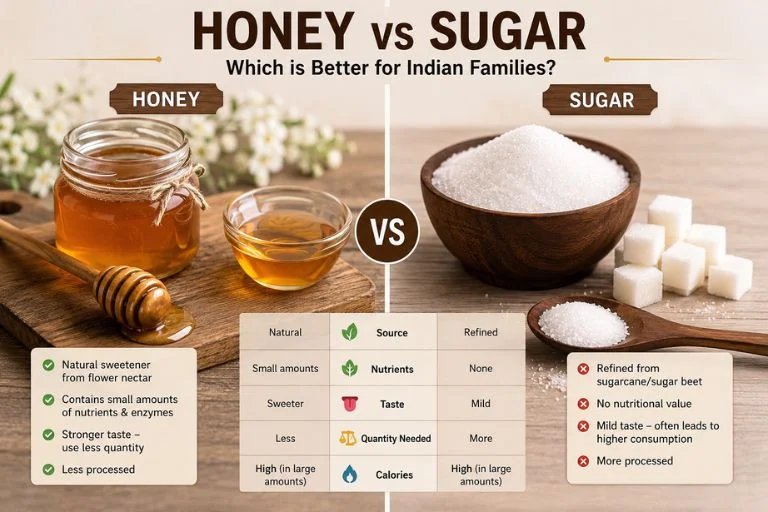
White sugar is mainly sucrose and is commonly made from sugarcane. It is refined into crystals and primarily provides sweetness and energy.
Honey is produced by bees from flower nectar. It mainly contains glucose and fructose, together with water and small amounts of naturally occurring compounds. Its flavour, colour, and thickness can vary depending on the floral source.
Honey is less refined and has a stronger taste. Some people may therefore feel satisfied with a smaller quantity. However, honey is dense, so a full spoon is not automatically a low-calorie substitute for a full spoon of sugar.
A simple habit recommended in nutrition consultations is to measure honey and sugar with a spoon instead of pouring them directly. This creates honest portion awareness and prevents accidental overuse.
Is Honey Healthier Than Sugar?
Honey may have a more natural image and a distinctive flavour, but it should not be treated as an unlimited health food. Both honey and sugar contribute sweetness and calories. Both may affect blood glucose.
The better option depends on how much is used, how often it is consumed, what it is added to, and the person’s health goals. A small amount of honey in plain curd may fit one person’s plan, while another person may need tighter control because of frequent sweets, weight concerns, or unstable blood sugar.
General articles can explain the difference between ingredients. Personalised nutrition guidance explains how those ingredients fit into your actual day.
Can Honey Support Weight Loss?
Honey is often promoted in warm water or lemon water as a weight loss habit. However, no single drink or ingredient can create sustainable weight loss by itself.
Weight management depends on total calorie intake, meal portions, food quality, activity, sleep, stress, hydration, and consistency. Adding honey water to a routine that already includes sweet tea, biscuits, fried snacks, large portions, and late-night desserts simply adds another source of calories.
What a Practical Weight-Loss Plan Usually Examines
- The amount of sugar used in tea, coffee, milk, and homemade drinks.
- Whether breakfast contains enough protein and fibre.
- Rice, roti, snack, and dessert portions across the day.
- The difference between weekday and weekend eating.
- Restaurant meals, travel food, and social occasions.
- Evening hunger, sweet cravings, and late-night eating.
- Daily movement, sleep quality, and meal consistency.
Chief Nutritionist Vasanthi’s weight management consultations are designed to identify the specific habits holding a person back. The goal is not to hand everyone the same chart. It is to build an Indian meal pattern that can be followed in real life.
Honey, Diabetes, and Blood Sugar
Honey contains natural sugars and can raise blood glucose. It should not be considered sugar-free merely because it is natural.
People with diabetes, prediabetes, insulin resistance, or a strong family history of diabetes need to pay attention to portions and food combinations. The entire meal matters.
For example, oats topped with banana, dates, raisins, and honey may contain far more total sugar than expected. A savoury oats preparation with vegetables, curd, nuts, seeds, eggs, paneer, or another suitable protein source may offer better balance for some people.
The right choice depends on blood sugar patterns, daily activity, meal timings, and the person’s broader health picture. Personalised clinical nutrition guidance can make these decisions clearer and safer.
Why Personalisation Matters A person trying to lose weight, a child, an older adult, and someone managing blood sugar should not follow the same generic food chart. The sweetener is only one part of the complete meal pattern.
Indian Tea: A Major Everyday Source of Sugar
Tea is a daily ritual in many Indian homes. Some people drink three to five cups every day. When each cup contains two teaspoons of sugar, the total can become significant. Biscuits, rusk, cake, mixture, or fried snacks served with tea add even more calories.
Changing from sugar to an equal amount of honey does not automatically make this routine healthier. A better strategy is to reduce sweetness gradually and improve the snack eaten with the drink.
Simple Tea-Time Improvements
- Reduce the usual sweetener by one-fourth and adjust again after one or two weeks.
- Use ginger, cardamom, cinnamon, mint, or lemongrass for flavour.
- Avoid drinking tea only because others are having it.
- Replace routine biscuits with a planned, satisfying snack.
- Choose water between cups of tea instead of another sweet beverage.
Better Indian Tea-Time Options
- Roasted chana or a small handful of nuts.
- Sprouts chaat, sundal, or boiled corn.
- A whole fruit with plain curd.
- An egg, paneer portion, or vegetable sandwich.
- Lightly roasted makhana in a measured portion.
The best snack depends on your hunger pattern, work timings, digestion, activity, and health goal. This is where professional diet planning becomes more useful than a generic list.
Honey in Breakfast Foods
Breakfast can look healthy while carrying a large amount of added sugar. Oats with honey, dates, raisins, and banana; pancakes covered with honey; bread with honey and jam; sweetened cornflakes; flavoured yoghurt; packaged granola; and fruit juice are common examples.
A balanced breakfast should provide satisfaction and steady energy rather than mainly sweetness.
Practical Indian Breakfast Ideas
- Vegetable dosa or idli with sambar.
- Moong dal chilla with curd.
- Egg bhurji with roti.
- Vegetable poha with peanuts.
- Paneer or vegetable sandwich on whole-grain bread.
- Adai, ragi dosa, or vegetable upma with a suitable side.
- Plain curd with fruit, nuts, and seeds.
- Oats prepared with vegetables and a protein-rich accompaniment.
A small quantity of honey may fit selected breakfasts, but it should not become the main flavour. During a consultation, breakfast is planned around appetite, work timing, cooking facilities, food preferences, and individual goals.
Honey and Children
Parents often choose honey because they believe it is healthier than sugar. They may add it to milk, cereal, fruit, pancakes, bread, or homemade drinks. Frequent sweetening, however, can teach children to expect every food to taste sweet.
A child who regularly consumes chocolate cereal, flavoured milk, packaged juice, biscuits, sweetened yoghurt, desserts, and honey-based snacks may gradually lose interest in simple home foods.
Family Habits That Encourage Better Eating
- Offer whole fruit instead of fruit juice.
- Avoid adding honey to fruits that are already sweet.
- Keep biscuits and sweets as planned, occasional foods.
- Do not use sweets as a reward for finishing meals.
- Serve a proper breakfast before school.
- Include vegetables and protein in family meals.
- Encourage water instead of sweetened drinks.
- Allow children to experience natural flavours.
Honey should not be given to infants below one year of age. For older children, choices should consider growth needs, activity, appetite, school timings, and the complete quality of the diet.
Families concerned about poor appetite, excessive snacking, picky eating, weight gain, or frequent sweet cravings can benefit from structured nutrition guidance.
Honey and Women’s Weight Management
Many women manage work, children, household duties, social commitments, and family meals while putting their own health last. Some skip breakfast, eat leftovers, drink several cups of tea, snack while cooking, or eat late at night.
Starting the day with honey water may feel like a healthy step, but it cannot compensate for an unbalanced routine. A useful assessment looks at why evening hunger is intense, whether meals contain enough protein, how sleep affects cravings, whether portions match activity, and how weekends differ from weekdays.
Chief Nutritionist Vasanthi works with women to simplify food decisions using familiar Indian meals. The focus is on consistency, not starvation or extreme restrictions.
Honey and Men’s Eating Habits
Many men believe they eat very little because they skip meals or avoid sweets at home. Office tea, restaurant lunches, sweetened coffee, bakery snacks, weekend overeating, and late-night meals may still contribute substantially to calorie intake.
Replacing sugar with honey cannot correct an irregular eating pattern. A realistic plan may involve a proper breakfast, a planned snack, smarter restaurant choices, fewer sweetened beverages, improved protein intake, and earlier dinners.
Honey and Older Adults
Older adults may rely on sweet tea and biscuits because these foods are easy to consume. Unfortunately, they can reduce appetite for more nourishing meals.
Softer, Balanced Meal Options
- Idli with sambar or soft vegetable upma.
- Dal khichdi or curd rice with vegetables.
- Soft roti with dal and cooked vegetables.
- Egg, paneer, fish, or another suitable protein preparation.
- Vegetable oats, soups with protein, or fruit with plain curd.
Families caring for older adults may need personalised help with appetite, digestion, food texture, weight maintenance, meal timing, and existing health concerns. A clinical nutrition consultation can simplify planning for the entire household.
What About Jaggery, Brown Sugar, and Other Alternatives?
White sugar is often replaced with jaggery, brown sugar, coconut sugar, date syrup, or honey. These ingredients may differ in taste, colour, and processing, but they remain concentrated sources of sweetness.
Using a larger quantity of jaggery because it appears traditional or natural may not improve the overall diet. The best strategy is usually to reduce the total amount of added sweetener.
Words such as natural, organic, traditional, unrefined, and made with honey can create a health impression. Portion size and frequency still matter.
Hidden Sugar in Packaged Foods
Families often focus only on the sugar bowl while overlooking packaged foods. Added sweetness may come from breakfast cereals, flavoured yoghurt, packaged fruit drinks, soft drinks, bakery foods, ketchup, sauces, flavoured milk, granola bars, sweetened spreads, and ready-to-eat desserts.
Even a product labelled “made with honey” may contain a high amount of added sugar. Reading the ingredient list and understanding the complete product is important.
Common Sweetening Ingredients on Labels
- Sugar, sucrose, glucose, fructose, and dextrose.
- Glucose syrup, corn syrup, malt syrup, and invert syrup.
- Honey, jaggery, brown sugar, and fruit concentrate.
Nutrition counselling can help families compare products, understand marketing claims, and decide which packaged foods can be regular choices and which are better kept occasional.
How to Reduce Sugar Without Feeling Punished
A lower-sugar diet does not have to feel boring. Taste buds adjust when sweetness is reduced gradually, and naturally flavoured foods become more enjoyable.
Measure Before Adding
Use a teaspoon instead of pouring honey or sugar directly into food or drinks.
Reduce in Stages
Cut the usual amount by one-fourth. Continue for a few days, then reduce again.
Avoid Combining Several Sweeteners
Do not automatically add honey, dates, raisins, sweet fruit, and sugar to the same dish.
Choose Plain Products
Buy plain oats, curd, milk, and cereal. Add fruit or spices at home when needed.
Use Flavour, Not Only Sweetness
Cardamom, cinnamon, ginger, nutmeg, vanilla, mint, and saffron can make food enjoyable.
Eat Regular Meals
Long gaps may increase cravings for biscuits, sweets, and sugary drinks.
Include Protein and Fibre
Dal, pulses, curd, paneer, eggs, fish, chicken, soy foods, vegetables, fruit, nuts, and seeds can improve satisfaction.
Plan Desserts
Enjoy a small portion consciously rather than eating sweets repeatedly throughout the day.
Why Generic Diet Advice Often Fails
Two people can eat the same food and still need different guidance. A homemaker, office employee, teenager, person with diabetes, older adult, and someone trying to lose weight cannot all follow one identical chart.
The choice between honey and sugar may depend on current health, weight goals, work schedule, sleep, activity, hunger timing, digestive comfort, family cooking habits, restaurant frequency, and sweet cravings.
Generic advice explains what is generally healthy. Personalised guidance shows how to make it work in your life.
When Should You Consult Chief Nutritionist Vasanthi?
A consultation may be useful when you are confused by conflicting nutrition advice or need a structured plan that fits your routine.
- You keep gaining and losing the same weight.
- You experience frequent sweet cravings or depend heavily on tea, coffee, and biscuits.
- You need Indian meal ideas for weight or blood sugar management.
- Your family needs guidance for children or older adults.
- You are unsure about portions, meal timing, or food combinations.
- You have tried several generic diet plans without lasting consistency.
- You want practical guidance without removing every favourite Indian food.
Consulting does not mean you will automatically be told to stop rice, roti, dosa, idli, or every sweet. The purpose is to understand how much, how often, and in what combination foods can fit into your routine.
What Makes Chief Nutritionist Vasanthi’s Approach Different?
Chief Nutritionist Vasanthi brings 21 years of professional experience and a practical understanding of Indian family eating patterns.
Her Consultation Approach Includes
- Personalised Indian meal planning.
- Practical portion and meal-timing guidance.
- Weight management and clinical nutrition support.
- Family-friendly food choices.
- Clear explanations without unnecessary hype.
- Plans designed around home cooking, work, travel, and social occasions.
- A focus on habits that can be continued long term.
Her National Awards in clinical nutrition, weight loss, holistic health, and nutrition innovation reflect her professional commitment. More importantly, her guidance is designed for real life rather than an ideal routine that is impossible to maintain.
Frequently Asked Questions
Is honey better than sugar for daily use?
Honey is less refined and has a stronger flavour, but it is still a concentrated sweetener. Quantity and frequency matter more than simply changing the name of the sweetener.
Is honey good for weight loss?
Honey does not directly cause weight loss. It may fit into a controlled plan, but the complete diet, portions, activity, sleep, and routine must be considered.
Can people with diabetes consume honey?
Honey can raise blood glucose. People with diabetes should treat it as a sweetener and follow personalised dietary guidance.
Is honey water useful in the morning?
It may be enjoyed as a beverage, but it cannot replace balanced meals, activity, sleep, and proper calorie control.
Is jaggery healthier than sugar?
Jaggery is less refined, but it remains a concentrated sweetener. Large portions can add significant calories.
Can children consume honey?
Children above one year may have small amounts occasionally. Honey should not be given to infants below one year.
Which is better for tea: honey or sugar?
The most useful improvement is usually to reduce the overall sweetness. Replacing sugar with an equal amount of honey may not offer a major advantage.
Why consult a nutritionist for a sweetener question?
Because the sweetener may be only one part of a larger pattern involving weight, blood sugar, cravings, portions, meal balance, and family habits.
A Healthier Decision Starts With Clarity
The honey versus sugar debate should not create fear. You do not need to remove every sweet food, and you do not need to replace every spoon of sugar with honey.
A small measured amount of honey or sugar may fit into a balanced diet. Problems are more likely when sweeteners are used frequently, added to foods that are already sweet, or consumed through drinks and packaged snacks without awareness.
The right diet should be practical enough to follow at home, at work, during travel, and at family functions. That requires a plan built around the person rather than a trend.
Book a Personalised Nutrition Consultation Reading can create awareness, but lasting change becomes easier when advice is matched to your body, routine, food preferences, and goals. Consult Chief Nutritionist Vasanthi for practical guidance on weight management, blood sugar-friendly eating, sweet cravings, family nutrition, meal portions, and healthier Indian food choices. You do not need another extreme diet. You need a plan that fits your life.
Author
Chief Nutritionist Vasanthi Senthilvel leads Newtrist Nutritionist Dietitian Dietician, providing personalised diet plans for weight management and clinical nutrition for children, adolescents, adults and families.
She has 21 years of experience in nutrition and has received professional recognition for her work.
- Pride of Bharat Awards 2026: Outstanding Achievement in Holistic Health & Nutrition Innovation
- Doctor of The Year: Nutritionist 2026: Excellence in Clinical Nutrition and Weight Loss.
Her approach considers age, growth, health history, medical conditions, laboratory reports, medication, body composition, weight history, dietary preferences, regional food habits, family routines, activity, sleep and personal health goals. Recommendations are developed according to individual needs rather than using one standard diet for everyone.
Consultations are available in person at Bangalore HSR Layout, Koramangala, Bellandur, Haralur and Electronic City, as well as online across India.
Independent Medical Review Panel
Newtrist health and nutrition articles undergo medical review, where appropriate, by doctors with relevant specialist expertise. The medical professionals listed below contribute to Newtrist’s review process within their respective specialties.
| Speciality | Doctor |
|---|---|
| Endocrinology | Dr Vinay Prasad MBBS, MD, DM |
| Gastroenterology & Hepatology | Dr Sunil kumar N MBBS, MD, DM |
| Gynaecology | Dr Prathiba G MBBS, DNB, FIRM, FMAS |