
Written by: Chief Nutritionist Vasanthi Senthilvel
21 years of experience | Newtrist Nutritionist Dietitian Dietician
Best Nutritionist in Bangalore with multiple awards for excellence in clinical nutrition, weight loss, holistic health and nutrition innovation.
Medically reviewed by: Dr Prathiba G MBBS, DNB, FIRM, FMAS | Dr Sunil kumar N MBBS, MD, DM | Dr Vinay Prasad MBBS, MD, DM
Medical Disclaimer: Nutritional needs vary based on an individual’s profile. The information on this page is for general educational purposes only and is not intended to replace personalised medical or nutrition care.
One person tells you to eat more turmeric. Another says to avoid tomatoes. You replace rice with millets, add a few healthy foods, and still wonder whether you are making the right dietary changes for your painful joints.
When knee pain or stiff fingers already make everyday activities uncomfortable, following conflicting food advice can become another burden.
What you need is not a longer list of foods to avoid. You need to know which everyday food choices are worth prioritising and how to build them into meals you can prepare and enjoy consistently.
Key Takeaway
An arthritis diet plan should include vegetables, fruits, whole grains, pulses, adequate protein, and healthy fats, including omega-3 sources. A balanced eating pattern can support nutritional health and suitable body weight, while some dietary patterns may offer modest benefits for arthritis symptoms. No single food reliably relieves joint pain. Familiar Indian meals can provide these nutrients without unnecessary restrictions.

Table of Contents
What Can Diet Change for Arthritis-Related Joint Pain?
A balanced diet can support joint health by helping maintain a suitable body weight, providing nutrients for muscle maintenance, and supporting overall health. Its effect on pain and inflammation varies according to the type of arthritis.
For people with osteoarthritis, maintaining an appropriate body weight can reduce mechanical stress on weight-bearing joints, particularly the knees and hips.
In inflammatory arthritis, dietary patterns rich in plant foods and unsaturated fats may offer modest benefits, although improvements in pain and joint function are not consistent across studies.
This is why eating patterns matter more than individual ingredients.
A nutritious lunch cannot reverse joint damage, but consistently eating balanced meals can contribute to better overall health and help you address nutritional factors relevant to your joints.
What Should an Everyday Arthritis Diet Look Like?
You can build a practical Indian meal around three components:
- A protein-containing food: Dal, legumes, curd, paneer, tofu, eggs, or fish, depending on your preferences.
- Vegetables: Include seasonal varieties to provide fibre, vitamins, and other plant nutrients.
- A suitable carbohydrate portion: Rice, roti, millets, or another familiar grain according to your energy requirements.
Nuts, seeds, fruits, and suitable cooking oils can contribute additional nutrients throughout the day.
The important consideration is the balance of your complete eating pattern, not whether every meal contains a particular ingredient described as anti-inflammatory.

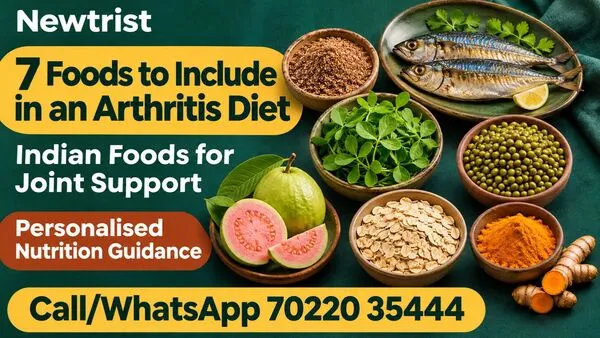
Seven Foods to Include in an Arthritis Diet
Which foods are worth including regularly?
These seven choices provide useful nutrients and can fit naturally into Indian cooking. Each contributes something different, so there is no need to rely on one food for joint health.
1. Indian Mackerel or Sardines
Indian mackerel, also called bangda, and sardines provide omega-3 fatty acids known as EPA and DHA.
These fats have anti-inflammatory properties and may be helpful in some forms of inflammatory arthritis.
If you eat fish, include a suitable portion of freshly prepared mackerel or sardines with your regular rice, roti, and vegetables. The benefit comes from the nutritional contribution of the fish, not from a special cooking recipe.
2. Ground Flaxseeds
Flaxseeds, or alsi, provide alpha-linolenic acid (ALA), a plant-based omega-3 fatty acid, along with fibre.
Ground flaxseeds make a convenient addition to vegetarian meals because they can be mixed into curd or sprinkled over breakfast dishes.
They are not nutritionally identical to oily fish, since the body’s conversion of ALA into EPA and DHA is limited.
3. Methi Leaves
Fresh methi leaves provide dietary fibre, vitamin K, and other plant nutrients.
You can include them in methi sabzi, dal, or homemade phulka.
Methi is not a direct treatment for joint inflammation. Its value is in helping you maintain a varied, nutrient-rich diet using an affordable and familiar Indian vegetable.
4. Guava
Guava provides vitamin C, which contributes to normal collagen formation and the maintenance of connective tissues.
It also contains fibre and is easy to eat without elaborate preparation.
Choose whole guava as a snack, and alternate it with seasonal fruits such as amla, orange, or papaya for nutritional variety.
5. Whole Moong
Whole green gram, or moong, contributes plant protein, fibre, and minerals.
Adequate dietary protein supports muscle maintenance, which is important for movement and everyday physical function.
Whole moong can be prepared as chilla, curry, or sundal. The actual serving size determines how much protein the dish provides.
6. Oats
Oats contain soluble fibre and can be used to prepare filling meals without relying entirely on refined grains.
Vegetable oats upma, savoury oats porridge, and oats-based chilla are convenient options.
Oats do not need to replace rice or wheat. Including different grains can make your eating pattern more varied and enjoyable.
7. Turmeric
Turmeric contains curcumin, a plant compound studied for its anti-inflammatory properties.
However, the quantity found in normal cooking is relatively small, and adding culinary turmeric to food has not been shown to reliably relieve arthritis pain.
Continue using turmeric in familiar dishes such as dal, sabzi, and curry for flavour and dietary variety rather than expecting it to act as a standalone remedy.
Sample Indian Diet Chart for Joint Pain
How do these foods fit into an ordinary day without requiring separate cooking or complicated recipes?
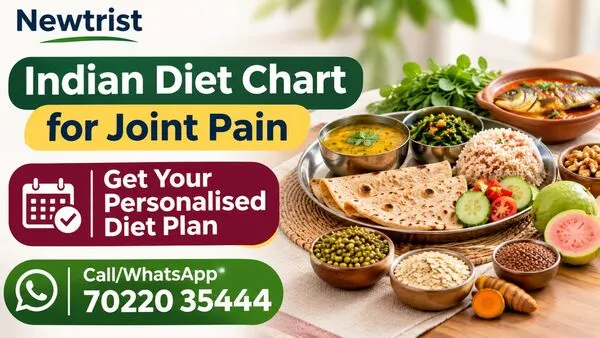
The following 1-day Indian arthritis diet plan demonstrates a vegetarian eating pattern with familiar ingredients and balanced food combinations.
1-Day Indian Arthritis Diet Plan
| Meal | Indian Menu |
| Breakfast, 8:00 AM | 2 medium moong-oats chillas, ¾ cup plain curd, and 1 tsp ground flaxseeds |
| Mid-Morning, 11:00 AM | 1 medium guava and 2 whole walnut kernels |
| Lunch, 1:30 PM | 2 medium whole wheat phulkas, ¾ cup chana curry, 1 cup methi leaves sabzi, and cucumber salad |
| Evening Snack, 4:30 PM | 25 g roasted chana and 1 small serving of papaya |
| Dinner, 7:30 PM | 1 cup cooked hand-pounded rice, 150 g tofu bhurji prepared with turmeric and ginger, and 1 cup seasonal mixed vegetable sabzi |
The menu includes a combination of protein-containing foods, fibre-rich carbohydrates, vegetables, fruits, and healthy fats.
It is an illustrative meal plan, not a fixed daily nutritional prescription. Suitable portions depend on your current food intake, body composition, activity level, and individual requirements.
How to Adapt the Chart to Your Usual Meals
You may prefer idli and dosa over oats, eat rice for both lunch and dinner, or prepare the same food for your entire family.
That does not mean you need a separate arthritis menu.
The most practical approach is to improve the meals you already prepare instead of replacing every familiar dish.
How Can You Improve Your Regular Indian Meals?
| Your Usual Meal | A Practical Adjustment |
| Idli with coconut chutney | Include a generous serving of dal-rich sambar |
| Rice with rasam and vegetable poriyal | Add a substantial serving of dal or another protein source |
| Chapati with potato sabzi | Include a suitable serving of curd or legumes instead of removing the potato |
| Plain dosa | Use a mixed dal batter occasionally or serve with a protein-containing accompaniment |
| Rice with a vegetable curry | Adjust portions and include an appropriate serving of paneer, tofu, eggs, or fish |
These are examples of meal improvements, not compulsory replacements.
For non-vegetarian preferences, freshly prepared fish, eggs, or chicken can be included in suitable portions.
You can also retain your family’s usual cooking style rather than preparing a completely different meal for yourself.
What if Joint Pain Makes Cooking Difficult?
Preparing several dishes can feel tiring when your joints are uncomfortable.
Keeping a few meal components ready can make nutritious eating more manageable.
For example, cooked dal, prepared dosa batter, washed vegetables, and plain curd can help you assemble balanced meals with less preparation.
A simple combination you can prepare consistently is more useful than an elaborate recipe you rarely have the time or comfort to make.
How Do You Know Whether Your Diet Is Balanced Enough?
Consider two people experiencing arthritis-related joint pain.
One eats mostly vegetarian meals, has a small appetite, and finds it difficult to include enough protein. Another eats substantial meals but needs to review portion sizes to maintain an appropriate body weight.
Both may benefit from similar food groups, yet the quantities and combinations suitable for them can differ.
The first may need more protein-rich choices within comfortable portions. The second may need changes to the distribution of foods across the plate.
A standard diet chart can show you what balanced eating looks like. An individual nutrition assessment helps identify which changes would make your own meals more appropriate.
Frequently Asked Questions
Should You Avoid Tomatoes, Potatoes, and Brinjal With Arthritis?
No. There is no convincing evidence that these vegetables routinely worsen arthritis symptoms. They can remain part of a varied diet unless you have an individual reason to exclude them.
Do You Need to Buy Expensive Foods for an Arthritis Diet?
No. Seasonal Indian fruits, locally available vegetables, pulses, and whole grains can provide valuable nutrition. A balanced arthritis diet does not depend on imported ingredients or expensive specialty foods.
How Soon Can Dietary Changes Improve Arthritis-Related Joint Pain?
There is no predictable timeframe. Some people may notice improvements associated with changes in their overall eating pattern or body weight, while others may experience little difference in joint symptoms. Individual foods do not produce reliable, immediate pain relief.
Get a Personalised Arthritis Diet Plan From Newtrist
You may already be eating nutritious food and making an effort to follow the right advice.
But are you changing the things that actually matter for your diet?
Perhaps you have replaced rice with millets without checking your protein intake. You may be avoiding several vegetables unnecessarily. Or your current diet chart may be difficult to follow when joint pain makes cooking uncomfortable.
The missing piece may not be another list of foods. It may be understanding what your existing meals need.
At Newtrist, Chief Nutritionist Vasanthi Senthilvel provides personalised nutrition guidance based on your current eating habits, nutritional requirements, food preferences, and daily routine.
Your consultation can help identify nutritional gaps, establish suitable portions, and develop practical Indian meal combinations that fit your lifestyle.
Instead of following conflicting food rules, you can focus on the changes relevant to your individual nutritional needs while continuing to enjoy familiar homemade meals.
Find out what your current diet is providing, what could be improved, and how to build an arthritis diet plan that works for you.
Book a Personalised Arthritis Diet Consultation With Chief Nutritionist Vasanthi Senthilvel
Author
Chief Nutritionist Vasanthi Senthilvel leads Newtrist Nutritionist Dietitian Dietician, providing personalised diet plans for weight management and clinical nutrition for children, adolescents, adults and families.
She has 21 years of experience in nutrition and has received professional recognition for her work.
- Pride of Bharat Awards 2026: Outstanding Achievement in Holistic Health & Nutrition Innovation
- Doctor of The Year: Nutritionist 2026: Excellence in Clinical Nutrition and Weight Loss.
Her approach considers age, growth, health history, medical conditions, laboratory reports, medication, body composition, weight history, dietary preferences, regional food habits, family routines, activity, sleep and personal health goals. Recommendations are developed according to individual needs rather than using one standard diet for everyone.
Consultations are available in person at Bangalore HSR Layout, Koramangala, Bellandur, Haralur and Electronic City, as well as online across India.
Independent Medical Review Panel
Newtrist health and nutrition articles undergo medical review, where appropriate, by doctors with relevant specialist expertise. The medical professionals listed below contribute to Newtrist’s review process within their respective specialties.
| Speciality | Doctor |
|---|---|
| Endocrinology | Dr Vinay Prasad MBBS, MD, DM |
| Gastroenterology & Hepatology | Dr Sunil kumar N MBBS, MD, DM |
| Gynaecology | Dr Prathiba G MBBS, DNB, FIRM, FMAS |
| Nephrology | Dr Priyashree R MBBS, MD, DNB, DM |