
Written by: Chief Nutritionist Vasanthi Senthilvel
21 years of experience | Newtrist Nutritionist Dietitian Dietician
Best Nutritionist in Bangalore with multiple awards for excellence in clinical nutrition, weight loss, holistic health and nutrition innovation.
Medically reviewed by: Dr Dr Prathiba G MBBS, DNB, FIRM, FMAS | Dr Sunil kumar N MBBS, MD, DM | Dr Vinay Prasad MBBS, MD, DM
Medical Disclaimer: Nutritional needs vary based on an individual’s profile. The information on this page is for general educational purposes only and is not intended to replace personalised medical or nutrition care.
A pregnancy food chart should support changing nutritional needs from before conception through pregnancy, recovery after delivery and breastfeeding. It should not be a fixed menu copied from the internet.
Pregnancy stage, health history, laboratory findings, prescribed treatment and supplements, symptoms, appetite, food preferences and obstetric advice can all influence an appropriate dietary approach.
Key takeaway: A pregnancy food chart is best used as a personalised nutrition framework rather than a standard list of meals. Nutritional priorities change across pre-conception, the first, second and third trimesters, postpartum recovery and lactation, and may need further modification for gestational diabetes, gestational hypertension or obesity in pregnancy. Exact quantities and clinical changes depend on individual assessment.
Table of Contents

Pregnancy Nutrition Across the Complete Journey
Nutrition needs do not begin with a positive pregnancy test or end at delivery. Pre-conception nutrition can prepare for early pregnancy, each trimester brings different nutritional and practical considerations, and the postpartum period introduces recovery and breastfeeding needs. Pregnancy-related medical conditions may also require specific dietary modification alongside medical care.
This page covers:
- Pre-conception nutrition and pregnancy planning
- First trimester nutrition
- Second trimester nutrition
- Third trimester nutrition
- Gestational diabetes nutrition
- Gestational hypertension nutrition
- Gestational obesity and weight management during pregnancy
- Postpartum recovery nutrition
- Lactation and breastfeeding nutrition

What Should a Pregnancy Food Chart Consider?
A pregnancy food chart is a structured way to organise balanced, safe and practical nutrition without assuming that every woman needs the same foods or quantities. It may consider food groups, nutrient sources, hydration, food safety, appetite, symptoms, medication, supplements and the stage of the pregnancy journey.
Individual planning may need to consider:
- Pre-pregnancy nutritional status and weight history
- Stage of pregnancy, postpartum recovery or lactation
- Singleton or multiple pregnancy
- Appetite, nausea, vomiting and food aversions
- Constipation, heartburn or other digestive concerns
- Gestational diabetes, thyroid disorders, hypertension, anaemia or other medical conditions
- Laboratory findings, treatment and prescribed supplements
- Vegetarian, vegan, Jain, egg-based or non-vegetarian preferences
- Food allergies, intolerances and cultural food practices
- Work routine, travel, cooking facilities, sleep and activity
Nutrition Through Each Stage of the Pregnancy Journey
Pre-Conception Nutrition
Pre-conception nutrition focuses on entering pregnancy with a sound nutritional foundation. Planning may include reviewing overall diet quality, folate, iron and vitamin B12 status where relevant, existing medical conditions, current treatment and supplements, food restrictions and weight management before pregnancy.
Folic acid is commonly recommended before conception, but the appropriate supplement and dose should follow medical guidance, particularly when there is a relevant medical or pregnancy history. If weight management is appropriate before pregnancy, gradual and nutritionally adequate changes are preferable to crash dieting.
First Trimester Nutrition
The first trimester combines early developmental needs with practical challenges such as nausea, vomiting, altered smell, food aversions and reduced appetite. Nutrition planning may need to focus on tolerable foods, hydration, food safety and prescribed supplements rather than forcing an ideal-looking menu.
The emphasis should remain on nutritional quality and individual tolerance rather than automatically increasing food intake. Persistent vomiting or difficulty keeping fluids down needs medical assessment.
Second Trimester Nutrition
During the second trimester, appetite may improve for some women while maternal tissues, blood volume and fetal growth continue to influence nutritional requirements. A varied diet with appropriate protein, micronutrients, fibre, healthy fats and fluids remains important.
Screening or laboratory results may also identify gestational diabetes, anaemia, thyroid concerns or another condition. When this occurs, dietary changes should be coordinated with medical care rather than based on a restrictive standard chart.
Third Trimester Nutrition
The third trimester requires continued nutritional adequacy while physical comfort may change. Heartburn, constipation, early fullness and reduced appetite can make an ordinary eating pattern more difficult.
Practical adjustments in timing, food texture and meal pattern may help maintain adequate intake. Restrictive dieting to control late-pregnancy weight is not appropriate without individual medical guidance.
Gestational Diabetes Nutrition
Gestational diabetes requires individual nutrition planning alongside blood-glucose monitoring and obstetric or diabetes care. Dietary guidance may consider carbohydrate amount, type and distribution, meal timing, protein, fibre, activity and the overall nutritional needs of pregnancy.
Gestational diabetes does not automatically require eliminating rice, roti, fruit or all carbohydrates. If medication or insulin is prescribed, it should be continued and adjusted only by the treating medical team. Postpartum glucose follow-up is also important because previous gestational diabetes increases future diabetes risk.
Gestational Hypertension Nutrition
Gestational hypertension is a medical condition that requires blood-pressure monitoring and obstetric care. Nutrition can support overall dietary quality, but food alone should not be presented as treatment for high blood pressure in pregnancy.
Dietary review may consider sources of sodium, food quality, hydration and other health conditions, but salt restriction should not be used as a stand-alone strategy to prevent pregnancy-related hypertension. Prescribed treatment should not be changed without medical advice.
Gestational Obesity and Weight Management During Pregnancy
The search term gestational obesity is sometimes used, but obesity in pregnancy and excessive gestational weight gain are not separate gestational diseases in the same way as gestational diabetes or gestational hypertension. Nutrition care usually considers pre-pregnancy weight status, health conditions, fetal growth and the pattern of weight change during pregnancy.
The goal during pregnancy is not rapid weight loss. Nutritional adequacy and appropriate gestational weight gain should be considered together, with individual guidance from the healthcare team. Structured weight reduction is generally more appropriately discussed before pregnancy or after postpartum recovery when clinically suitable.
Postpartum Recovery Nutrition
Postpartum recovery includes healing after childbirth, adapting to disrupted sleep, restoring eating routines and managing any continuing medical concerns. Needs may differ after a vaginal birth, caesarean birth, significant blood loss, anaemia or other complications.
Nutrition may need to support protein intake, iron status where relevant, fibre, fluids and overall dietary variety. The early postpartum period is not the time for crash dieting, and weight-management decisions should take recovery, breastfeeding and medical history into account.
Lactation and Breastfeeding Nutrition
Breastfeeding changes maternal nutritional demands, but most women do not need a rigid or highly restrictive lactation diet. A varied diet, adequate fluids and appropriate attention to nutrient adequacy can support maternal nutrition while breastfeeding.
Vegetarian or vegan mothers may need closer review of nutrients that can be more difficult to obtain consistently. Food restrictions should be based on maternal tolerance, medical advice or a clearly identified infant concern rather than routine avoidance.
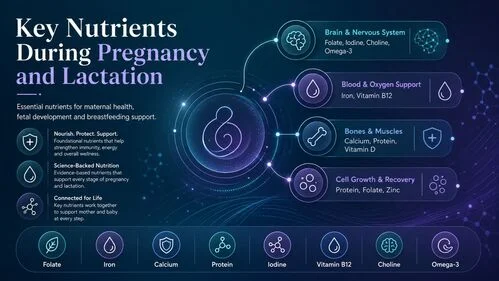
Key Nutrients During Pregnancy and Lactation
No single nutrient determines pregnancy health, but several nutrients have important roles. The priorities and the need for supplementation vary according to pregnancy stage, dietary pattern, laboratory findings and medical advice.
- Folate supports normal cell division and early neural-tube development.
- Iron supports haemoglobin production and the increased blood requirements of pregnancy.
- Protein supports maternal tissues, fetal growth and postpartum recovery.
- Calcium and vitamin D contribute to maternal and fetal bone health.
- Iodine supports thyroid function and fetal brain development.
- Vitamin B12 supports blood and nervous-system function and deserves particular attention in diets with little or no animal food.
- Choline contributes to brain and nervous-system development.
- Omega-3 fats may be obtained from suitable lower-mercury fish and selected plant foods.
- Fibre and fluids can support bowel regularity and digestive comfort.
Food can provide many of these nutrients, but pregnancy and lactation supplements may still be recommended. Supplements should not be self-prescribed or changed simply because a nutrient is important.
Indian Foods Can Fit Pregnancy and Lactation Nutrition
Pregnancy nutrition does not require imported foods, expensive powders or a separate household menu. Familiar Indian foods can contribute to balanced nutrition when variety, preparation, food safety and individual requirements are considered.
Rice, roti and millets can provide staple carbohydrates; dal, pulses, beans and soy foods can contribute protein and fibre; milk, curd and paneer can provide protein and calcium where suitable; eggs, fish and chicken can provide animal protein where consumed; vegetables and fruits provide fibre and micronutrients; nuts and seeds contribute fats and selected minerals. These are food examples, not a prescribed meal plan.
Food Safety During Pregnancy
Food safety is an essential part of pregnancy nutrition because certain foodborne infections can have more serious consequences during pregnancy. Practical precautions are more useful than long lists of unsupported food bans.
- Choose pasteurised milk and dairy products.
- Cook eggs, meat, poultry, fish and seafood safely and thoroughly.
- Wash fruits and vegetables carefully before eating or preparing them.
- Keep raw foods separate from ready-to-eat foods during preparation.
- Store refrigerated foods safely and avoid food kept under unsuitable conditions.
- Avoid fish known to contain high levels of mercury and choose lower-mercury options where fish is eaten.
- Keep caffeine within current pregnancy guidance or the limit advised by the treating healthcare team.
- Use caution with herbal products and unregulated supplements because natural does not automatically mean safe during pregnancy.
Pregnancy food restrictions should be evidence-based. Familiar foods should not be excluded simply because an internet list labels them unsafe without considering preparation, amount, individual tolerance and the quality of evidence.
Common Pregnancy Food Chart Mistakes
- Following one unchanged chart from pre-conception through the third trimester.
- Copying a week-by-week or month-by-month menu from the internet.
- Assuming pregnancy means eating twice the usual quantity.
- Removing rice, roti, fruit or other major foods without an individual reason.
- Using juices, powders or supplements as substitutes for a varied diet.
- Believing that one particular food can guarantee fetal growth or prevent a pregnancy complication.
- Treating cravings as proof of a nutrient deficiency.
- Changing prescribed supplements because of online advice.
- Trying to lose weight rapidly during pregnancy.
- Using the same dietary approach for gestational diabetes, hypertension and an uncomplicated pregnancy.
When Should You Seek Medical Assessment?
Nutrition guidance should not delay maternity or emergency care. Seek appropriate medical assessment for persistent or severe vomiting, difficulty keeping fluids down, signs of dehydration, significant or unexplained weight loss, vaginal bleeding, severe abdominal pain, fever, severe headache, visual changes, sudden or marked swelling, concerning blood-glucose or blood-pressure readings, or reduced fetal movement when fetal movement would normally be expected.
Medical review is also important when laboratory results are abnormal, medication is being used, a pregnancy complication has been diagnosed or the obstetric team has given specific dietary instructions.
Frequently Asked Questions
Can a vegetarian diet support pregnancy and lactation?
Yes. A well-planned vegetarian diet can support pregnancy and lactation, but protein, iron, vitamin B12, calcium, iodine and other nutrients may need closer review. The complete dietary pattern, laboratory findings and prescribed supplements should be considered rather than assuming every vegetarian diet provides the same nutrient intake.
Do I need to eat for two during pregnancy?
No. Pregnancy increases nutritional requirements, but it does not mean that food intake should simply be doubled. The appropriate amount depends on the stage of pregnancy, pre-pregnancy nutritional status, activity, appetite, medical conditions and other individual factors.
Do pregnancy supplements replace a balanced diet?
No. Supplements can provide nutrients that are difficult to obtain in sufficient amounts from food alone, but they do not replace a varied diet. The appropriate supplement depends on pregnancy stage, medical history, dietary pattern, laboratory findings and advice from the treating healthcare team.
Can I use the same diet after delivery?
Not necessarily. Postpartum recovery and breastfeeding can change nutritional priorities, appetite, hydration needs and practical eating patterns. Medical recovery, anaemia, breastfeeding, medication and weight-management goals may all affect the dietary approach after delivery.
Conclusion
A pregnancy food chart should evolve across the complete pregnancy journey. Pre-conception, each trimester, pregnancy-related conditions, postpartum recovery and lactation can create different nutritional priorities, so one standard chart cannot determine the correct foods, quantities, supplements or clinical modifications for every woman.
When Personalised Pregnancy Nutrition Guidance May Help
General pregnancy nutrition information can explain important principles, but it cannot determine the exact requirements of every woman. Stage of pregnancy, medical history, laboratory findings, treatment, supplements, symptoms, appetite, food preferences, postpartum recovery, breastfeeding and obstetric advice may all influence an appropriate plan.
Readers who need individual guidance may consult Chief Nutritionist Vasanthi Senthilvel at Newtrist for personalised pregnancy nutrition and a diet plan developed around their health information, food preferences and daily routine. Personalised nutrition guidance complements antenatal, obstetric and medical care and does not replace it.
During an active pregnancy nutrition programme, support may include:
- Approximately one-hour detailed initial consultation
- Review of relevant medical and pregnancy reports
- Review of prescriptions, treatment and supplements
- Personalised Indian pregnancy, postpartum or lactation diet plan
- Condition-specific nutrition guidance where medically relevant
- Weekly progress tracking
- Follow-up consultation every two weeks
- Phone and WhatsApp support for nutrition-related questions
- Diet-plan adjustments according to changing needs and feedback
- A new diet plan every month during the active programme
Consult Chief Nutritionist Vasanthi Senthilvel for personalised pregnancy nutrition guidance and an individual diet plan developed around your stage of the pregnancy journey, health information, food preferences and daily routine.
Author
Chief Nutritionist Vasanthi Senthilvel leads Newtrist Nutritionist Dietitian Dietician, providing personalised diet plans for weight management and clinical nutrition for children, adolescents, adults and families.
She has 21 years of experience in nutrition and has received professional recognition for her work.
- Pride of Bharat Awards 2026: Outstanding Achievement in Holistic Health & Nutrition Innovation
- Doctor of The Year: Nutritionist 2026: Excellence in Clinical Nutrition and Weight Loss.
Her approach considers age, growth, health history, medical conditions, laboratory reports, medication, body composition, weight history, dietary preferences, regional food habits, family routines, activity, sleep and personal health goals. Recommendations are developed according to individual needs rather than using one standard diet for everyone.
Consultations are available in person at Bangalore HSR Layout, Koramangala, Bellandur, Haralur and Electronic City, as well as online across India.
Independent Medical Review Panel
Newtrist health and nutrition articles undergo medical review, where appropriate, by doctors with relevant specialist expertise. The medical professionals listed below contribute to Newtrist’s review process within their respective specialties.
| Speciality | Doctor |
|---|---|
| Endocrinology | Dr Vinay Prasad MBBS, MD, DM |
| Gastroenterology & Hepatology | Dr Sunil kumar N MBBS, MD, DM |
| Gynaecology | Dr Prathiba G MBBS, DNB, FIRM, FMAS |