
Written by: Chief Nutritionist Vasanthi Senthilvel
21 years of experience | Newtrist Nutritionist Dietitian Dietician
Best Nutritionist in Bangalore with multiple awards for excellence in clinical nutrition, weight loss, holistic health and nutrition innovation.
Medically reviewed by: Dr Prathiba G MBBS, DNB, FIRM, FMAS | Dr Sunil kumar N MBBS, MD, DM | Dr Vinay Prasad MBBS, MD, DM
Medical Disclaimer: Nutritional needs vary based on an individual’s profile. The information on this page is for general educational purposes only and is not intended to replace personalised medical or nutrition care.
The hardest part of DASH is often not knowing which foods are healthy. It is opening your own kitchen and wondering whether the dosa batter, khichdi, saag or fish curry your family already eats can stay. DASH diet recipes for hypertension become practical when familiar dishes are adapted instead of replaced.
The recipes below keep their regional identity while shifting the cooking towards more pulses, vegetables and whole grains, less unnecessary sodium and sensible fat use. They are recipe examples, not a complete diet plan, because the right quantities and restrictions still depend on the individual.
Key takeaway: DASH diet recipes for hypertension can be made with familiar Indian dishes rather than a separate Western-style menu. Pesarattu, vegetable ragi rotti, dalma, bajra-moong khichdi, vegetable handvo, haak saag, masor tenga and vegetable poha can all be adapted around DASH principles while keeping the original dish recognisable. The most suitable ingredients and quantities can change when hypertension occurs with kidney disease, diabetes, high cholesterol, poor appetite or other clinical needs.
Table of Contents
What is the DASH diet?
DASH stands for Dietary Approaches to Stop Hypertension. It is an eating pattern that gives more space to vegetables, fruits, whole grains, pulses and legumes, nuts, seeds, suitable dairy and lean protein foods while limiting excess sodium, saturated fat and heavily processed foods.
For Indian cooking, DASH is best treated as a set of principles rather than a fixed menu. The main hypertension guide can cover the broader sodium, potassium and food-pattern questions; this page focuses on turning those principles into familiar recipes.
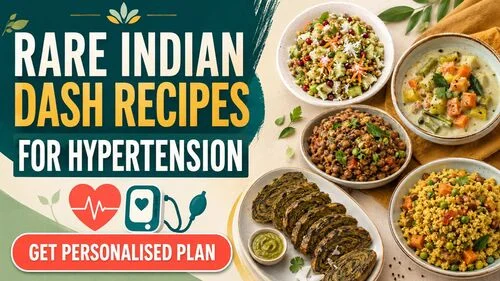
Eight Indian DASH-style recipes for hypertension
These recipes deliberately avoid exact portions, calorie targets and a breakfast-lunch-dinner sequence. Use them as examples of how regional food can be adapted, not as instructions for building a personal therapeutic diet.
Andhra Pradesh and Telangana: Pesarattu
Pesarattu can fit a DASH-style pattern because the batter is based on whole green gram rather than refined flour. The pulse base contributes plant protein, fibre, magnesium and potassium, while herbs and spices can provide flavour without depending on heavy seasoning.
Ingredients: whole green gram, ginger, cumin, green chilli, coriander, onion if preferred, water and a small amount of cooking oil. Added salt can be kept modest.
How to prepare: Soak the green gram until softened, then blend it with ginger, cumin, chilli and enough water to form a spreadable batter. Stir in coriander and onion if used. Spread the batter on a hot pan and cook with only the oil needed for the surface.
Why this recipe is useful: The dish brings a whole pulse into a familiar breakfast or light-meal preparation. The DASH benefit comes from the pulse-rich base and controlled seasoning, not from treating pesarattu as a food that lowers blood pressure on its own.
Karnataka: Vegetable ragi rotti
Ragi rotti is a familiar Karnataka preparation based on finger millet. A vegetable version can add more plant variety while keeping the grain recognisably local.
Ingredients: ragi flour, finely chopped onion, grated carrot or another suitable vegetable, coriander, cumin, green chilli, curry leaves, water and a small amount of cooking oil. Salt is used lightly.
How to prepare: Combine the ragi flour with the vegetables, herbs and spices, then add water gradually to make a soft dough. Pat the dough thinly on a suitable pan and cook until set and lightly crisp, using limited oil.
Why this recipe is useful: Ragi contributes whole-grain fibre and magnesium, while the vegetables increase dietary variety. The recipe also shows that following DASH does not require replacing Indian grains with imported foods.
Odisha: Dalma
Dalma is especially suited to DASH-style adaptation because lentils and vegetables are already central to the dish. It brings plant protein, fibre and several vegetables into one familiar preparation without requiring a rich gravy.
Ingredients: toor dal or another traditional dal used in the household version, pumpkin, raw papaya, brinjal, beans or other seasonal vegetables, turmeric, cumin, ginger and a light tempering. Salt and oil are kept moderate.
How to prepare: Cook the dal with the selected vegetables and turmeric until soft but not completely broken down. Finish with a modest tempering and roasted spice mixture so aroma provides much of the character.
Why this recipe is useful: Dalma combines pulses and vegetables naturally, which makes it easier to move the overall meal pattern towards DASH principles without preparing separate food for the person with hypertension.
Rajasthan and Haryana: Bajra-moong khichdi
Bajra-moong khichdi combines pearl millet with moong dal, giving the recipe a whole-grain and pulse base. It is a useful alternative to assuming that every DASH recipe must be built around brown rice or oats.
Ingredients: bajra, moong dal, cumin, turmeric, ginger, suitable vegetables if used in the household version, water and limited cooking fat. Added salt is kept moderate.
How to prepare: Soak or prepare the bajra as required for the grain form being used, then cook it with moong dal, spices and any chosen vegetables until soft. Use a light tempering rather than a heavy ghee finish.
Why this recipe is useful: The grain-pulse combination contributes fibre, plant protein and minerals. The main DASH adaptation is not removing the traditional dish, but preventing salt and saturated fat from becoming the dominant features.
Gujarat: Vegetable handvo
Handvo can provide pulses, fermented grains and vegetables in a preparation that still feels like normal Gujarati food. Bottle gourd is commonly used, while other vegetables may be included according to the household recipe.
Ingredients: a fermented rice-and-lentil handvo batter, grated bottle gourd or other suitable vegetables, ginger, green chilli, sesame, mustard seeds, curry leaves and limited oil. Salt and high-sodium leavening are used thoughtfully.
How to prepare: Fold the vegetables and seasoning into the fermented batter. Cook by baking or pan-cooking until the centre is set and the surface is lightly browned, using only the oil needed for the chosen method.
Why this recipe is useful: The combination of pulses and vegetables gives handvo more nutritional substance than many refined-flour snacks. Fermentation and spices also create flavour, which can make a heavily salted version unnecessary.
Kashmir: Haak saag
Haak saag is a traditional leafy-green preparation that needs very little reinvention to fit a DASH-style pattern. The greens contribute fibre, potassium, magnesium and other micronutrients.
Ingredients: haak or another appropriate leafy green used for the traditional preparation, green chilli, a modest amount of cooking oil, water and light seasoning.
How to prepare: Wash and cut the greens, then cook them until tender using the traditional simple style rather than turning the dish into a rich gravy. Keep added salt measured rather than seasoning repeatedly during cooking.
Why this recipe is useful: The dish makes vegetables the centre of the recipe with little need for saturated fat. People with kidney disease or abnormal potassium levels, however, may need individual advice before increasing potassium-rich foods.
Assam: Masor tenga
Masor tenga is a light, sour Assamese fish curry. Its tangy character is useful for DASH-style cooking because tomato, lemon or another traditional souring ingredient can provide strong flavour without requiring a very salty or creamy gravy.
Ingredients: fish, tomato or another traditional souring ingredient, turmeric, green chilli, herbs where used, water and a small amount of cooking oil. Salt is added modestly.
How to prepare: Lightly cook the fish rather than deep-frying it, prepare the sour broth with the chosen traditional ingredient and simmer the fish briefly in the broth until the flavours come together.
Why this recipe is useful: Fish contributes high-quality protein, while the sour broth helps keep the dish light. The DASH adaptation preserves the recipe’s defining tang instead of compensating for lower salt with extra fat.
Maharashtra: Vegetable poha with unsalted peanuts
Poha is one of Maharashtra’s most familiar preparations. A vegetable-rich version can work better within a DASH pattern when flattened rice is not the only substantial ingredient.
Ingredients: poha, onion, peas, carrot or other suitable vegetables, curry leaves, mustard seeds, turmeric, coriander, lemon, unsalted peanuts and a small amount of cooking oil. Salt is kept modest.
How to prepare: Rinse and soften the poha, then cook the seasoning and vegetables in limited oil. Fold in the poha and finish with coriander, lemon and unsalted peanuts so acidity, aroma and texture reduce reliance on extra salt.
Why this recipe is useful: Vegetables add fibre and variety, while peanuts contribute unsaturated fat and magnesium. Poha remains a carbohydrate-rich food, so the appropriate quantity may need individual adjustment when diabetes or weight management is also relevant.
What makes these recipes different from simply eating ‘healthy Indian food’?
The DASH difference is intentionality. A recipe is reviewed for where sodium enters, whether vegetables or pulses are doing meaningful nutritional work, whether the cooking fat is dominating, and whether packaged seasonings or salty accompaniments are undoing the changes made in the main dish.
That is why copying a recipe name is not enough. Pesarattu with several salty accompaniments, handvo with heavy seasoning or a vegetable dish finished with excessive saturated fat can move away from the pattern even when the core ingredients look suitable.
When the same DASH recipe may need a different version
Two people with hypertension can need different modifications even if they enjoy exactly the same regional foods. Kidney function can change potassium, sodium, fluid and protein considerations. Diabetes can change the useful carbohydrate quantity and distribution. High cholesterol may make fat quality more important, while poor appetite or unintended weight loss can change the priority again.
This is where recipe advice reaches its limit. General recipes can show what a DASH-style adaptation looks like, but they cannot determine the correct quantity, sodium level, cooking-fat allowance or clinical modification for one person.
Frequently asked questions
Do DASH recipes have to be completely salt-free?
No. DASH does not mean every recipe must contain zero added salt. The aim is to reduce excess sodium across the overall eating pattern and avoid letting salt, packaged seasonings and salty accompaniments dominate. The amount that is appropriate for one person cannot be decided from a recipe alone, particularly when kidney or heart conditions also affect sodium needs.
Is brown rice compulsory in an Indian DASH diet?
No. Brown rice can fit, but DASH is not built around one compulsory grain. Ragi, bajra and other whole or less-refined grains can also contribute variety when they suit the person’s digestion, blood glucose and usual food habits. White rice does not automatically become forbidden; the wider diet and individual quantity still matter.
Can a vegetarian family use these DASH recipe ideas?
Yes. Pulses, dals, beans, whole grains, vegetables, fruits, nuts, seeds and suitable dairy foods can provide the main building blocks of a vegetarian DASH-style diet. The useful question is whether the complete diet is nutritionally adequate, not whether it contains meat. Vegan diets may need closer assessment of nutrients such as vitamin B12 and calcium.
Are millets automatically better for blood pressure?
No. Millets can contribute whole-grain variety, fibre and minerals, but they are not a treatment for hypertension and do not need to replace every other grain. The type and quantity that fit best can change with diabetes, digestive tolerance, appetite, body composition and the rest of the person’s usual diet.
Can these recipes be used if someone also has diabetes?
Often, but not without considering carbohydrate quantity and the wider eating pattern. Ragi, bajra, poha and other carbohydrate foods can affect blood glucose even when the recipe follows DASH principles. When diabetes and hypertension occur together, the useful approach is to adapt one eating pattern to both conditions rather than follow two conflicting food lists.
Can someone with kidney disease use these DASH recipes?
Not automatically. DASH-style eating can be relatively rich in potassium because of vegetables, fruits, pulses and other plant foods. Some people with kidney disease need potassium, sodium, fluid or protein modified according to kidney function and laboratory findings. Kidney-specific advice can therefore change even a recipe that is otherwise suitable for hypertension.
Conclusion
DASH diet recipes for hypertension can stay recognisably Indian. The strongest recipes are not the ones with the longest list of ‘healthy’ ingredients, but the ones that make useful changes without losing the food culture a person can realistically continue.
Once the recipe principles are clear, the next question becomes personal: which of these dishes fit your health findings, how should your usual versions change, and what quantities make sense across the rest of your day?
When personalised nutrition guidance may help
A recipe article can show how to prepare a lower-sodium pesarattu or a vegetable-rich dalma. It cannot identify whether your main issue is the recipe itself, the quantity, salty accompaniments, restaurant meals, blood glucose, kidney function, body composition or another part of the routine.
Readers who need individual guidance may consult Chief Nutritionist Vasanthi Senthilvel at Newtrist Nutritionist Dietitian Dietician. A clinical nutrition assessment may consider health history, blood-pressure pattern, laboratory reports, kidney function, blood glucose, lipid profile, body composition, appetite, the recipes already cooked at home, regional food habits, cooking methods, family routines and personal goals. These findings can be used to develop a Personalised Diet Plan for Clinical Nutrition that adapts familiar foods to the individual’s needs rather than replacing them with a generic DASH menu.
Consult Chief Nutritionist Vasanthi Senthilvel for a Personalised Diet Plan for Clinical Nutrition developed around your hypertension, health findings, food preferences, regional recipes and everyday cooking routine.
Author
Chief Nutritionist Vasanthi Senthilvel leads Newtrist Nutritionist Dietitian Dietician, providing personalised diet plans for weight management and clinical nutrition for children, adolescents, adults and families.
She has 21 years of experience in nutrition and has received professional recognition for her work.
- Pride of Bharat Awards 2026: Outstanding Achievement in Holistic Health & Nutrition Innovation
- Doctor of The Year: Nutritionist 2026: Excellence in Clinical Nutrition and Weight Loss.
Her approach considers age, growth, health history, medical conditions, laboratory reports, medication, body composition, weight history, dietary preferences, regional food habits, family routines, activity, sleep and personal health goals. Recommendations are developed according to individual needs rather than using one standard diet for everyone.
Consultations are available in person at Bangalore HSR Layout, Koramangala, Bellandur, Haralur and Electronic City, as well as online across India.
Independent Medical Review Panel
Newtrist health and nutrition articles undergo medical review, where appropriate, by doctors with relevant specialist expertise. The medical professionals listed below contribute to Newtrist’s review process within their respective specialties.
| Speciality | Doctor |
|---|---|
| Endocrinology | Dr Vinay Prasad MBBS, MD, DM |
| Gastroenterology & Hepatology | Dr Sunil kumar N MBBS, MD, DM |
| Gynaecology | Dr Prathiba G MBBS, DNB, FIRM, FMAS |
| Nephrology | Dr Priyashree R MBBS, MD, DNB, DM |