
Written by: Chief Nutritionist Vasanthi Senthilvel
21 years of experience | Newtrist Nutritionist Dietitian Dietician
Best Nutritionist in Bangalore with multiple awards for excellence in clinical nutrition, weight loss, holistic health and nutrition innovation.
Medically reviewed by: Dr Prathiba G MBBS, DNB, FIRM, FMAS | Dr Sunil kumar N MBBS, MD, DM | Dr Vinay Prasad MBBS, MD, DM
Medical Disclaimer: Nutritional needs vary based on an individual’s profile. The information on this page is for general educational purposes only and is not intended to replace personalised medical or nutrition care.
Maharashtra, Gujarat and Goa share geography, not one cooking system. Grains, pulses, sweet-sour flavours, coconut, seafood, farsan, street food and festive dishes all appear in very different ways.
A West Indian diet plan for weight loss should therefore begin with the person’s real cuisine. The useful changes are found by separating everyday food from restaurant and festive food, understanding how ingredients are prepared, and matching the pattern to appetite, health and routine.
Key takeaway: A West Indian diet plan for weight loss can keep Maharashtrian, Gujarati and Goan foods rather than replacing them with a generic menu. Bhakri, pulses, fermented foods, vegetables, coconut, fish and regional dishes can all have a place. What matters is the complete eating pattern, preparation, frequency, nutritional balance and individual requirements, not the state name attached to the dish.
Table of Contents
How Can a West Indian Diet Plan for Weight Loss Use Regional Foods?
West Indian cuisines show why regional weight management cannot be built from one list of ‘allowed’ foods. Maharashtra includes dryland millet traditions, coastal Konkani food, urban street food and several distinct subregional cuisines. Gujarat includes many vegetarian patterns, fermented and steamed foods, farsan and seasonal dishes. Goa combines Konkan ingredients with strong coastal and Indo-Portuguese influences.
The right question is not which state has the healthiest cuisine. It is which foods are repeated in the household, how they are cooked, what is added through snacks and social eating, and whether the person’s actual pattern is nutritionally adequate and sustainable.
Maharashtra Diet Plan for Weight Loss: Maharashtrian Foods and Dishes
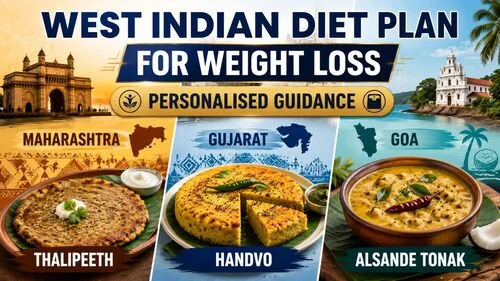
A Maharashtra diet plan for weight loss can keep thalipeeth, bhakri, matki usal, bharli vangi, ambadi or other leafy vegetables, varan, koshimbir, fish and regional home foods. The state is too diverse for one template because Vidarbha, Khandesh, Konkan, Pune and Kolhapur, among other regions, have different staples and flavour profiles.
Thalipeeth is a good example of a familiar mixed-grain preparation. Its grain blend can add variety, but the nutritional role changes when it is finished with generous butter or paired with several energy-dense accompaniments. Matki usal brings pulses into the conversation, while bharli vangi may contain peanuts and coconut that add flavour and energy in ways that depend on preparation.
Urban Maharashtra adds another layer through misal, vada pav, bakery foods, sweetened tea and frequent eating out. The useful plan does not ban street food; it identifies whether these foods are occasional or whether they have quietly become part of the everyday pattern.
| Meal | Diet plan |
| Breakfast | Thalipeeth with plain curd and koshimbir |
| Mid-morning | Seasonal fruit |
| Lunch | Bhakri with matki usal, bharli vangi and leafy vegetable preparation |
| Evening | Buttermilk with a small home-prepared pulse-based snack |
| Dinner | Varan with a small serving of rice, seasonal vegetables and koshimbir |
Gujarati Diet Plan for Weight Loss: Gujarati Foods and Dishes
A Gujarati diet plan for weight loss can retain bajra rotla, handvo, undhiyu, muthia, dals, kadhi, sprouts, vegetables and familiar home foods. Gujarati cuisine is often described as sweet, but the amount of jaggery or sugar varies widely between households and dishes, so one label cannot describe the entire state’s eating pattern.
Steamed foods such as some versions of handvo or muthia are sometimes promoted as automatically light. The full recipe still matters because oil in tempering, nuts, seeds, flour composition and accompaniments can change energy density. Undhiyu similarly contains a wide range of winter vegetables but may also include fried muthia and generous oil depending on the style.
Farsan and sweets are part of Gujarati food culture, not proof that the cuisine is unsuitable for weight management. The practical task is to see how often they appear, whether they are replacing more substantial foods, and how the everyday pulse, vegetable and grain pattern is functioning.
| Meal | Diet plan |
| Breakfast | Handvo with plain curd |
| Mid-morning | Seasonal fruit |
| Lunch | Bajra rotla with dal, undhiyu and salad |
| Evening | Steamed muthia with unsweetened buttermilk |
| Dinner | Phulka with Gujarati kadhi, sprouts and seasonal vegetables |
Goa Diet Plan for Weight Loss: Goan Foods and Dishes
A Goa diet plan for weight loss can include rice, fish, alsande tonak, tambdi bhaji, uddamethi, vegetable curries, legumes, coconut and familiar Goan breads according to the household. Goan cuisine includes Hindu, Catholic and regional coastal traditions, so vindaloo or xacuti should not be treated as the whole state diet.
Alsande tonak, made around cowpeas in many versions, brings legumes into a distinctly Goan preparation. Tambdi bhaji adds local leafy vegetables, while uddamethi uses fish, coconut, urad dal and fenugreek in a different flavour profile. These foods show why a personalised plan can stay recognisably Goan without turning every curry into a ‘diet curry’.
Restaurant seafood can also differ greatly from home cooking. Frying, coconut-rich gravies, bread baskets and celebratory foods may change the overall pattern more than the fact that fish or rice is being eaten. The useful plan makes those differences visible without asking the person to abandon coastal food culture.
| Meal | Diet plan |
| Breakfast | Goan bread with alsande tonak |
| Mid-morning | Seasonal fruit |
| Lunch | Rice with fish curry, tambdi bhaji and seasonal vegetables |
| Evening | Buttermilk with a small home-prepared snack |
| Dinner | Vegetable curry with a small serving of rice and a legume preparation |
Dadra and Nagar Haveli and Daman and Diu Diet Plan for Weight Loss: Tribal and Coastal Foods
A Dadra and Nagar Haveli and Daman and Diu diet plan for weight loss should preserve the difference between tribal inland food traditions and the coastal Gujarati-Portuguese influences of Daman and Diu. Dadra and Nagar Haveli households may use rice, nagli or ragi, jowar, pulses, wild mushrooms, bamboo shoots, river fish, crab and dishes such as Ubadiyu, Ukad and suran bhaji. Daman and Diu add fresh seafood, fish curries, Gujarati foods and Portuguese-influenced dishes such as vindaloo or sanna in some communities.
Ubadiyu is a useful example because vegetables, beans, roots and herbs are cooked together in an earthen pot; the dish can bring considerable vegetable variety without needing to be labelled a special weight-loss food. Ukad, a steamed rice-flour preparation, provides another contrast with fried snacks. On the coast, a home fish curry or grilled seafood can fit very differently from fried seafood platters, rich restaurant gravies or celebratory meat dishes.
The practical plan should therefore begin with the person’s actual district and household pattern. Nagli, rice, pulses, vegetables and fish can remain while the review focuses on cooking fats, sweet foods, fried snacks, restaurant seafood and how frequently richer preparations appear. This keeps both tribal and coastal food identities visible instead of flattening the union territory into a generic Gujarati menu.
| Meal | Diet plan |
| Breakfast | Ukad or nagli bhakri with plain curd and a vegetable accompaniment |
| Mid-morning | Seasonal fruit |
| Lunch | Nagli or jowar roti with dal, suran bhaji or another seasonal vegetable and curd |
| Evening | Unsweetened chaas with roasted chana |
| Dinner | Rice with home-style fish curry and vegetables, or a pulse-based preparation for a vegetarian meal |
Three Neighbouring States, Three Different Weight-Management Questions
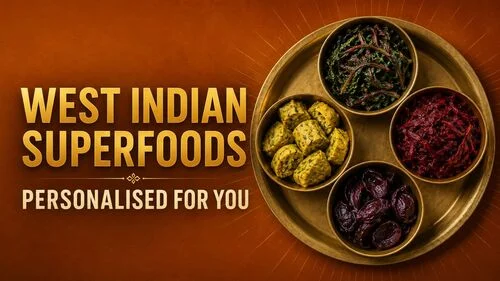
Maharashtra often raises questions about millet breads, pulse dishes, urban snacks and subregional variation. Gujarat may require a closer look at farsan, sweet-sour balance, pulses and the difference between steamed and oil-rich versions. Goa often brings fish, coconut, bread and restaurant seafood into the discussion.
That is why the West Indian label is useful for navigation but not sufficient for personal planning. A state-specific food culture is still only the first layer; the individual’s household, work routine, appetite and health needs determine the real changes.
Street Food, Farsan and Coastal Restaurant Meals Can Change the Week
West Indian home food can be very different from the foods that dominate eating outside the home. In Maharashtra, misal, vada pav, bakery foods and sweetened beverages may sit around otherwise simple bhakri, dal or vegetable dishes. In Gujarat, farsan and sweets may shift from occasional accompaniments to routine snacks. In Goa, fried seafood, bread, coconut-rich restaurant curries and social eating can create another layer over home cooking.
None of these foods needs to be treated as forbidden. The useful question is frequency: is a rich preparation genuinely occasional, or has convenience, commuting, travel or social eating made it part of most days? That distinction often reveals more than blaming bhakri, handvo, rice or fish.
This also protects regional cuisine from being judged by its most famous restaurant dishes. A personalised plan should reflect the week a person actually lives, including home food and the foods that enter through work, travel and celebrations.
When Personalised West Indian Nutrition Can Make the Plan More Realistic
Personalisation can help when the difficult part is not choosing between Maharashtra, Gujarat and Goa, but understanding how home food, snacks, restaurant meals and social eating combine. Body composition, health history, medication, appetite, activity, work schedule, food tolerance and previous dieting may alter which changes are appropriate.
Chief Nutritionist Vasanthi Senthilvel at Newtrist Nutritionist Dietitian Dietician provides personalised diet plans for weight management. Consultation can map the person’s real Maharashtrian, Gujarati or Goan week, preserve familiar staples and identify the few changes most relevant to nutritional adequacy, appetite and weight-management goals rather than converting all three cuisines into one menu.
Consult Chief Nutritionist Vasanthi Senthilvel for personalised weight-management guidance shaped around your Maharashtrian, Gujarati or Goan food pattern and daily life.
Author
Chief Nutritionist Vasanthi Senthilvel leads Newtrist Nutritionist Dietitian Dietician, providing personalised diet plans for weight management and clinical nutrition for children, adolescents, adults and families.
She has 21 years of experience in nutrition and has received professional recognition for her work.
- Pride of Bharat Awards 2026: Outstanding Achievement in Holistic Health & Nutrition Innovation
- Doctor of The Year: Nutritionist 2026: Excellence in Clinical Nutrition and Weight Loss.
Her approach considers age, growth, health history, medical conditions, laboratory reports, medication, body composition, weight history, dietary preferences, regional food habits, family routines, activity, sleep and personal health goals. Recommendations are developed according to individual needs rather than using one standard diet for everyone.
Consultations are available in person at Bangalore HSR Layout, Koramangala, Bellandur, Haralur and Electronic City, as well as online across India.
Independent Medical Review Panel
Newtrist health and nutrition articles undergo medical review, where appropriate, by doctors with relevant specialist expertise. The medical professionals listed below contribute to Newtrist’s review process within their respective specialties.
| Speciality | Doctor |
|---|---|
| Endocrinology | Dr Vinay Prasad MBBS, MD, DM |
| Gastroenterology & Hepatology | Dr Sunil kumar N MBBS, MD, DM |
| Gynaecology | Dr Prathiba G MBBS, DNB, FIRM, FMAS |
| Nephrology | Dr Priyashree R MBBS, MD, DNB, DM |