
Written by: Chief Nutritionist Vasanthi Senthilvel
21 years of experience | Newtrist Nutritionist Dietitian Dietician
Best Nutritionist in Bangalore with multiple awards for excellence in clinical nutrition, weight loss, holistic health and nutrition innovation.
Medically reviewed by: Dr Prathiba G MBBS, DNB, FIRM, FMAS | Dr Sunil kumar N MBBS, MD, DM | Dr Vinay Prasad MBBS, MD, DM
Medical Disclaimer: Nutritional needs vary based on an individual’s profile. The information on this page is for general educational purposes only and is not intended to replace personalised medical or nutrition care.
A Punjabi kitchen, a Haryanvi household, a Himachali home and a family in Rajasthan can share some staples yet differ completely in grains, dairy, pulses, festive foods and cooking styles.
A North Indian diet plan for weight loss becomes more useful when it asks better questions: which familiar foods are already working well, where richness is actually entering the diet, and which changes fit the person’s health, appetite, routine and preferences?
Key takeaway: A North Indian diet plan for weight loss does not need to replace familiar food with a standard ‘diet menu’. The stronger starting point is to keep the cuisine, then review the parts that change the nutritional balance most, such as cooking fats, restaurant-style richness, protein and vegetable adequacy, snacks, beverages and social eating. The right adjustments vary between households and individuals.
Table of Contents
How Can a North Indian Diet Plan for Weight Loss Use Familiar Foods?
Familiar North Indian foods can form the base of a weight-management diet because grains, dals, pulses, vegetables, dairy and, where preferred, eggs, fish or meat already provide the raw materials for a nutritionally balanced pattern. The task is not to identify one ‘fattening’ staple. It is to understand how the household actually cooks, eats outside the home and moves between everyday food and richer social food.
Three contrasts are often more useful than a list of foods to avoid: home food versus restaurant versions, everyday dishes versus festive dishes, and the staple itself versus the extras around it. A simple dal, sabzi or curd-based preparation can sit in a very different overall pattern from the same cuisine when butter, cream, fried sides, sweets and sweetened drinks become frequent additions.
North India is also too varied for one regional template. Punjab’s dairy-rich food culture, Haryana’s rotis and milk products, Himachal’s valley cuisines, Uttarakhand’s pulses and mountain grains, Uttar Pradesh’s mix of home food and Awadhi or street-food traditions, and Rajasthan’s grain, pulse and desert-food repertoire each raise different questions.
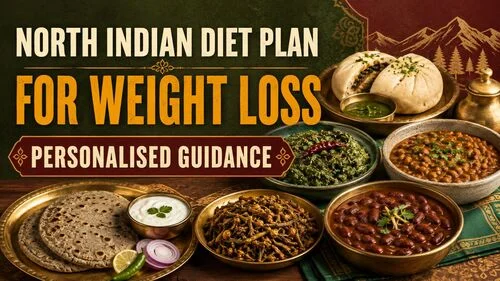
Punjab Diet Plan for Weight Loss: Punjabi Foods and Dishes
A Punjab diet plan for weight loss can retain Punjabi foods such as sarson da saag, makki di roti, rajma, chole, kadhi, curd, paneer and tandoori preparations. The useful first step is to separate everyday Punjabi home food from the restaurant stereotype of Punjabi cuisine. Butter-heavy gravies, cream-rich dal, fried breads and oversized sweet lassi are visible parts of the cuisine, but they are not the whole cuisine.
Punjab’s pulses, dairy foods, seasonal greens and wheat- or maize-based breads can give a plan familiar structure without resorting to special diet products. What deserves closer attention is often the layer added to the food: generous butter or ghee, frequent fried breads, creamy restaurant gravies, or a social meal that combines several rich items at once.
Foods such as Amritsari kulcha, chole bhature or sweets can still belong to a person’s cultural and social life. Their place in a weight-management approach depends on how often they appear and what the rest of the eating pattern looks like, not on turning them into forbidden foods.
| Meal | Diet plan |
| Breakfast | Makki di roti with sarson da saag and plain curd |
| Mid-morning | Seasonal fruit |
| Lunch | Phulka with rajma, seasonal sabzi and curd |
| Evening | Chaach with a small roasted chana snack |
| Dinner | Tandoori paneer with mixed vegetables and phulka |
Haryana Diet Plan for Weight Loss: Haryanvi Foods and Dishes
A Haryana diet plan for weight loss can work with familiar foods such as bajra roti, mixed dal, hara chana or cholia, kachri ki sabzi, bathua raita, curd, chaach and lassi. Haryanvi cuisine has a strong grain-and-dairy identity, so the practical question is not whether these foods belong in the diet, but which forms are routine and which additions make the pattern much richer than it first appears.
Dairy illustrates the point well. Curd or chaach can contribute protein, calcium and familiarity, while sweetened lassi, large amounts of butter or liberal ghee can change the nutritional profile considerably. The name ‘dairy’ therefore tells us much less than the way the food is prepared and consumed.
Bajra has similar context. It is a traditional grain, not a shortcut to weight loss. A switch from wheat to bajra means little if the rest of the eating pattern remains unchanged. The useful plan looks at the person’s work routine, appetite, dairy use, snacks and family food together.
| Meal | Diet plan |
| Breakfast | Bajra roti with bathua raita |
| Mid-morning | Seasonal fruit |
| Lunch | Phulka with mixed dal, kachri ki sabzi and curd |
| Evening | Unsweetened chaach with roasted chana |
| Dinner | Bajra roti with hara chana or cholia and seasonal vegetables |
Himachal Pradesh Diet Plan for Weight Loss: Himachali Foods and Dishes
A Himachal Pradesh diet plan for weight loss should respect the fact that Himachali cuisine changes from valley to valley. Rajma, lentils, madra, siddu, local cereals, curd-based dishes, trout and meat preparations may all appear, but not in the same way across the state. That diversity makes a generic ‘mountain diet’ especially unhelpful.
Celebration food also needs to be separated from daily food. Dham is a traditional feast with several courses and regional variations, while siddu, madra and richer meat dishes may carry a different role in the household than ordinary dal, grain or vegetable preparations. Treating a ceremonial meal as if it describes the everyday diet can lead to the wrong changes.
Current lifestyle matters as much as mountain heritage. A person doing desk-based work may have very different requirements from someone with a highly active routine even when both prefer the same Himachali foods. Personalisation is therefore about fitting those foods to today’s life, not rejecting them because they are traditional.
| Meal | Diet plan |
| Breakfast | Siddu with plain curd |
| Mid-morning | Seasonal fruit |
| Lunch | Rice with rajma, local vegetable preparation and curd |
| Evening | Buttermilk with a small roasted pulse snack |
| Dinner | Local cereal roti with lentil preparation and cooked vegetables |
Uttarakhand Diet Plan for Weight Loss: Uttarakhand Foods and Dishes
An Uttarakhand diet plan for weight loss can draw on distinctive pulses, greens and grains without turning them into ‘superfoods’. Gahat or kulath, bhatt, chainsoo, phanu, kafuli, mandua and jhangora illustrate the variety found in Uttarakhand food. These ingredients can contribute protein, fibre, micronutrients and culinary familiarity, but none causes weight loss simply because it is traditional or millet-based.
Pulse-based dishes such as phanu or chainsoo can be especially useful in vegetarian food patterns, while leafy preparations such as kafuli add another layer of variety. The practical review is usually about tolerance, preparation and the rest of the diet. Someone with digestive discomfort may not respond to a pulse-heavy pattern in the same way as another person.
Mandua and jhangora are good examples of why food trends can distort regional nutrition. A local grain does not become more effective for weight management simply because it is marketed as an alternative to wheat or rice. Its role depends on the person’s total diet, preferences and health needs.
| Meal | Diet plan |
| Breakfast | Mandua roti with curd |
| Mid-morning | Seasonal fruit |
| Lunch | Jhangora with phanu, kafuli and seasonal vegetables |
| Evening | Buttermilk with roasted bhatt or another pulse snack |
| Dinner | Mandua roti with chainsoo and cooked greens |
Uttar Pradesh Diet Plan for Weight Loss: UP Foods and Dishes
An Uttar Pradesh diet plan for weight loss has to account for unusually wide food variation. Everyday dal, roti, rice, vegetables, curd and pulses sit alongside rural dishes such as tehri or baati-chokha, Awadhi foods such as kebabs, biryani and korma, and city eating built around chaat, kachori, sweets and other social foods. One UP ‘diet’ cannot represent all of those patterns.
For many people, the main difference is not between ‘healthy’ and ‘unhealthy’ UP food but between ordinary household eating and what is added through workdays, travel, restaurants and social occasions. A day with simple home food can change quickly when fried snacks, sweet drinks, desserts and rich evening food become routine around it.
Awadhi dishes, street foods and sweets do not require blanket bans. They need context. A useful UP-specific plan has to reflect what the person actually eats across home, work and social life rather than pretending only the home-cooked part of the diet exists.
| Meal | Diet plan |
| Breakfast | Vegetable tehri with plain curd |
| Mid-morning | Seasonal fruit |
| Lunch | Roti with dal, seasonal sabzi and curd |
| Evening | Roasted chana with unsweetened tea |
| Dinner | Baati-chokha style meal with dal and vegetables |
Rajasthan Diet Plan for Weight Loss: Rajasthani Foods and Dishes
A Rajasthan diet plan for weight loss can keep foods such as bajra roti, panchmel dal, gatte, ker sangri, kadhi and other regional preparations. Rajasthan’s cuisine also includes famous richer foods such as dal baati churma, kachori, ghevar and, for people who eat meat, laal maas. The challenge is to distinguish everyday grain-and-pulse eating from the celebratory foods that often dominate the public image of the cuisine.
Dal baati churma shows why judging a dish by one ingredient can be misleading. Dal brings pulses, while baati and churma may add substantial wheat, ghee and sugar depending on preparation. The complete dish has to be understood as a whole rather than being labelled suitable because it contains dal or unsuitable because it contains ghee.
Bajra and besan deserve the same balanced view. They are useful traditional ingredients, but they do not carry a special weight-loss effect. A practical Rajasthani approach should preserve foods that matter to the household while deciding how everyday dishes, festive foods and restaurant versions fit the person’s actual appetite and routine.
| Meal | Diet plan |
| Breakfast | Bajra roti with curd and a seasonal vegetable |
| Mid-morning | Seasonal fruit |
| Lunch | Bajra roti with panchmel dal, ker sangri and curd |
| Evening | Chaach with roasted chana |
| Dinner | Gatte ki sabzi with phulka and a simple vegetable preparation |
Chandigarh Diet Plan for Weight Loss: Punjabi, Haryanvi and Urban Food Patterns
A Chandigarh diet plan for weight loss can start with the Punjabi and Haryanvi foods common in many homes while recognising that Chandigarh is also a highly urban eating environment. Roti, dal, rajma, chole, seasonal vegetables, curd, paneer, chaach, sarson da saag and makki di roti can all appear in familiar household meals. At the same time, Amritsari kulcha, chole, tandoori foods, chaat, café meals and sweetened beverages may form a regular part of eating outside the home.
This makes the home-versus-restaurant distinction especially useful. Sarson da saag and makki di roti can be part of a simple seasonal meal, but generous butter or ghee changes the complete plate. Paneer can appear in a home vegetable dish or in a cream-rich restaurant gravy. Lassi can be plain or lightly prepared, or it can become a large sweetened drink. The dish name therefore says much less than how the food is cooked and served.
A practical Chandigarh plan keeps familiar grains, pulses, dairy foods and vegetables while making snacks, café food, social eating and restaurant frequency visible. The useful adjustments are usually made around cooking fats, protein and vegetable balance, sweetened drinks and the frequency of richer foods rather than by removing roti, rice or dairy from the cuisine.
| Meal | Diet plan |
| Breakfast | Besan chilla or a home-style stuffed roti with plain curd |
| Mid-morning | Seasonal fruit |
| Lunch | Roti with dal, seasonal sabzi and curd |
| Evening | Unsweetened chaach with roasted chana |
| Dinner | Tandoori paneer or chicken with cooked vegetables and roti |
Delhi Diet Plan for Weight Loss: Home Food, Street Food and Urban Eating
A Delhi diet plan for weight loss has to reflect a city shaped by migration and many North Indian food traditions rather than one local menu. Dal, roti, rice, rajma-chawal, chole, seasonal vegetables, curd, paneer, eggs and meat dishes may all appear in ordinary household eating. Delhi’s food identity also includes parathas, chole kulche, dahi bhalla, aloo tikki, chaat, kebabs and a large restaurant and takeaway culture.
The distinction between the everyday meal and the foods surrounding it is often more useful than removing a staple. Rajma-chawal at home can fit into a very different day from one that also includes fried street snacks, sweet drinks, bakery foods and a rich restaurant dinner. A stuffed paratha made at home also differs from versions fried generously in ghee and served with multiple rich accompaniments. Chaat and kebabs can remain part of social food without becoming everyday defaults.
A realistic Delhi plan therefore needs to include office eating, commuting, evening snacking, food delivery and social meals instead of evaluating only breakfast, lunch and dinner cooked at home. Familiar staples can remain while the repeated extras, cooking fats, beverages, vegetable adequacy and protein distribution are reviewed across the whole week.
| Meal | Diet plan |
| Breakfast | Home-style vegetable or paneer paratha with plain curd |
| Mid-morning | Seasonal fruit |
| Lunch | Rajma with rice, seasonal vegetables and salad |
| Evening | Roasted chana with unsweetened tea or chaach |
| Dinner | Roti with paneer, egg or chicken preparation and cooked vegetables |
Jammu and Kashmir Diet Plan for Weight Loss: Dogra and Kashmiri Foods and Dishes
A Jammu and Kashmir diet plan for weight loss should recognise the difference between Dogra food traditions in Jammu, Kashmiri household cooking and richer ceremonial dishes. Jammu foods can include rajma-chawal, khameera, kalari, madra, oria and khatta meat, while Kashmiri homes may use rice, haak, nadru, curd-based preparations, fish or meat. These foods belong to different subregional patterns, so one famous dish should not represent the whole union territory.
Rajma-chawal is a useful everyday example because it combines a familiar pulse and grain, but its role still depends on the rest of the meal and the quantity of added fat. Kalari, a traditional Jammu cheese, shows a different issue because it is commonly pan-cooked in its own fat and may be paired with bread. In Kashmir, haak and nadru can add vegetable variety, while rich meat dishes and multi-course wazwan meals usually belong to a different social or ceremonial context from ordinary household food.
A useful plan therefore keeps the household’s Jammu or Kashmiri identity while distinguishing daily food from bakery items, fried snacks, rich gravies and feast foods. The more relevant questions are protein and vegetable adequacy, cooking fats, appetite, activity and how often richer foods appear rather than whether rice, rajma or traditional breads need to be removed.
| Meal | Diet plan |
| Breakfast | Khameera or whole-wheat roti with plain curd and a seasonal vegetable preparation |
| Mid-morning | Apple or another seasonal fruit |
| Lunch | Rice with rajma, haak or another leafy vegetable and curd |
| Evening | Unsweetened kahwa with a small nut or roasted-pulse snack |
| Dinner | Roti or rice with nadru or seasonal vegetables and fish, chicken or dal |
Ladakh Diet Plan for Weight Loss: Ladakhi Foods and Dishes
A Ladakh diet plan for weight loss can retain the foods that make local eating recognisably Ladakhi, including khambir, skyu, thukpa, paba, barley preparations, chhurpi, local vegetables and meat where preferred. Traditional high-altitude food evolved around climate, availability and physically demanding lifestyles, but present-day needs can differ substantially between an active outdoor worker and someone with a desk-based routine.
Skyu illustrates why a traditional mixed dish should be assessed as a complete meal rather than labelled light or heavy. Its wheat or barley dough pieces may be cooked with vegetables and sometimes meat, so protein, vegetable content and added fat can vary. Paba, a barley-based preparation, preserves an important local grain tradition but is not a weight-loss food by itself. Khambir and chhurpi can also fit, while restaurant momos, richer noodle dishes or frequent butter-rich accompaniments may create a different overall pattern.
A practical Ladakhi plan can keep local grains, soups, vegetables and protein foods while reviewing current activity, appetite, added fats, sweet or salty beverages and how often restaurant or convenience foods appear. The purpose is to fit Ladakhi food to today’s routine rather than replace it with a lowland diet chart.
| Meal | Diet plan |
| Breakfast | Khambir with chhurpi or curd and a vegetable accompaniment |
| Mid-morning | Fresh or dried apricot according to season and availability |
| Lunch | Vegetable-and-pulse skyu |
| Evening | Lightly prepared unsweetened tea with roasted barley or a small pulse-based snack |
| Dinner | Vegetable thukpa with egg, lean meat or a pulse-based protein |
Do Roti, Rice or Paratha Have to Be Removed for Weight Loss?
No. Roti, rice and paratha do not need automatic elimination for weight loss. They are staples or familiar preparations, and their role depends on the complete eating pattern, the way they are prepared, what accompanies them and the individual’s nutritional requirements. Removing a staple can make a plan harder to live with without addressing the reason the diet was difficult to manage in the first place.
A better question is what surrounds the staple. Roti within a simple home-food pattern is different from a restaurant meal that combines several breads with creamy gravies, fried starters, sweets and sweetened drinks. A home paratha can also differ substantially from a restaurant version finished with generous fat and paired with multiple rich accompaniments.
This is why carbohydrate avoidance is a poor substitute for assessment. Appetite, protein and fibre intake, cooking fats, eating outside the home, activity, sleep and health conditions may all influence what works for a particular person.
Why the Same North Indian Dish Can Change Outside the Home
The dish name often stays the same while the nutritional profile changes. Dal may be a relatively simple home preparation or a restaurant dal finished with butter and cream. Paneer may appear in a vegetable-rich home dish or in a rich gravy. Lassi may be salted and lightly prepared or heavily sweetened. Paratha, kebab and curry can vary just as widely.
This matters because people often judge their diet by the main meals they cook at home and mentally separate the rest. Takeaway food, office snacks, tea-time biscuits, sweets, chaat, fried starters and sweetened drinks still belong to the same overall pattern. When those extras become frequent, changing the staple alone rarely addresses the real issue.
The aim is not to turn social eating into a problem. It is to make it visible enough that a plan can accommodate real life rather than being written for an ideal week that never happens.
When a Personalised North Indian Diet Plan May Help
A general article can explain how North Indian foods may fit weight management, but it cannot decide the exact foods, quantities or modifications that suit one person. The answer may change with appetite, health history, medication, body composition, activity, work routine, eating outside the home, food tolerance, family habits and previous dieting experiences. A medical condition or abnormal laboratory finding can make individual assessment even more important because regional cuisine alone cannot determine a safe clinical modification.
Chief Nutritionist Vasanthi Senthilvel at Newtrist Nutritionist Dietitian Dietician provides personalised diet plans for weight management. The consultation can begin with the foods a person already eats, including Punjabi, Haryanvi, Himachali, Uttarakhand, Uttar Pradesh or Rajasthani dishes, and identify which parts of that real eating pattern need adjustment rather than replacing the cuisine with a generic chart.
Consult Chief Nutritionist Vasanthi Senthilvel for a personalised weight-management diet plan developed around your North Indian food preferences, health needs, routine and individual requirements.
Author
Chief Nutritionist Vasanthi Senthilvel leads Newtrist Nutritionist Dietitian Dietician, providing personalised diet plans for weight management and clinical nutrition for children, adolescents, adults and families.
She has 21 years of experience in nutrition and has received professional recognition for her work.
- Pride of Bharat Awards 2026: Outstanding Achievement in Holistic Health & Nutrition Innovation
- Doctor of The Year: Nutritionist 2026: Excellence in Clinical Nutrition and Weight Loss.
Her approach considers age, growth, health history, medical conditions, laboratory reports, medication, body composition, weight history, dietary preferences, regional food habits, family routines, activity, sleep and personal health goals. Recommendations are developed according to individual needs rather than using one standard diet for everyone.
Consultations are available in person at Bangalore HSR Layout, Koramangala, Bellandur, Haralur and Electronic City, as well as online across India.
Independent Medical Review Panel
Newtrist health and nutrition articles undergo medical review, where appropriate, by doctors with relevant specialist expertise. The medical professionals listed below contribute to Newtrist’s review process within their respective specialties.
| Speciality | Doctor |
|---|---|
| Endocrinology | Dr Vinay Prasad MBBS, MD, DM |
| Gastroenterology & Hepatology | Dr Sunil kumar N MBBS, MD, DM |
| Gynaecology | Dr Prathiba G MBBS, DNB, FIRM, FMAS |
| Nephrology | Dr Priyashree R MBBS, MD, DNB, DM |