
Written by: Chief Nutritionist Vasanthi Senthilvel
21 years of experience | Newtrist Nutritionist Dietitian Dietician
Best Nutritionist in Bangalore with multiple awards for excellence in clinical nutrition, weight loss, holistic health and nutrition innovation.
Medically reviewed by: Dr Prathiba G MBBS, DNB, FIRM, FMAS | Dr Sunil kumar N MBBS, MD, DM | Dr Vinay Prasad MBBS, MD, DM
Medical Disclaimer: Nutritional needs vary based on an individual’s profile. The information on this page is for general educational purposes only and is not intended to replace personalised medical or nutrition care.
A Rayalaseema kitchen, a Telangana home, a coastal Karnataka family, a Kerala household and a Kongunadu kitchen can use very different staples, pulses, vegetables, coconut, fermented foods and cooking methods.
A South Indian diet plan for weight loss becomes practical only when it starts with that real pattern. The useful questions are which foods are everyday staples, which dishes arrive mainly through restaurants or celebrations, how cooking changes the food, and what the individual needs for appetite, health and routine.
Key takeaway: A South Indian diet plan for weight loss can keep rice, millets, fermented foods, pulses, coconut-based dishes and familiar regional preparations. Weight management depends more on the overall eating pattern, preparation, frequency, nutritional balance and individual requirements than on whether a food is labelled South Indian. Exact quantities and clinical modifications need personal assessment rather than a standard regional chart.
Table of Contents
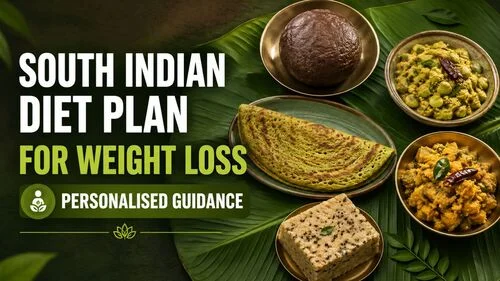
How Can a South Indian Diet Plan for Weight Loss Use Familiar Foods?
South Indian cuisines already contain useful building blocks for a balanced eating pattern: rice and millets, dals and pulses, vegetables, curd, fermented batters, nuts and seeds, and, where preferred, eggs, fish or meat. The challenge is not to replace these foods. It is to see how they are being used in the particular household and whether the pattern supports satiety, nutritional adequacy and a sustainable routine.
This is why the same food can lead to very different conversations. A fermented preparation cooked with modest added fat is not nutritionally identical to a restaurant version paired with several fried sides. Coconut can be part of a traditional vegetable or fish preparation without becoming either a food to fear or a free food. Rice can be a normal staple without explaining the whole weight history.
Most importantly, South India is not one food culture. State-level differences matter enough that a useful regional plan needs to recognise them rather than offer one generic ‘South Indian menu’.
Andhra Pradesh Diet Plan for Weight Loss: Andhra Foods and Dishes
An Andhra Pradesh diet plan for weight loss can retain foods such as pesarattu, gongura-based preparations, ulava charu, ragi sangati, gutti vankaya, dals, rice, vegetables, fish or meat according to the household. Andhra cuisine also varies between coastal Andhra and Rayalaseema, so a spicy restaurant plate should not be treated as the definition of everyday Andhra food.
Horse gram in ulava charu, green gram in pesarattu and sorrel leaves in gongura dishes show how traditional foods can bring pulses and greens into the diet. Their value still depends on the complete preparation. Oil-rich pickles, generous tempering, fried accompaniments and restaurant gravies can change energy density even when the main ingredient itself is familiar and nutritious.
Ragi sangati also illustrates why a grain should not be given a weight-loss halo. It can fit comfortably in an Andhra food pattern, but changing from rice to ragi does not automatically correct appetite, food quantity, eating out or an unbalanced overall pattern.
| Meal | Diet plan |
| Breakfast | Pesarattu with a fresh gongura-based accompaniment |
| Mid-morning | Seasonal fruit with plain curd |
| Lunch | Rice with dal, gutti vankaya, cooked vegetables and curd |
| Evening | Buttermilk with a small home-prepared pulse-based snack |
| Dinner | Ragi sangati with ulava charu and cooked vegetables |
Telangana Diet Plan for Weight Loss: Telangana Foods and Dishes
A Telangana diet plan for weight loss should recognise both Telugu home food and the strong Hyderabadi food culture that may shape eating outside the home. Jonna rotte, sarva pindi, pachi pulusu, dals, leafy vegetables and seasonal produce can sit alongside biryani, haleem, kebabs and bakery foods in the same person’s real week.
Traditional sorghum-based foods such as jonna rotte are useful because they keep the plan culturally familiar, not because sorghum guarantees fat loss. Sarva pindi is another good example: rice flour, peanuts and spices can make a distinctive regional preparation, while the amount of oil and the rest of the eating pattern determine how it fits an individual’s needs.
For many urban Telangana readers, the most useful assessment is therefore not ‘home food or Hyderabadi food’. It is how frequently richer restaurant dishes, sweet drinks, bakery snacks or late social meals appear around otherwise simple household food.
| Meal | Diet plan |
| Breakfast | Sarva pindi with plain curd |
| Mid-morning | Seasonal fruit |
| Lunch | Jonna rotte with dal, leafy vegetable preparation and pachi pulusu |
| Evening | Buttermilk with a simple home-prepared snack |
| Dinner | Home-style rice with dal and seasonal vegetables |
Karnataka Diet Plan for Weight Loss: Karnataka Foods and Dishes
A Karnataka diet plan for weight loss has to account for one of the most varied food landscapes in South India. Jolada rotti and pulse-based dishes are familiar in North Karnataka, ragi mudde is strongly associated with parts of the south, coastal regions use rice, neer dose, fish and coconut, while Udupi, Mysuru and Kodagu traditions add still more variation.
Foods such as avarekalu, kosambari, ragi, jowar and a wide range of vegetable preparations can support variety and nutritional adequacy. Bisi bele bath shows why a mixed dish should be assessed as a complete preparation: rice, lentils and vegetables may all be present, but added fat, serving context and what else is eaten still affect the overall pattern.
Karnataka also shows why a person should not choose a ‘state superfood’ and build the plan around it. A practical plan may keep the household’s preferred grain or fermented food while reviewing protein adequacy, restaurant breakfasts, fried snacks, sweets and eating patterns that are more relevant to that individual.
| Meal | Diet plan |
| Breakfast | Neer dose with a pulse- or vegetable-based accompaniment |
| Mid-morning | Kosambari |
| Lunch | Jolada rotti with avarekalu or another pulse preparation and cooked vegetables |
| Evening | Plain curd or buttermilk |
| Dinner | Ragi mudde with a pulse-and-vegetable curry |
Kerala Diet Plan for Weight Loss: Kerala Foods and Dishes
A Kerala diet plan for weight loss does not require removing rice, coconut, puttu, appam or familiar curries. Kerala food patterns can include matta rice, avial, erissery, vegetables, pulses, fish, tapioca, fermented rice preparations and coconut in many forms. The useful question is how these foods are prepared and how they fit the person’s total intake and appetite.
Coconut deserves a particularly balanced explanation. Grated coconut, coconut milk and coconut oil are culturally important, but the name ‘coconut’ does not tell us the quantity used or how rich the final dish becomes. Likewise, a fish curry and a fried fish preparation can have very different profiles even when the same fish is used.
Kerala also has a strong distinction between everyday home food, festive sadya foods, bakery snacks and restaurant dishes. A personalised approach can preserve the foods that make the cuisine familiar while identifying which parts of the actual routine, rather than the state cuisine itself, need attention.
| Meal | Diet plan |
| Breakfast | Puttu with a home-style pulse curry |
| Mid-morning | Seasonal fruit |
| Lunch | Matta rice with avial, erissery and a home-style fish or pulse preparation |
| Evening | Buttermilk with a simple home-prepared snack |
| Dinner | Appam with a vegetable or fish curry |
Tamil Nadu Diet Plan for Weight Loss: Tamil Foods and Dishes
A Tamil Nadu diet plan for weight loss should move beyond the idea that Tamil food means only idli, dosa, sambar and curd rice. Tamil Nadu includes Chettinad, Kongunadu, Nanjil Nadu, temple-food traditions and many household variations. Kambu preparations, kollu, kootu, sundal, vazhaipoo dishes, arisi paruppu sadam, fish and country-chicken dishes may appear in different regions and communities.
Kongunadu foods are a useful example of regional variety. Kambu dosa, lentil-rice preparations, local vegetables and horse gram can bring grains, pulses and produce into the diet without requiring imported ‘diet foods’. Chettinad cooking raises a different question because spice intensity does not tell us whether a dish is high or low in energy; the amount of oil, coconut, meat, frying and accompaniments still matter.
The strongest Tamil-specific plan therefore starts with the person’s actual cuisine and routine. It does not replace a familiar grain because another one is fashionable, and it does not assume every fermented breakfast or home-cooked dish automatically suits every weight-management goal.
| Meal | Diet plan |
| Breakfast | Idli with sambar |
| Mid-morning | Seasonal fruit |
| Lunch | Arisi paruppu sadam with kootu and a vazhaipoo vegetable preparation |
| Evening | Sundal |
| Dinner | Kambu dosa with a kollu-based accompaniment and cooked vegetables |
Andaman and Nicobar Islands Diet Plan for Weight Loss: Island Foods and Dishes
An Andaman and Nicobar Islands diet plan for weight loss should begin with the islands’ real household food rather than assume there is one uniform Andaman cuisine. The settled population has brought strong South Indian, Bengali and North Indian influences, while rice, fresh fish and other seafood, coconut and tropical produce are common across many homes. Idli, dosa and sambar may appear at breakfast, while rice with fish curry, Bengali-style macher jhol, grilled fish or a coconut-based seafood preparation may appear later in the day.
Fish curry is a useful example of why the preparation matters more than the ingredient name. A home-style fish curry with rice and vegetables can fit very differently from fried seafood, butter-rich grilled dishes or restaurant platters with several energy-dense sides. Coconut deserves the same context: it is a familiar island ingredient, but coconut milk, grated coconut and coconut-rich restaurant gravies can contribute very different amounts depending on the recipe.
Tropical fruits such as banana, papaya, pineapple and guava can add local variety, while pulses, curd, eggs and vegetables help keep meals nutritionally balanced. The useful plan is not to label seafood or rice as weight-loss foods, but to keep the familiar island pattern and review cooking fats, fried foods, sweetened drinks, snacks, restaurant frequency, protein and vegetable adequacy around it.
| Meal | Diet plan |
| Breakfast | Idli with vegetable sambar and a modest coconut chutney |
| Mid-morning | Papaya, pineapple or another seasonal fruit |
| Lunch | Rice with home-style fish curry or macher jhol, cooked vegetables and curd |
| Evening | Roasted chana or another simple home-prepared snack |
| Dinner | Grilled or lightly cooked fish with vegetables and a small serving of rice or roti |
Lakshadweep Diet Plan for Weight Loss: Island Foods and Dishes
A Lakshadweep diet plan for weight loss can stay recognisably island-based because tuna, rice and coconut are central to local food culture. Traditional dishes include tuna preparations such as Maas Riha, Mus Kavaab and Maas Podichathu, alongside rice-based foods such as Kilanji and Batla Appam. The islands also have strong Malabar connections, so pathiri and coconut-based curries can feel more natural than an imported mainland diet menu.
Tuna illustrates why a regional ingredient is not automatically a weight-loss food. Fresh tuna can provide a useful protein source, but the final meal changes with coconut milk, added oil, frying, accompanying rice and the quantity served. Maas Podichathu, made with dried tuna and coconut, raises another issue because dried or preserved foods can differ from fresh fish in salt and concentration. Coconut should similarly be judged by how much is used in the complete preparation rather than removed or treated as unlimited.
A practical Lakshadweep plan can therefore keep familiar rice, fish and coconut preparations while making space for vegetables, pulses, eggs and fruit where they are normally eaten. The more useful review looks at everyday home food versus festive dishes, fried seafood, sweets, packaged snacks and sweet drinks that may have entered the modern pattern.
| Meal | Diet plan |
| Breakfast | Kilanji or another rice-based breakfast with a suitable egg or pulse accompaniment |
| Mid-morning | Seasonal fruit |
| Lunch | Rice with Maas Riha or another home-style tuna curry and cooked vegetables |
| Evening | A simple home-prepared snack with unsweetened tea |
| Dinner | Pathiri with a vegetable preparation and a modest serving of tuna or another protein food |
Puducherry Diet Plan for Weight Loss: Puducherry, Karaikal, Mahe and Yanam Foods
A Puducherry diet plan for weight loss needs to reflect the fact that the union territory is spread across four separate regions. Puducherry and Karaikal are closely connected with Tamil food traditions, Mahe is surrounded by Kerala, and Yanam sits beside Andhra Pradesh. Tamil-style rice meals, idli, dosa, sambar and vegetable poriyal may be familiar in Puducherry and Karaikal; Mahe households may use puttu, appam, fish curries and coconut; Yanam may feature Telugu-style rice, dals, vegetables and local fish such as seasonal Pulasa or Cheeramenu.
That diversity is more useful than trying to invent one ‘Puducherry diet’. A fermented breakfast such as idli or dosa can fit well, but the same morning can become much richer when fried sides, bakery foods or sweetened drinks are added. Fish can be a useful protein source, yet a home curry differs from a fried restaurant preparation. Likewise, coconut-based Mahe dishes and French-influenced bakery or café foods need to be judged by recipe and frequency rather than by regional identity alone.
The strongest plan keeps the household’s own regional pattern and reviews where richness is entering through added fats, sweets, fried snacks, restaurant food or irregular meal timing. Pulses, vegetables, curd, eggs, fish and other protein foods can then be balanced around the staple instead of replacing familiar food with a generic South Indian chart.
| Meal | Diet plan |
| Breakfast | Idli or dosa with sambar and a modest chutney |
| Mid-morning | Seasonal fruit |
| Lunch | Rice with kootu or dal, cooked vegetables, curd and fish where preferred |
| Evening | Sundal or another pulse-based home snack |
| Dinner | Appam, roti or another familiar regional staple with vegetable curry and an appropriate protein food |

Fermentation, Coconut and Rice Need More Context Than a Food List
Three recurring South Indian themes are often oversimplified online. Fermentation can change flavour, texture and digestibility, but it does not turn every fermented dish into a weight-loss food. Coconut is a traditional ingredient that can remain in the diet, but the quantity and preparation still matter. Rice is a staple across many households, yet its role cannot be judged without the rest of the eating pattern.
The more useful review looks at what is eaten with these foods, how often fried or restaurant versions appear, whether protein and vegetables are adequate, how hunger changes through the day and whether the pattern fits the person’s work and family routine. This keeps the discussion practical without blaming one culturally important ingredient.
When Personalised South Indian Nutrition Becomes Useful
Personalisation becomes useful when familiar South Indian foods are not the problem, but the pattern around them is difficult to judge. A person may be trying to balance rice, fermented staples, coconut-based cooking, office food, restaurant meals, appetite and a health condition at the same time. A generic chart cannot show which of those factors deserves attention first.
Chief Nutritionist Vasanthi Senthilvel at Newtrist Nutritionist Dietitian Dietician provides personalised diet plans for weight management. An individual assessment can begin with the person’s actual Andhra, Telangana, Karnataka, Kerala or Tamil food habits, then adapt the plan to health history, medication, body composition, activity, sleep, food tolerance and daily routine without turning the cuisine into a list of replacements.
Consult Chief Nutritionist Vasanthi Senthilvel for personalised weight-management guidance that works with your South Indian cuisine, health needs and everyday routine.
Author
Chief Nutritionist Vasanthi Senthilvel leads Newtrist Nutritionist Dietitian Dietician, providing personalised diet plans for weight management and clinical nutrition for children, adolescents, adults and families.
She has 21 years of experience in nutrition and has received professional recognition for her work.
- Pride of Bharat Awards 2026: Outstanding Achievement in Holistic Health & Nutrition Innovation
- Doctor of The Year: Nutritionist 2026: Excellence in Clinical Nutrition and Weight Loss.
Her approach considers age, growth, health history, medical conditions, laboratory reports, medication, body composition, weight history, dietary preferences, regional food habits, family routines, activity, sleep and personal health goals. Recommendations are developed according to individual needs rather than using one standard diet for everyone.
Consultations are available in person at Bangalore HSR Layout, Koramangala, Bellandur, Haralur and Electronic City, as well as online across India.
Independent Medical Review Panel
Newtrist health and nutrition articles undergo medical review, where appropriate, by doctors with relevant specialist expertise. The medical professionals listed below contribute to Newtrist’s review process within their respective specialties.
| Speciality | Doctor |
|---|---|
| Endocrinology | Dr Vinay Prasad MBBS, MD, DM |
| Gastroenterology & Hepatology | Dr Sunil kumar N MBBS, MD, DM |
| Gynaecology | Dr Prathiba G MBBS, DNB, FIRM, FMAS |
| Nephrology | Dr Priyashree R MBBS, MD, DNB, DM |