
Written by: Chief Nutritionist Vasanthi Senthilvel
21 years of experience | Newtrist Nutritionist Dietitian Dietician
Best Nutritionist in Bangalore with multiple awards for excellence in clinical nutrition, weight loss, holistic health and nutrition innovation.
Medically reviewed by: Dr Prathiba G MBBS, DNB, FIRM, FMAS | Dr Sunil kumar N MBBS, MD, DM | Dr Vinay Prasad MBBS, MD, DM
Medical Disclaimer: Nutritional needs vary based on an individual’s profile. The information on this page is for general educational purposes only and is not intended to replace personalised medical or nutrition care.
People with diabetes can usually eat fruit, and fruits for diabetes do not need to come from a short universal “safe” list. Whole fruits provide carbohydrate along with water, fibre, vitamins, minerals and other plant compounds, but they can still affect blood glucose. The practical question is how the type of fruit, its form, ripeness, amount, diabetes treatment and the person’s usual glucose response fit together.
Key takeaway: Fruits for diabetes can include many familiar whole fruits, including mango, banana, papaya, guava, grapes, apples and citrus fruits. Whole fruit is generally more useful than fruit juice because its structure and fibre are retained. There is no single fruit list, quantity or timing rule that is appropriate for everyone with diabetes.
Table of Contents

Can people with diabetes eat fruit?
Yes. Diabetes does not automatically require avoiding fruit. Current diabetes nutrition guidance includes whole fruit within nutrient-dense eating patterns, while recognising that fruit contains carbohydrate and therefore needs to be considered within the person’s overall diabetes treatment and food intake.
Fruit is one part of the broader eating pattern rather than a stand-alone treatment. Readers who want the overall framework for food quality, medication, activity and other nutrition priorities can refer to Newtrist’s broader diabetes diet and nutrition guidance.
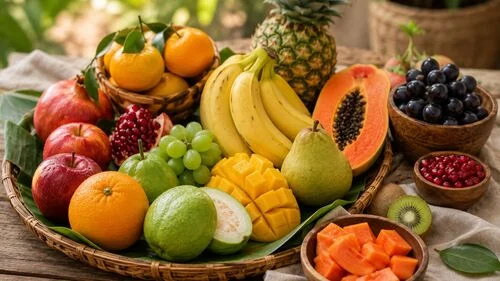
What matters when choosing fruits for diabetes?
The word “fruit” describes a wide range of foods with different carbohydrate amounts, fibre content, water content, textures and levels of processing. The same fruit can also vary with ripeness and preparation. These factors help explain why simply labelling a fruit as allowed or forbidden is not very useful.
Fruit still contributes carbohydrate even when its sugars occur naturally. For a deeper explanation of how carbohydrate amount, fibre, food structure and processing influence blood glucose, see the dedicated guide to carbohydrates and diabetes.
Why is whole fruit different from fruit juice?
Whole fruit and fruit juice are not nutritionally equivalent. Whole fruit retains its natural structure and usually provides more fibre, while juice removes much of that structure and can be consumed quickly. This can make it easier to take in a larger carbohydrate load in a short time.
Even 100% fruit juice contains naturally occurring sugars and should not be treated as a “free” drink. Fruit-flavoured beverages, sweetened juices and packaged fruit drinks may also contain added sugars. The separate guide to foods that may need limiting with diabetes explains sugary beverages and added sugars in more detail.
How should dried fruit be understood?
Dried fruit is fruit with much of its water removed, so the carbohydrate is packed into a smaller volume. Raisins, dates, dried figs and other dried fruits are therefore easy to eat in concentrated amounts even though they may still provide fibre and micronutrients.
Dried fruit is not automatically prohibited, but it should not be assumed to behave like the same volume of fresh fruit. The suitable amount depends on the person’s glucose patterns, treatment, nutritional needs and the rest of the eating pattern, so a general article should not prescribe a serving size.
Does fruit ripeness affect blood glucose?
It can. As certain fruits ripen, their carbohydrate form changes and the fruit may become softer and sweeter. This is particularly noticeable in fruits such as bananas and mangoes, although the practical glucose effect also depends on the variety, amount eaten, overall food context and the individual.
Ripeness alone is therefore not a reliable reason to permanently avoid a fruit. A person’s repeated glucose pattern is more informative than assuming that every ripe fruit will produce the same response.
Does processing change how fruit fits into diabetes nutrition?
Yes. Fresh fruit, frozen fruit and canned fruit without added sugar can all retain useful nutrients, but processing can change texture, physical structure and how quickly the fruit is eaten. Canned fruit packed in syrup adds another source of sugar, so the packing medium and ingredient list are relevant when comparing processed fruit products.
Processing does not create one simple hierarchy that applies to everyone. The ingredient list, whether sugar has been added, the physical form of the fruit and the person’s treatment all matter more than marketing descriptions such as “natural”, “no refined sugar” or “diabetic-friendly”.
How should common Indian fruits be understood?
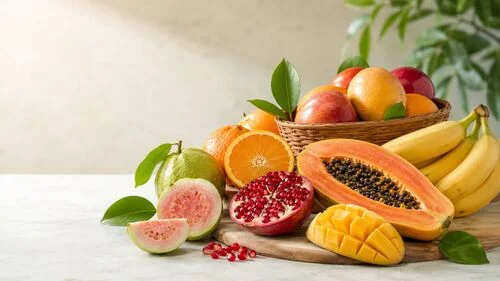
Indian households have access to a wide range of seasonal and regional fruits. None of the following fruits is universally forbidden because of diabetes, and none should be treated as unlimited. The purpose of these examples is to explain differences, not to create a ranked “best fruits” list.
- Mango: Mango contains natural sugars and carbohydrate, but diabetes does not automatically make mango unsuitable. Variety, ripeness, amount and the person’s glucose response all influence how it fits.
- Banana: Bananas provide carbohydrate along with potassium, fibre and other nutrients. Ripeness and size can change the practical carbohydrate exposure, so one banana is not nutritionally identical to every other banana.
- Papaya: Papaya contains carbohydrate, water, fibre and micronutrients. Its relatively light texture does not make it carbohydrate-free, and suitability should be considered within the broader eating pattern.
- Guava: Guava can provide fibre and vitamin C, but its fibre content does not cancel the carbohydrate it contains. The whole fruit should be considered differently from guava juice or sweetened guava drinks.
- Grapes: Grapes are whole fruit, but their small size can make it easy to eat many without noticing the total amount. Diabetes does not make grapes forbidden, but the amount consumed still matters.
- Apples, oranges and other citrus fruits: Whole forms retain their structure and fibre. Juice made from these fruits is a different form and can produce a different glucose response.
For a broader discussion of rice, roti, dal, snacks, sweets, dairy, vegetables and other regional choices, use the separate guide to familiar Indian foods for diabetes.
Why can the same fruit affect people differently?
Fruit responses vary because blood glucose is influenced by more than the name of the fruit. The form and amount of fruit, ripeness, recent activity, starting glucose level, digestion, insulin or glucose-lowering medication and the rest of the dietary pattern can all influence what happens after eating.
A single glucose reading does not prove that a fruit is permanently suitable or unsuitable. Repeated patterns interpreted within the person’s treatment plan are more useful, particularly for people using insulin or treatment that can cause low blood glucose.
Who may need more individual guidance about fruit?
Individual assessment becomes more important when diabetes occurs alongside treatment or medical factors that change food decisions. Examples include insulin use, recurrent low blood glucose, pregnancy, kidney disease, digestive conditions, poor appetite, unintended weight loss, childhood or adolescence, and major changes in usual food intake.
Kidney disease is one example where fruit advice cannot be generalised. Some people may need to consider potassium or other dietary factors depending on kidney function, laboratory results and treatment, while others may not require that restriction. Fruit should not be removed solely because a person has heard that it is “high in potassium”.
Frequently asked questions
Are low-sugar fruits always better for diabetes?
No. Sugar content is only one feature of a fruit. Fibre, water, physical structure, ripeness, the amount eaten and the person’s treatment all influence the practical glucose response. A fruit described as lower in sugar is not automatically suitable in unlimited quantities, and a naturally sweeter fruit does not automatically need to be excluded from an otherwise appropriate diabetes eating pattern.
Are smoothies the same as whole fruit?
Not exactly. Blending changes the physical structure of fruit and can make it easier to consume a larger amount quickly, especially when several fruits or sweetened ingredients are used. A smoothie can still contain fibre depending on how it is prepared, but it should not automatically be treated as equivalent to eating intact whole fruit. Individual glucose response and treatment remain relevant.
Can children with diabetes eat fruit?
Yes. Whole fruit can be part of a nutritionally adequate eating pattern for children with diabetes. The priority is to support growth, development and a healthy relationship with food while coordinating carbohydrate intake with the child’s diabetes treatment when needed. Restrictive adult-style fruit rules should not be applied automatically, and insulin-related decisions should remain with the child’s diabetes care team.
Are imported berries better than Indian fruits for diabetes?
No. Imported berries are not automatically better for diabetes, and familiar seasonal Indian fruits do not need to be avoided simply because they taste sweeter or are more commonly available. Fruit suitability depends on the form, amount, ripeness, diabetes treatment and the person’s usual glucose response. Seasonal availability, affordability and food preferences can also matter when building a sustainable eating pattern.
Conclusion
Fruits for diabetes can include many familiar whole fruits without relying on a rigid permitted-and-forbidden list. Whole fruit, juice, dried fruit, ripeness and processing can affect how fruit fits into diabetes nutrition, but the appropriate amount and form depend on treatment, glucose patterns and individual nutritional needs.
When personalised nutrition guidance may help
General information about fruit cannot decide how fruit should be handled for every person with diabetes. An individual assessment may need to bring together glucose patterns, medication or insulin, kidney health, digestive tolerance, nutritional status, appetite, life stage, regional preferences and the practical availability of seasonal fruits.
When fruit choices need to be translated into an individual eating approach, readers may consult Chief Nutritionist Vasanthi Senthilvel at Newtrist Nutritionist Dietitian Dietician for personalised clinical nutrition and a tailored diet plan. The assessment can place fruit within the person’s broader food pattern and medical treatment without relying on a generic fruit chart.
For individual help deciding how fruit fits within diabetes nutrition, consult Chief Nutritionist Vasanthi Senthilvel for clinical nutrition guidance based on treatment, health needs, food preferences and daily routine.
Author
Chief Nutritionist Vasanthi Senthilvel leads Newtrist Nutritionist Dietitian Dietician, providing personalised diet plans for weight management and clinical nutrition for children, adolescents, adults and families.
She has 21 years of experience in nutrition and has received professional recognition for her work.
- Pride of Bharat Awards 2026: Outstanding Achievement in Holistic Health & Nutrition Innovation
- Doctor of The Year: Nutritionist 2026: Excellence in Clinical Nutrition and Weight Loss.
Her approach considers age, growth, health history, medical conditions, laboratory reports, medication, body composition, weight history, dietary preferences, regional food habits, family routines, activity, sleep and personal health goals. Recommendations are developed according to individual needs rather than using one standard diet for everyone.
Consultations are available in person at Bangalore HSR Layout, Koramangala, Bellandur, Haralur and Electronic City, as well as online across India.
Independent Medical Review Panel
Newtrist health and nutrition articles undergo medical review, where appropriate, by doctors with relevant specialist expertise. The medical professionals listed below contribute to Newtrist’s review process within their respective specialties.
| Speciality | Doctor |
|---|---|
| Endocrinology | Dr Vinay Prasad MBBS, MD, DM |
| Gastroenterology & Hepatology | Dr Sunil kumar N MBBS, MD, DM |
| Gynaecology | Dr Prathiba G MBBS, DNB, FIRM, FMAS |
| Nephrology | Dr Priyashree R MBBS, MD, DNB, DM |