
Written by: Chief Nutritionist Vasanthi Senthilvel
21 years of experience | Newtrist Nutritionist Dietitian Dietician
Best Nutritionist in Bangalore with multiple awards for excellence in clinical nutrition, weight loss, holistic health and nutrition innovation.
Medically reviewed by: Dr Prathiba G MBBS, DNB, FIRM, FMAS | Dr Sunil kumar N MBBS, MD, DM | Dr Vinay Prasad MBBS, MD, DM
Medical Disclaimer: Nutritional needs vary based on an individual’s profile. The information on this page is for general educational purposes only and is not intended to replace personalised medical or nutrition care.
Imagine ordering a crispy paper dosa that stretches beyond the edges of your plate. The next morning, you make a much smaller dosa at home.
Both are called one dosa. But surely they cannot contain the same calories?
Now add another choice: plain dosa, masala dosa, ragi dosa or moong dal dosa. Does changing the batter make a meaningful difference?
If you have searched for dosa calories, you have probably found several conflicting numbers.
The explanation is simpler than you might think.
What goes into the batter, how much you use and what you add during cooking determine the calories and nutrients in your dosa.
Once you understand those differences, you can compare your favourite varieties more confidently, without turning a familiar South Indian meal into a complicated calculation.
Key Takeaway
One medium homemade plain dosa provides approximately 165 calories, while a masala dosa with potato filling provides about 290 calories, based on the illustrative recipes used here. Other varieties differ in protein, carbohydrates and fat according to their ingredients. Portion size, cooking oil, butter and fillings influence the final calorie content. The comparison below includes the dosa itself, excluding sambar and chutney.
Table of Contents
How Many Calories Are in One Dosa?
A medium plain dosa contains approximately 165 calories when prepared using 30 g raw rice, 10 g raw urad dal and 3 g cooking oil.
That is a useful home-style reference, but not a fixed number for every dosa.
For example, adding a potato-and-onion filling with extra cooking oil increases the estimated calories to approximately 290.
A smaller serving may contain fewer calories. A much larger restaurant dosa may contain substantially more.
The most useful comparison is therefore one that tells you what ingredients and quantities were assumed.
Dosa Calories and Nutrition Comparison Chart
| Dosa type | Illustrative serving | Calories (kcal) | Protein (g) | Carbs (g) | Fat (g) |
| Plain dosa | 1 medium | 165 | 4.7 | 28.6 | 3.3 |
| Masala dosa | 1 medium with potato filling | 290 | 6.7 | 48.6 | 7.5 |
| Rava dosa | 1 medium | 195 | 4.7 | 31.6 | 5.4 |
| Onion rava dosa | 1 medium | 220 | 5.1 | 34.0 | 6.4 |
| Ragi dosa | 1 medium | 170 | 3.7 | 27.1 | 4.6 |
| Wheat dosa | 1 medium | 165 | 4.2 | 25.7 | 4.6 |
| Moong dal dosa | 1 medium | 185 | 10.7 | 23.7 | 4.6 |
| Neer dosa | 1 piece | 125 | 2.4 | 23.5 | 2.2 |
| Set dosa | 1 small piece | 165 | 4.7 | 28.5 | 3.4 |
| Egg dosa | 1 medium with one egg | 245 | 11.0 | 28.9 | 9.1 |
About these values: The figures are rounded, ingredient-based estimates for specific home-style servings. They include the cooking oil assumed in each recipe. Sambar, coconut chutney and other accompaniments are excluded.
What Ingredients Were Used for the Calorie Estimates?
The comparison uses the following quantities for each illustrative serving.
Traditional dosas: Plain dosa uses 30 g raw rice, 10 g raw urad dal and 3 g oil. Masala dosa uses the same base with 90 g boiled potato, 20 g onion and 4 g additional oil.
Rava varieties: Rava dosa uses 30 g semolina, 10 g raw rice, 5 g whole-wheat flour and 5 g oil. Onion rava dosa adds 25 g onion and another 1 g oil.
Ragi and wheat dosas: Ragi dosa uses 25 g ragi, 10 g raw rice, 5 g urad dal and 4 g oil. Wheat dosa uses 40 g whole-wheat flour and 4 g oil.
Protein-containing varieties: Moong dal dosa uses 45 g dry split moong dal and 4 g oil. Egg dosa adds one large egg and 1 g extra oil to the plain dosa base.
Neer and set dosas: Neer dosa uses 30 g raw rice and 2 g oil. Set dosa uses 25 g raw rice, 10 g urad dal, 5 g dry poha and 3 g oil.
The nutritional estimates use ingredient composition values for the stated forms, including boiled potato and egg. Small amounts of spices and herbs are not included in the calculations.
These quantities allow the nutritional differences to be compared consistently without assuming that every restaurant uses the same recipe.
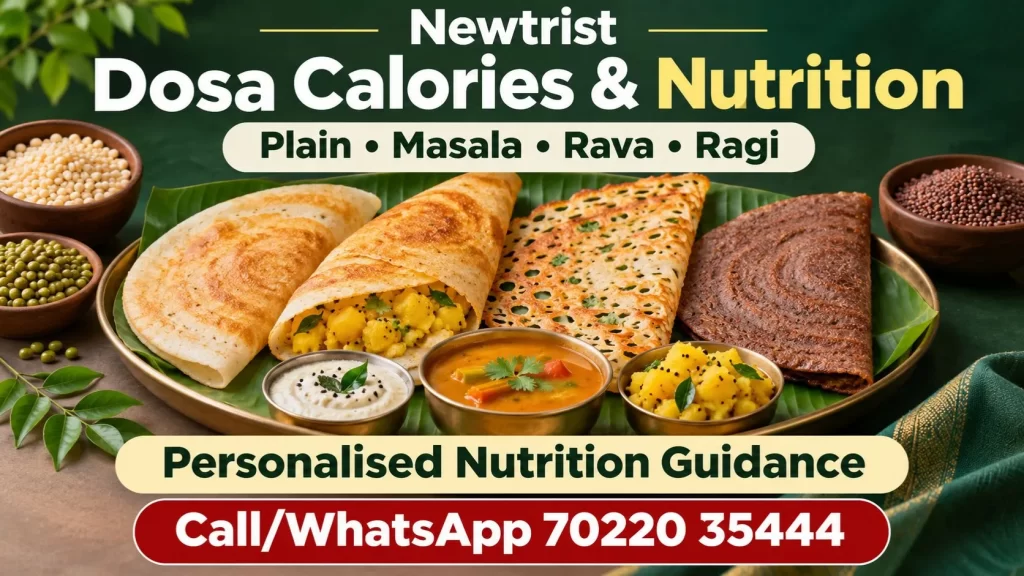
Plain Dosa Calories: What Does It Provide?
Plain dosa is generally prepared using fermented rice and urad dal batter.
Rice contributes most of the carbohydrates, while urad dal adds protein and other nutrients.
If you prepare dosas with the same batter and cooking oil quantities as the illustrative recipe, the calorie totals increase with the number eaten.
| Quantity | Approximate calories |
| 1 plain dosa | 165 kcal |
| 2 plain dosas | 330 kcal |
| 3 plain dosas | 495 kcal |
These totals apply to identical servings.
Two small homemade dosas may contain a different amount of batter from one large restaurant dosa, so the number of pieces is not always a reliable measure of food quantity.
Is Plain Dosa High in Protein?
Traditional plain dosa contains some protein from urad dal, but its nutritional composition is predominantly carbohydrate-based.
In the illustrative recipe, one medium plain dosa provides approximately 4.7 g protein.
Increasing the proportion of urad dal in the batter can alter that amount.
This matters if you regularly eat dosa for breakfast and want to understand how much protein the meal contributes.
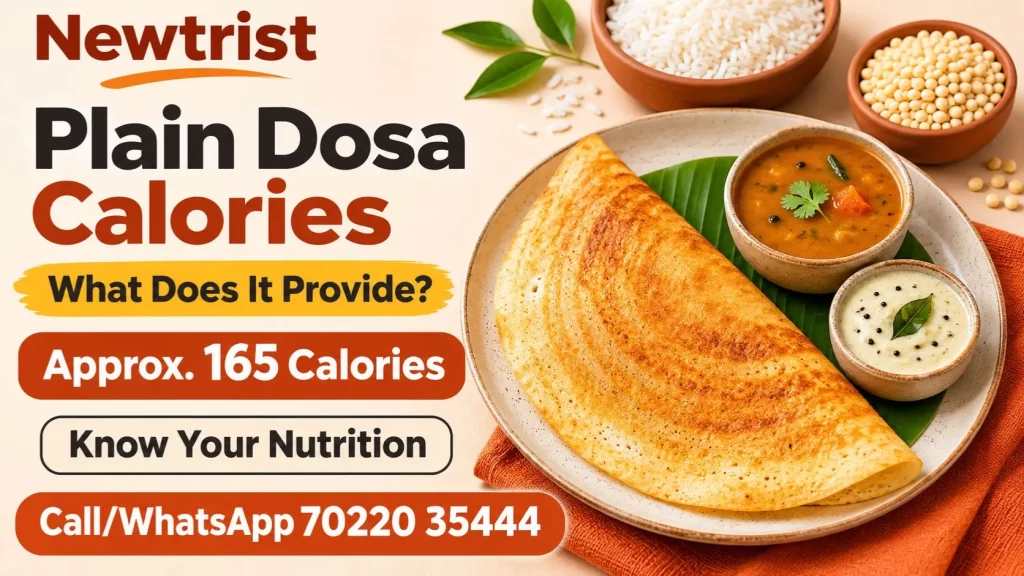
Masala Dosa Calories: How Much Does the Filling Add?
A masala dosa may look similar to a plain dosa on the outside, but its potato filling changes the nutritional composition.
The boiled potato contributes carbohydrates, while the oil used to prepare the filling adds fat and energy.
In the comparison recipe, adding 90 g boiled potato, 20 g onion and 4 g oil increases the total by approximately 125 calories.
A larger filling or more cooking fat will change that figure.
What About Mysore Masala Dosa and Butter Masala Dosa?
Mysore masala dosa commonly includes a spiced red chutney spread inside the dosa, sometimes with potato filling.
Its additional calories depend on the chutney ingredients and quantity.
Butter masala dosa contains extra fat from butter used during cooking or added before serving.
As a simple example, 5 g butter contributes approximately 35 to 40 calories.
A large restaurant preparation may therefore differ substantially from a lightly cooked homemade version.
The name tells you the style of dosa, but not exactly how much filling, chutney or butter has been used.
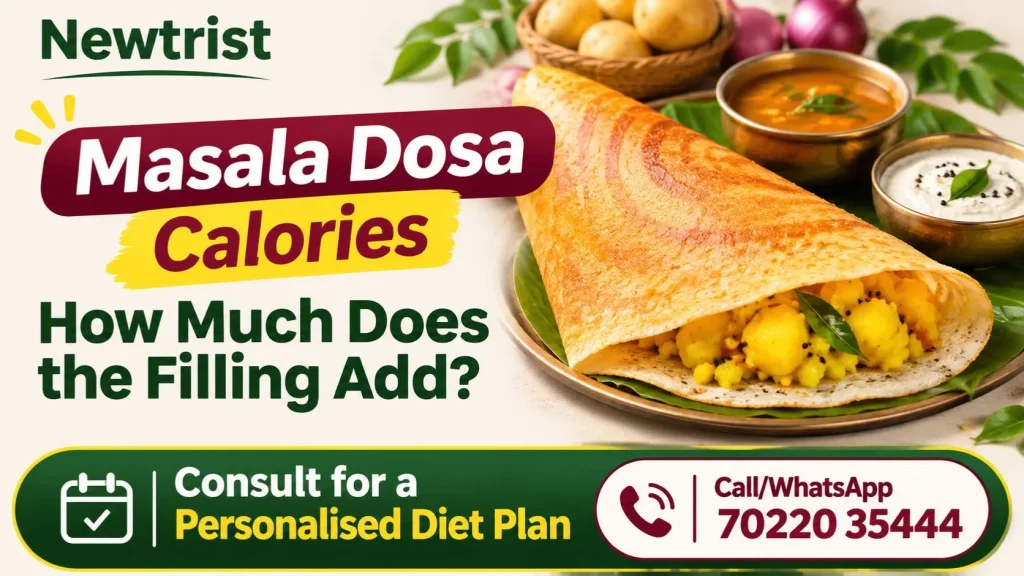
Rava, Ragi and Other Dosa Varieties: What Changes Nutritionally?
Different dosas can have similar calorie totals but noticeably different nutrient profiles.
That is why comparing only calories does not tell the whole story.
Rava Dosa and Onion Rava Dosa
Rava dosa is commonly made using semolina, often combined with rice and other flour ingredients.
Its thin, crisp texture can make it appear lighter than a regular dosa.
However, obtaining that crispness may involve additional cooking oil.
Onion rava dosa also contains chopped onion, but the difference between two preparations may depend more on the amount of oil than the onion itself.
Ragi Dosa and Wheat Dosa
Ragi, also known as finger millet, contributes minerals including calcium.
Whole-wheat flour provides a different combination of nutrients and fibre from traditional rice-based batter.
In the illustrative recipes, both dosa varieties provide a similar amount of energy.
Changing the grain can improve or alter specific nutrient contributions without necessarily reducing the calories.
This is useful to understand when choosing between traditional rice dosa and alternatives made using ragi or wheat.
Moong Dal Dosa and Egg Dosa
If protein is the nutrient you are comparing, these two varieties deserve attention.
Moong dal provides plant protein, while egg adds protein and fat to the dosa.
The illustrative recipes provide approximately 10.7 g protein for moong dal dosa and 11 g for egg dosa.
Both supply more protein than the traditional plain dosa example.
However, their ingredients, carbohydrate content and fat composition are different.
The better choice depends on which nutrients you want the meal to provide.
Neer Dosa and Set Dosa
Neer dosa is usually thin and soft, while set dosa is thicker and often served in multiple pieces.
Their serving patterns create an important distinction.
Three small set dosas should be assessed as a three-piece serving, not as one dosa.
Similarly, several small neer dosas may collectively contain more rice batter than one larger piece.
When comparing their nutritional values, focus on the total serving consumed.
Why Are Restaurant Dosa Calories Different From Homemade Dosa?
A restaurant dosa may be wider, crispier and richer than your usual homemade preparation.
Three details can explain much of the difference.
1. Batter Quantity and Dosa Thickness
A very large paper dosa can use more batter than a smaller regular dosa, even though it is thinner.
A thick set dosa may have a smaller diameter but contain a substantial portion of batter.
Appearance alone cannot reliably tell you the raw ingredient quantity.
2. Oil, Ghee and Butter Used During Cooking
Cooking fat adds energy without making a dramatic difference to the dosa’s size.
| Additional oil | Approximate additional calories |
| 3 g | 27 kcal |
| 5 g | 45 kcal |
| 10 g | 90 kcal |
For example, a restaurant dosa cooked with 10 g more oil than your homemade version will contain approximately 90 additional calories from that oil alone.
3. Chutney and Sambar Served Alongside
A dosa meal often includes coconut chutney, tomato chutney, sambar or other accompaniments.
Coconut chutney contributes energy from coconut and any added tempering oil. Sambar contributes carbohydrates, protein and other nutrients from lentils and vegetables.
Their nutritional contribution depends on the recipe and amount served.
When estimating the complete meal, include the accompaniments rather than assuming that the dosa-only calorie value covers everything on the plate.
Dosa Calories Per 100 g: How Is This Different From Calories Per Dosa?
Nutrition websites and food-tracking apps often show two different measurements.
Calories per dosa refer to one individual serving.
Calories per 100 g refer to a fixed weight of the finished food.
For example, suppose a cooked dosa weighs 120 g and contains 180 calories.
Its energy content would be approximately 150 calories per 100 g.
The distinction matters because dosas contain water, some of which evaporates during cooking.
A value calculated for 100 g of wet batter therefore cannot automatically be treated as the value for 100 g of cooked dosa.
How Can You Estimate Homemade Dosa Calories More Accurately?
Start with the raw ingredients used to prepare the complete batch of batter.
Calculate their nutritional contribution and divide it according to the quantity of batter used for each dosa.
Then account for the cooking oil and any additional fillings.
This gives you a recipe-specific estimate rather than relying on a generic database entry that may represent a different serving size.
Frequently Asked Questions About Dosa Calories
1. Does Fermenting Dosa Batter Reduce Its Calories?
Fermentation changes the batter through microbial activity, but it does not eliminate most of the energy supplied by rice and lentils. A fermented dosa is not automatically substantially lower in calories than an otherwise comparable unfermented preparation.
2. Should Rice and Urad Dal Be Measured Before or After Soaking?
For recipe-based nutrition calculations, measure the rice and urad dal in their dry, raw state. Soaking increases their weight through water absorption, but the absorbed water does not add calories.
3. Can Packaged Dosa Batter Labels Be Used to Calculate Cooked Dosa Calories?
Yes. Use the nutrition information for the actual quantity of batter prepared, then include cooking oil, butter, fillings or other ingredients added separately. The package label describes that manufacturer’s particular batter formulation.
4. Why Do Calorie-Tracking Apps Show Different Numbers for the Same Dosa?
Different entries may use different recipes, ingredient ratios, portion weights or cooking-fat quantities. Some entries represent homemade servings, while others reflect restaurant preparations. Check the serving definition before relying on a particular number.
How Can Personalised Nutrition Help You Choose the Right Dosa Portion?
You may now know approximately how many calories a plain dosa contains, why masala dosa has more and how alternative batters affect protein and carbohydrates.
But there is a question that a comparison chart cannot answer.
How many dosas should you eat, and which variety best fits your individual nutritional requirements?
Perhaps you eat two plain dosas with sambar every morning.
You may wonder whether switching to ragi dosa would make a meaningful difference.
Or you might choose moong dal dosa because it contains more protein but remain uncertain about the quantity appropriate for your usual breakfast.
These questions cannot be answered by selecting the lowest-calorie dosa.
They require an understanding of your regular eating habits, nutritional needs and the role that dosa plays in your overall food intake.
Personalised Nutrition With Chief Nutritionist Vasanthi Senthilvel
At Newtrist, Chief Nutritionist Vasanthi Senthilvel provides personalised diet and nutrition guidance that considers individual health needs, food preferences, daily routines and nutritional goals.
A personalised assessment can help you determine whether your usual dosa portions are appropriate, how much protein your preferred breakfast provides and which accompaniments make sense for your nutritional requirements.
For one person, a familiar plain dosa breakfast may need only a change in portion or accompaniment.
For another, choosing a different dosa batter may be a useful way to adjust specific nutrient contributions.
The goal is not to replace traditional South Indian foods unnecessarily. It is to make them work for your individual nutrition needs.
Enjoy dosa regularly but unsure which variety, quantity and accompaniments are right for you? Consult Chief Nutritionist Vasanthi Senthilvel at Newtrist for personalised nutrition guidance based on the Indian foods you already enjoy.
Author
Chief Nutritionist Vasanthi Senthilvel leads Newtrist Nutritionist Dietitian Dietician, providing personalised diet plans for weight management and clinical nutrition for children, adolescents, adults and families.
She has 21 years of experience in nutrition and has received professional recognition for her work.
- Pride of Bharat Awards 2026: Outstanding Achievement in Holistic Health & Nutrition Innovation
- Doctor of The Year: Nutritionist 2026: Excellence in Clinical Nutrition and Weight Loss.
Her approach considers age, growth, health history, medical conditions, laboratory reports, medication, body composition, weight history, dietary preferences, regional food habits, family routines, activity, sleep and personal health goals. Recommendations are developed according to individual needs rather than using one standard diet for everyone.
Consultations are available in person at Bangalore HSR Layout, Koramangala, Bellandur, Haralur and Electronic City, as well as online across India.
Independent Medical Review Panel
Newtrist health and nutrition articles undergo medical review, where appropriate, by doctors with relevant specialist expertise. The medical professionals listed below contribute to Newtrist’s review process within their respective specialties.
| Speciality | Doctor |
|---|---|
| Endocrinology | Dr Vinay Prasad MBBS, MD, DM |
| Gastroenterology & Hepatology | Dr Sunil kumar N MBBS, MD, DM |
| Gynaecology | Dr Prathiba G MBBS, DNB, FIRM, FMAS |
| Nephrology | Dr Priyashree R MBBS, MD, DNB, DM |