
Written by: Chief Nutritionist Vasanthi Senthilvel
21 years of experience | Newtrist Nutritionist Dietitian Dietician
Best Nutritionist in Bangalore with multiple awards for excellence in clinical nutrition, weight loss, holistic health and nutrition innovation.
Medically reviewed by: Dr Prathiba G MBBS, DNB, FIRM, FMAS | Dr Sunil kumar N MBBS, MD, DM | Dr Vinay Prasad MBBS, MD, DM
Medical Disclaimer: Nutritional needs vary based on an individual’s profile. The information on this page is for general educational purposes only and is not intended to replace personalised medical or nutrition care.
Carbohydrates and diabetes are closely connected because digestible carbohydrate has the most direct food-related effect on blood glucose. However, carbohydrate foods are not interchangeable. Rice, roti, millets, pulses, fruit, milk, sweets and packaged foods can differ in starch structure, sugar content, fibre, processing and nutritional value.
The useful question is therefore not simply whether a food contains carbohydrate, but how much carbohydrate is present, what form it takes and how it fits the person’s diabetes treatment and overall diet.
Key takeaway: Carbohydrates and diabetes should be considered through both carbohydrate amount and carbohydrate quality. Total carbohydrate influences the glucose load from food, while fibre, processing, food structure, meal composition and individual factors can change the glucose response. There is no single carbohydrate target or universally suitable low-carbohydrate pattern for everyone with diabetes.
Table of Contents

How do carbohydrates and diabetes connect through blood glucose?
Most digestible carbohydrate is broken down into simple sugars during digestion and absorbed into the bloodstream. This can raise blood glucose after eating, which is why carbohydrate is a central part of diabetes nutrition. The size and timing of that rise depend on more than whether a food tastes sweet.
The total amount of digestible carbohydrate matters, but so do the food’s physical structure, fibre, degree of processing, preparation, the other foods eaten with it, recent activity and diabetes treatment. Someone using mealtime insulin may also need carbohydrate information for treatment decisions, while another person may use carbohydrate awareness mainly to understand glucose patterns.
For the wider framework covering food quality, medication, activity and other aspects of diabetes care, see Newtrist’s broader diabetes diet and nutrition guide.
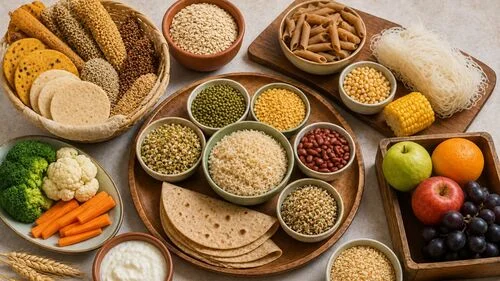
What counts as carbohydrate?
Starch
Starch is found in foods such as rice, wheat, millets, oats, potatoes, corn, pulses and many grain-based products. Starch is made of glucose units linked together. During digestion, much of it is broken down into glucose, although the rate and extent of digestion can differ substantially between foods.
Sugars
Sugars occur naturally in foods such as fruit and milk, and they can also be added during processing. Natural sugar does not make a food automatically unsuitable, and added sugar is not the only carbohydrate that affects blood glucose. A starchy food can contain little sugar yet still contribute a meaningful amount of digestible carbohydrate.
Fibre
Dietary fibre is also classified as carbohydrate, but it is not digested and absorbed in the same way as starch and sugars. Different fibres behave differently in the digestive tract, so fibre is considered separately when assessing the nutritional quality and glucose effect of carbohydrate-containing foods.
Total carbohydrate and carbohydrate quality answer different questions
Total carbohydrate describes how much carbohydrate a food or drink provides. Carbohydrate quality describes characteristics such as fibre, intactness of the food, degree of refining, nutrient density and whether the carbohydrate comes mainly from minimally processed foods or from products high in refined starches and added sugars.
Both perspectives are useful. Focusing only on total carbohydrate can make nutritionally different foods appear equivalent, while focusing only on a label such as ‘whole grain’ or ‘complex carbohydrate’ can overlook the amount eaten and the person’s actual glucose response. A useful diabetes approach considers quantity and quality together rather than treating either one as the complete answer.
Why can similar carbohydrate foods affect glucose differently?
A carbohydrate value on its own does not predict every post-meal glucose response. Several features can change how quickly carbohydrate becomes available for absorption and how the body handles it.
- Food structure: intact grains and legumes can behave differently from finely milled, flaked, puffed or powdered forms.
- Fibre: naturally fibre-rich foods may be digested more slowly and can change the overall nutrient profile of the food.
- Processing and preparation: milling, grinding and the degree of cooking can alter how accessible starch is to digestive enzymes.
- Ripeness: in some fruits, ripening changes the balance between starches and sugars.
- Mixed meals: fat, protein, fibre and meal composition can alter the speed and duration of the glucose response.
- Activity and treatment: recent physical activity, insulin, glucose-lowering medication and the starting glucose level can change what happens after eating.
These variables explain why a single glucose reading should not be used to label a normal food as permanently suitable or unsuitable. Patterns are more informative than isolated responses, particularly when medication or insulin is involved.

What do glycaemic index and glycaemic load tell you?
Glycaemic index, or GI, ranks carbohydrate-containing foods according to how strongly they raise blood glucose under standard test conditions. A lower GI food generally produces a smaller or slower glucose rise than a higher GI comparison food when the same amount of available carbohydrate is tested.
Glycaemic load, or GL, adds another layer by considering both the GI of a food and the amount of available carbohydrate in the quantity being considered. This can be useful because a food’s GI does not tell you how much carbohydrate a person will actually eat.
GI and GL are helpful concepts, but neither should be used as a stand-alone food ranking system. Variety, ripeness, processing, cooking, mixed meals and individual glucose responses can all change the practical effect. A lower GI also does not automatically make a food nutritionally superior, just as a higher GI does not automatically make it unsuitable.
Why does fibre matter when choosing carbohydrate foods?
Fibre is one of the main features that can improve carbohydrate quality. Pulses, legumes, whole fruits, vegetables, nuts, seeds and less-refined grains can provide fibre along with vitamins, minerals and other nutrients. Fibre-rich eating patterns can also support satiety and digestive health.
Fibre does not ‘cancel out’ the rest of the carbohydrate in a food, and a high-fibre label does not remove the need to consider total intake. Tolerance also matters. People with digestive disorders, poor appetite, fluid restrictions or some kidney-related concerns may need a more individual approach to fibre.
Vegetarian diets can contain substantial carbohydrate from pulses, grains, fruit and dairy while also providing fibre and plant protein. Readers who follow meat-free patterns can use the dedicated vegetarian diet for diabetes guide for nutritional-adequacy considerations beyond carbohydrate alone.
How should familiar Indian carbohydrate foods be understood?
Indian diets contain many carbohydrate foods, but none can be judged by one rule. The carbohydrate discussion below is deliberately limited to the features that affect glucose; the separate guide to Indian foods for diabetes covers regional foods, cooking practices and everyday choices in greater depth.
- Rice: variety, refinement, cooking, quantity and the rest of the eating pattern can all influence glucose response. Brown rice may provide more fibre than polished white rice, but colour alone does not predict an individual’s glucose response.
- Roti and chapati: flour type, how finely it is milled, added ingredients and the amount eaten all matter. Whole-wheat roti is not carbohydrate-free simply because it is less refined.
- Millets: millets provide carbohydrate and are not automatically low-GI or suitable in unlimited quantities. Species, processing and preparation can change their effect.
- Pulses and legumes: dal, chickpeas, rajma and other pulses contain carbohydrate along with fibre and protein. Their mixed nutrient profile differs from refined grain foods, but they still contribute carbohydrate.
- Fruit and milk: whole fruit contains natural sugars with water, fibre and micronutrients, while milk contains lactose along with protein and other nutrients. These foods should not be judged by sugar content alone.
For a deeper discussion of whole fruit, juice, dried fruit, ripeness and common Indian fruits, see the Fruits for Diabetes guide.
Do people with diabetes need to avoid carbohydrates?
No. Diabetes does not automatically require complete carbohydrate avoidance. Current diabetes nutrition practice uses individualised eating patterns rather than one universal carbohydrate percentage or one standard low-carbohydrate prescription.
Large reductions in carbohydrate can change glucose patterns and may affect the safety of insulin or some glucose-lowering treatment. People who use insulin or medication should therefore coordinate major dietary changes with the treating team rather than adjusting treatment on their own.
The role of carbohydrate can also differ by diabetes type. In Type 1 diabetes, carbohydrate information may be used directly in mealtime insulin planning, so the dedicated Type 1 diabetes nutrition page covers that relationship. In Type 2 diabetes, carbohydrate amount and quality sit alongside cardiometabolic health, medication, body composition and other priorities, which are addressed in the Type 2 diabetes diet guide.
How can packaged-food labels help with carbohydrate decisions?
For packaged foods, total carbohydrate is a practical starting point because it captures starches and sugars rather than focusing only on the word ‘sugar’. Fibre information can then help describe carbohydrate quality, while the ingredient list provides context about whole grains, refined flours, sweeteners and other components.
Front-of-pack terms such as diabetic-friendly, wholegrain, high-protein or low-GI should not replace the full nutrition information. A marketing claim describes only one feature of a product and cannot determine how that food will fit a person’s overall carbohydrate intake or glucose response.
Why do individual carbohydrate needs differ?
The diagnosis of diabetes does not determine one correct carbohydrate amount. Carbohydrate needs and the safest way to distribute them can change with treatment, activity and nutritional requirements.
- Type of diabetes and whether insulin or glucose-lowering medication is used
- Usual glucose patterns and risk of hypoglycaemia
- Age, growth, pregnancy, breastfeeding and other life-stage needs
- Physical activity, sports, work schedule and shift work
- Kidney, digestive, cardiovascular or other medical conditions
- Appetite, nutritional status, unintended weight change and body composition
- Vegetarian, vegan, egg-based or non-vegetarian dietary patterns
- Regional food habits, food tolerance, affordability and family routines
This is why an online article can explain carbohydrate principles but cannot prescribe an individual carbohydrate target, meal schedule or medication-related food adjustment.
Common mistakes when thinking about carbohydrates and diabetes
- Judging carbohydrate only by sweetness: rice, bread and other starches may contain little sugar yet still affect blood glucose.
- Assuming brown, wholegrain or millet automatically means a small glucose effect: processing, amount and preparation still matter.
- Treating pulses, milk or fruit as ‘free foods’ because they also contain protein, fibre or micronutrients: they can still contribute carbohydrate.
When should medical review guide carbohydrate changes?
Medical coordination is particularly important when a person using insulin or glucose-lowering medication plans a major change in carbohydrate intake, fasting pattern or meal timing. Recurrent low blood glucose, persistently concerning glucose patterns, pregnancy, significant unintended weight loss, kidney disease or illness that affects eating can all change what is safe.
Children and adolescents also need carbohydrate decisions to support growth and development rather than adult-style restriction. General nutrition guidance should complement the diabetes treatment plan and should not be used to change insulin, medication or glucose targets.
Frequently asked questions
Should carbohydrate intake be the same at every meal?
Not necessarily. Some people benefit from a fairly consistent carbohydrate pattern, while others can use more flexible eating approaches depending on insulin, medication, activity and daily routine. The safest pattern depends on the person’s treatment and glucose response. A general article cannot prescribe how carbohydrate should be divided across meals or snacks for one individual.
Does adding protein or fat cancel the carbohydrate in a food?
No. Protein or fat can change digestion and the timing of the glucose response in a mixed meal, but they do not remove the carbohydrate or make its amount irrelevant. A meal that produces a slower rise can still lead to a later or prolonged glucose response. Treatment, food composition and individual glucose patterns all influence the result, so this principle should not be turned into a fixed food-combining rule.
Are net-carbohydrate claims a reliable guide for diabetes?
Not always. Net-carbohydrate claims commonly subtract selected fibre or sugar alcohols from total carbohydrate, but those ingredients do not all behave identically in digestion or glucose response. The calculation can therefore oversimplify what happens after eating. Total carbohydrate, fibre, ingredients and actual glucose patterns are usually more useful starting points for individual decisions.
Is carbohydrate counting useful for people who do not take mealtime insulin?
It can be useful for some people, but it is not compulsory for everyone. People with Type 2 diabetes or prediabetes may use carbohydrate awareness, portion understanding or glucose monitoring without detailed carbohydrate counting. The appropriate method depends on treatment, health goals, numeracy, preferences and whether the information actually helps the person make sustainable decisions.
Conclusion
Carbohydrates and diabetes are best understood by considering both the amount of carbohydrate and the quality and structure of the food. Fibre, processing, preparation, mixed meals, treatment and individual glucose patterns can all influence the practical response. The useful goal is not universal carbohydrate avoidance, but an approach that fits the person’s nutritional needs and diabetes care.
When personalised nutrition guidance may help
General carbohydrate guidance cannot determine the correct amount, distribution or clinical modification for every person with diabetes. Personalised assessment can bring together glucose patterns, medication or insulin, nutritional status, activity, food preferences, digestive tolerance and other medical conditions without turning carbohydrate advice into a generic formula.
When carbohydrate decisions need to be translated into an individual eating approach, readers may consult Chief Nutritionist Vasanthi Senthilvel at Newtrist Nutritionist Dietitian Dietician for an assessment and personalised diet plan for clinical nutrition. The assessment can help organise carbohydrate choices within the person’s broader nutritional needs and daily routine while medical treatment continues under the treating healthcare team.
For individual help with carbohydrate choices in diabetes, seek clinical nutrition guidance from Chief Nutritionist Vasanthi Senthilvel based on treatment, health needs, food preferences and daily routine.
Author
Chief Nutritionist Vasanthi Senthilvel leads Newtrist Nutritionist Dietitian Dietician, providing personalised diet plans for weight management and clinical nutrition for children, adolescents, adults and families.
She has 21 years of experience in nutrition and has received professional recognition for her work.
- Pride of Bharat Awards 2026: Outstanding Achievement in Holistic Health & Nutrition Innovation
- Doctor of The Year: Nutritionist 2026: Excellence in Clinical Nutrition and Weight Loss.
Her approach considers age, growth, health history, medical conditions, laboratory reports, medication, body composition, weight history, dietary preferences, regional food habits, family routines, activity, sleep and personal health goals. Recommendations are developed according to individual needs rather than using one standard diet for everyone.
Consultations are available in person at Bangalore HSR Layout, Koramangala, Bellandur, Haralur and Electronic City, as well as online across India.
Independent Medical Review Panel
Newtrist health and nutrition articles undergo medical review, where appropriate, by doctors with relevant specialist expertise. The medical professionals listed below contribute to Newtrist’s review process within their respective specialties.
| Speciality | Doctor |
|---|---|
| Endocrinology | Dr Vinay Prasad MBBS, MD, DM |
| Gastroenterology & Hepatology | Dr Sunil kumar N MBBS, MD, DM |
| Gynaecology | Dr Prathiba G MBBS, DNB, FIRM, FMAS |
| Nephrology | Dr Priyashree R MBBS, MD, DNB, DM |