
Written by: Chief Nutritionist Vasanthi Senthilvel
21 years of experience | Newtrist Nutritionist Dietitian Dietician
Best Nutritionist in Bangalore with multiple awards for excellence in clinical nutrition, weight loss, holistic health and nutrition innovation.
Medically reviewed by: Dr Prathiba G MBBS, DNB, FIRM, FMAS | Dr Sunil kumar N MBBS, MD, DM | Dr Vinay Prasad MBBS, MD, DM
Medical Disclaimer: Nutritional needs vary based on an individual’s profile. The information on this page is for general educational purposes only and is not intended to replace personalised medical or nutrition care.
Type 1 diabetes nutrition is closely connected to insulin because the body makes little or no insulin of its own. Food choices still need to support growth, energy, heart health and overall nutritional adequacy, but carbohydrate intake, physical activity, glucose patterns and insulin treatment also influence day-to-day decisions. The appropriate approach differs by age, treatment method, activity, appetite, food preferences and other health needs.
Key takeaway: Type 1 diabetes nutrition should support adequate nourishment while helping food, insulin and physical activity work together safely. Carbohydrate awareness is important because carbohydrate has the most direct food-related effect on blood glucose, but exact carbohydrate amounts and insulin adjustments are individual. A general article can explain the principles, but insulin doses, correction calculations and personal treatment changes belong with the diabetes care team.
Table of Contents

Why do food and insulin need to be considered together in Type 1 diabetes?
Type 1 diabetes is an autoimmune condition in which the immune system damages the pancreatic cells that make insulin. Because insulin is essential for moving glucose from the blood into cells, people with Type 1 diabetes need ongoing insulin treatment. Nutrition therefore cannot be separated from the person’s insulin plan, glucose monitoring and activity pattern.
The focus here is the food-insulin relationship that makes Type 1 diabetes nutrition distinct. Readers looking for general principles across diabetes types can use Newtrist’s diabetes diet and nutrition guide.
What should Type 1 diabetes nutrition focus on?
Maintain nutritional adequacy, not only glucose control
A useful eating pattern needs to provide enough energy and nutrients for the person’s age, body size, activity and life stage. Vegetables, fruits, grains, pulses, dairy or suitable alternatives, nuts, seeds, eggs, fish, chicken and other foods can contribute different nutrients according to the person’s dietary pattern. The goal is not to make food choices solely around one glucose reading.
Restricting food too aggressively can create problems with energy intake, growth, appetite, nutrient adequacy or enjoyment of food. This is especially important for children, adolescents, people with low appetite, and anyone losing weight unintentionally.
Understand the role of carbohydrate without turning food into a formula
Carbohydrate-containing foods have the most immediate food-related effect on blood glucose. People with Type 1 diabetes may be taught carbohydrate counting or another structured way to estimate carbohydrate by their diabetes team so that food and mealtime insulin can be coordinated. The insulin-to-carbohydrate ratio, correction factors and personal carbohydrate targets are individual treatment information and are not provided in a general nutrition article.
Carbohydrate quality also matters, but this page does not duplicate the detailed science. The dedicated guide to carbohydrates and diabetes explains fibre, food processing, glycaemic concepts and common carbohydrate foods in greater depth.
Remember that mixed meals can affect glucose patterns differently
Carbohydrate is not the only part of food that can influence the glucose pattern after eating. Fat, protein, fibre, meal composition and digestion can change how quickly glucose appears in the bloodstream, so two foods with a similar carbohydrate amount may not produce identical glucose curves. These effects are one reason insulin decisions should be based on an individual plan rather than copied from another person.
Use familiar Indian foods within the individual treatment context
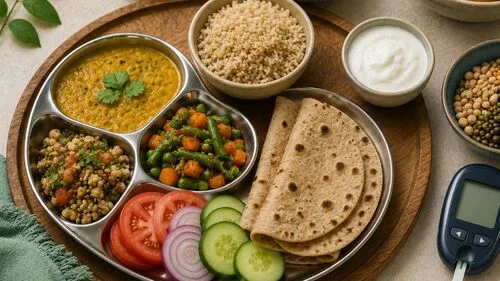
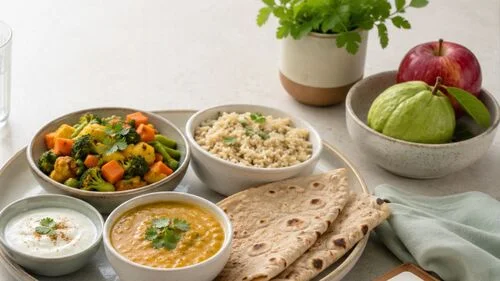
Type 1 diabetes does not require replacing familiar foods with special diet products. Rice, roti, dal, curd, fruit, vegetables, eggs, fish, chicken, nuts and seeds can have a place depending on the individual’s nutritional needs, carbohydrate awareness, insulin plan and glucose response. For a deeper discussion of traditional staples and regional choices, use the guide to Indian foods for diabetes.
How do meal pattern and insulin interact?
Some people with Type 1 diabetes follow fairly regular eating times, while others use insulin systems that allow greater flexibility. Either approach still requires attention to the relationship between food, insulin action and current glucose levels. Skipping or delaying food after insulin, making abrupt changes to carbohydrate intake, or extending gaps between meals can increase the risk of unexpected glucose changes for some people.
Fasting, shift work and highly irregular schedules need additional safety considerations rather than a generic timetable. The separate guide to meal timing and fasting with diabetes covers those situations without giving a personal fasting schedule or insulin-adjustment instructions.
What changes around physical activity?
Physical activity is beneficial for health and fitness, but glucose can respond differently depending on the type, intensity and duration of activity, the amount of active insulin, recent food intake and the individual’s usual response. Some activities may lower glucose during or after exercise, while others can temporarily raise it.
People using insulin need an exercise plan that includes appropriate glucose monitoring and a strategy for preventing and treating low blood glucose. The exact carbohydrate or insulin changes around exercise are individual treatment decisions and should be taught by the diabetes care team rather than copied from an online routine.
Why does hypoglycaemia awareness matter in nutrition planning?
Hypoglycaemia, or low blood glucose, is an important safety consideration for people using insulin. It can occur when insulin action, food intake and physical activity are not matched as expected, and the risk can also change with illness, previous low-glucose episodes and other clinical factors.
A person with Type 1 diabetes and relevant family members or caregivers should know the individual plan for recognising and treating hypoglycaemia and should have the recommended treatment available. Recurrent lows, severe episodes or reduced awareness of warning symptoms require review by the treating diabetes team because the treatment plan may need reassessment.
Children and adolescents need growth-focused Type 1 diabetes nutrition
For children and adolescents, nutrition has to support growth, puberty, learning, activity and normal development as well as diabetes management. Appetite and insulin needs can change during growth, and school schedules, sports, examinations, sleep, family routines and increasing independence can affect how food and treatment are coordinated.
Restrictive adult-style dieting is not appropriate simply because a child or teenager has diabetes. Families also need to watch for food anxiety, excessive restriction or intentional insulin omission related to weight or body image, because these concerns need prompt professional attention rather than nutritional rules alone.
Why do individual Type 1 diabetes nutrition needs differ?
Two people with Type 1 diabetes may use different insulin systems, have different glucose patterns and need different nutritional priorities. A useful assessment looks at the whole clinical and practical picture rather than assuming that the diagnosis determines one standard diet.
- Age, growth stage, pregnancy or other life-stage needs
- Insulin delivery method, glucose-monitoring approach and usual glucose patterns
- Frequency of hypoglycaemia and awareness of low-glucose symptoms
- Physical activity, sports participation and work or school routine
- Appetite, nutritional status, recent weight change and digestive tolerance
- Kidney, coeliac, thyroid or other medical conditions that may affect nutrition
- Dietary pattern, including vegetarian, vegan, egg-based and non-vegetarian choices
- Regional food habits, budget, household routines and cultural or religious practices
These differences mean that a general article cannot determine an individual carbohydrate target, insulin dose, correction calculation, meal schedule or clinical restriction.
Common mistakes to avoid in Type 1 diabetes nutrition
- Treating every high or low glucose reading as proof that one food is unsuitable, without considering insulin timing, activity, illness and the wider glucose pattern.
- Reducing carbohydrate sharply in an attempt to reduce insulin needs, especially without professional review of nutritional adequacy and treatment safety.
- Copying another person’s carbohydrate-counting method, exercise strategy or insulin-related food routine even though treatment plans and glucose responses differ.
- Applying restrictive adult weight-loss rules to children or adolescents instead of prioritising growth, development and healthy relationships with food.
- Changing insulin, correction doses or treatment timing based on general nutrition information rather than instructions from the treating diabetes team.
When should medical review guide nutrition changes?
Medical review is important when glucose patterns become difficult to manage, hypoglycaemia is recurrent or severe, food intake falls substantially, or illness affects eating and hydration. Persistent vomiting, increasing weakness, confusion, breathing difficulty or symptoms that could suggest diabetic ketoacidosis require urgent medical assessment rather than dietary experimentation.
Unintended weight loss, growth concerns, pregnancy, suspected coeliac disease, new digestive symptoms, repeated exercise-related glucose problems, or signs of disordered eating also deserve professional assessment. Nutrition guidance should work alongside the person’s endocrinologist or diabetes team and does not replace insulin treatment or medical monitoring.
Frequently asked questions
Why can the same food affect glucose differently on different days?
The same food can produce different glucose patterns because food is only one part of the picture. Active insulin, recent exercise, stress, illness, sleep, digestion, menstrual-cycle changes and the starting glucose level may all influence the response. Repeated unexpected patterns are more useful to review with the diabetes team than making a permanent food restriction after one reading.
Do insulin pumps or automated insulin delivery systems remove the need to think about food?
No. Diabetes technology can make insulin delivery and glucose monitoring more responsive, but food information still matters. Many systems use meal information as part of insulin delivery, and nutritional adequacy remains important regardless of device. Device settings, bolus decisions and insulin adjustments are individual treatment matters, so nutrition advice should complement the training provided by the diabetes care team.
What should families consider for school, college or work routines?
Planning should focus on safety and practicality rather than creating a rigid food schedule for everyone. The person needs access to insulin, glucose monitoring, the agreed treatment for hypoglycaemia, suitable food when needed and support from relevant staff or family members. Travel time, sports, examinations, shift work and changes in routine can all affect coordination between food and treatment.
Does illness change nutrition considerations in Type 1 diabetes?
Yes. Illness can change appetite, hydration, glucose levels and insulin requirements, even when a person is eating less than usual. Type 1 diabetes also carries a risk of ketone build-up when insulin is insufficient, so illness should be managed using the individual sick-day plan supplied by the diabetes team. Insulin should not be stopped simply because food intake has fallen.
Conclusion
Type 1 diabetes nutrition is safest and most practical when food, insulin, glucose patterns and activity are considered together without sacrificing nutritional adequacy. Carbohydrate awareness is important, but the correct amounts, insulin decisions and treatment-related adjustments differ between individuals. General guidance can explain the principles, while personal treatment decisions require the diabetes care team.
When personalised nutrition guidance may help
General information cannot determine the exact food quantities or clinical modifications needed by every person with Type 1 diabetes. A personalised nutrition assessment can bring together nutritional status, growth or life-stage needs, eating patterns, glucose trends, treatment, activity, food preferences and other medical conditions without replacing insulin management by the treating team.
Readers who need individual nutrition guidance may consult Chief Nutritionist Vasanthi Senthilvel at Newtrist Nutritionist Dietitian Dietician for a personalised diet plan for clinical nutrition. Nutrition recommendations can then be shaped around the person’s eating pattern and daily circumstances while the diabetes team continues to manage insulin and medical care. More information is available through Newtrist’s personalised clinical nutrition services.
For personalised clinical nutrition support around Type 1 diabetes, consult Chief Nutritionist Vasanthi Senthilvel for guidance that considers nutritional needs, food preferences, activity and the practical demands of daily treatment.
Author
Chief Nutritionist Vasanthi Senthilvel leads Newtrist Nutritionist Dietitian Dietician, providing personalised diet plans for weight management and clinical nutrition for children, adolescents, adults and families.
She has 21 years of experience in nutrition and has received professional recognition for her work.
- Pride of Bharat Awards 2026: Outstanding Achievement in Holistic Health & Nutrition Innovation
- Doctor of The Year: Nutritionist 2026: Excellence in Clinical Nutrition and Weight Loss.
Her approach considers age, growth, health history, medical conditions, laboratory reports, medication, body composition, weight history, dietary preferences, regional food habits, family routines, activity, sleep and personal health goals. Recommendations are developed according to individual needs rather than using one standard diet for everyone.
Consultations are available in person at Bangalore HSR Layout, Koramangala, Bellandur, Haralur and Electronic City, as well as online across India.
Independent Medical Review Panel
Newtrist health and nutrition articles undergo medical review, where appropriate, by doctors with relevant specialist expertise. The medical professionals listed below contribute to Newtrist’s review process within their respective specialties.
| Speciality | Doctor |
|---|---|
| Endocrinology | Dr Vinay Prasad MBBS, MD, DM |
| Gastroenterology & Hepatology | Dr Sunil kumar N MBBS, MD, DM |
| Gynaecology | Dr Prathiba G MBBS, DNB, FIRM, FMAS |
| Nephrology | Dr Priyashree R MBBS, MD, DNB, DM |