
Written by: Chief Nutritionist Vasanthi Senthilvel
21 years of experience | Newtrist Nutritionist Dietitian Dietician
Best Nutritionist in Bangalore with multiple awards for excellence in clinical nutrition, weight loss, holistic health and nutrition innovation.
Medically reviewed by: Dr Prathiba G MBBS, DNB, FIRM, FMAS | Dr Sunil kumar N MBBS, MD, DM | Dr Vinay Prasad MBBS, MD, DM
Medical Disclaimer: Nutritional needs vary based on an individual’s profile. The information on this page is for general educational purposes only and is not intended to replace personalised medical or nutrition care.
It’s 11 AM. You’ve already eaten breakfast, but you’re thinking about what to eat next.
And breakfast wasn’t small. You had a generous plate of poha.
If this happens regularly, it’s tempting to make a bigger serving tomorrow. But what if the better answer isn’t more flattened rice?
Your usual poha may simply need a different balance of ingredients.
To make poha more filling, add a meaningful protein source such as soya granules, paneer or tofu, along with fibre-containing ingredients such as cooked moong, matki, green peas and vegetables. These changes may improve how satisfying the meal feels without replacing the familiar breakfast you enjoy.
The trick is knowing what to add, how much to start with and when more ingredients might not be the answer.
Table of Contents

Why Does Regular Poha Sometimes Leave You Hungry Soon?
Poha is made from flattened rice, which primarily supplies carbohydrates.
Carbohydrates provide energy. But when most of your serving consists of flattened rice, onions and potatoes, the finished dish may contain relatively modest amounts of protein and fibre.
Protein contributes to satiety, while fibre adds bulk and can influence digestion.
That doesn’t mean ordinary poha is a poor breakfast choice. Nor does it mean that every episode of early hunger is caused by low protein.
How much you eat, your activity level and the gap between meals also influence appetite.
Still, if your poha rarely keeps you satisfied until your next planned meal, changing its composition is a useful first step before simply increasing the quantity.

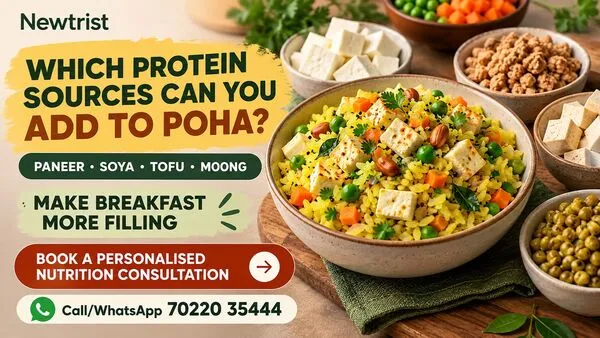
Which Protein Sources Can You Add to Poha?
Choose one main protein ingredient rather than depending on small quantities of several foods.
Your usual turmeric, curry leaves, mustard seeds and lemon can stay exactly as they are.
| Protein addition | Illustrative quantity | Best way to include it |
| Soya granules | 20–25 g dry | Rehydrate, cook thoroughly and drain before mixing |
| Paneer | 50–75 g | Crumble into the poha towards the end of cooking |
| Firm tofu | 75–100 g | Add cubes or crumble into the seasoned vegetables |
The quantities are starting examples, not individual dietary prescriptions. Actual protein content varies by product.
Soya granules work well when you prefer an ingredient that blends into the flattened rice. Paneer provides a softer bite, while firm tofu can be used in plant-based preparations.
Choose according to your food preferences and the way you normally cook.
What About the Peanuts Already in Poha?
Keep them if you enjoy them.
Peanuts contribute fats, some protein and the crunch that makes poha appealing. But a teaspoon or two is a garnish, not a substantial protein serving.
If peanuts are the only protein-containing addition in your usual recipe, consider whether another ingredient would make a more meaningful contribution.
For ideas beyond poha, Newtrist also has a guide on how to add protein to an Indian breakfast.
How Can You Add Fibre Without Overloading the Bowl?
You don’t need to transform poha into a completely different dish.
Two types of additions work particularly well.
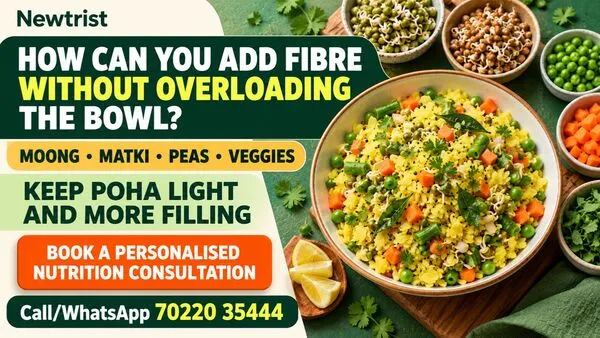
Cooked whole legumes: Thoroughly cooked whole moong or matki adds fibre, some plant protein and a pleasant bite. Approximately ⅓–½ cup is an illustrative starting quantity.
Vegetables: Green peas, French beans, carrots and methi fit naturally with traditional poha seasoning. Around ½ cup of mixed vegetables can add variety and substance.
Use the ingredients you enjoy and have available. There’s no special advantage in adding every option at once.
If legumes are unfamiliar to your digestive system, introduce them gradually and adjust according to comfort.
What Could a More Filling Bowl of Poha Look Like?
You don’t need a separate recipe. You can upgrade your normal preparation.
Here’s one example using everyday ingredients.
Example: Poha with Soya, Moong and Vegetables
| Ingredient | Illustrative quantity |
| Thick poha, dry | 40 g |
| Soya granules, dry | 25 g |
| Thoroughly cooked whole moong | ⅓ cup |
| Green peas, carrots and beans | ½ cup combined |
| Roasted peanuts | 1 teaspoon |
| Oil | 1 teaspoon |
| Onion, curry leaves, mustard seeds, turmeric and chilli | As preferred |
| Coriander and lemon | To finish |
Briefly rinse and drain the poha until softened.
Prepare the soya granules according to the packet instructions, cooking them thoroughly and draining excess water. Cook the vegetables with your usual tempering, add the cooked moong and soya, then gently fold in the softened poha.
Finish with peanuts, coriander and lemon.
The familiar taste remains, while the finished meal includes a more substantial contribution from protein- and fibre-containing foods.
Important: This is an illustrative combination, not a prescribed portion or a verified nutrient analysis. The precise protein, fibre and energy values depend on the ingredients and brands used. The finished dish should not be described as meeting a formal high-protein or high-fibre threshold without calculating its nutritional content.

What If Your Improved Poha Still Doesn’t Feel Right?
More nutritious ingredients don’t automatically make the finished meal ideal for your appetite.
Use what you notice after eating to decide what deserves attention.
| What happens? | What to consider |
| You’re hungry much earlier than expected | Review the size and composition of the complete breakfast, your morning activity and the time until your next meal |
| The serving feels too heavy | The extra ingredients may have increased the total quantity. Reconsider the overall proportions instead of forcing a larger bowl |
| The poha becomes wet or sticky | Drain cooked ingredients well, allow excess vegetable moisture to evaporate and fold in the softened poha gently |
For busy mornings, moong or matki can be cooked in advance, cooled promptly and refrigerated safely. Reheat thoroughly before use.
If early hunger or discomfort continues despite practical changes, the issue may require looking beyond the breakfast recipe itself.
Frequently Asked Questions About Protein- and Fibre-Rich Poha
1. Is Red Poha Automatically Higher in Fibre Than White Poha?
Not necessarily. Fibre content depends on the rice variety, processing and product. Some red poha products may contain more fibre, but colour alone doesn’t establish the amount. Compare nutrition labels where available rather than assuming a different colour solves the problem.
2. Do I Need to Remove Potatoes from Poha?
No. Potatoes can remain in your usual preparation. The quantity can be adjusted to accommodate other ingredients and the overall serving you prefer. Improving the protein and fibre balance doesn’t require eliminating potatoes.
3. Can I Have Curd Alongside Poha Instead of Adding Paneer?
Yes. Plain curd can contribute protein without changing the poha itself. The amount depends on the type and quantity of curd you use. A small serving of ordinary curd may provide less protein than a substantial paneer portion.
4. Can I Add Raw Sprouted Moong Directly to Poha?
It’s safer to use thoroughly cooked sprouts. Raw sprouts can carry harmful microorganisms, and proper cooking helps reduce the risk of foodborne illness.
Key Takeaway: Change the Balance, Not the Breakfast
Your next bowl of poha doesn’t need a long ingredient list.
Choose one meaningful protein addition, include a fibre-containing ingredient and keep the finished serving comfortable.
You can keep the taste you love while making a thoughtful change to what your breakfast provides.
You’ve Improved Your Poha. But Are the Portions Right for You?
Maybe you’ve tried these changes, but you’re still hungry well before lunch.
Or the new combination is too heavy, and you can’t tell whether you need less poha, a different protein quantity or a change somewhere else in your eating routine.
That’s the question a recipe cannot answer for you.
Your breakfast needs to fit your overall food intake, appetite, activity, health considerations and daily schedule, not just a list of recommended ingredients.
Get Personalised Nutrition Guidance from Chief Nutritionist Vasanthi Senthilvel
At Newtrist, Chief Nutritionist Vasanthi Senthilvel provides personalised nutrition guidance based on an assessment of individual eating habits, health context, lifestyle and goals.
Rather than repeatedly guessing which ingredient or portion to change, you can discuss your actual meals and identify which nutritional adjustments deserve attention.
A useful starting point is to note your usual breakfast for two or three mornings: what you ate, the approximate quantity and when hunger returned. You can bring these observations to your consultation.
The goal isn’t to replace familiar Indian foods with an unfamiliar diet. It’s to understand how your everyday meals can better fit your individual requirements.
If you’re unsure whether your breakfast or your overall diet is meeting your nutritional needs, book a personalised nutrition consultation with Chief Nutritionist Vasanthi Senthilvel.
Bring your usual food choices and questions. The consultation can help clarify which changes are appropriate for you and whether a personalised nutrition plan would be useful.
Author
Chief Nutritionist Vasanthi Senthilvel leads Newtrist Nutritionist Dietitian Dietician, providing personalised diet plans for weight management and clinical nutrition for children, adolescents, adults and families.
She has 21 years of experience in nutrition and has received professional recognition for her work.
- Pride of Bharat Awards 2026: Outstanding Achievement in Holistic Health & Nutrition Innovation
- Doctor of The Year: Nutritionist 2026: Excellence in Clinical Nutrition and Weight Loss.
Her approach considers age, growth, health history, medical conditions, laboratory reports, medication, body composition, weight history, dietary preferences, regional food habits, family routines, activity, sleep and personal health goals. Recommendations are developed according to individual needs rather than using one standard diet for everyone.
Consultations are available in person at Bangalore HSR Layout, Koramangala, Bellandur, Haralur and Electronic City, as well as online across India.
Independent Medical Review Panel
Newtrist health and nutrition articles undergo medical review, where appropriate, by doctors with relevant specialist expertise. The medical professionals listed below contribute to Newtrist’s review process within their respective specialties.
| Speciality | Doctor |
|---|---|
| Endocrinology | Dr Vinay Prasad MBBS, MD, DM |
| Gastroenterology & Hepatology | Dr Sunil kumar N MBBS, MD, DM |
| Gynaecology | Dr Prathiba G MBBS, DNB, FIRM, FMAS |
| Nephrology | Dr Priyashree R MBBS, MD, DNB, DM |