
Written by: Chief Nutritionist Vasanthi Senthilvel
21 years of experience | Newtrist Nutritionist Dietitian Dietician
Best Nutritionist in Bangalore with multiple awards for excellence in clinical nutrition, weight loss, holistic health and nutrition innovation.
Medically reviewed by: Dr Prathiba G MBBS, DNB, FIRM, FMAS | Dr Sunil kumar N MBBS, MD, DM | Dr Vinay Prasad MBBS, MD, DM
Medical Disclaimer: Nutritional needs vary based on an individual’s profile. The information on this page is for general educational purposes only and is not intended to replace personalised medical or nutrition care.
You have replaced regular rice with millet because you want to manage your blood sugar better. But your readings after lunch are not improving as much as you expected.
You start wondering whether you should try another millet, reduce your serving or change the way you cook it.
Yet the answer may be much closer to home.
The millet rice you serve in your usual katori, the thick jowar bhakri made for dinner and the ragi porridge prepared for breakfast can contain very different amounts of carbohydrate, even when each looks like a reasonable portion.
The important question is not simply which millet you eat. It is how that particular millet dish fits into your everyday meals.
Understanding a few practical details can help you make better choices without changing everything your family cooks.
Key Takeaway
Millets contain carbohydrates and can raise blood sugar. Their effect depends on serving size, processing, cooking and the complete meal. Measure cooked millet rice or the dry grain and flour used in recipes, replace rather than simply add to your usual grain serving, and pair millet with protein-rich foods and vegetables. Individual nutritional needs determine the appropriate portion.
Table of Contents

Can Millets Raise Blood Sugar Even When They Replace Rice?
Yes. Millets contain starch that is broken down into glucose during digestion. Replacing rice with millet changes the grain, but does not remove carbohydrates from the meal.
Millets also provide fibre, protein and minerals. Some millet preparations may produce a more favourable blood sugar response than certain refined-grain foods.
However, the response is not identical across millet varieties and preparations.
For example, whole millet cooked as rice has a different physical structure from finely milled millet flour. This is one reason why a bowl of millet rice and a millet flour preparation may affect blood glucose differently.
For more about how starch, food structure and overall carbohydrate quantity influence blood sugar, read Newtrist’s guide to carbohydrates and diabetes.
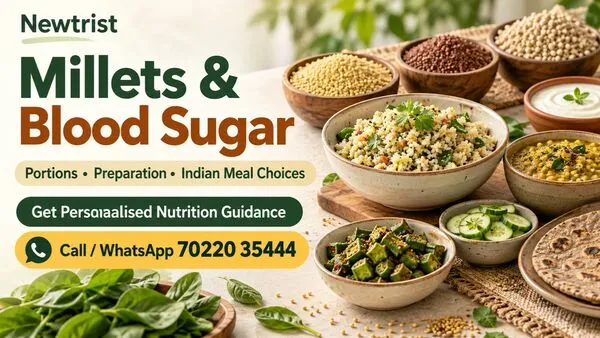
How Much Millet Should You Eat in One Meal?
The quantity of millet that fits your meal depends on carbohydrate requirements, physical activity, appetite and overall eating habits.
The following examples help explain how familiar millet dishes can be measured.
Practical Millet Portion Size Chart
| Millet preparation | Illustrative serving | How to measure |
| Cooked millet rice | ½ cup cooked | Measure after cooking |
| Jowar or bajra roti | 1 small roti | Approximately 25–30 g dry flour |
| Ragi porridge | Prepared using 25–30 g ragi flour | Measure flour before adding liquid |
| Vegetable millet upma | Prepared using approximately 25–30 g dry millet | Measure the uncooked grain |
These are serving examples, not carbohydrate-equivalent portions. The nutritional composition differs across preparations.
Cooked vs Uncooked Millet: Which Measurement Matters?
Dry measurements show how much grain goes into a recipe. Cooked measurements help you serve a consistent quantity.
Millets absorb water and expand during cooking.
Suppose you prepare 90 g of dry millet for three equal servings. Each serving contains grain from approximately 30 g of dry millet, even though the finished quantity is larger after cooking.
This approach is particularly useful for family-sized preparations.
You can also check the capacity of your regular steel katori using a standard measuring cup. Once you know how much it holds, it becomes easier to recognise your usual cooked millet serving without weighing every meal.
Why Does the Flour Quantity Matter in Millet Roti?
Homemade millet rotis can vary considerably in thickness.
A small jowar roti may contain 25 g flour, while a large bhakri may use 50 g. Both might be counted as one roti, even though the second contains approximately twice as much flour.
Measuring the flour used for a typical batch makes it easier to understand your regular serving.
Should You Replace Rice With Millet or Combine Both?
If your usual lunch contains rice, dal and vegetables, millet can replace some or all of the rice portion.
You can also combine smaller quantities of rice and millet within your intended grain serving if you prefer the familiar taste and texture.
Adding a full serving of millet without reducing an existing grain portion increases the overall amount of grain in the meal.
A gradual substitution can make millet easier to introduce into family cooking. For a wider discussion of familiar Indian staples, see Indian foods for diabetes.
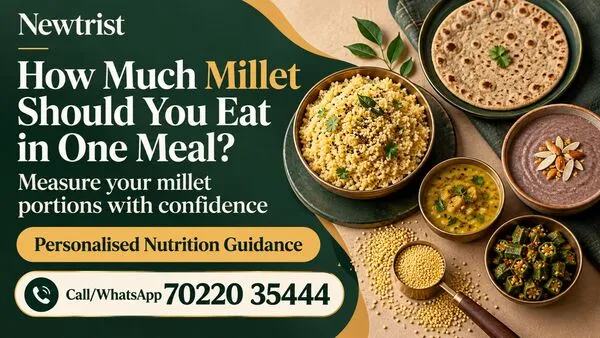
How Does Millet Preparation Affect Blood Sugar?
Processing and cooking change the physical structure of millet starch, which can influence how readily it is digested.
This makes the preparation method relevant when comparing different millet dishes.
Whole Millet vs Millet Flour
Whole or minimally processed millet retains more of its original grain structure.
Grinding millet into flour breaks the grain into smaller particles, which can make starch more accessible to digestive enzymes.
The final effect also depends on the millet variety and the way the flour is prepared. This explains why whole millet rice, millet roti and millet porridge may produce different glycaemic responses.
How to Prepare Millet Rice for Indian Meals
Foxtail millet and little millet can be prepared as rice-style dishes and served with familiar Indian foods.
For foxtail millet:
1. Wash: Rinse the grains thoroughly in clean water.
2. Soak: Soak briefly if desired to hydrate the grains.
3. Cook: Start with approximately two parts water for one part dry millet. Bring to a boil, cover and simmer until tender.
4. Rest: Let the cooked millet rest for a few minutes before fluffing and serving.
Water requirements and cooking times vary according to the millet variety and preferred texture.
The finished preparation can be served with dal, sambar and vegetable dishes.
Does Soaking Millet Reduce Its Blood Sugar Effect?
Soaking hydrates millet grains, can soften their texture and may reduce cooking time.
It can also influence some naturally occurring compounds in the grain.
However, soaking alone does not determine the finished preparation’s glycaemic response. For everyday cooking, soaking is mainly useful for hydration and texture.
Boiling vs Pressure Cooking: Which Is Better?
Both methods change millet starch through heating.
Pressure cooking generally softens the grains more quickly, while open-pot cooking allows greater control over firmness and water absorption.
The resulting starch digestibility depends on the grain and cooking conditions. Neither method consistently produces a lower blood sugar response across all millet preparations.
Choose a method that gives you a suitable texture and works with your regular kitchen routine.

What Should You Serve With Millets in Indian Meals?
Millet can form the grain component of a meal, alongside familiar foods that contribute protein, fibre and other nutrients.
For example, moong dal and horse gram (kollu) contribute plant protein and fibre. Bhindi, amaranth greens and drumstick leaves provide fibre and micronutrients. Plain curd and paneer add protein and calcium.
These ingredients fit naturally into Indian cooking.
A millet rice lunch can be served with dal and seasonal vegetables, while millet roti can accompany paneer or another protein-rich preparation with vegetables.
This makes it possible to build satisfying meals without relying on unfamiliar ingredients.

Sample One-Day Indian Meal Plan With Millets
Here is an illustrative day showing how millet can fit into familiar Indian meals.
| Meal | Menu |
| Breakfast | 1–2 small vegetable pesarattu with plain curd |
| Mid-morning | 1 small pear |
| Lunch | ½ cup cooked foxtail millet rice, ¾ cup horse gram dal, amaranth greens poriyal and cucumber salad |
| Evening snack | A small handful of roasted peanuts |
| Dinner | 1–2 small whole-wheat phulkas with paneer and mixed vegetable curry |
This example includes millet at lunch while allowing other familiar foods throughout the day.
It demonstrates how a measured millet serving can fit alongside pulses, leafy vegetables and other ingredients without making millet necessary at every meal.
The portions and meal combinations can be personalised according to nutritional requirements, daily routine and food preferences.
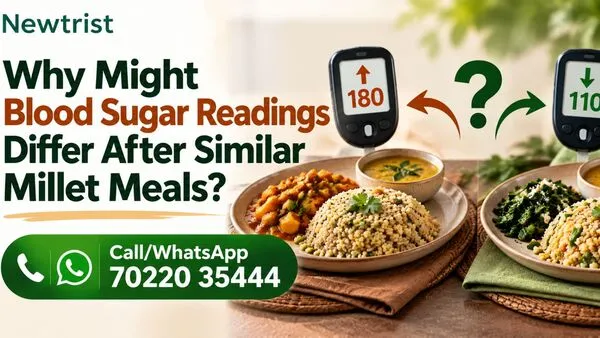
Why Might Blood Sugar Readings Differ After Similar Millet Meals?
You prepare millet rice for lunch on two different days. The portion appears similar, but your blood sugar readings are different.
The millet itself may be identical, while other aspects of the meal have changed.
Perhaps one lunch includes millet rice with dal and non-starchy vegetables, while another contains a generous potato-based curry.
Meal timing, physical activity and individual factors can also influence glucose patterns.
What Can You Learn From Your Regular Millet Meals?
If you already monitor your blood sugar, keeping brief records of your usual millet meals can make patterns easier to identify.
Record the preparation, quantity served, accompaniments, meal timing and readings from your regular monitoring routine.
For example, you might notice that your serving changes depending on who prepares the meal, or that certain homemade flour-based dishes contain more grain than you expected.
These observations can help you identify specific questions relevant to your individual food choices.
Frequently Asked Questions About Millets and Blood Sugar
1. Does Fermenting Millet Batter Remove Its Carbohydrates?
No. Fermentation changes the characteristics of millet batter, including flavour and texture, but does not eliminate its carbohydrates. The amount of grain and other ingredients determines much of the finished dosa or idli’s carbohydrate contribution.
2. Does Adding Milk to Ragi Porridge Change Its Nutritional Composition?
Yes. Milk contributes protein, calcium and lactose, which is a carbohydrate. Ragi porridge prepared with milk therefore differs nutritionally from porridge made with water, even when the ragi flour quantity remains the same.
3. Are Instant Millet Mixes the Same as Plain Cooked Millet?
Not necessarily. Instant millet mixes may contain additional starches, refined ingredients or added sugars. Their nutritional composition can differ from plain cooked millet. Comparing the ingredient list and total carbohydrate per serving helps explain these differences.
When Is a Personalised Millet Meal Plan More Useful?
You may understand how millet portions are measured but still find it difficult to apply standard charts to the meals prepared in your own kitchen.
Perhaps your family’s jowar bhakri is thicker than the usual portion example.
Maybe your preferred breakfast is ragi dosa, made with a homemade batter containing several ingredients.
Or you have been paying attention to your millet servings and still notice differences in your blood sugar readings.
This is where a standard portion chart may no longer provide the answer you need. It can explain how to measure a serving, but it cannot determine which serving best suits your individual requirements.
Chief Nutritionist Vasanthi Senthilvel at Newtrist provides personalised diet and nutrition guidance based on nutritional needs, everyday eating habits and food preferences.
A personalised assessment can help you work through the millet preparations you regularly eat, the grain and flour quantities used in your household and how those foods fit your daily eating pattern.
You can bring practical details such as your usual katori capacity, the flour quantity in your homemade rotis and the millet dishes your family prepares most often.
These details make it possible to discuss changes that fit your actual kitchen and routine rather than following an unfamiliar food chart.
If you have switched to millets but remain unsure about the right portions or meal combinations, consult Chief Nutritionist Vasanthi Senthilvel for a personalised diet and nutrition plan.
Enquire about a Personalised Nutrition Consultation With Chief Nutritionist Vasanthi Senthilvel
Build your millet meals around your nutritional requirements and the Indian foods you already enjoy.
Author
Chief Nutritionist Vasanthi Senthilvel leads Newtrist Nutritionist Dietitian Dietician, providing personalised diet plans for weight management and clinical nutrition for children, adolescents, adults and families.
She has 21 years of experience in nutrition and has received professional recognition for her work.
- Pride of Bharat Awards 2026: Outstanding Achievement in Holistic Health & Nutrition Innovation
- Doctor of The Year: Nutritionist 2026: Excellence in Clinical Nutrition and Weight Loss.
Her approach considers age, growth, health history, medical conditions, laboratory reports, medication, body composition, weight history, dietary preferences, regional food habits, family routines, activity, sleep and personal health goals. Recommendations are developed according to individual needs rather than using one standard diet for everyone.
Consultations are available in person at Bangalore HSR Layout, Koramangala, Bellandur, Haralur and Electronic City, as well as online across India.
Independent Medical Review Panel
Newtrist health and nutrition articles undergo medical review, where appropriate, by doctors with relevant specialist expertise. The medical professionals listed below contribute to Newtrist’s review process within their respective specialties.
| Speciality | Doctor |
|---|---|
| Endocrinology | Dr Vinay Prasad MBBS, MD, DM |
| Gastroenterology & Hepatology | Dr Sunil kumar N MBBS, MD, DM |
| Gynaecology | Dr Prathiba G MBBS, DNB, FIRM, FMAS |
| Nephrology | Dr Priyashree R MBBS, MD, DNB, DM |