
Written by: Chief Nutritionist Vasanthi Senthilvel
21 years of experience | Newtrist Nutritionist Dietitian Dietician
Best Nutritionist in Bangalore with multiple awards for excellence in clinical nutrition, weight loss, holistic health and nutrition innovation.
Medically reviewed by: Dr Prathiba G MBBS, DNB, FIRM, FMAS | Dr Sunil kumar N MBBS, MD, DM | Dr Vinay Prasad MBBS, MD, DM
Medical Disclaimer: Nutritional needs vary based on an individual’s profile. The information on this page is for general educational purposes only and is not intended to replace personalised medical or nutrition care.
To create a protein-rich Indian breakfast, first identify whether the meal contains a meaningful protein food, then choose a suitable option from dairy, pulses, soy foods, eggs or other animal protein foods according to your preferences.
Protein can support fullness and muscle maintenance, but more protein is not automatically better, and individual requirements vary. The right foods and quantity depend on age, activity, health, dietary pattern and the rest of the day’s intake.
Table of Contents

Why include protein at breakfast?
Protein supplies amino acids, which the body uses to maintain muscles and other tissues and to produce many enzymes, hormones and immune-system components. Breakfast is one opportunity to distribute protein across the day instead of depending mainly on the evening meal.
A breakfast containing an appropriate amount of protein may help some people remain satisfied for longer than a meal made almost entirely from refined or starchy foods. This response is not identical for everyone. Fibre, fat, meal size, sleep, stress, medication and usual eating habits can also affect hunger and fullness.
For weight management, protein may help protect lean body tissue when the overall diet and activity pattern are appropriate. Protein itself does not cause weight loss. Total food intake, portions, food quality, physical activity, sleep, stress, medical conditions and consistency still influence progress.
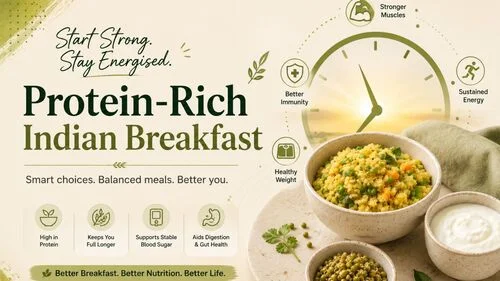
Which Indian breakfasts may contain limited protein?
A breakfast may be relatively low in protein when most of it comes from cereal, starch, sugar or added fat and only a small amount comes from pulses, dairy, soy, egg or another protein-rich food. This does not make the breakfast food unsuitable. It means the overall balance may need review.
Foods such as poha, upma, bread, paratha, rice-based dishes and some dosa or idli preparations can vary widely in protein content depending on their ingredients and preparation. Fermentation or the presence of a small quantity of dal does not automatically make every serving high in protein.
Traditional Indian foods do not need to be replaced with Western diet products. The practical goal is to understand what the breakfast already provides and strengthen the protein component where appropriate.
How to add protein to an Indian breakfast
Start by looking for the main protein food in the breakfast. A garnish of a few nuts, a spoon of curd or a small amount of dal may add some protein, but it may not be the meal’s main protein source. The suitable choice depends on dietary preference, tolerance, availability, cost and individual nutritional needs.
Use a dairy-based protein option where suitable
Milk, curd and paneer are familiar protein-containing foods in many Indian households. The most suitable form depends on lactose tolerance, appetite, preparation, total energy intake and any clinical dietary restrictions. Sweetened dairy drinks and desserts should not be treated as equivalent to plain dairy foods simply because they contain milk.
Use pulses, legumes or pulse-based ingredients
Dal, chickpeas, beans, peas, sprouts and besan can contribute protein as well as other nutrients. Pulse-based batters and preparations may be useful when they already fit the household’s regional food pattern. Digestive tolerance, cooking method and the overall quantity eaten can influence suitability.
Consider soy foods for vegetarian or vegan diets
Tofu and other minimally processed soy foods can provide protein for people who include them. Soy is not compulsory for a vegetarian diet, and it should not be added when there is an allergy or another individual reason to avoid it. Familiarity, affordability and cultural preference matter.
Include eggs when they fit the dietary pattern
Eggs are a practical protein source for households that include them. Preparation method and the rest of the breakfast still matter, especially when weight management, digestion or a medical condition is relevant. Eggs are one option, not the only way to improve breakfast protein.
Use regional non-vegetarian foods where customary
Fish, chicken or other suitable lean animal foods may be part of breakfast in some Indian regions and households. The appropriate choice depends on cultural practice, preparation, food safety, total intake and individual health needs. A non-vegetarian breakfast is not automatically more balanced than a vegetarian one.
Treat nuts and seeds as supporting foods
Groundnuts, other nuts and seeds contain protein along with fats and several micronutrients. They can support breakfast quality, but a small garnish may not provide enough protein to function as the main source. Large quantities may also add substantial energy, which can matter during weight management.
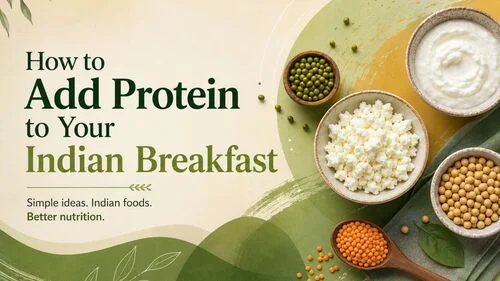
Protein sources for different dietary preferences
Protein can come from both plant and animal foods. Plant proteins differ in amino acid profile and digestibility, but a varied vegetarian or vegan eating pattern can still provide adequate protein. Cereals and pulses do not need to be combined in a precise formula at every breakfast; variety across the day is more practical for most people.
| Dietary pattern or protein category | Familiar examples | Practical consideration |
| Vegetarian dairy foods | Milk, curd, paneer | Consider tolerance, added sugar, preparation and total energy intake. |
| Pulses and legumes | Dal, chickpeas, beans, peas, sprouts, besan | Cooking method, digestion and food variety may influence suitability. |
| Vegan protein foods | Tofu, soy foods, pulses, legumes | Choose according to preference, allergy status, availability and overall diet quality. |
| Egg-based diets | Eggs | Preparation and the balance of the full meal still matter. |
| Non-vegetarian diets | Fish, chicken and other suitable lean foods | Regional practice, food safety and individual health needs should be considered. |
| Supporting foods | Groundnuts, other nuts and seeds | Useful additions, but not always sufficient as the only protein source. |
Do you need to remove carbohydrates to increase protein?
No. Adding protein does not require removing rice, roti, idli, dosa, poha, upma or other familiar carbohydrate foods. Carbohydrates provide energy, and whole grains or less-refined options can also contribute fibre and other nutrients.
The aim is to improve meal balance rather than label traditional staples as unsuitable. During weight management, the amount and preparation of carbohydrate foods may need individual adjustment, but severe carbohydrate restriction is not the only way to improve a breakfast.
Does a high-protein breakfast guarantee weight loss?
No. A protein-rich breakfast may support fullness and help some people manage hunger, but it cannot guarantee fat loss or a particular change on the weighing scale. Adding protein without considering portions, cooking fat, sugary drinks, snacks and the rest of the day may increase total energy intake rather than reduce it.
Personalised weight management considers nutritional adequacy, eating patterns, hunger and fullness cues, body composition, activity, sleep, stress, medication, medical conditions, work routine and personal goals. It should not be reduced to eating as little as possible or copying another person’s breakfast.
Common mistakes when increasing breakfast protein
- Assuming that any breakfast containing a few nuts or a small amount of dal is automatically high in protein.
- Adding protein powder without first checking whether ordinary foods can meet the need.
- Increasing paneer, cheese, nuts or seeds without considering total energy intake and preparation.
- Removing all carbohydrate foods and vegetables in an attempt to make the meal “high protein”.
- Relying on packaged foods labelled “high protein” without checking added sugar, fat, sodium and the ingredient list.
- Following a fitness influencer’s protein target without considering age, body size, activity, health conditions or medication.
- Treating protein as the only factor that matters for weight management or health.
Why protein needs differ between individuals
The appropriate amount of protein at breakfast cannot be determined from one general article. Protein requirements and suitable food choices may vary according to age, growth stage, body composition, activity, pregnancy, breastfeeding, health conditions, laboratory findings, medication, allergies, food tolerance, appetite and total daily intake.
Children and adolescents
Protein supports growth and development, but children should not be given a smaller version of an adult weight-loss diet. Appetite, growth pattern, activity, food preferences, allergies and health history should be considered together. Restrictive eating or calorie cutting is not appropriate without a clear clinical reason and professional assessment.
Pregnancy and breastfeeding
Nutritional requirements change during pregnancy and breastfeeding. A breakfast approach should consider appetite, nausea, food safety, medical conditions, supplements and the advice of the treating healthcare team. Weight-loss strategies should not be applied automatically during these life stages.
Older adults
Older adults may need attention to muscle maintenance, reduced appetite, chewing or swallowing difficulties, mobility, medication and chronic health conditions. Simply increasing the volume of food may not be practical, so individual assessment can help identify suitable protein foods and meal patterns.
People with medical conditions
People with kidney or liver disease, diabetes, digestive disorders, food allergies or other medical conditions may need modified protein amounts, food choices or meal timing. Nutrition guidance should support medical care and prescribed treatment, not replace it. Medication should not be changed based on general online advice.
Are protein powders necessary for breakfast?
Protein powders are not necessary for most people who can meet their requirements through a varied diet. Powders may be convenient in selected circumstances, but they can also contain sweeteners, flavours or other ingredients that do not suit every person.
Supplement use should be considered carefully when there is a medical condition, pregnancy, breastfeeding, an allergy, digestive difficulty, medication use or a history of restrictive dieting. A powder should not replace assessment of the whole diet or become a shortcut for an otherwise unbalanced eating pattern.
Frequently asked questions
Are idli and dosa good sources of protein?
Idli and dosa can contribute some protein because traditional batter usually includes urad dal, but the amount varies with the recipe, cereal-to-pulse ratio and quantity eaten. They should not automatically be described as high-protein foods. The full breakfast pattern and the person’s total daily intake need to be considered.
Can vegetarians build a protein-rich Indian breakfast?
Yes. Vegetarian protein foods may include milk, curd, paneer, dal, chickpeas, beans, peas, sprouts, besan, tofu, soy foods, nuts and seeds. The suitable quantity and combination depend on appetite, total diet, food tolerance, activity and health. A varied vegetarian diet is more useful than relying on one food repeatedly.
Is an egg the best protein food for breakfast?
Eggs are a useful protein source for people who eat them, but there is no single best breakfast protein for everyone. Dairy, pulses, legumes and soy foods can also contribute protein. Suitability depends on dietary preference, culture, allergies, digestion, preparation and individual nutritional requirements.
Will eating more protein at breakfast reduce cravings?
It may help some people feel fuller, especially when the previous breakfast was mainly refined carbohydrate or sugar. Cravings can also be influenced by inadequate total intake, sleep, stress, emotional eating, medication and long gaps between meals. Protein is one factor, not a guaranteed solution.
Can I use protein powder instead of food?
Protein powder is not automatically required and should not replace a varied diet without a clear reason. Ordinary foods can often provide protein along with vitamins, minerals and other nutrients. People with medical conditions, allergies, pregnancy, breastfeeding or medication use should seek individual guidance before using supplements regularly.
How much protein should my breakfast contain?
The appropriate amount depends on body size, age, activity, health, total daily protein intake, appetite, pregnancy or breastfeeding status and personal goals. A general online number may be too high or too low for a particular person. Individual assessment is appropriate when an exact target is needed.
Conclusion
A protein-rich Indian breakfast can be created by identifying the meal’s main protein food and choosing a suitable option from familiar dairy, pulse, soy, egg or other animal protein sources. Traditional carbohydrate foods do not need to be removed, and powders are not automatically necessary.
The right protein source and quantity vary between individuals. A breakfast that suits one person’s appetite, health and weight-management goals may not suit another person with different medical needs, activity or routine.
When personalised nutrition guidance may help
General nutrition information can explain how protein contributes to breakfast quality, but it cannot determine the exact food quantity, protein target, meal timing or clinical modification for every individual. Age, health history, body composition, laboratory findings, medication, food preferences, activity, sleep, work routine and personal goals may all influence an appropriate approach.
Readers who need individual guidance may consult Chief Nutritionist Vasanthi Senthilvel at Newtrist Nutritionist Dietitian Dietician for a personalised diet plan for weight management. Where a medical condition affects protein requirements or food choices, clinical nutrition guidance may be coordinated with appropriate medical care.
Consult Chief Nutritionist Vasanthi Senthilvel for a personalised diet plan developed around your weight-management goals, health history, protein requirements, food preferences and daily routine.
Author
Chief Nutritionist Vasanthi Senthilvel leads Newtrist Nutritionist Dietitian Dietician, providing personalised diet plans for weight management and clinical nutrition for children, adolescents, adults and families.
She has 21 years of experience in nutrition and has received professional recognition for her work.
- Pride of Bharat Awards 2026: Outstanding Achievement in Holistic Health & Nutrition Innovation
- Doctor of The Year: Nutritionist 2026: Excellence in Clinical Nutrition and Weight Loss.
Her approach considers age, growth, health history, medical conditions, laboratory reports, medication, body composition, weight history, dietary preferences, regional food habits, family routines, activity, sleep and personal health goals. Recommendations are developed according to individual needs rather than using one standard diet for everyone.
Consultations are available in person at Bangalore HSR Layout, Koramangala, Bellandur, Haralur and Electronic City, as well as online across India.
Independent Medical Review Panel
Newtrist health and nutrition articles undergo medical review, where appropriate, by doctors with relevant specialist expertise. The medical professionals listed below contribute to Newtrist’s review process within their respective specialties.
| Speciality | Doctor |
|---|---|
| Endocrinology | Dr Vinay Prasad MBBS, MD, DM |
| Gastroenterology & Hepatology | Dr Sunil kumar N MBBS, MD, DM |
| Gynaecology | Dr Prathiba G MBBS, DNB, FIRM, FMAS |
| Nephrology | Dr Priyashree R MBBS, MD, DNB, DM |