
Written by: Chief Nutritionist Vasanthi Senthilvel
21 years of experience | Newtrist Nutritionist Dietitian Dietician
Best Nutritionist in Bangalore with multiple awards for excellence in clinical nutrition, weight loss, holistic health and nutrition innovation.
Medically reviewed by: Dr Prathiba G MBBS, DNB, FIRM, FMAS | Dr Sunil kumar N MBBS, MD, DM | Dr Vinay Prasad MBBS, MD, DM
Medical Disclaimer: Nutritional needs vary based on an individual’s profile. The information on this page is for general educational purposes only and is not intended to replace personalised medical or nutrition care.
Your kitchen may already have moong dal, chana, curd and paneer. But having protein-rich foods available doesn’t necessarily mean you’re getting enough protein from your meals.
Think about a typical working day. Breakfast is quick, lunch depends on what’s available, and dinner is often the only meal you prepare with much thought. By then, you may be relying on one meal to provide much of your daily protein.
What if you could see how your regular Indian meals add up, rather than guessing whether you’re eating enough?
That’s where a high-protein vegetarian meal plan becomes useful.
Key Takeaway
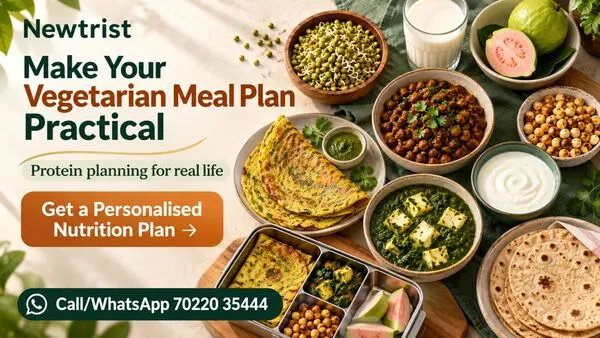
A high-protein vegetarian meal plan can help meet daily protein needs by distributing suitable portions of protein-containing foods across meals. This one-day Indian example provides approximately 72 g of protein: 18 g at breakfast, 18 g at lunch, 13 g from an evening snack and 23 g at dinner. It uses familiar foods such as moong dal, kala chana, curd, roasted chana and paneer. Your individual requirements and suitable portions may differ.
Table of Contents
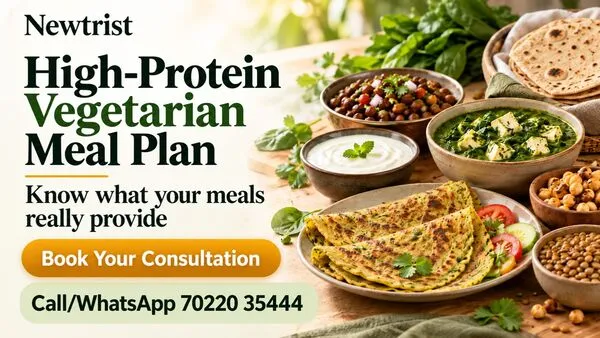
One-Day High-Protein Vegetarian Meal Plan
The following example shows how protein can be distributed across four eating occasions using familiar Indian vegetarian foods.
| Meal | Vegetarian meal and portion sizes | Approx. protein |
| Breakfast | 2 moong dal chillas made with 60 g dry moong dal, served with 100 g plain curd | 18 g |
| Lunch | Kala chana curry made with 60 g dry kala chana, 2 whole-wheat phulkas prepared from 60 g atta, and cucumber-carrot salad | 18 g |
| Evening snack | 30 g roasted chana with 200 ml cow’s milk and 1 small guava | 13 g |
| Dinner | Palak paneer prepared with 100 g paneer and 75 g spinach, served with 1 whole-wheat phulka prepared from 30 g atta | 23 g |
| Total daily protein | 72 g |
Protein estimates are approximate and rounded, using typical values for the main ingredients: dry moong dal (24 g/100 g), dry kala chana (19 g/100 g), whole-wheat atta (11 g/100 g), roasted chana (21 g/100 g), paneer (18 g/100 g), curd (3.5 g/100 g), milk (3.2 g/100 ml) and spinach (2.9 g/100 g). Small contributions from fruit, salad and cooking ingredients are excluded. Actual values vary with food composition and preparation. Pulses and atta are measured dry, before cooking. This menu demonstrates protein distribution; it is not a complete diet prescription for daily energy and other nutritional requirements.
How to Make This Vegetarian Meal Plan Practical
The meals themselves are familiar. The challenge is making them work around your morning routine, office lunch and family dinner.
A little preparation can make a difference without requiring you to cook entirely separate meals.
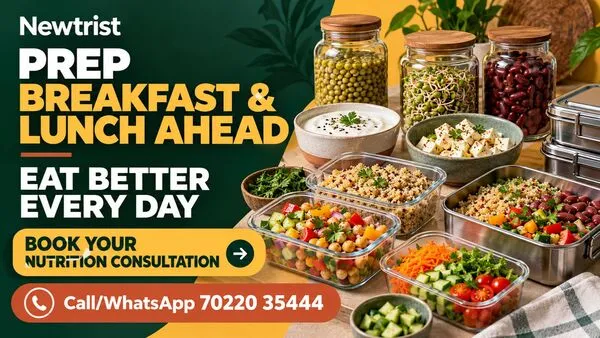
Prepare Breakfast and Lunch Ingredients Ahead
Soak moong dal the previous evening so it is ready to grind into chilla batter the next morning.
Kala chana can be cooked in advance and divided into suitable portions for packed lunches. Refrigerate or freeze cooked foods promptly and follow safe storage practices.
You can also portion roasted chana before leaving home.
This way, the foods that require the most preparation are already organised when your day becomes busy.
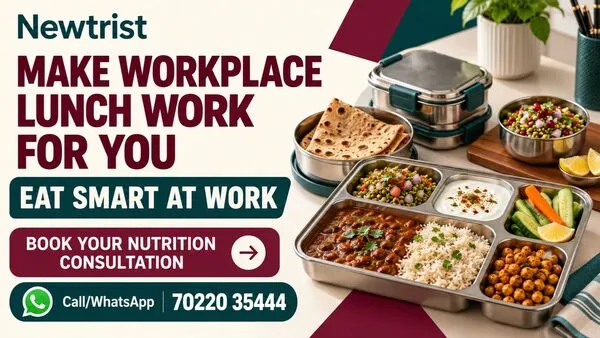
Work With the Lunch Available at Your Workplace
Suppose your canteen serves rajma and rice instead of kala chana and phulkas.
You don’t necessarily need to prepare a separate lunch. However, the amount of protein will depend on the quantities served.
A bowl containing mostly gravy with relatively few beans will not provide the same protein as a substantial rajma portion.
When eating outside, look at how much of the main protein-containing ingredient is actually on your plate. That gives you a better starting point than judging the meal by its name.
Keep Dinner Part of Your Family Menu
Palak paneer and phulka can remain part of a normal family dinner.
You don’t have to prepare a different dish just because you’re paying attention to protein.
However, the quantity served to you may need to differ from another family member’s portion. The sample assumes 100 g of paneer, which may be more than you normally receive in a shared curry.
The practical advantage is being able to work with familiar family meals while planning the amount you eat.
Is 72 g of Protein the Right Amount for You?
Not necessarily. The sample provides one possible daily protein total, not a universal requirement.
Your individual needs depend on body weight, age, physical activity, life stage and health circumstances.
For an initial estimate, use the Newtrist Protein Intake Calculator.
Once you know an appropriate target, the sample helps you understand how different meals could contribute towards it.
For example, if you need less protein than the amount shown, you may not require every suggested portion. If you need more, the food quantities or combinations may need adjustment.
However, simply increasing every protein-containing ingredient is not always suitable. Larger portions also affect energy intake, appetite and the overall nutritional balance of the diet.
The goal is to meet your nutritional needs through food quantities you can comfortably maintain.
Why Your Actual Protein Intake May Differ From the Sample
Even when you follow the same menu, your meals may not provide exactly the protein amounts shown.
Two details are particularly important.
Dry and Cooked Pulse Quantities Are Different
Pulses absorb water during soaking and cooking, increasing their weight.
For example, 60 g of dry kala chana produces a larger cooked serving. If you instead measure only 60 g of cooked kala chana, you will be eating less of the original ingredient.
That means the protein contribution will be lower than the amount calculated for the dry quantity.
Protein Content Can Vary Between Similar Foods
Paneer, curd and milk can contain different amounts of protein depending on their composition and preparation.
Homemade phulkas also vary in size and the amount of atta used.
For packaged foods, nutrition labels can help you estimate protein more accurately. For homemade meals, knowing approximately how much of the main ingredient went into your serving is a useful starting point.
You don’t have to weigh every meal indefinitely. Understanding your usual portions helps you interpret the numbers more reliably.
How to Adapt the Plan to the Meals You Actually Eat
What if your usual breakfast is idli or dosa, lunch is rice with sambar, and dinner is a lighter meal?
You do not need to replace your entire routine with the example.
The more practical approach is to understand the protein contribution from your existing meals before deciding what needs to change.
If your breakfast provides relatively little protein, that may be the first meal worth reviewing. If your lunch is unpredictable, you may have more control over breakfast, dinner or another eating occasion.
Similarly, your appetite may make the four eating occasions in the sample less practical than three meals.
The distribution can be adjusted, but any replacement foods need to be considered according to their actual quantities and nutritional contribution.
A useful vegetarian protein meal plan should fit your everyday food habits while helping you meet an appropriate daily target.
Frequently Asked Questions
Can I Follow This High-Protein Vegetarian Meal Plan Without Dairy?
Yes. Dairy-containing foods can be replaced with appropriately portioned tofu, soy foods or other vegetarian protein sources. However, the revised portions need to be calculated because these foods do not necessarily provide equivalent amounts of protein.
Can I Replace Phulkas With Rice?
Yes. Rice can be included in the plan. Its protein contribution depends on the variety and serving size, so the revised meal should not automatically be assigned the original protein value.
Can I Prepare the Meals in Advance?
Yes. Kala chana can be cooked and portioned ahead, while moong dal can be soaked for the next day’s breakfast. Store prepared foods safely and prepare fresh accompaniments as needed.
Can I Use This Meal Plan for My Whole Family?
The dishes can be prepared as family meals, but identical portions may not be suitable for everyone. Individual nutritional requirements should determine the serving sizes.
When Your Vegetarian Protein Meal Plan Needs Personalisation
The sample shows what approximately 72 g of protein can look like across a day of Indian vegetarian meals.
But there’s one question it cannot answer:
What should your own breakfast, lunch, snacks and dinner provide?
Perhaps you already eat chana and paneer regularly but don’t know whether the quantities are sufficient. You may find larger pulse portions uncomfortable, depend on a workplace canteen or have different food preferences from those shown in the sample.
You might even know your approximate daily protein requirement but still be unsure which meal needs attention.
A generic chart cannot resolve all these differences.
Chief Nutritionist Vasanthi Senthilvel, at Newtrist Nutritionist Dietitian Dietician, brings 21 years of experience in nutrition to personalised dietary assessment and guidance.
An individual assessment can examine the foods you currently eat, the quantities you typically serve and the practical challenges in your routine.
It can help clarify whether your meals provide an appropriate amount of protein, which food combinations may need adjustment and how those changes can fit into an overall nutritionally suitable eating pattern.
For example, if your office lunch consistently provides less protein than expected, replacing it completely may not be practical. Another approach may involve reviewing the meals you prepare at home and deciding where an adjustment would make sense.
If large servings of pulses are difficult to manage, a different combination of vegetarian foods may be more comfortable.
The aim is to develop a plan around your actual eating habits rather than force your day to match a standard menu.
Find Out Whether Your Vegetarian Meals Are Meeting Your Needs
If you’ve been trying to improve your protein intake but aren’t sure what to change, start with a record of one ordinary day.
Include your usual breakfast, lunch, snacks and dinner, along with approximate serving sizes. Your normal meals provide a useful starting point for identifying what is already working and what deserves attention.
Book a personalised nutrition consultation with Chief Nutritionist Vasanthi Senthilvel to review your current eating pattern, understand your individual protein needs and explore a vegetarian eating plan tailored to your food preferences, appetite and daily routine.
You may already have many of the foods you need. The next step is understanding which portions and combinations are right for you.
Author
Chief Nutritionist Vasanthi Senthilvel leads Newtrist Nutritionist Dietitian Dietician, providing personalised diet plans for weight management and clinical nutrition for children, adolescents, adults and families.
She has 21 years of experience in nutrition and has received professional recognition for her work.
- Pride of Bharat Awards 2026: Outstanding Achievement in Holistic Health & Nutrition Innovation
- Doctor of The Year: Nutritionist 2026: Excellence in Clinical Nutrition and Weight Loss.
Her approach considers age, growth, health history, medical conditions, laboratory reports, medication, body composition, weight history, dietary preferences, regional food habits, family routines, activity, sleep and personal health goals. Recommendations are developed according to individual needs rather than using one standard diet for everyone.
Consultations are available in person at Bangalore HSR Layout, Koramangala, Bellandur, Haralur and Electronic City, as well as online across India.
Independent Medical Review Panel
Newtrist health and nutrition articles undergo medical review, where appropriate, by doctors with relevant specialist expertise. The medical professionals listed below contribute to Newtrist’s review process within their respective specialties.
| Speciality | Doctor |
|---|---|
| Endocrinology | Dr Vinay Prasad MBBS, MD, DM |
| Gastroenterology & Hepatology | Dr Sunil kumar N MBBS, MD, DM |
| Gynaecology | Dr Prathiba G MBBS, DNB, FIRM, FMAS |
| Nephrology | Dr Priyashree R MBBS, MD, DNB, DM |