
Written by: Chief Nutritionist Vasanthi Senthilvel
21 years of experience | Newtrist Nutritionist Dietitian Dietician
Best Nutritionist in Bangalore with multiple awards for excellence in clinical nutrition, weight loss, holistic health and nutrition innovation.
Medically reviewed by: Dr Prathiba G MBBS, DNB, FIRM, FMAS | Dr Sunil kumar N MBBS, MD, DM | Dr Vinay Prasad MBBS, MD, DM
Medical Disclaimer: Nutritional needs vary based on an individual’s profile. The information on this page is for general educational purposes only and is not intended to replace personalised medical or nutrition care.
A Type 2 diabetes diet needs to do more than reduce sugar. Type 2 diabetes involves insulin resistance and, over time, may also involve reduced insulin production, so nutrition has to work alongside medical treatment while supporting blood glucose management and overall health. The most useful approach depends on medication, glucose patterns, cardiovascular and kidney health, body composition, appetite, food preferences and daily routine.
Key takeaway: A Type 2 diabetes diet should be nutritionally adequate, practical and coordinated with the person’s treatment. Food quality, carbohydrate intake, fibre, cardiovascular risk, medication effects and weight goals may all matter, but their priority differs between individuals. Exact amounts, meal timing and restrictions should not be copied from a generic diet chart.
Table of Contents

What is different about nutrition in Type 2 diabetes?
In Type 2 diabetes, cells do not respond to insulin as effectively as they should. The pancreas may initially produce more insulin to compensate, but over time it may not produce enough to keep blood glucose within the person’s treatment goals. Nutrition can influence glucose exposure after eating and overall metabolic health, but it does not replace medication, monitoring or other parts of diabetes care.
This page focuses on the considerations that are specific to Type 2 diabetes. For the wider framework covering all major forms of diabetes, use Newtrist’s diabetes diet and nutrition guide.

What should a Type 2 diabetes diet prioritise?
Support blood glucose management without focusing only on sugar
Blood glucose is affected by more than table sugar. The total eating pattern, carbohydrate-containing foods, food processing, fibre, activity, medication and the timing of intake can all influence glucose patterns. Looking only at whether a food tastes sweet can therefore miss other factors that matter in Type 2 diabetes.
Foods that are high in added sugars or heavily refined may be useful to limit, but a Type 2 diabetes diet should not turn into a long blacklist. The separate guide to foods to avoid with diabetes explains which foods may need limiting and why, without treating ordinary foods as universally forbidden.
Keep carbohydrate decisions in context
Carbohydrate-containing foods can raise blood glucose after eating, but carbohydrate quality, amount, fibre content, processing and the rest of the dietary pattern all affect how a food fits into diabetes nutrition. Grains, pulses, fruit, milk and curd can therefore require different consideration rather than being grouped together as one category to remove.
The appropriate carbohydrate amount cannot be determined from the diagnosis alone. Readers who need the detailed explanation of carbohydrate quality, glycaemic concepts and food sources can refer to carbohydrates and diabetes rather than using this Type 2 page as a carbohydrate prescription.
Prioritise fibre and nutritional quality
Vegetables, pulses, legumes, whole fruits, nuts, seeds and less-refined grains can contribute fibre as well as vitamins, minerals and other nutrients. Fibre can support digestive health, satiety and dietary quality, but tolerance and suitability can change when there is kidney disease, gastrointestinal illness, poor appetite or another clinical concern.
Protein and fats also need to support nutritional adequacy rather than simply being used to replace carbohydrate. The useful balance depends on the person’s nutritional status, kidney function, cardiovascular risk, appetite and dietary pattern.
Consider heart health alongside blood glucose
Type 2 diabetes is closely linked with cardiovascular risk, so nutrition planning should not focus on glucose in isolation. Blood pressure, blood lipids, body composition and the overall quality of dietary fats and fibre may all influence long-term priorities.
A dietary pattern that improves one glucose reading but relies heavily on saturated fat, highly processed foods or excessive sodium may not support the person’s broader health needs. Cardiometabolic risk should therefore be considered alongside glycaemic management.
Keep familiar Indian foods in the discussion
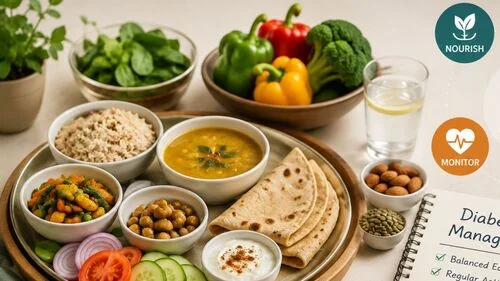
Type 2 diabetes does not require replacing familiar Indian foods with imported diet products. Rice, chapati, dal, curd, vegetables, fruit, eggs, fish, chicken, nuts and seeds may all fit differently depending on quantity, preparation, medication and the person’s glucose response. The dedicated guide to Indian foods for diabetes examines everyday choices in greater depth without providing a standard meal plan.
How can diabetes medication affect nutrition decisions?
Medication can change the safety and practicality of dietary changes. Some glucose-lowering treatments, including insulin and certain treatments, can increase the risk of low blood glucose, while other treatments may influence appetite, digestion, hydration or body weight. These effects can alter what needs attention during nutrition assessment.
Major changes such as prolonged fasting, severe carbohydrate restriction or long gaps between meals should not be started without considering treatment. The guide to meal timing and fasting with diabetes explains these issues in more detail. Prescribed medication or insulin should not be reduced, stopped or rescheduled to fit an online diet.
Where do body composition and weight management fit?
Weight management can be an important treatment goal for some people with Type 2 diabetes who also have overweight or obesity, but it is not a universal requirement. A person who is already losing weight unintentionally, has low appetite, is frail, is an older adult with muscle loss, or has another medical condition may have very different nutritional priorities.
When weight reduction is appropriate, the approach should preserve nutritional adequacy and be sustainable rather than rely on crash dieting or severe food restriction. The diabetes and weight loss guide covers this overlap in depth. Newtrist’s personalised weight-management guidance may also be relevant when weight is an agreed part of the person’s health goals.
Why can Type 2 diabetes nutrition needs differ so much?
The diagnosis of Type 2 diabetes does not reveal the whole nutritional picture. Two people with similar glucose results may need different priorities because treatment, nutritional status and other medical risks are not identical.
- Blood glucose patterns and laboratory findings, including trends rather than one isolated result
- Medication or insulin use and the person’s risk of low blood glucose
- Kidney, cardiovascular, liver or digestive conditions that may require additional modification
- Body composition, weight history, appetite and recent unintended weight change
- Age, pregnancy, frailty, muscle maintenance and other life-stage considerations
- Physical activity, shift work, sleep and the practical timing of food
- Vegetarian, vegan, egg-based or non-vegetarian preferences and food tolerance
- Regional foods, affordability, family routines and the ability to sustain dietary changes
These factors are why the diagnosis alone cannot determine the correct calorie intake, carbohydrate amount, meal timing or weight target for an individual.
Common mistakes in Type 2 diabetes nutrition
- Changing the diet sharply after one high glucose reading: A single reading does not explain the full glucose pattern, medication effect or nutritional context.
- Using HbA1c as the only nutrition input: HbA1c is clinically useful, but it does not show kidney function, appetite, food tolerance, body composition or day-to-day glucose variability.
- Copying another person’s fasting or low-carbohydrate routine: Treatment and hypoglycaemia risk can differ even when two people have the same diagnosis.
- Pursuing weight loss despite poor intake or unintended weight loss: Nutritional adequacy, muscle maintenance and the cause of weight change may need attention first.
- Judging success only by glucose: Blood pressure, lipids, kidney health, cardiovascular risk, nutritional status and quality of life may also influence the nutrition plan.
When medical review should guide nutrition changes
Nutrition changes need medical coordination when Type 2 diabetes is difficult to manage alongside medication, illness or another health condition. Recurrent low blood glucose, persistently concerning glucose readings, substantial unintended weight loss, new kidney or heart problems, pregnancy, surgery, or an illness that reduces food and fluid intake can all change the appropriate approach.
Seek timely medical advice for symptoms such as marked thirst, frequent urination, unexplained weight loss, persistent vomiting, significant weakness, confusion or recurrent symptoms of low blood glucose. Nutrition guidance complements medical assessment and prescribed treatment; it does not replace them.
Frequently asked questions
Do older adults with Type 2 diabetes need different nutrition priorities?
Often, yes. Older adults with Type 2 diabetes may need to balance blood glucose management with maintaining muscle, adequate nourishment, appetite, kidney function, medication effects and the risk of low blood glucose. Aggressive restriction or weight loss may be inappropriate for some people, especially those who are frail or losing weight unintentionally. Individual assessment should consider health status, function and treatment rather than age alone.
Are protein powders necessary for Type 2 diabetes?
No. Type 2 diabetes does not automatically create a need for protein powders or specialised protein products. Protein requirements depend on age, body composition, appetite, activity, kidney function and the rest of the diet. Supplements may be useful in selected situations, but they should address a defined nutritional need rather than be treated as a routine part of diabetes management.
Can family members share the same foods with someone who has Type 2 diabetes?
Often, yes. A household can share many familiar foods, but individual quantities, timing and clinical modifications may differ. One family member may need changes related to diabetes medication or kidney health, while another may have different energy or growth needs. Sharing foods does not mean that every person in the household should follow the same restriction or portion pattern.
Does improved blood glucose mean Type 2 diabetes is cured?
No. Better blood glucose can reflect medication, nutrition changes, physical activity, weight change or several factors working together. Some people may meet medical criteria for Type 2 diabetes remission, but remission is not the same as a permanent cure and still requires follow-up. Prescribed treatment should not be stopped because glucose results improve unless the treating clinician advises a change.
Conclusion
A Type 2 diabetes diet works best when it is matched to treatment, cardiometabolic risk, nutritional status and everyday life rather than reduced to a list of foods to avoid. Sustainable food quality and appropriate individual adjustments matter more than copying a standard chart, particularly when medication, weight change or other medical conditions affect nutrition needs.
When personalised nutrition guidance may help
General information can explain the nutrition priorities relevant to Type 2 diabetes, but it cannot determine the correct carbohydrate amount, meal timing, weight goal or clinical modification for every individual. A personalised assessment brings together glucose patterns, treatment, nutritional status, major medical conditions and the practical realities of the person’s daily routine.
Readers who need individual guidance may consult Chief Nutritionist Vasanthi Senthilvel at Newtrist Nutritionist Dietitian Dietician for a personalised diet plan for clinical nutrition. Weight management can be considered when it is relevant to the person’s health goals and nutritional status. Learn more about Newtrist’s personalised clinical nutrition services.
For individual Type 2 diabetes nutrition planning, consult Chief Nutritionist Vasanthi Senthilvel for clinical nutrition guidance that considers treatment, laboratory findings, nutritional status, food preferences and daily routine.
Author
Chief Nutritionist Vasanthi Senthilvel leads Newtrist Nutritionist Dietitian Dietician, providing personalised diet plans for weight management and clinical nutrition for children, adolescents, adults and families.
She has 21 years of experience in nutrition and has received professional recognition for her work.
- Pride of Bharat Awards 2026: Outstanding Achievement in Holistic Health & Nutrition Innovation
- Doctor of The Year: Nutritionist 2026: Excellence in Clinical Nutrition and Weight Loss.
Her approach considers age, growth, health history, medical conditions, laboratory reports, medication, body composition, weight history, dietary preferences, regional food habits, family routines, activity, sleep and personal health goals. Recommendations are developed according to individual needs rather than using one standard diet for everyone.
Consultations are available in person at Bangalore HSR Layout, Koramangala, Bellandur, Haralur and Electronic City, as well as online across India.
Independent Medical Review Panel
Newtrist health and nutrition articles undergo medical review, where appropriate, by doctors with relevant specialist expertise. The medical professionals listed below contribute to Newtrist’s review process within their respective specialties.
| Speciality | Doctor |
|---|---|
| Endocrinology | Dr Vinay Prasad MBBS, MD, DM |
| Gastroenterology & Hepatology | Dr Sunil kumar N MBBS, MD, DM |
| Gynaecology | Dr Prathiba G MBBS, DNB, FIRM, FMAS |
| Nephrology | Dr Priyashree R MBBS, MD, DNB, DM |