
Choosing vegetarian or plant-based food answers one question: what foods you prefer to eat.
It does not automatically answer whether your diet is meeting your nutritional needs.
You may eat mostly home-cooked food and still wonder whether you get enough protein. A blood test may have raised concerns about iron or vitamin B12. You may want to manage weight, build muscle, become vegan or improve your diet alongside diabetes, PCOS, thyroid concerns or another health condition.
This is where a plant based nutritionist can be useful.
Instead of starting with a standard list of foods to eat and avoid, personalised nutrition looks at what you already eat, what your body requires, what your health goals are and where meaningful changes may actually be needed.
At Newtrist, vegetarian, vegan and predominantly plant-based nutrition is approached in that context rather than through a generic vegetarian diet chart.
Key takeaway: A vegetarian or plant-based diet can provide good nutrition, but nutritional adequacy depends on the foods you actually eat and your individual requirements. A plant-based nutritionist can assess whether protein, vitamin B12, iron and other nutrients need attention while also considering weight goals, health conditions, lifestyle and food preferences. The aim is to correct genuine gaps without creating unnecessary restrictions.
Table of Contents
A Healthy Vegetarian Diet Can Still Be the Wrong Fit for You
Many people seeking nutrition advice are not eating poorly.
That is often what makes the problem difficult to recognise.
Dal, vegetables, fruits, nuts, curd and home-cooked meals can all be nutritious. But individual foods do not tell us whether the whole diet is suitable for one particular person.
For example, you may:
- eat nutritious foods but become hungry soon after meals
- include protein-rich foods but still be unsure whether the total intake is adequate
- struggle with weight despite trying to eat healthily
- have iron, vitamin B12 or another nutrient concern
- remove dairy or eggs without replacing their nutritional contribution
- exercise regularly but feel unsure about nutrition for recovery or muscle gain
- manage a medical condition that makes general food advice difficult to apply
- take supplements because you are unsure whether food alone is enough
These are not usually solved by finding another list of “best vegetarian foods”.
They require a more individual question: What is appropriate for you?
What Does a Plant-Based Nutritionist Actually Help You Decide?
The value of personalised nutrition is not simply receiving more information.
It is deciding which information applies to you.
What is already working?
Not everything in your existing diet needs changing. Identifying useful habits and foods that can remain makes dietary changes more practical.
Where are the genuine nutritional gaps?
Your eating pattern can be considered for protein and nutrients that may deserve greater attention, rather than assuming every vegetarian has the same deficiencies.
Does your diet suit your goal?
Weight management, muscle gain, general health, sports nutrition and clinical nutrition create different priorities.
Are medical factors affecting the advice?
Symptoms, health conditions, treatment and relevant laboratory findings can change what is appropriate.
Are you restricting foods unnecessarily?
Vegetarian diets can become increasingly difficult to balance when dairy, eggs or several other food groups are also removed without suitable replacements.
Can the recommendations work in your everyday life?
Family meals, regional foods, work schedules, travel, fasting practices, affordability and personal preferences all influence whether a dietary plan is realistic.
The result should be a plan you can understand and use, not simply a technically perfect diet that does not fit your life.
Vegetarian, Vegan and Plant-Based Are Not Nutritionally Identical
These terms are often grouped together, but the diets they describe can be quite different.
A vegetarian may include dairy products and possibly eggs.
A vegan avoids animal-derived foods.
Someone describing themselves as plant-based may eat predominantly plant foods without excluding all animal foods.
Those differences affect where nutrients such as protein, vitamin B12, calcium, iron and omega-3 fats come from. For nutrition planning, what you actually eat regularly matters more than the label attached to the diet.
Are You Getting Enough Protein?
A vegetarian diet can provide adequate protein.
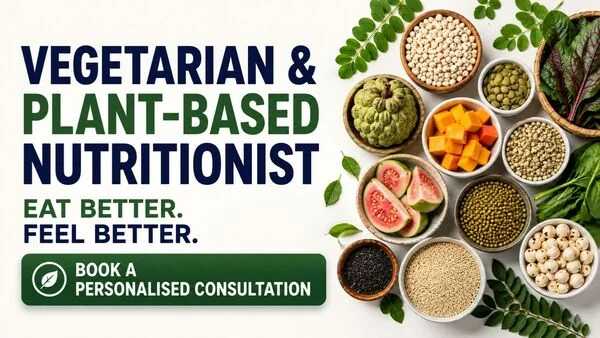
Dals, pulses, beans, soy foods, dairy products, eggs where included, nuts, seeds and grains can all contribute.
But knowing which foods contain protein does not tell you whether your total intake is appropriate for your needs.
Requirements can differ according to age, activity, muscle-building goals, pregnancy, ageing and health status.
This is also why following a vegetarian diet does not automatically mean you need protein powder.
A more useful starting point is to assess what your normal diet already provides and then determine whether there is a genuine gap.
Which Nutrients May Need Closer Attention?
There is no single nutrient deficiency that every vegetarian develops.
However, the following may deserve consideration depending on the foods you include.
Vitamin B12
Vitamin B12 needs particular attention in vegan diets because dependable natural plant sources are limited.
Vegetarians who consume dairy or eggs may obtain some B12 through food, but adequacy can still vary.
The relevant question is therefore whether your intake and status are adequate, rather than whether everyone following a vegetarian diet should take the same supplement.
Iron
Vegetarian foods can provide iron, although plant-derived iron is absorbed differently from iron obtained from animal foods.
If iron deficiency or anaemia is identified, nutrition may be part of management, but the reason for the deficiency also needs appropriate evaluation.
Calcium and Vitamin D
Removing dairy can change the major sources of calcium in a person’s diet, making appropriate alternatives important.
Vitamin D requires separate consideration because food intake is only one factor influencing vitamin D status.
Zinc and Omega-3 Fats
Legumes, whole grains, nuts and seeds can contribute zinc, while certain nuts and seeds provide plant forms of omega-3 fats.
Whether these require particular attention depends on the overall eating pattern rather than the presence of one individual “superfood”.
Can a Vegetarian Diet Support Weight Management?
Yes.
But eating vegetarian food does not automatically cause weight loss.
A vegetarian diet can contain plenty of vegetables, pulses, fruits and other nutrient-rich foods. It can also contain substantial amounts of refined cereals, fried foods, sweets, bakery products, sugary drinks or highly processed vegetarian foods.
Successful weight management therefore depends on the broader picture, including:
- appetite and satiety
- usual food pattern
- physical activity
- sleep
- stress
- medical conditions
- treatment
- previous dieting
- individual goals
It also does not automatically require eliminating rice, roti, dal, fruit or other familiar foods.
The aim is to identify changes that support weight management without making the diet unnecessarily restrictive or difficult to maintain.
What Changes When You Have a Medical Condition?
General vegetarian advice becomes less useful when a health condition changes what you need.
Someone managing diabetes may need to consider blood glucose response and medication.
A person with thyroid concerns may have different priorities depending on diagnosis, treatment and relevant laboratory findings.
PCOS, hypertension, digestive conditions and other clinical concerns can introduce different nutritional considerations again.
This means a food can be nutritious in general without automatically being the right choice, quantity or preparation for every individual.
When medical conditions are involved, personalised nutrition should complement appropriate medical care rather than replace it.
Moving From Vegetarian to Vegan?
Removing animal-derived foods is only half of the decision.
The other half is: What will replace what you are removing?
Depending on your current diet, transitioning to vegan eating may require closer attention to protein sources, vitamin B12, calcium, iron, vitamin D, omega-3 fats and overall food variety.
That does not mean vegan diets are inherently inadequate.
It means that replacement deserves as much thought as restriction.
Planning the transition can be particularly useful if you are also managing a health condition, exercising intensively, pregnant, breastfeeding or already following a restricted diet.
Good Plant-Based Nutrition Does Not Require Expensive Foods
Eating well does not require imported ingredients, expensive substitutes or an entirely new pantry.
Indian diets already contain a wide variety of useful plant foods, including:
- dals and pulses
- beans
- soy foods
- vegetables
- fruits
- grains and millets
- nuts and seeds
Dairy products and eggs provide additional options for people who include them.
The important issue is not whether these foods are available. It is how they fit together in your eating pattern.
Regional habits matter too.
A vegetarian household in Karnataka may eat very differently from one in Tamil Nadu, Kerala, Gujarat, Punjab or West Bengal. Family cooking, religious practices, fasting, work schedules, seasonal availability and budget can all influence what is practical.
A personalised diet plan should work with those realities wherever possible rather than expecting you to follow somebody else’s idea of a perfect vegetarian menu.
Do Vegetarians and Vegans Need Supplements?
Not automatically.
Supplement requirements depend on what you eat and whether there is a reason for supplementation.
Relevant considerations may include:
- whether you consume dairy or eggs
- how restrictive the diet is
- fortified-food intake
- age and life stage
- pregnancy or breastfeeding
- medical conditions
- treatment
- laboratory findings
- supplements already being taken
Vitamin B12 deserves particular attention in vegan diets, but taking multiple supplements without understanding the need for them is not the same as having a nutritionally balanced diet.
The useful question is not: “What supplements do vegetarians take?”
It is: “Which, if any, are appropriate for me?”
When Is Personalised Nutrition Worth Considering?
You do not need a nutrition consultation simply because you eat vegetarian food.
It becomes more valuable when your question has moved beyond general healthy eating.
“Am I actually getting enough protein for my needs?”
“Do my blood reports suggest that something in my diet needs attention?”
“Can I manage my weight without giving up the foods I normally eat?”
“How should I eat when a medical condition and vegetarian preferences overlap?”
“I want to become vegan. What do I need to replace?”
“Are the supplements I am taking actually necessary?”
At that point, searching for more general nutrition information can sometimes create more options without creating more clarity.
An individual assessment can help distinguish between what is generally recommended and what actually applies to you.
Personalised Vegetarian & Plant-Based Nutrition at Newtrist
At Newtrist, the consultation starts with your present situation rather than a predetermined vegetarian menu.
Chief Nutritionist Vasanthi Senthilvel can assess relevant information such as your:
- current eating pattern
- health and weight history
- symptoms
- laboratory reports where relevant
- treatment and supplements
- food preferences
- regional food habits
- allergies or intolerances
- physical activity
- family and work routine
- previous diet experiences
- individual goals
The purpose is to answer three practical questions:
What can remain as it is?
What needs attention?
What changes are appropriate for your goal and health?
Where a structured dietary plan is appropriate, a personalised diet plan can then be developed around the findings of your assessment rather than taken from a standard vegetarian template.
That may mean changing fewer things than you expected, but making the changes that matter more.
Consult a Vegetarian & Plant-Based Nutritionist
If you already know what healthy vegetarian foods are but are still unsure what you should be doing, another generic diet chart may not be the answer.
Personalised nutrition can help you understand what your current diet provides, where genuine gaps may exist and how your food choices can be adapted to your health, preferences and goals.
You can consult Chief Nutritionist Vasanthi Senthilvel at Newtrist for personalised vegetarian, vegan or plant-based nutrition guidance and, where appropriate, a personalised diet plan.
Support can be tailored for needs including weight management, clinical nutrition, nutrient adequacy, sports nutrition and changing life stages.
Consultations are available in Bangalore and online across India.
Frequently Asked Questions
Can I consult if I am not completely vegetarian or vegan?
Yes. You do not need to follow a particular dietary label. Nutrition guidance can be based on the foods you currently eat, the changes you are considering and your individual requirements.
Will I need to cook separate food from my family?
Not necessarily. Family cooking and shared meals can be considered when developing recommendations. The aim is to make the plan practical rather than automatically create a separate menu for one person.
Should I get blood tests before my consultation?
Not necessarily. If you already have recent reports relevant to your nutrition or health concerns, they can be considered during assessment. Any need for additional medical testing should be determined by an appropriate healthcare professional.
Can my existing supplements be reviewed?
Yes. Supplements you currently use can be considered alongside your food intake, health information and relevant laboratory findings.
Can I consult online if I live outside Bangalore?
Yes. Newtrist provides online consultations across India for people seeking personalised vegetarian, vegan or plant-based nutrition guidance.
Author
Chief Nutritionist Vasanthi Senthilvel leads Newtrist Nutritionist Dietitian Dietician, providing personalised diet plans for weight management and clinical nutrition for children, adolescents, adults and families.
She has 21 years of experience in nutrition and has received professional recognition for her work.
- Pride of Bharat Awards 2026: Outstanding Achievement in Holistic Health & Nutrition Innovation
- Doctor of The Year: Nutritionist 2026: Excellence in Clinical Nutrition and Weight Loss.
Her approach considers age, growth, health history, medical conditions, laboratory reports, medication, body composition, weight history, dietary preferences, regional food habits, family routines, activity, sleep and personal health goals. Recommendations are developed according to individual needs rather than using one standard diet for everyone.
Consultations are available in person at Bangalore HSR Layout, Koramangala, Bellandur, Haralur and Electronic City, as well as online across India.
Independent Medical Review Panel
Newtrist health and nutrition articles undergo medical review, where appropriate, by doctors with relevant specialist expertise. The medical professionals listed below contribute to Newtrist’s review process within their respective specialties.
| Speciality | Doctor |
|---|---|
| Endocrinology | Dr Vinay Prasad MBBS, MD, DM |
| Gastroenterology & Hepatology | Dr Sunil kumar N MBBS, MD, DM |
| Gynaecology | Dr Prathiba G MBBS, DNB, FIRM, FMAS |
| Nephrology | Dr Priyashree R MBBS, MD, DNB, DM |