
Written by: Chief Nutritionist Vasanthi Senthilvel
21 years of experience | Newtrist Nutritionist Dietitian Dietician
Best Nutritionist in Bangalore with multiple awards for excellence in clinical nutrition, weight loss, holistic health and nutrition innovation.
Medically reviewed by: Dr Prathiba G MBBS, DNB, FIRM, FMAS | Dr Sunil kumar N MBBS, MD, DM | Dr Vinay Prasad MBBS, MD, DM
Medical Disclaimer: Nutritional needs vary based on an individual’s profile. The information on this page is for general educational purposes only and is not intended to replace personalised medical or nutrition care.
Every festive menu has that one dish nobody wants to change.
It might be gujiya made with your family’s favourite filling, besan ladoo roasted to perfection, or murukku prepared just the way you remember it.
Then comes the practical question: What will everyone eat for breakfast, lunch and dinner when sweets and snacks are available throughout the day?
You want to enjoy the celebration, serve food your family loves and make choices that support your nutritional needs. But does that mean changing traditional recipes or preparing an entirely separate healthy menu?
Not necessarily.
Here are nutritious Diwali and Deepavali meal ideas, traditional sweets, savoury snacks and sample one-day menus that make festive food planning easier.
Key Takeaway
Healthy Diwali and Deepavali foods can include satisfying Indian meals, traditional sweets and homemade savoury snacks. Pair grain-based dishes with dal, chickpeas, paneer or curd and vegetables. Choose your favourite festive treats, consider suitable cooking adjustments and plan portions around your individual nutritional needs.
Table of Contents
Healthy Meals, Sweets, and Snacks for Diwali
A Diwali food menu often includes flavourful vegetable preparations, paneer dishes, fragrant rice, mithai and crunchy namkeen.
You can create a festive spread using familiar North Indian foods without making every dish rich or elaborate.
Healthy Meals for Diwali
These meal combinations offer traditional flavours alongside a variety of nutritious ingredients.
1. Palak Chana with Whole Wheat Phulka
Prepare chickpeas in a spinach, tomato and ginger gravy seasoned with cumin and aromatic spices.
Chickpeas contribute plant protein and fibre, while spinach provides folate and carotenoids. Serve with freshly prepared whole wheat phulkas.
2. Vegetable Pulao with Paneer and Raita
Prepare pulao with rice, green peas, carrots, beans and whole spices.
Add grilled paneer and cucumber raita as accompaniments. This makes a convenient family meal with vegetables and protein-rich foods.
3. Methi Moong Dal Khichdi
Combine rice, yellow moong dal and fresh fenugreek leaves with cumin and a little ghee.
The mild flavour and comforting texture make khichdi a practical choice when your family prefers a simpler meal between festive gatherings.
4. Tandoori Paneer with Jowar Roti
Grill paneer, capsicum and onions marinated in curd and tandoori spices.
Serve with jowar roti and coriander chutney. Jowar contributes fibre and minerals, while the grilled vegetables add colour and flavour.
Healthy Diwali Sweets
Which sweet would make your Diwali feel incomplete?
For some families, it is besan ladoo. For others, it is freshly prepared gujiya or warm carrot halwa.
These traditional favourites can remain part of your celebration. The preparation method and ingredient quantities offer opportunities for small adjustments.
1. Besan Ladoo with Less Added Sugar
Slow-roast besan in ghee until fragrant, then add cardamom and a measured quantity of sugar.
The roasted flavour helps preserve the familiar taste when the added sweetness is reduced slightly.
2. Baked Gujiya with Dry Fruits
Prepare gujiya with a filling of chopped almonds, coconut, cardamom and a modest amount of sugar.
Baking instead of deep-frying reduces the oil used during preparation while retaining the crisp pastry and sweet filling.
3. Carrot Halwa with Milk and Nuts
Simmer grated carrots with milk, cardamom and a little ghee. Finish with chopped almonds or cashews.
Carrots contribute beta-carotene, while milk provides calcium and protein. Adjust the added sweetness to suit your preferred flavour.
4. Anjeer and Sesame Bites
Combine softened dried figs with roasted sesame seeds and finely chopped nuts.
Shape the mixture into small festive bites. Figs provide natural sweetness, while sesame contributes calcium and unsaturated fats.
Healthy Diwali Snacks
A selection of homemade savouries makes entertaining easier when relatives and friends arrive throughout the day.
- Roasted makhana: Lightly roast with a little ghee, cumin, turmeric and black pepper.
- Baked whole wheat mathri: Prepare with ajwain and kasuri methi for a savoury crunch.
- Roasted poha chivda: Combine crisp poha with peanuts, roasted chana, curry leaves and spices.
- Air-fried vegetable samosa: Fill with potatoes, green peas and coriander, then cook with a light coating of oil.
You can prepare a few contrasting flavours and textures rather than making several similar varieties of namkeen.
Sample 1-Day Healthy Diwali Diet Plan
Suppose your celebration includes family lunch, guests arriving in the evening and dinner at home.
Here is an example of how regular meals and a favourite festive sweet can fit into the same day.
| Meal | Menu |
| Breakfast | Vegetable besan chilla with curd and mint chutney |
| Mid-morning | Guava or another seasonal fruit |
| Lunch | Whole wheat phulka, palak chana and cucumber salad |
| Evening snack | One small homemade gujiya with roasted makhana |
| Dinner | Vegetable pulao, grilled paneer and cucumber raita |
This vegetarian menu provides a practical starting point. Meal timings and serving quantities can be adapted according to appetite, activity and individual nutritional requirements.
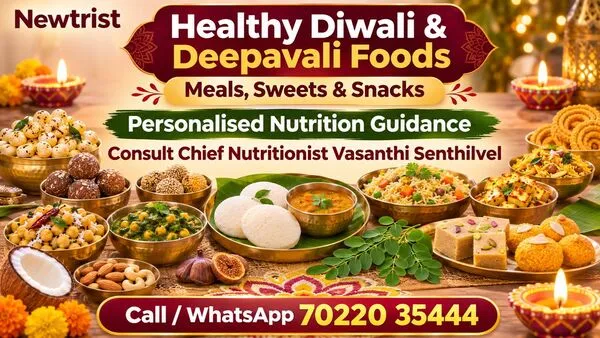
Healthy Meals, Sweets, and Snacks for Deepavali
In many South Indian households, Deepavali food preparations begin early, with a special breakfast followed by homemade sweets and savouries.
Rice, lentils, millets, sesame seeds, coconut and curry leaves offer plenty of possibilities for preparing nourishing foods with familiar regional flavours.
Healthy Meals for Deepavali
These South Indian dishes bring together traditional preparations and ingredients commonly found in home kitchens.
1. Idli with Vegetable Sambar
Serve soft steamed idlis with sambar prepared using toor dal, drumstick, pumpkin and tomatoes.
The dal contributes plant protein, while vegetables add flavour and nutritional variety. Coconut chutney makes a familiar accompaniment.
2. Samai Millet Ven Pongal
Prepare ven pongal using little millet, also called samai, with moong dal, ginger, cumin, black pepper and a little ghee.
Samai contributes fibre and minerals, while the moong dal gives the dish its familiar creamy texture.
3. Adai with Vegetable Avial
Prepare adai using a mixture of lentils and rice.
Serve with avial prepared from seasonal vegetables, coconut and curd. The combination offers a satisfying mixture of textures and flavours.
4. Red Rice with Keerai Kootu
Pair cooked red rice with keerai kootu made using leafy greens and moong dal.
Murungai keerai, or moringa leaves, can be included when available for additional carotenoids and minerals.
Healthy Deepavali Sweets
Deepavali sweets often feature ingredients such as rice flour, jaggery, coconut, milk and nuts.
Some recipes can be adapted with small changes. Others are best enjoyed in their original form, especially when the preparation is a cherished family favourite.
1. Ragi and Ellu Ladoo
Combine roasted ragi flour, sesame seeds, cardamom, chopped almonds and a modest amount of jaggery.
Ragi and sesame contribute calcium, while almonds provide unsaturated fats and texture.
2. Paal Payasam with Less Added Sugar
Slowly simmer milk, rice and cardamom until creamy.
Use a measured quantity of sugar and finish with a few roasted cashews to retain the traditional flavour.
3. Traditional Homemade Adhirasam
Adhirasam is prepared using rice flour and jaggery. Its distinctive taste and texture depend on the traditional preparation method.
If this is your family’s favourite Deepavali sweet, enjoying a smaller homemade piece may be more satisfying than changing the original recipe extensively.
4. Coconut Ladoo
Combine freshly grated coconut with cardamom and a measured quantity of sugar or jaggery.
Coconut contributes fat and fibre, giving the sweet its familiar richness.
Healthy Deepavali Snacks
Deepavali savouries are popular for their crisp texture and aromatic seasoning.
These options bring variety to the snack selection:
- Baked murukku: Prepare using rice flour, urad dal flour, sesame seeds and cumin.
- Baked thattai: Combine rice flour, roasted gram, sesame seeds and traditional spices.
- Air-fried ribbon pakoda: Use rice flour, besan and spices with a light coating of oil.
- Kadalai paruppu sundal: Temper cooked chana dal with mustard seeds, curry leaves, green chilli and grated coconut.
Sundal adds a pulse-based dish to a platter of crispy savouries, offering a different texture and a satisfying accompaniment.
Sample 1-Day Healthy Deepavali Diet Plan
An early festive breakfast and visits to relatives may make Deepavali meal timings different from a usual day.
Here is a sample vegetarian South Indian menu.
| Meal | Menu |
| Early breakfast | Idli with vegetable sambar and coconut chutney |
| Mid-morning | One small homemade adhirasam |
| Lunch | Red rice, keerai kootu, beans poriyal and curd |
| Evening snack | Baked thattai with kadalai paruppu sundal |
| Dinner | Adai with vegetable avial |
This menu brings together familiar dishes and a traditional sweet, with meal combinations that can be adjusted to different eating schedules.
Frequently Asked Questions
Does replacing sugar with jaggery make festive sweets healthier?
Jaggery contains small amounts of minerals, but it remains a concentrated source of sugar. Replacing refined sugar with jaggery does not automatically improve the nutritional quality of a sweet. The amount used and the complete recipe matter more.
Which Diwali and Deepavali snacks can be prepared in advance?
Dry savouries such as chivda, mathri, murukku and thattai can be prepared ahead of the celebration. Allow them to cool completely before storing them in airtight containers to help preserve their crisp texture.
What can I serve guests who avoid dairy products?
Options include chickpea sundal, roasted chana, makhana prepared with vegetable oil and sesame-based sweets made without milk or ghee. Vegetable-based snacks can provide additional choices.
What if I do not have an oven or air fryer?
Roasted makhana, poha chivda and sundal can be prepared on the stovetop. You can also retain selected traditional fried preparations instead of changing every family recipe.
Can I prepare a festive menu with both North Indian and South Indian foods?
Yes. A family menu can combine dishes such as vegetable pulao, paneer tikka, adai and sundal, along with selected homemade sweets. Choose combinations that suit your family’s preferences and the occasion.
Your Festive Menu Is Ready. But Is It Right for You?
You now have a selection of Diwali and Deepavali meals, sweets, snacks and two sample one-day menus.
Perhaps you already know which dishes you would like to prepare.
But there is an important difference between choosing nutritious foods and knowing which foods, combinations and quantities suit your individual needs.
How much rice or roti should your meal include? How do your favourite sweets fit into the day? Which foods and portions are most appropriate for your usual eating routine?
The sample menus provide ideas, but they cannot answer those questions for everyone.
Two people may enjoy the same festive foods yet have different appetites, nutritional requirements, activity levels and health goals.
At Newtrist Nutritionist Dietitian Dietician, Chief Nutritionist Vasanthi Senthilvel provides personalised nutrition consultations that consider your current eating habits, regional food preferences, lifestyle and individual requirements.
A consultation offers an opportunity to review what you normally eat, discuss your meal timings and portions, and identify nutritional priorities relevant to your circumstances.
For example, you may want guidance on combining your preferred Indian foods into satisfying meals, adjusting portions to your needs or understanding whether a personalised diet plan would benefit you.
You know which festive foods you love. The next step is finding out how those foods fit into your individual nutritional needs and everyday routine.
Book a personalised nutrition consultation with Chief Nutritionist Vasanthi Senthilvel at Newtrist and discuss the most appropriate next steps for your diet.
Author
Chief Nutritionist Vasanthi Senthilvel leads Newtrist Nutritionist Dietitian Dietician, providing personalised diet plans for weight management and clinical nutrition for children, adolescents, adults and families.
She has 21 years of experience in nutrition and has received professional recognition for her work.
- Pride of Bharat Awards 2026: Outstanding Achievement in Holistic Health & Nutrition Innovation
- Doctor of The Year: Nutritionist 2026: Excellence in Clinical Nutrition and Weight Loss.
Her approach considers age, growth, health history, medical conditions, laboratory reports, medication, body composition, weight history, dietary preferences, regional food habits, family routines, activity, sleep and personal health goals. Recommendations are developed according to individual needs rather than using one standard diet for everyone.
Consultations are available in person at Bangalore HSR Layout, Koramangala, Bellandur, Haralur and Electronic City, as well as online across India.
Independent Medical Review Panel
Newtrist health and nutrition articles undergo medical review, where appropriate, by doctors with relevant specialist expertise. The medical professionals listed below contribute to Newtrist’s review process within their respective specialties.
| Speciality | Doctor |
|---|---|
| Endocrinology | Dr Vinay Prasad MBBS, MD, DM |
| Gastroenterology & Hepatology | Dr Sunil kumar N MBBS, MD, DM |
| Gynaecology | Dr Prathiba G MBBS, DNB, FIRM, FMAS |
| Nephrology | Dr Priyashree R MBBS, MD, DNB, DM |