
Written by: Chief Nutritionist Vasanthi Senthilvel
21 years of experience | Newtrist Nutritionist Dietitian Dietician
Best Nutritionist in Bangalore with multiple awards for excellence in clinical nutrition, weight loss, holistic health and nutrition innovation.
Medically reviewed by: Dr Prathiba G MBBS, DNB, FIRM, FMAS | Dr Sunil kumar N MBBS, MD, DM | Dr Vinay Prasad MBBS, MD, DM
Medical Disclaimer: Nutritional needs vary based on an individual’s profile. The information on this page is for general educational purposes only and is not intended to replace personalised medical or nutrition care.
Everyone’s dinner is on the table. Yours is still on the stove.
You’ve already cooked chapati, dal and sabzi for your family. Now you’re preparing something different for yourself because you’re trying to lose weight.
Another pan to wash. Another meal to plan. And another evening when you can’t simply sit down and enjoy the food you’ve prepared.
You want to take better care of yourself, but you didn’t expect your weight-loss efforts to double your kitchen work.
What if the change you need isn’t another recipe, but a different way of using the meals you already cook?
Key Takeaway
You can lose weight without cooking separate meals by eating the same food as your family in portions and combinations suited to your needs. Keep the main dishes common, make optional additions separately, and adjust your own plate. Weight loss depends on your overall energy intake relative to your needs, not on whether you prepare special diet food.
Table of Contents
What Does Eating the Same Family Food for Weight Loss Look Like?
Imagine your family has prepared rice, sambar, beans poriyal and curd for lunch.
Everyone sits down to eat from the same dishes.
One person enjoys a larger serving of rice with sambar and vegetables. Another chooses a smaller rice serving, more sambar, beans poriyal and some curd.
Both enjoy the same lunch.
The second plate isn’t automatically a weight-loss plate. Whether it is suitable depends on that person’s nutritional requirements and overall food intake.
The important distinction is between what the household prepares and what each person serves.
People in the same family may have different needs because of their activity levels, body size, appetite and daily routines.
A common menu can accommodate those differences without requiring an entirely separate preparation.

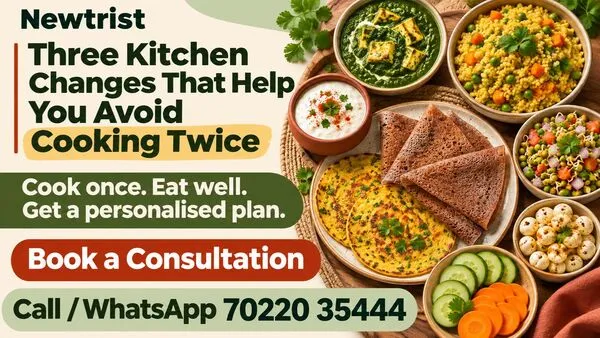
Three Kitchen Changes That Help You Avoid Cooking Twice
Making shared meals practical starts before everyone sits down to eat.
These changes allow you to work with your usual household cooking rather than adding another set of recipes.
1. Prepare Enough of the Foods Everyone Can Share
Suppose your family usually prepares plenty of rice but only a small quantity of dal.
By lunchtime, you may want more dal, but there isn’t enough left for a substantial serving.
Instead of making an additional protein-rich dish just for yourself, prepare enough dal during the family’s regular cooking.
The same approach works with moong dal, toor dal, green gram, chana and cowpeas.
Vegetables such as drumstick leaves, amaranth greens, beans and gourds can also be prepared in quantities that allow everyone to enjoy them.
These familiar Indian ingredients provide protein, fibre, vitamins or minerals.
You don’t need to introduce several new dishes. Making enough of the foods your family already enjoys gives everyone more choice when serving.
2. Keep the Main Recipe Common and Finish Individual Servings Differently
Your family may enjoy additional ghee on rice, butter on chapati or extra cream in paneer curry.
These preferences don’t have to result in two different recipes.
Prepare the main dish together and offer optional additions at the dining table.
For example, everyone can share the same dal, while those who enjoy additional ghee can add it to their own serving.
You can also measure the amount of oil used during regular cooking instead of pouring it directly into the pan.
The family continues enjoying familiar food, and each person can make their own choices about the extras.
3. Serve Your Own Plate Rather Than Copying Someone Else’s
Sometimes the quantity you eat is decided by habit.
Someone serves three chapatis because that’s what you’ve always eaten. Another person adds rice before you’ve considered how hungry you are.
Serving yourself allows you to look at the complete meal first.
Choose an appropriate amount of rice or roti, include the available dal or another protein-containing preparation, and add vegetables from the shared dishes.
Your usual katoris and serving spoons can help you become more familiar with the quantities you eat.
The aim isn’t to make your plate as small as possible.
It’s to find a combination that suits your nutritional needs and keeps you comfortably satisfied.
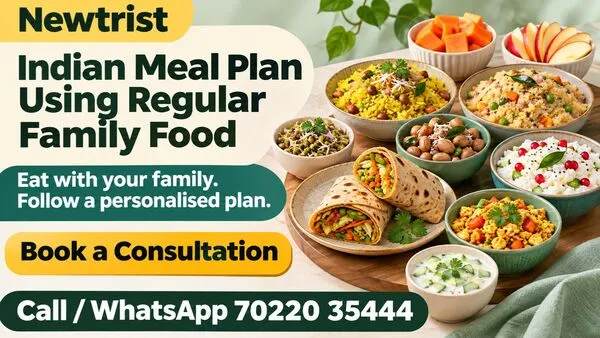
Sample 1-Day Indian Meal Plan Using Regular Family Food
Here’s how one day’s food can come from the household’s existing preparations without a separate weight-loss menu.
| Meal | What the Family Prepares or Has Available | Example of Your Serving |
| Breakfast | Idli, vegetable sambar and coconut chutney | 2 medium idlis, a generous bowl of sambar and some chutney |
| Mid-morning | Seasonal fruit | 1 small guava |
| Lunch | Rice, leftover sambar, drumstick leaves poriyal and curd | A small katori of cooked rice, a bowl of sambar, a serving of poriyal and some curd |
| Evening | Roasted chana | A small handful of roasted chana |
| Dinner | Chapati, chana curry and palak sabzi | 2 small chapatis, a bowl of chana curry and a serving of palak |
Notice that the sambar prepared for breakfast is also used at lunch.
The evening meal is prepared once for everyone. You don’t need another curry simply because your nutritional goal differs from your family’s.
Guava, drumstick leaves, chana, curd and traditional dals contribute useful nutrients while remaining part of everyday Indian eating.
This example shows how one household menu can work across a day. The amounts suitable for you will depend on your individual requirements.
What If You’re Not the Person Who Cooks at Home?
Perhaps your parents prepare the meals. Maybe your spouse handles the cooking, or a family cook follows a fixed menu.
You may not decide what appears on the table every day.
Asking for a different breakfast, lunch and dinner can create additional work for the person cooking, especially when everyone else is happy with the usual menu.
A more practical conversation is about the arrangements you need, not a completely different set of dishes.
You could say:
“You don’t need to prepare anything separately for me. I’ll eat what everyone is having and serve the amount I need.”
This allows you to participate in the household’s normal eating routine without expecting everyone to follow your weight-loss plan.
When Family Members Keep Encouraging You to Eat More
You have finished dinner and feel satisfied.
Then someone says, “Have one more chapati.”
In many Indian households, offering more food is an expression of affection. Declining another serving may feel uncomfortable, particularly when someone has prepared the meal with care.
You can appreciate the gesture without accepting another helping.
“The food is lovely. I’ve had enough for now.”
You don’t have to turn every family meal into a conversation about dieting.
Enjoy the food and the company while allowing your appetite and nutritional needs to guide your own serving choices.
Frequently Asked Questions
Can I Eat Khichdi or Pongal When My Family Prepares Only One Dish?
Yes. One-pot dishes such as khichdi and pongal can be part of a weight-loss eating pattern. Their nutritional composition depends on the proportions of grains, pulses and other ingredients. You can choose a suitable serving and include an available accompaniment where appropriate, rather than cooking another main dish.
What If My Family and I Eat Dinner at Different Times?
You can keep your portion of the common meal aside, store it appropriately and reheat it when you’re ready to eat. Different mealtimes don’t require different recipes.
What If My Family Orders Biryani or Pulao Instead of Cooking?
You can still share the family meal. The portion you choose, the way it is prepared and the available accompaniments can be considered within your usual eating pattern. Ordering food together doesn’t automatically mean you need a separate meal.
The Family Menu Is Common. Your Nutritional Requirements Are Personal.
Making one family meal work is a practical solution to unnecessary cooking.
But it doesn’t answer every question about your own food requirements.
How much of your regular household food is right for you?
Perhaps you’ve reduced your rice serving but feel hungry again within a couple of hours.
Maybe you eat chapati and dal most evenings but aren’t sure whether the combination meets your protein needs.
Or you’ve tried several changes without knowing which ones are helping you progress towards your weight-loss goal.
These are difficult questions to answer using a standard instruction such as “eat less rice” or “have two chapatis.”
The amounts and combinations that suit you depend on what you currently eat, your appetite, daily activity and individual nutritional requirements.
Understanding those details can help you make more appropriate changes without abandoning the family menu.
Get Personalised Nutrition Guidance From Chief Nutritionist Vasanthi Senthilvel
Think about yesterday’s meals.
What did your family prepare for breakfast? How much rice did you eat at lunch? What accompanied your dinner? Were you comfortably satisfied, or did you feel hungry again soon afterwards?
You don’t need an unfamiliar diet menu to begin answering these questions.
At Newtrist, Chief Nutritionist Vasanthi Senthilvel provides personalised weight-loss nutrition guidance based on your existing eating habits, food preferences, nutritional requirements and daily routine.
Your regular household meals can become the starting point for identifying suitable portions, food combinations and practical changes that fit your family’s cooking arrangements.
Instead of guessing which foods to reduce or preparing another meal out of uncertainty, you can work towards an eating plan designed around your actual needs.
Imagine sitting down to the dinner your family already enjoys, knowing how to serve your own plate without second-guessing every choice.
That’s the kind of everyday confidence personalised nutrition guidance can help you build.
Consult Chief Nutritionist Vasanthi Senthilvel at Newtrist for a personalised weight-loss diet plan based on your familiar Indian family food, nutritional requirements and daily routine.
Your family already knows what it’s cooking. Find out what works best on your plate.
Author
Chief Nutritionist Vasanthi Senthilvel leads Newtrist Nutritionist Dietitian Dietician, providing personalised diet plans for weight management and clinical nutrition for children, adolescents, adults and families.
She has 21 years of experience in nutrition and has received professional recognition for her work.
- Pride of Bharat Awards 2026: Outstanding Achievement in Holistic Health & Nutrition Innovation
- Doctor of The Year: Nutritionist 2026: Excellence in Clinical Nutrition and Weight Loss.
Her approach considers age, growth, health history, medical conditions, laboratory reports, medication, body composition, weight history, dietary preferences, regional food habits, family routines, activity, sleep and personal health goals. Recommendations are developed according to individual needs rather than using one standard diet for everyone.
Consultations are available in person at Bangalore HSR Layout, Koramangala, Bellandur, Haralur and Electronic City, as well as online across India.
Independent Medical Review Panel
Newtrist health and nutrition articles undergo medical review, where appropriate, by doctors with relevant specialist expertise. The medical professionals listed below contribute to Newtrist’s review process within their respective specialties.
| Speciality | Doctor |
|---|---|
| Endocrinology | Dr Vinay Prasad MBBS, MD, DM |
| Gastroenterology & Hepatology | Dr Sunil kumar N MBBS, MD, DM |
| Gynaecology | Dr Prathiba G MBBS, DNB, FIRM, FMAS |
| Nephrology | Dr Priyashree R MBBS, MD, DNB, DM |