
Written by: Chief Nutritionist Vasanthi Senthilvel
21 years of experience | Newtrist Nutritionist Dietitian Dietician
Best Nutritionist in Bangalore with multiple awards for excellence in clinical nutrition, weight loss, holistic health and nutrition innovation.
Medically reviewed by: Dr Prathiba G MBBS, DNB, FIRM, FMAS | Dr Sunil kumar N MBBS, MD, DM | Dr Vinay Prasad MBBS, MD, DM
Medical Disclaimer: Nutritional needs vary based on an individual’s profile. The information on this page is for general educational purposes only and is not intended to replace personalised medical or nutrition care.
Your family is having rice, dal and sabzi for lunch. You want to reduce carbohydrates, so you serve yourself less rice. But what should you add instead?
More dal? An extra serving of vegetables? Paneer? Or would replacing rice with millet roti be a better choice?
Each option changes the nutritional composition of your meal differently. And a food that is nutritious is not necessarily low in carbohydrates.
This is why following a low carb Indian diet can feel more complicated than simply eating less rice or roti.
The real challenge is making familiar Indian meals satisfying and nutritionally balanced while reducing carbohydrates, without having to cook separately or give up the foods you enjoy.
Key Takeaway
A low carb Indian diet reduces daily carbohydrate intake, commonly to less than approximately 130 grams, although definitions vary. It prioritises non-starchy vegetables, adequate protein, healthy fats and fibre while allowing measured portions of rice, roti, dal, millets and fruit. The appropriate carbohydrate allowance depends on individual nutritional requirements and activity levels.

Table of Contents
What Counts as a Low-Carbohydrate Indian Diet?
A low-carbohydrate Indian diet is an eating pattern in which the overall carbohydrate contribution is reduced while maintaining adequate energy and essential nutrients.
Carbohydrates are naturally present in cereals, pulses, fruits, milk and vegetables. The amounts differ considerably between foods.
A lower-carbohydrate meal is therefore not determined by the absence of one particular ingredient. It depends on the complete combination of foods and their quantities.
Daily carbohydrate requirements also differ between individuals according to energy needs, body size and physical activity.

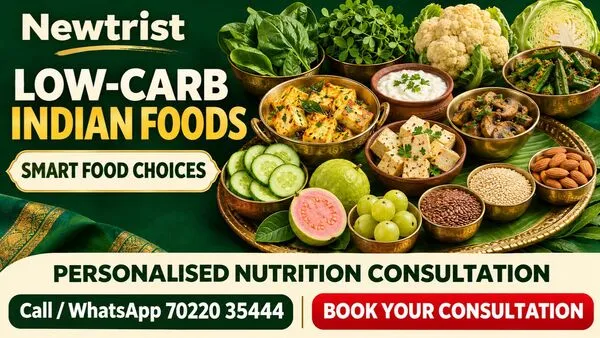
Low-Carb Indian Foods to Include in Your Diet
Many ingredients suitable for a low-carbohydrate eating pattern are already part of everyday Indian cooking.
Non-starchy vegetables, protein-rich foods and appropriate quantities of healthy fats provide a practical foundation for meals.
Non-Starchy Indian Vegetables
Non-starchy vegetables generally contain fewer carbohydrates than grains, potatoes and other starch-rich foods. They also contribute dietary fibre, vitamins and minerals.
| Indian Vegetable | Familiar Preparation |
| Bottle gourd (lauki, sorakkai) | Lauki sabzi or lightly spiced curry |
| Ridge gourd (turai, peerkangai) | Ridge gourd poriyal |
| Spinach (palak, keerai) | Palak paneer or sautéed greens |
| Fenugreek leaves (methi) | Methi sabzi |
| Cauliflower (gobi) | Gobi sabzi or roasted cauliflower |
| Cabbage | Cabbage poriyal |
| Ladies’ finger (bhindi, vendakkai) | Bhindi masala |
| Brinjal (baingan, kathirikai) | Roasted brinjal or curry |
| Cucumber | Fresh salad or cucumber raita |
| Mushrooms | Mushroom pepper fry |
These vegetables fit naturally into North Indian and South Indian meals.
A simple sabzi or poriyal can provide variety without requiring unfamiliar ingredients. The final carbohydrate content depends on the preparation, particularly when potato, flour or other starch-rich ingredients are added.
Vegetarian Protein Foods
A low-carb Indian vegetarian diet needs particular attention to protein because many traditional plant-based protein sources also contain carbohydrates.
Paneer provides protein and calcium with relatively little carbohydrate. It can be prepared as paneer bhurji, palak paneer or a vegetable-based curry.
Tofu provides plant-based protein and works well in Indian-style curries, bhurji and vegetable stir-fries.
Plain unsweetened curd contributes protein and calcium alongside naturally occurring milk carbohydrates.
Soy-based foods offer additional protein choices, although their nutritional composition varies between products.
The serving size matters. A few pieces of paneer added to a vegetable curry may provide considerably less protein than a substantial paneer-based portion.
Non-Vegetarian Protein Foods
Eggs, fish and unprocessed chicken naturally contain little or no carbohydrate before other ingredients are added.
Vegetable omelette, egg bhurji, grilled fish, fish curry and pepper chicken are familiar options.
Their final carbohydrate contribution depends on ingredients such as flour-based coatings, gravy thickeners and accompanying foods.
Nuts, Seeds and Healthy Fats
Peanuts, almonds, walnuts, sesame seeds and flaxseeds provide fats alongside varying amounts of protein, fibre and minerals.
They can be included in measured snack portions or traditional vegetable preparations.
Because nuts and seeds are energy-dense, the amount consumed remains important even when their carbohydrate contribution is relatively low.
Which Indian Foods Need Smaller Portions?
Some nutritious Indian foods also contain substantial carbohydrates.
Understanding their contribution helps you decide which portions deserve attention rather than automatically excluding entire food groups.
| Food Group | Common Indian Foods | What Matters |
| Cereals | White rice, brown rice, whole wheat | Quantity of cooked grain or dry flour |
| Millets | Ragi, jowar, bajra | Carbohydrate content despite differences in fibre and minerals |
| Pulses and legumes | Moong dal, toor dal, masoor dal, chana, rajma | Both carbohydrate and protein contribution |
| Starchy vegetables | Potato, sweet potato, yam, corn, green peas | Starch content of the serving |
| Fruits | Guava, papaya, orange, banana, mango | Fruit variety and edible portion |
| Foods with added sugars | Indian sweets, biscuits and desserts | Additional carbohydrates from sugars |
Are Millets Lower in Carbohydrates Than Rice or Wheat?
Not necessarily.
Ragi, jowar and bajra contain carbohydrates, although their fibre and micronutrient composition differs from that of other grains.
Replacing wheat chapati with ragi roti may change the nutritional profile of a meal without substantially reducing its carbohydrate content.
The amount of flour used is an important factor.
Where Does Dal Fit Into a Low-Carb Diet?
Dal provides plant protein, dietary fibre and minerals alongside carbohydrates.
This makes it nutritionally valuable, particularly in vegetarian meals, but its carbohydrate contribution still needs to be considered.
A thick preparation containing more lentils generally provides more carbohydrates per serving than a watery version made with fewer lentils.
Dal therefore contributes both protein and carbohydrates to the overall meal.
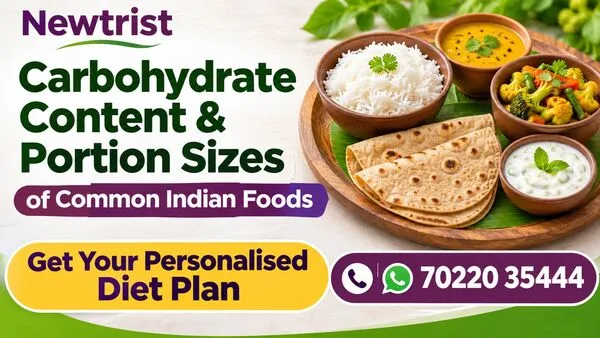
Carbohydrate Content and Portion Sizes of Common Indian Foods
A small homemade phulka and a large restaurant chapati may both be described as one piece, yet their flour content can differ considerably.
Similarly, one katori of cooked rice or dal does not represent the same weight in every household.
Defined food quantities make carbohydrate comparisons more meaningful.
How Many Carbohydrates Are in Common Indian Foods?
| Indian Food | Measured Portion | Approximate Total Carbohydrates |
| White rice, cooked | 100 g | 28 g |
| Whole-wheat atta, dry | 30 g | 22 g |
| Plain boiled lentils | 100 g | 20 g |
| Besan, dry | 40 g | 23 g |
| Plain unsweetened curd | 100 g | 4 to 5 g |
| Guava, edible portion | 100 g | 14 g |
| Cauliflower, raw | 100 g | 5 g |
Values are approximate total carbohydrates, including dietary fibre, for the specified foods and quantities. Actual values vary with the food variety and preparation. Available carbohydrate excludes dietary fibre and is a different measurement.
What Do These Portions Mean for an Indian Meal?
Suppose lunch contains 100 g cooked white rice and 75 g plain boiled lentils.
The rice provides approximately 28 g of total carbohydrates, while the lentils contribute around 15 g.
Together, these foods provide about 43 g of carbohydrates, before including vegetables or other accompaniments.
This shows why the total carbohydrate contribution of the plate can differ even when the rice portion remains the same.
Why Do Raw and Cooked Food Weights Matter?
Rice and pulses absorb water during cooking.
Their cooked weight increases, but the carbohydrates present in the original dry ingredients do not increase simply because water is absorbed.
For example, 40 g of raw white rice contains roughly 31 g of carbohydrates. After cooking, it weighs more because of the absorbed water.
For consistent estimates, raw food quantities should be compared with raw nutritional values and cooked quantities with cooked values.
How to Build a Balanced Low-Carb Indian Plate
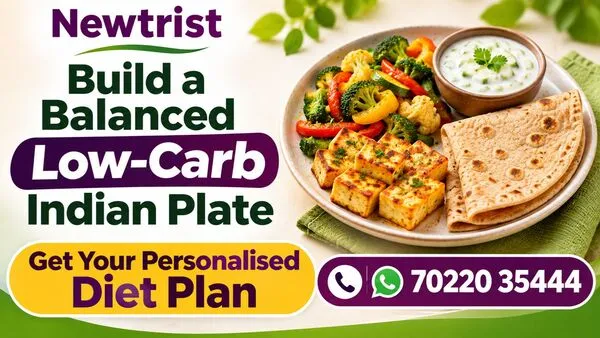
Once you understand the carbohydrate contribution of different foods, the next step is to combine them into meals that are satisfying and nutritionally balanced.
Begin with a substantial protein source, add non-starchy vegetables and then choose an appropriate portion of carbohydrate-rich food.
For instance, a vegetarian lunch could include paneer bhurji, cabbage poriyal and a small phulka.
A non-vegetarian alternative might contain grilled fish, beans poriyal and a measured serving of cooked rice.
Both combinations preserve familiar Indian flavours while giving protein and vegetables a meaningful place in the meal.
Sample One-Day Low-Carb Indian Diet
The following example illustrates how familiar Indian foods can be combined with measured carbohydrate-containing ingredients.
| Meal | Menu |
| Breakfast | Two small vegetable besan chillas made with 35 g besan, served with 150 g plain curd |
| Mid-morning | 75 g fresh guava |
| Lunch | 75 g cooked white rice, paneer bhurji prepared with 150 g paneer, and 200 g lauki sabzi |
| Evening snack | 20 g roasted peanuts |
| Dinner | One small phulka prepared with 25 g whole-wheat atta, tofu curry made with 200 g tofu, and 200 g cabbage poriyal |
For a non-vegetarian variation, tofu at dinner can be replaced with an appropriate serving of fish or chicken.
The example combines measured cereal portions, protein-rich foods, vegetables and familiar Indian preparations.
The final carbohydrate and energy totals depend on the complete recipes, cooking fats and other ingredients. Actual food quantities can be adjusted according to individual energy and nutritional requirements.
Nutritional Considerations When Following a Low-Carb Indian Diet
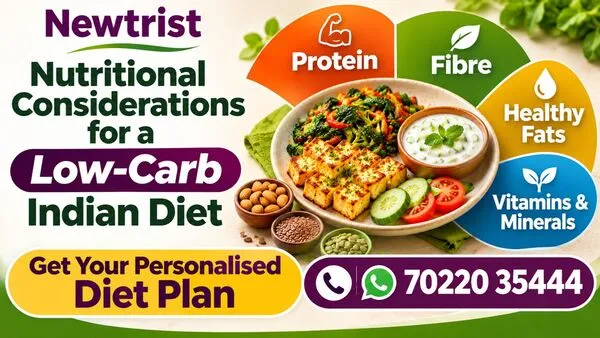
Reducing carbohydrate-rich foods also changes the nutrients those foods contribute.
A nutritionally balanced eating pattern needs to maintain adequate protein, fibre, energy and micronutrients rather than focusing only on carbohydrate intake.
Protein: Are Your Meals Providing Enough?
Protein supports the maintenance and repair of body tissues.
Reducing a substantial rice or roti portion without including a suitable protein source may leave the meal relatively low in protein.
Protein requirements vary with body weight, age, physical activity and individual nutritional needs.
Consider the protein contribution across breakfast, lunch and dinner rather than relying on one large protein-rich meal.
Fibre: What Happens When Grain Portions Decrease?
Whole grains, pulses and fruits can contribute meaningful amounts of dietary fibre.
Reducing these foods may lower overall fibre intake.
Non-starchy vegetables, leafy greens, suitable fruit portions, nuts and seeds can help maintain fibre diversity.
Fibre supports normal digestive function and contributes to the overall nutritional quality of meals.
Healthy Fats and Energy: What Replaces the Reduced Carbohydrates?
Carbohydrates provide energy. Reducing their contribution changes the amount of energy obtained from other nutrients.
However, replacing large cereal portions with substantial quantities of butter, ghee, cream or cheese can increase saturated fat intake.
Appropriate amounts of unsaturated fats from plant oils, nuts and seeds can contribute to a balanced eating pattern alongside adequate protein and other nutrient-rich foods.
Vitamins and Minerals: Which Indian Ingredients Are Useful?
Several traditional Indian foods provide nutrients worth retaining when cereal and pulse portions change.
| Indian Ingredient | Nutritional Contribution |
| Moringa leaves (murungai keerai) | Beta-carotene, calcium and iron |
| Amaranth greens | Folate, carotenoids and minerals |
| Fenugreek leaves (methi) | Folate and other micronutrients |
| Amla | Vitamin C |
| Guava | Vitamin C and dietary fibre |
| Sesame seeds (til, ellu) | Calcium and other minerals |
| Flaxseeds (alsi) | Fibre and plant-based omega-3 fatty acids |
Vitamin C from foods such as amla and guava also helps the body absorb non-haem iron from plant foods.
These ingredients can be incorporated into everyday Indian cooking, helping maintain nutritional variety without unfamiliar preparations.
Frequently Asked Questions About a Low-Carb Indian Diet
Can I Eat Idli or Dosa on a Low-Carb Indian Diet?
Yes, measured servings of idli or dosa can fit within some low-carbohydrate eating patterns. Traditional batters generally contain rice and pulses. Their carbohydrate content depends on the batter composition, size and number consumed.
Is Poha a Low-Carb Breakfast?
Poha is made from flattened rice and contains substantial carbohydrates. Adding vegetables and peanuts improves its nutritional variety but does not make the flattened rice low in carbohydrates. The quantity of dry poha used determines much of the final carbohydrate content.
Does Sprouting Moong Remove Its Carbohydrates?
No. Sprouting changes the nutritional composition of moong but does not eliminate its carbohydrates. Sprouted moong continues to provide carbohydrates alongside protein, fibre and micronutrients.
Is Roasted Makhana a Low-Carb Snack?
Makhana contains substantial starch and is not particularly low in carbohydrates. Roasting changes its texture and flavour without removing the starch. The carbohydrate contribution depends on the portion consumed.
Can Coconut Chutney Be Included in a Low-Carb Indian Diet?
Fresh coconut chutney can fit into a lower-carbohydrate eating pattern in measured quantities. Its carbohydrate content depends on additions such as roasted gram or sugar. Coconut also contributes saturated fat, making the serving size relevant to the overall nutritional balance.
Your Usual Indian Meals Are the Starting Point. Your Portions Need a Personal Answer.
You may now have a clearer understanding of which foods contain fewer carbohydrates and how everyday Indian portions compare.
But knowing that 100 g of cooked rice contains approximately 28 g of carbohydrates does not tell you how much rice belongs in your own lunch.
Perhaps your family eats rice twice a day. You may prefer vegetarian food, have an unpredictable work schedule or find that smaller portions leave you hungry.
You might also be uncertain whether your current meals provide enough protein, fibre and energy.
The next question is not simply what a food contains. It is what your own diet needs.
At Newtrist, Chief Nutritionist Vasanthi Senthilvel provides personalised diet and nutrition guidance based on your existing food habits, nutritional requirements, preferences, physical activity and daily routine.
A personalised assessment can help determine:
- What carbohydrate intake is appropriate for your nutritional needs.
- How much rice, roti, dal and other familiar Indian foods can fit into your meals.
- Whether your current food combinations provide adequate protein, fibre and energy.
- Which practical adjustments can work within your family’s cooking and daily schedule.
You can start with one ordinary day of your eating.
Think about what you usually have for breakfast, lunch, dinner and snacks. Consider your typical serving sizes and which meals leave you satisfied or hungry.
These details provide a starting point for evaluating your actual eating pattern rather than applying a standard low-carb food chart.
If you’d like to understand how individual recommendations become a structured plan, read more about personalised diet planning at Newtrist.
If you know which foods to choose but remain uncertain about the portions and combinations that suit your needs, consult Chief Nutritionist Vasanthi Senthilvel at Newtrist for a personalised diet and nutrition assessment.
You do not need to begin with unfamiliar foods. Begin with the Indian meals you already enjoy and find the nutritional balance that works for you.
Author
Chief Nutritionist Vasanthi Senthilvel leads Newtrist Nutritionist Dietitian Dietician, providing personalised diet plans for weight management and clinical nutrition for children, adolescents, adults and families.
She has 21 years of experience in nutrition and has received professional recognition for her work.
- Pride of Bharat Awards 2026: Outstanding Achievement in Holistic Health & Nutrition Innovation
- Doctor of The Year: Nutritionist 2026: Excellence in Clinical Nutrition and Weight Loss.
Her approach considers age, growth, health history, medical conditions, laboratory reports, medication, body composition, weight history, dietary preferences, regional food habits, family routines, activity, sleep and personal health goals. Recommendations are developed according to individual needs rather than using one standard diet for everyone.
Consultations are available in person at Bangalore HSR Layout, Koramangala, Bellandur, Haralur and Electronic City, as well as online across India.
Independent Medical Review Panel
Newtrist health and nutrition articles undergo medical review, where appropriate, by doctors with relevant specialist expertise. The medical professionals listed below contribute to Newtrist’s review process within their respective specialties.
| Speciality | Doctor |
|---|---|
| Endocrinology | Dr Vinay Prasad MBBS, MD, DM |
| Gastroenterology & Hepatology | Dr Sunil kumar N MBBS, MD, DM |
| Gynaecology | Dr Prathiba G MBBS, DNB, FIRM, FMAS |
| Nephrology | Dr Priyashree R MBBS, MD, DNB, DM |