
Written by: Chief Nutritionist Vasanthi Senthilvel
21 years of experience | Newtrist Nutritionist Dietitian Dietician
Best Nutritionist in Bangalore with multiple awards for excellence in clinical nutrition, weight loss, holistic health and nutrition innovation.
Medically reviewed by: Dr Prathiba G MBBS, DNB, FIRM, FMAS | Dr Sunil kumar N MBBS, MD, DM | Dr Vinay Prasad MBBS, MD, DM
Medical Disclaimer: Nutritional needs vary based on an individual’s profile. The information on this page is for general educational purposes only and is not intended to replace personalised medical or nutrition care.
It is 8:15 AM. You are almost ready for work, but your lunchbox is still empty.
There is leftover sabzi in the fridge, some cooked rice and barely enough time to make chapatis. You pack whatever is available and hurry out.
By 2 PM, you open your tiffin. The meal looks small, but you tell yourself that eating less should help with weight loss.
By 4 PM, hunger has returned, and the office canteen looks more tempting than ever.
If this sounds familiar, your office lunch might simply not be planned around your appetite, nutritional needs and working hours.
You do not have to cook a separate diet meal or give up familiar Indian foods. A practical lunchbox can include the rice, roti, dal, vegetables and other foods you already enjoy.
The question is how to put them together so that your lunch supports your weight-loss efforts without making busy mornings more stressful.
Key Takeaway
Healthy Indian office lunch ideas for weight loss include roti with dal and sabzi, paneer bhurji rolls, rajma rice, vegetable moong dal khichdi with curd, soya chunk pulao, egg bhurji with phulka and home-cooked chicken with vegetables.
A weight-loss-friendly office lunch combines a suitable protein source, vegetables and an appropriate portion of rice or roti. Choose meals that are filling, convenient to carry and realistic to prepare. Your ideal portions depend on your daily activity, appetite and individual nutritional requirements.
Table of Contents
What Should a Healthy Office Lunchbox Contain for Weight Loss?
A lunchbox does not become suitable for weight loss simply because it contains less food.
If you pack one chapati and a few spoonfuls of sabzi, you may reduce the size of lunch without necessarily making it nutritionally balanced.
A more useful approach is to consider three parts of the meal.
Protein-containing foods: Dal, rajma, chana, paneer, soya chunks, eggs and chicken contribute protein, which helps support satiety and muscle maintenance during weight loss.
Vegetables: Seasonal vegetables such as bhindi, beans, cabbage, carrot, cauliflower and palak provide fibre, nutrients and volume.
Carbohydrate-containing foods: Rice, whole-wheat phulka and traditional millet rotis can provide energy and remain part of your usual lunch.
How much you pack from each group depends on your nutritional needs.
The aim is not to remove rice or chapati. It is to avoid a lunch that consists almost entirely of one food group while missing other useful components.
With that in mind, here are seven Indian meals that can work in a real office lunchbox.
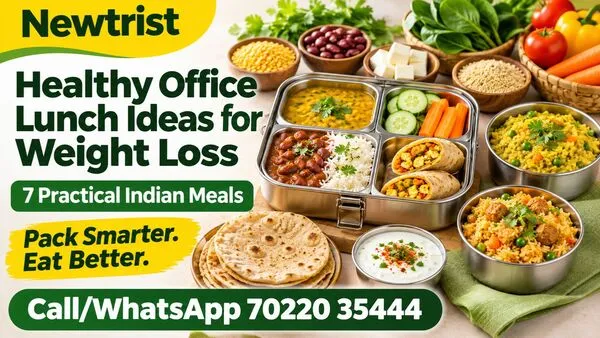
What Are the Best Healthy Indian Office Lunch Ideas for Weight Loss?
These meals are built around familiar ingredients, straightforward cooking and practical packing.
The serving sizes are illustrative examples rather than fixed portions for everyone.
1. Whole-Wheat Roti, Dal and Vegetable Sabzi
Sometimes the best lunchbox is already part of your family’s regular cooking.
A traditional combination of roti, dal and sabzi can work well without preparing a separate weight-loss recipe.
What to pack:
- 2 medium whole-wheat phulkas
- 1 katori of cooked dal
- 1 katori of seasonal vegetable sabzi
- A small portion of cucumber or carrot
You can use moong, masoor or toor dal.
For vegetables, choose whatever is conveniently available, such as bhindi, beans, cabbage, lauki or palak.
The important detail is to pack a proper portion of dal rather than treating it as a small accompaniment to chapati.
This gives your lunch a more useful combination of nutrients.
Office packing tip: Keep the dal in a separate leakproof container so the phulkas do not become soggy.
Best for: Someone who wants to improve their everyday home-cooked lunch without changing the family menu.
2. Paneer Bhurji Roti Roll With Vegetables
Do you have a short lunch break or frequent afternoon meetings?
A paneer bhurji roll may be easier to manage than a traditional lunch requiring several containers.
What to pack:
- 2 medium whole-wheat rotis
- Approximately 75 to 100 grams of paneer
- Chopped onion, capsicum and tomato
- Cucumber or carrot sticks
Prepare paneer bhurji with familiar Indian spices and a measured amount of oil.
Keep the filling relatively dry before dividing it between the rotis.
Roll them firmly so they can be eaten without much effort at your desk or during a short break.
Paneer contributes protein, while the vegetables add texture and variety.
Office packing tip: Wrap the rolls individually and keep the vegetable sticks in a separate compartment.
Best for: Professionals who need a compact, easy-to-eat lunch during busy working days.
3. Rajma Rice With Cucumber and Carrot
If you enjoy rajma chawal, there is no reason to assume you must avoid it during weight loss.
A practical adjustment is to pack a suitable amount of rice alongside a meaningful serving of rajma.
What to pack:
- Approximately ¾ to 1 cup of cooked rice
- 1 katori of cooked rajma
- Cucumber and carrot
Rajma provides plant protein and dietary fibre.
You can prepare it with onion, tomato, ginger and your preferred spices, just as you would at home.
There is no need to replace ordinary white rice with brown rice simply because you are trying to lose weight.
What matters is how the complete lunch fits into your overall nutritional requirements.
Office packing tip: Prepare a relatively thick rajma gravy and pack it separately from the rice.
Best for: People who prefer a familiar rice-based lunch over chapati meals.
4. Vegetable Moong Dal Khichdi With Curd
Some mornings are too busy for cooking several separate dishes.
Vegetable moong dal khichdi makes lunch preparation simpler because much of the meal can be prepared in one pot.
What to pack:
- Approximately 1 to 1½ cups of cooked vegetable moong dal khichdi
- 100 to 150 grams of plain curd
Prepare the khichdi using rice, moong dal, carrot, beans, peas and spinach.
Use a meaningful amount of moong dal rather than preparing a predominantly rice-based dish with only a small quantity of pulses.
Curd complements the meal with additional protein and calcium.
You can adjust the consistency to make it easier to pack and reheat.
Office packing tip: Carry the curd separately in a chilled container.
Best for: Busy mornings when you want a home-cooked lunch without preparing multiple dishes.
5. Soya Chunk and Vegetable Pulao
If you enjoy vegetable pulao but want a more substantial vegetarian protein source, soya chunks are a useful addition.
They absorb Indian spices and can be prepared using familiar pulao ingredients.
What to pack:
- Approximately ¾ to 1 cup of cooked vegetable rice
- Soya chunks prepared from 30 to 40 grams of dry soya
- Carrot, beans, peas and capsicum
Prepare the soya chunks according to the package instructions and cook them with onion, tomato and preferred spices.
Combine them with the vegetables and cooked rice.
Soya chunks contribute plant protein, making the combination more substantial than a simple vegetable rice preparation.
Office packing tip: Prepare the soya mixture the previous evening and combine it with rice when assembling your tiffin.
Best for: Vegetarians who prefer a convenient one-container rice lunch.
6. Egg Bhurji With Phulka and Vegetable Sabzi
For people who eat eggs, bhurji is a quick way to include a protein source in a familiar Indian lunch.
You do not need a complicated recipe or special ingredients.
What to pack:
- Egg bhurji made using 2 eggs
- 1 to 2 medium whole-wheat phulkas
- 1 katori of vegetable sabzi
Prepare the bhurji with onion, tomato, coriander and familiar spices.
Adding finely chopped palak or capsicum can introduce more vegetables without changing the dish considerably.
Pair it with the phulkas and a dry sabzi of your choice.
Office packing tip: Cook the bhurji until excess moisture evaporates and keep it chilled until lunchtime.
Best for: Working professionals who eat eggs and want a quick, freshly cooked lunch.
7. Home-Cooked Chicken With Roti and Vegetable Sabzi
If chicken is part of your usual eating routine, you do not have to switch to unfamiliar grilled chicken recipes for weight loss.
A simple home-style chicken preparation can fit into your office lunch.
What to pack:
- Approximately 100 to 120 grams of cooked boneless chicken
- 1 to 2 medium whole-wheat phulkas
- 1 katori of dry vegetable sabzi
Prepare the chicken using ginger, garlic, tomato and your preferred Indian spices, with a measured amount of oil.
Choose a relatively dry preparation that is convenient to carry.
Chicken contributes high-quality protein, while the phulkas and vegetables complete the combination.
Office packing tip: Use a leakproof container and keep the chicken chilled during transport until it can be refrigerated or reheated.
Best for: Non-vegetarians who prefer regular homemade Indian food over separate diet recipes.
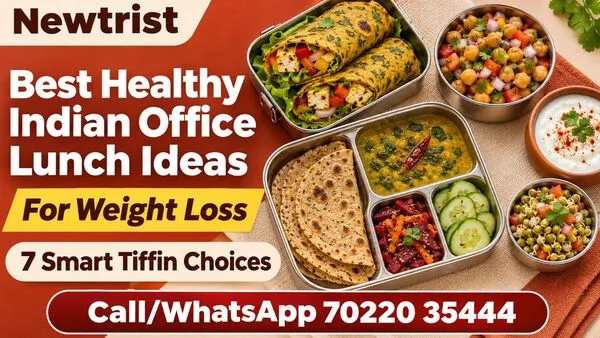
How Can You Prepare Healthy Office Lunches Without Spending Too Much Time in the Morning?
You might enjoy cooking, but that does not mean you want to spend an hour preparing lunch before work.
The most practical approach is to make the next morning easier before the previous day ends.
Complete the Time-Consuming Tasks the Previous Evening
If tomorrow’s lunch is rajma rice, cook and refrigerate the rajma in advance.
If you are planning paneer rolls, wash and chop the vegetables.
For roti and sabzi, knead the atta and prepare the vegetables.
For soya pulao, get the soya mixture ready.
These simple tasks reduce the amount of preparation left for the morning.
Make the Packed Lunch Pleasant to Eat
Have you ever opened your tiffin to find that the chapatis have become soggy or the rice has absorbed all the gravy?
Even a nutritious lunch may be unappealing when packed poorly.
Keep wet and dry foods separate where practical. Use relatively dry fillings for roti rolls and suitable containers for gravies.
Carry perishable items such as curd, paneer, eggs and chicken using appropriate temperature-controlled storage.
A lunch that tastes good when you open it is easier to look forward to every working day.

What Could a Five-Day Indian Office Lunch Rotation Look Like?
You do not need a new recipe every day.
A simple Monday-to-Friday rotation can make grocery planning easier and reduce the number of decisions you make in the morning.
| Day | Office lunch | Preparation advantage |
| Monday | Phulka, dal and seasonal sabzi | Uses familiar household cooking |
| Tuesday | Paneer bhurji roti rolls | Convenient for a short lunch break |
| Wednesday | Rajma rice with cucumber and carrot | Rajma can be prepared in advance |
| Thursday | Vegetable moong dal khichdi with curd | Simple one-pot preparation |
| Friday | Soya chunk vegetable pulao | Easy one-container lunch |
The egg and chicken options can replace any of these meals according to your food preferences.
This is a lunch-only rotation to simplify your working week, not a complete weight-loss diet chart.
The meal quantities should be adjusted to your own needs.
How Do You Know Whether Your Office Lunch Portion Is Appropriate?
Two people may both carry two chapatis, dal and vegetables to work.
Yet the amount of food they need can be different.
One may spend most of the working day seated, while the other may walk frequently or have higher daily energy requirements.
Even the size of a chapati or household katori varies.
That is why the sample quantities in a general article are useful starting examples, not universal prescriptions.
You can assess whether your lunch is practical by considering how comfortably satisfied you feel, whether the portion suits your workday and how it fits into the rest of your eating routine.
For weight loss, the important question is not simply how little you can pack. It is how much food is appropriate for your individual energy and nutritional requirements.
A personalised assessment can help determine that more precisely.
Frequently Asked Questions About Healthy Office Lunches for Weight Loss
Can I Use Leftover Dinner Food for My Office Lunch?
Yes. Leftover dal, sabzi or other home-cooked preparations can help you assemble lunch quickly when stored appropriately. The important part is checking whether the complete tiffin includes suitable food groups, rather than packing leftovers only because they are available.
What If I Have Only 15 Minutes for Lunch at Work?
Choose a meal that is easy to serve and eat. A well-filled roti roll is particularly convenient when your break is short. Packing a complete lunch in advance can help you avoid skipping the meal because of your schedule.
Is Office Canteen Food Always Unsuitable for Weight Loss?
No. A canteen meal can also fit into a weight-loss eating pattern. Look for a combination containing vegetables, a suitable protein source and a portion of rice or roti that matches your needs. The food preparation and quantity matter more than where the meal was cooked.
Can I Eat the Same Office Lunch Several Days a Week?
Yes. Repeating a convenient meal can make your routine easier. You can vary the vegetables, dals or other ingredients over time to include different nutrients without needing a completely new recipe every day.
Do I Have to Carry Raw Salad With Every Office Lunch?
No. Cooked vegetables can also contribute fibre and nutrients. If you prefer bhindi, beans, cabbage, palak or other cooked vegetables, include them in your lunch instead of forcing yourself to carry raw salad.
Do I Need to Count Calories in Every Office Lunch?
Not necessarily. Some people find portion guidance and consistent meal combinations easier to maintain than calculating every ingredient. The appropriate approach depends on your weight-management requirements and how accurately your usual food intake needs to be assessed.
How Can Chief Nutritionist Vasanthi Senthilvel Help You Plan Your Office Lunch?
You may have found several meals in this article that you would happily pack tomorrow.
But there is a difference between knowing what a balanced tiffin looks like and knowing which combination and portion are right for your weight-loss goal.
Perhaps your homemade lunch leaves you hungry before the workday ends.
Maybe you eat balanced meals but cannot tell whether your portions are appropriate.
Or you might have unpredictable meeting schedules that make following a consistent lunch routine difficult.
These are precisely the kinds of practical details that a generic lunchbox list cannot account for.
At Newtrist, Chief Nutritionist Vasanthi Senthilvel provides personalised diet and nutrition guidance based on your food preferences, eating habits, work schedule, activity and nutritional requirements.
Instead of replacing your usual Indian meals with an unfamiliar menu, personalised planning can help you determine how your favourite foods should fit into your weight-management routine.
For example, reviewing what you currently pack for office lunch, your actual portions and your usual lunch timing can provide a starting point for identifying meaningful adjustments.
You can develop a more practical approach to food without constantly wondering whether one chapati is enough or whether your usual rice serving is too much.
Your lunchbox should be designed around your needs, not copied from someone else’s diet.
If you want to understand what to pack, how much to eat and how your office lunch should fit into a personalised Indian weight-loss diet plan, consult Chief Nutritionist Vasanthi Senthilvel at Newtrist.
Want personalised guidance for your office lunches and weight-loss goals?
Enquire about a personalised diet and nutrition consultation with Chief Nutritionist Vasanthi Senthilvel at Newtrist.
Author
Chief Nutritionist Vasanthi Senthilvel leads Newtrist Nutritionist Dietitian Dietician, providing personalised diet plans for weight management and clinical nutrition for children, adolescents, adults and families.
She has 21 years of experience in nutrition and has received professional recognition for her work.
- Pride of Bharat Awards 2026: Outstanding Achievement in Holistic Health & Nutrition Innovation
- Doctor of The Year: Nutritionist 2026: Excellence in Clinical Nutrition and Weight Loss.
Her approach considers age, growth, health history, medical conditions, laboratory reports, medication, body composition, weight history, dietary preferences, regional food habits, family routines, activity, sleep and personal health goals. Recommendations are developed according to individual needs rather than using one standard diet for everyone.
Consultations are available in person at Bangalore HSR Layout, Koramangala, Bellandur, Haralur and Electronic City, as well as online across India.
Independent Medical Review Panel
Newtrist health and nutrition articles undergo medical review, where appropriate, by doctors with relevant specialist expertise. The medical professionals listed below contribute to Newtrist’s review process within their respective specialties.
| Speciality | Doctor |
|---|---|
| Endocrinology | Dr Vinay Prasad MBBS, MD, DM |
| Gastroenterology & Hepatology | Dr Sunil kumar N MBBS, MD, DM |
| Gynaecology | Dr Prathiba G MBBS, DNB, FIRM, FMAS |
| Nephrology | Dr Priyashree R MBBS, MD, DNB, DM |