
Written by: Chief Nutritionist Vasanthi Senthilvel
21 years of experience | Newtrist Nutritionist Dietitian Dietician
Best Nutritionist in Bangalore with multiple awards for excellence in clinical nutrition, weight loss, holistic health and nutrition innovation.
Medically reviewed by: Dr Prathiba G MBBS, DNB, FIRM, FMAS | Dr Sunil kumar N MBBS, MD, DM | Dr Vinay Prasad MBBS, MD, DM
Medical Disclaimer: Nutritional needs vary based on an individual’s profile. The information on this page is for general educational purposes only and is not intended to replace personalised medical or nutrition care.
You have barely poured your evening chai, and the biscuit packet is already open.
Two biscuits seem enough. But once you start dipping them into your tea, reaching for another feels almost automatic.
The surprising part? Sometimes, you finish your biscuits without feeling particularly satisfied.
For many Indian households, chai and biscuits are inseparable. It is a familiar ritual that makes the evening feel complete.
But what if the food you enjoy with your tea is not quite meeting your appetite?
You do not have to give up chai, spend hours preparing snacks or force yourself to eat something you dislike. A better biscuit replacement may already be sitting in your kitchen.
Key Takeaway
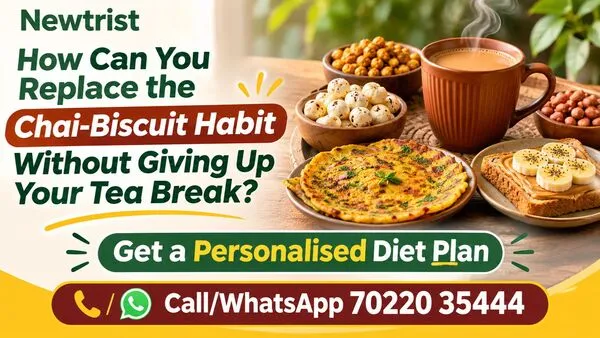
Healthy snacks with tea instead of biscuits include roasted chana, roasted peanuts, makhana paired with chana, whole-wheat toast with peanut butter and a small besan chilla. These foods provide different combinations of protein, fibre and healthy fats that may help you feel more satisfied.
Roasted chana is a convenient choice when you want something crunchy. A small besan chilla may be more suitable when you are genuinely hungry and dinner is still several hours away. Choose one alternative based on your appetite rather than adding several snacks to your usual biscuit serving.

Table of Contents
Why Do Biscuits With Evening Chai Sometimes Leave You Hungry?
Biscuits taste good with tea, but their nutritional composition does not always make them a satisfying snack.
Many ordinary glucose, Marie and similar biscuits are made predominantly from refined wheat flour, with varying amounts of sugar and fat.
Depending on the product and serving size, they may contain relatively little protein and dietary fibre.
That makes a difference when you are actually hungry rather than simply enjoying something sweet.
Protein contributes to satiety, which is the feeling of satisfaction after eating. Fibre and dietary fat can also influence how filling a food feels.
But the amount you eat matters just as much as the type of food.
A small serving of biscuits may be perfectly enjoyable as an occasional accompaniment. However, if you are relying on it to satisfy hunger after several hours without food, it may not be substantial enough.
The purpose of replacing biscuits is not simply to eat fewer calories. It is to choose a snack that provides useful nourishment in a portion that matches your appetite.
That is why the best alternative depends partly on what you need from your tea break.

What Are the Best Healthy Snacks to Eat With Tea Instead of Biscuits?
You do not need expensive packaged foods or unfamiliar ingredients.
The following five Indian options offer different ways to replace biscuits while retaining the textures and flavours you enjoy with chai.
1. Roasted Chana: When You Want Something Crunchy
If you enjoy the crisp bite of biscuits, roasted chana is an easy replacement.
Roasted Bengal gram contains plant protein and dietary fibre. It also has one practical advantage over many freshly prepared snacks: it is ready whenever you want it.
Sample portion: Approximately 25 to 30 grams of plain roasted chana.
You can enjoy it as it is or add a pinch of roasted cumin powder for flavour.
Keep a small airtight container in your kitchen or office. When your evening chai is ready, serve the chana in a katori.
You still have something crunchy to enjoy, without needing to prepare a separate recipe.
This is a particularly convenient choice when your biscuit habit is driven by ease and familiarity.
2. Roasted Peanuts: When You Prefer Something Savoury
Perhaps you enjoy a few savoury bites with chai but do not want a large plate of food.
Dry-roasted peanuts can be a suitable alternative.
They contain plant protein, mostly unsaturated fats and some dietary fibre. Their rich, nutty flavour also pairs naturally with milk tea.
Sample portion: Approximately 15 to 20 grams of plain roasted peanuts.
Serve the portion in a small bowl instead of eating directly from a large packet.
Because peanuts are energy-dense, their quantity matters. A large handful is not automatically a better choice simply because peanuts are nutritious.
This option works well when your appetite is modest and you want something savoury that requires no cooking.
3. Roasted Makhana With Chana: When You Enjoy Light, Crispy Bites
Makhana is enjoyable because of its light, airy texture.
However, a small serving of plain makhana contains relatively little protein. If you want something more substantial, combine it with roasted chana.
Try this simple combination:
- 1 cup of plain roasted makhana
- 2 tablespoons of roasted chana
- A pinch of cumin powder or black pepper
Dry-roast the makhana until crisp, allow it to cool slightly and combine it with the chana.
The makhana provides the delicate crunch, while roasted Bengal gram contributes additional protein and fibre.
This is an appealing alternative when you enjoy taking small, crispy bites during a relaxed tea break.
4. Whole-Wheat Toast With Peanut Butter: When You Miss Something Sweet
What if the sweetness of biscuits is what makes your evening tea enjoyable?
Switching to something salty or strongly spiced may not appeal to you.
A slice of whole-wheat toast with peanut butter offers another approach.
Sample portion: One slice of whole-wheat bread with approximately one tablespoon of peanut butter.
For a naturally sweeter taste, add a few thin banana slices.
The bread contributes carbohydrates and some fibre, depending on its ingredients, while peanut butter provides protein and fat.
Choose bread made predominantly with whole-wheat flour and peanut butter without unnecessary added sugar.
It takes only a few minutes to prepare and provides a more substantial option when you prefer something mildly sweet with chai.
5. Small Besan Chilla: When You Need Something More Substantial
Some evenings, you are not looking for something to nibble on.
You are genuinely hungry, and dinner is still a few hours away.
A small besan chilla can be a practical biscuit replacement on these days.
Besan, made from Bengal gram, contributes plant protein and dietary fibre.
For one small chilla, use:
- 30 to 40 grams of besan
- Finely chopped onion and coriander
- A little grated carrot or chopped spinach
- Cumin and preferred spices
- Water to prepare the batter
- A little oil for cooking
Mix the ingredients into a pourable batter and cook on a hot tawa until both sides are done.
You get a freshly prepared savoury snack using familiar Indian ingredients.
This is useful when a handful of dry snacks does not match your appetite, but you do not want to prepare an elaborate meal.

How Can You Replace the Chai-Biscuit Habit Without Giving Up Your Tea Break?
You may already know which biscuit alternative you would like to try.
Yet the next evening, you find yourself opening the same packet.
Why?
Because eating biscuits may have become part of making chai rather than a conscious food decision.
You put the tea on the stove, take out your favourite cup and reach for the biscuit tin. The actions happen almost automatically.
Changing the sequence can make a new food choice easier to maintain.
Change What You Prepare Before Sitting Down
Keep your usual tea time and the familiar break you enjoy.
But before you pour your chai, serve your chosen alternative in a small bowl or plate.
If the biscuit packet usually sits beside the stove, move it away from your normal tea-making area.
This small environmental change makes your planned snack the more convenient option.
You are changing one part of the routine without giving up the experience itself.
Start With One Alternative You Genuinely Like
You do not need five different snacks every week.
Choose one option that matches your taste and schedule.
Keep a ready-to-eat replacement for busy evenings. Choose something freshly prepared when you have more time.
Try your selected alternative during your next five tea breaks when you feel hungry.
Notice whether you enjoy it and whether the amount is satisfying.
If it works, you have found something practical enough to continue.
If it does not, the useful next step is to understand what is missing from the choice rather than automatically return to biscuits.
Frequently Asked Questions About Replacing Biscuits With Tea
Are Digestive Biscuits, Sugar-Free Biscuits or Rusks Better Than Regular Tea Biscuits?
Not automatically. These products differ in their ingredients, but the labels do not guarantee better nutritional quality. Some contain refined flour, added fat or relatively little fibre. Compare the nutritional information and serving sizes rather than assuming that digestive, sugar-free or rusk is necessarily a more filling choice.
Can Homemade Atta Biscuits Be a Good Alternative?
Yes, depending on how they are prepared. Whole-wheat flour, besan, nuts and seeds can contribute useful nutrients. However, the quantities of sugar and fat, along with the portion eaten, still influence the finished biscuit’s nutritional value. Homemade does not automatically mean more filling.
Do You Need to Eat Something Every Time You Drink Chai?
No. If you are already comfortably satisfied, you can enjoy your usual cup of chai without an accompaniment. A planned snack is useful when you are hungry or genuinely want food, not simply because biscuits have always been served with tea.
Can You Still Enjoy Your Favourite Biscuits Occasionally?
Yes. Replacing your usual biscuit serving does not mean completely avoiding a food you enjoy. An occasional serving can remain part of your eating routine while you choose more nourishing alternatives for everyday tea breaks.
What If You Replace Biscuits but Still Feel Hungry Before Dinner?
Imagine making the change.
You replace your regular biscuits with roasted chana. You enjoy the snack, finish your chai and return to work.
But an hour later, you are hungry again.
Should you try peanuts tomorrow? Or increase the chana? Or find another supposedly healthier snack?
Before changing the food again, consider what happened earlier in your day.
Someone who ate lunch at noon and plans to have dinner at 9 PM has a very different eating interval from someone who finished lunch at 2 PM and eats dinner by 7 PM.
The same small snack may not satisfy both people.
Your appetite is influenced by your previous meals, activity level, meal timings and individual nutritional requirements.
This is why a biscuit replacement can improve your food choice without necessarily resolving recurring evening hunger.
Sometimes the missing piece is not another snack. It is understanding how your evening food fits into the rest of your daily meals.
How Can Chief Nutritionist Vasanthi Senthilvel Help You Find the Right Evening Eating Routine?
You may know that roasted chana is a nourishing alternative to biscuits.
But does that tell you how much roasted chana you should eat? Whether a small chilla would suit you better? Or whether your lunch needs attention instead?
Not necessarily.
These are individual decisions that depend on your daily eating pattern.
At Newtrist, Chief Nutritionist Vasanthi Senthilvel provides personalised diet and nutrition guidance that considers your usual food intake, portions, meal timings, preferences, activity and nutritional requirements.
A personalised assessment can help you understand whether the reason you feel hungry every evening relates to the quantity of your lunch, the interval before dinner or the type and amount of food you choose with chai.
You can work towards a practical Indian diet plan that fits your familiar meals rather than repeatedly experimenting with generic snack suggestions.
Keep your favourite chai. Get clarity about what and how much you should eat with it.
If you are tired of guessing which food choices and portions suit you, take the next step towards personalised nutrition.Enquire about a personalised diet and nutrition consultation with Chief Nutritionist Vasanthi Senthilvel at Newtrist.
Author
Chief Nutritionist Vasanthi Senthilvel leads Newtrist Nutritionist Dietitian Dietician, providing personalised diet plans for weight management and clinical nutrition for children, adolescents, adults and families.
She has 21 years of experience in nutrition and has received professional recognition for her work.
- Pride of Bharat Awards 2026: Outstanding Achievement in Holistic Health & Nutrition Innovation
- Doctor of The Year: Nutritionist 2026: Excellence in Clinical Nutrition and Weight Loss.
Her approach considers age, growth, health history, medical conditions, laboratory reports, medication, body composition, weight history, dietary preferences, regional food habits, family routines, activity, sleep and personal health goals. Recommendations are developed according to individual needs rather than using one standard diet for everyone.
Consultations are available in person at Bangalore HSR Layout, Koramangala, Bellandur, Haralur and Electronic City, as well as online across India.
Independent Medical Review Panel
Newtrist health and nutrition articles undergo medical review, where appropriate, by doctors with relevant specialist expertise. The medical professionals listed below contribute to Newtrist’s review process within their respective specialties.
| Speciality | Doctor |
|---|---|
| Endocrinology | Dr Vinay Prasad MBBS, MD, DM |
| Gastroenterology & Hepatology | Dr Sunil kumar N MBBS, MD, DM |
| Gynaecology | Dr Prathiba G MBBS, DNB, FIRM, FMAS |
| Nephrology | Dr Priyashree R MBBS, MD, DNB, DM |