
Written by: Chief Nutritionist Vasanthi Senthilvel
21 years of experience | Newtrist Nutritionist Dietitian Dietician
Best Nutritionist in Bangalore with multiple awards for excellence in clinical nutrition, weight loss, holistic health and nutrition innovation.
Medically reviewed by: Dr Prathiba G MBBS, DNB, FIRM, FMAS | Dr Sunil kumar N MBBS, MD, DM | Dr Vinay Prasad MBBS, MD, DM
Medical Disclaimer: Nutritional needs vary based on an individual’s profile. The information on this page is for general educational purposes only and is not intended to replace personalised medical or nutrition care.
Madhya Pradesh stretches across Malwa, Bundelkhand, Mahakoshal and tribal food traditions, while Chhattisgarh has a strong rice culture alongside millets, leafy vegetables, steamed foods and Bastar influences. These are not interchangeable cuisines.
A Central Indian diet plan for weight loss should use that diversity rather than replace it. The useful work is to identify which local staples and dishes already fit everyday life, which richer preparations are occasional, and what needs adjustment for the individual’s appetite, health and routine.
Key takeaway: A Central Indian diet plan for weight loss can retain familiar foods from Madhya Pradesh and Chhattisgarh, including local grains, rice, pulses, vegetables and regional dishes. Kodo, kutki, corn or a steamed rice preparation does not produce weight loss by itself. Preparation, frequency, nutritional balance, appetite, activity and individual health needs determine how these foods fit.
Table of Contents
How Can a Central Indian Diet Plan for Weight Loss Use Regional Foods?
Central India includes dryland grain traditions, forest foods, rice-based dishes, pulses, vegetables, seasonal produce and strongly regional cooking methods. That variety makes local foods useful starting points for a sustainable plan, because the person does not have to learn an unfamiliar cuisine before making changes.
The limitation is that ‘traditional’ does not automatically mean light. A grain can be nutritious and still be served in a rich preparation. A steamed food can fit well but still be eaten around frequent fried snacks or sweets. A regional plan has to look beyond the reputation of individual dishes.
Madhya Pradesh Diet Plan for Weight Loss: MP Foods and Dishes
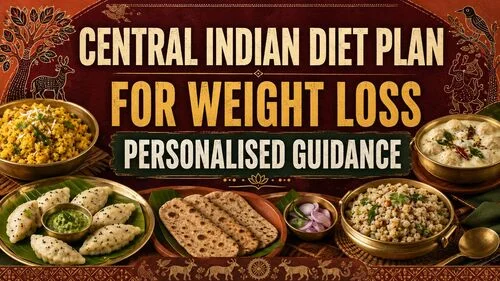
A Madhya Pradesh diet plan for weight loss can draw on bhutte ka kees, kodo and kutki, dal bafla, paniya, local vegetables, pulses and regional home foods. Madhya Pradesh is large enough that Malwa, Bundelkhand, Mahakoshal and tribal food traditions can differ substantially, so Indori poha or dal bafla alone cannot represent the state.
Kodo and kutki are traditional millets in several tribal food cultures and can add grain variety without needing a ‘millet diet’. Bhutte ka kees, based on grated corn, illustrates a different issue because versions may use milk and ghee, so the nutritional profile depends on how it is cooked rather than the fact that corn is the main ingredient.
Dal bafla also needs context. Pulses are present, but the bafla and the amount of ghee used can make the complete dish very different from a simple dal-and-grain preparation. A useful MP plan keeps celebratory foods visible while distinguishing them from the foods eaten most days.
| Meal | Diet plan |
| Breakfast | Indori poha with a pulse-based accompaniment |
| Mid-morning | Bhutte ka kees |
| Lunch | Kodo or kutki with dal and local vegetables |
| Evening | Paniya with a light pulse-based accompaniment |
| Dinner | Wheat or rice with pulses and seasonal vegetables |
Chhattisgarh Diet Plan for Weight Loss: Chhattisgarhi Foods and Dishes
A Chhattisgarh diet plan for weight loss can keep rice, chila, fara, angakar roti, aamat, bafauri, leafy vegetables and other local foods. Chhattisgarh’s identity as a rice-growing state is important, but the cuisine also includes millets, pulses, forest produce and tribal dishes that are rarely represented in generic Indian weight-loss plans.
Fara and bafauri show how steaming is used in familiar regional foods, while angakar roti uses rice flour in a very different form. These preparations can be useful alternatives within the cuisine, but the plan should not turn steamed food into a free food or rice flour into a weight-loss ingredient.
Aamat, especially in Bastar traditions, brings vegetables and bamboo-shoot cooking into the picture. Bore baasi and other soaked or fermented rice traditions may also appear in some households. Their place depends on food safety, accompaniments, salt, individual tolerance and the rest of the eating pattern.
| Meal | Diet plan |
| Breakfast | Chila with a leafy-vegetable accompaniment |
| Mid-morning | Bafauri |
| Lunch | Rice with aamat, pulses and leafy vegetables |
| Evening | Fara |
| Dinner | Angakar roti with a pulse preparation and local vegetables |
Do Not Let Famous Dishes Hide the Everyday Central Indian Diet
Searches for Central Indian food often surface a small set of famous dishes, but those dishes do not describe what most households eat every day. An MP household may rotate through dal, seasonal vegetables, wheat, rice, maize or local millets while richer foods such as dal bafla appear in a different context. A Chhattisgarh household may rely more heavily on rice, pulses, greens and steamed preparations, with Bastar and other tribal traditions adding still more variety.
This difference matters for weight management because an occasional signature dish should not become the target of the whole plan. The more useful assessment looks at repeated staples, cooking fats, snack and beverage habits, protein sources, vegetable variety, work routine and food availability.
It also means local foods should not be removed simply because a standard calorie app or generic diet chart does not recognise them. The role of a dish can be assessed from its ingredients, preparation and place in the overall pattern without replacing the cuisine.
Millets and Traditional Grains Are Useful, but They Are Not the Whole Strategy
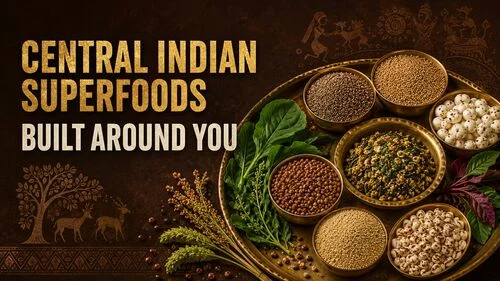
Kodo, kutki, jowar, bajra and other traditional grains can fit Central Indian weight management because they preserve familiar food habits and add variety. They should not be used as a shortcut around the rest of the diet. Switching grains does little if appetite, cooking fats, sweets, fried snacks, eating out or low protein and vegetable intake remain unchanged.
The more durable approach is to keep the grain that suits the household and review the complete pattern. That is especially important when a traditional food has been modernised into a richer restaurant or packaged version.
When Personalised Central Indian Nutrition May Be Useful
Personalisation may be helpful when local foods, seasonal availability and household traditions do not fit neatly into a standard Indian weight-loss chart. Health history, medication, appetite, activity, work routine, body composition, food access, family habits and previous dieting can all affect whether the useful change concerns quantity, preparation, eating frequency or something outside the staple food itself.
Chief Nutritionist Vasanthi Senthilvel at Newtrist Nutritionist Dietitian Dietician provides personalised diet plans for weight management. An assessment can start with the person’s actual Madhya Pradesh or Chhattisgarh foods, including less commonly represented local dishes, and translate nutrition principles into recommendations that remain realistic for the household.
Consult Chief Nutritionist Vasanthi Senthilvel for personalised weight-management guidance that works with your Madhya Pradesh or Chhattisgarh cuisine, food access and routine.
Author
Chief Nutritionist Vasanthi Senthilvel leads Newtrist Nutritionist Dietitian Dietician, providing personalised diet plans for weight management and clinical nutrition for children, adolescents, adults and families.
She has 21 years of experience in nutrition and has received professional recognition for her work.
- Pride of Bharat Awards 2026: Outstanding Achievement in Holistic Health & Nutrition Innovation
- Doctor of The Year: Nutritionist 2026: Excellence in Clinical Nutrition and Weight Loss.
Her approach considers age, growth, health history, medical conditions, laboratory reports, medication, body composition, weight history, dietary preferences, regional food habits, family routines, activity, sleep and personal health goals. Recommendations are developed according to individual needs rather than using one standard diet for everyone.
Consultations are available in person at Bangalore HSR Layout, Koramangala, Bellandur, Haralur and Electronic City, as well as online across India.
Independent Medical Review Panel
Newtrist health and nutrition articles undergo medical review, where appropriate, by doctors with relevant specialist expertise. The medical professionals listed below contribute to Newtrist’s review process within their respective specialties.
| Speciality | Doctor |
|---|---|
| Endocrinology | Dr Vinay Prasad MBBS, MD, DM |
| Gastroenterology & Hepatology | Dr Sunil kumar N MBBS, MD, DM |
| Gynaecology | Dr Prathiba G MBBS, DNB, FIRM, FMAS |
| Nephrology | Dr Priyashree R MBBS, MD, DNB, DM |