
Written by: Chief Nutritionist Vasanthi Senthilvel
21 years of experience | Newtrist Nutritionist Dietitian Dietician
Best Nutritionist in Bangalore with multiple awards for excellence in clinical nutrition, weight loss, holistic health and nutrition innovation.
Medically reviewed by: Dr Prathiba G MBBS, DNB, FIRM, FMAS | Dr Sunil kumar N MBBS, MD, DM | Dr Vinay Prasad MBBS, MD, DM
Medical Disclaimer: Nutritional needs vary based on an individual’s profile. The information on this page is for general educational purposes only and is not intended to replace personalised medical or nutrition care.
Seeing “high cholesterol” on a lipid report can make familiar foods feel suspect overnight: eggs, ghee, cooking oil, even rice. But cutting foods at random can solve the wrong problem. LDL cholesterol and triglycerides can be elevated for different reasons and often call for different nutrition priorities. A useful high cholesterol diet therefore starts with the lipid pattern and the food habits that repeat most often, not with the longest list of foods to avoid.
Key takeaway: A high cholesterol diet should be guided by the lipid pattern, not by a blanket rule to avoid all fat or broadly restrict carbohydrate foods. When LDL is elevated, fat quality and soluble fibre usually deserve more attention; when triglycerides are high, added sugars, refined carbohydrate foods and overall energy balance often become more relevant. The right emphasis and quantities depend on the individual’s lipid report, usual food pattern, body needs and daily life.
Table of Contents

What do LDL, HDL and triglycerides mean for your diet?
LDL and HDL are lipoproteins that carry cholesterol in the blood, while triglycerides are a different type of blood fat. The distinction matters nutritionally because the food factors that deserve the most attention can change according to which part of the lipid report is elevated.
| Lipid pattern | Dietary emphasis |
| LDL cholesterol is the main concern | Fat quality, replacement of saturated fat, soluble fibre and the overall food pattern |
| Triglycerides are elevated | Added sugars, refined carbohydrate foods, overall food quality and energy balance |
| Both are elevated | A combined approach that addresses both sets of priorities without unnecessary restriction |
HDL cholesterol is also part of the report, but the diet should not become a search for one “HDL-boosting” food. LDL and triglyceride findings usually give clearer direction for the nutrition discussion.
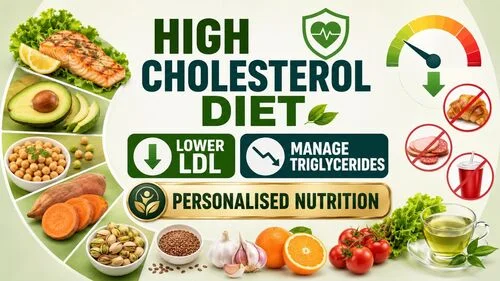
Dietary cholesterol and blood cholesterol are not the same thing
Cholesterol in food and cholesterol measured in the blood are related concepts, but they are not interchangeable. For many people with elevated LDL cholesterol, the type of fat in the overall diet deserves more attention than simply avoiding every food that contains cholesterol.
Eggs are a common example of the confusion. Removing eggs while leaving major saturated-fat sources unchanged does not automatically create a cholesterol-conscious diet. Individual priorities still depend on the lipid report and the rest of the diet.
The type of fat matters more than simply avoiding fat
A high cholesterol diet does not need to become a very low-fat diet. Replacing some saturated-fat-rich foods with sources of unsaturated fat can support LDL cholesterol management, which makes fat quality more useful than a blanket instruction to avoid fat.
Where saturated fat can enter the diet
Depending on food habits, sources can include ghee, butter, cream, some high-fat dairy foods, coconut oil, palm-fat-rich foods, fatty meat and many bakery or fried products. What matters most is how often these foods appear in the usual diet.
What unsaturated fat means in practical food terms
Unsaturated fats are found in many plant oils, nuts, seeds and fish. The practical idea is replacement: change the fat sources used repeatedly rather than trying to remove fat altogether. The suitable choice still depends on cooking style, intake and preferences.
Trans fat deserves separate attention
Trans fats can raise LDL cholesterol and lower HDL cholesterol. Commercial bakery products, shortenings and foods made with partially hydrogenated fats are relevant sources where they occur. When packaged foods are used regularly, the nutrition label and ingredient list can help identify whether trans fat is part of the product.
Which cooking oils can fit a high cholesterol diet?
There is no single “best” cooking oil that can correct high cholesterol by itself. When saturated fats are being replaced, oils that provide more unsaturated fat are generally more useful choices. Familiar options can include groundnut, mustard, sesame, sunflower, rice bran, soybean and olive oils, depending on cooking method, taste and household use. The choice still needs to be considered alongside how much oil is used, how often food is fried and which other fat sources are common in the diet.
Coconut oil, ghee and butter are often discussed as traditional or natural choices. Those descriptions do not remove their saturated-fat content. They can therefore require more careful consideration when LDL cholesterol is elevated, especially if several saturated-fat-rich foods are already common in the usual eating pattern.
Repeated deep frying also changes the practical picture. Choosing a different bottle of oil while keeping frequent deep-fried foods unchanged is unlikely to address the larger dietary pattern. Oil choice is one decision within the diet, not the whole strategy.
Soluble fibre deserves attention when LDL is high
Fibre is not one single substance. Soluble fibre is particularly relevant to LDL cholesterol because it can reduce cholesterol absorption in the digestive tract and support lower LDL levels as part of an appropriate diet.
Familiar food sources include oats, barley, dal and other pulses, beans, selected fruits and vegetables. These foods do not need to be arranged into a special menu to be useful. The important question is how consistently fibre-rich foods appear in the person’s existing diet and what they are replacing.
Nuts and seeds can help, but “healthy” does not mean unlimited
Nuts and seeds can contribute unsaturated fats, fibre and other nutrients to a cholesterol-conscious pattern. Examples include peanuts, almonds, walnuts, sesame seeds, flaxseed and other familiar choices that suit the household.
Their role is still part of the overall diet. Adding nuts to a pattern that remains high in saturated fat or highly refined foods does not solve the main problem, and a general article cannot determine the right quantity for a particular person.
Where omega-3 fats fit
Omega-3 fats can come from foods such as fish, flaxseed, chia seeds and walnuts. These foods can contribute to a balanced fat pattern, but they should not be presented as a stand-alone treatment for high cholesterol. Their usefulness depends on the person’s usual diet, dietary preference and the lipid issue being addressed.
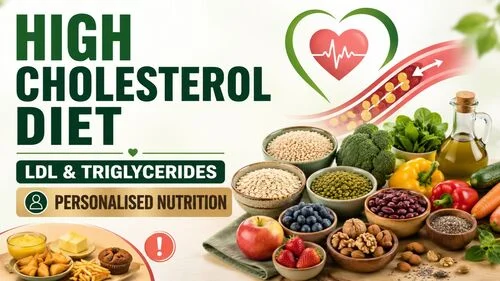
Why high triglycerides need a different nutrition focus
When triglycerides are elevated, focusing only on oil or dietary cholesterol can miss the main dietary issue. Frequent added sugars, sugary beverages, sweets, highly refined carbohydrate foods and excess energy intake can all be relevant to triglyceride levels.
This does not mean that every carbohydrate food needs to be removed. Rice, roti and other staples should be considered in the context of the whole diet, including degree of refinement, quantity, eating pattern and what else is being consumed. A blanket low-carbohydrate rule is not the same as a personalised triglyceride strategy.
How Indian food habits can be adapted for high cholesterol
Indian food does not need to be replaced with a separate Western-style “cholesterol diet”. The useful task is to look at how familiar foods are prepared, which fats are used repeatedly, how refined the staples and snacks are, and where fibre-rich foods already fit into the household pattern.
Practical areas to review can include:
- The type and frequency of cooking fats used at home.
- How often fried snacks, bakery foods or rich gravies appear.
- Whether dal, pulses, beans, vegetables, fruits and whole-grain choices appear regularly enough to support fibre intake.
- How sweets, sweetened foods and refined snacks appear across the week, particularly when triglycerides are elevated.
- Whether the vegetarian, egg-based or non-vegetarian pattern provides a balanced mix of protein foods and fat sources.
These are review points, not a diet chart. Regional preferences, appetite, affordability, work schedule and family habits all affect which changes are realistic.
How to read food labels when cholesterol is high
For a cholesterol-focused label check, start with saturated fat and look for trans-fat information where it is provided. Fibre and sugar information can also be useful, especially when comparing similar foods or when triglycerides are part of the concern.
The ingredient list helps explain what the numbers represent. Front-of-pack claims such as “multigrain”, “baked” or “high protein” do not tell you the full fat, fibre or sugar profile. Labels are most useful for comparing realistic options, not for finding a product that claims to solve cholesterol.
Eating out: look beyond the word “healthy”
Restaurant food can make fat quality and cooking method harder to judge. Fried foods, rich gravies, creamy preparations, bakery items and desserts can add substantial saturated fat, refined carbohydrates or both, even when the meal includes otherwise familiar ingredients.
With cholesterol, the useful question is not whether a restaurant meal is “allowed”, but which preparation patterns recur. If outside food is a regular part of the working week, repeated exposure to deep-fried foods, creamy gravies, bakery items or refined desserts may matter more than an occasional celebration meal. The strategy therefore needs to focus on the person’s usual ordering pattern rather than assuming an ideal home-cooked diet.
Does body weight affect cholesterol and triglycerides?
Body weight becomes most relevant when it is part of the same metabolic picture as raised triglycerides or when weight change is a genuine health goal. But a high cholesterol result is not, by itself, a prescription to lose weight. The decision should be based on the lipid pattern, body composition, eating habits and overall health rather than the cholesterol number alone.
If elevated triglycerides coincide with a weight-management goal, Newtrist’s personalised weight management information explains how food quality, appetite, body composition and everyday eating patterns can be considered together instead of relying on severe restriction.
Where high cholesterol diets often go wrong
- Reacting to the word “cholesterol” without first checking whether LDL cholesterol, triglycerides or both are driving the result.
- Treating “low fat” as the goal instead of looking at which fats are being replaced and what is taking their place.
- Changing the cooking oil while leaving other frequent saturated-fat sources or deep-fried foods unchanged.
- Restricting rice, roti or all carbohydrate foods when triglycerides are elevated without first examining added sugars, refined foods and the wider eating pattern.
- Assuming a vegetarian or “cholesterol-free” label automatically makes a food suitable without looking at fat quality, fibre and sugar.
What if you also have high blood pressure?
If blood pressure is also elevated, lipid-focused food changes are only part of the nutrition picture. The Newtrist hypertension diet guide covers the separate priorities related to blood-pressure nutrition, which are intentionally not repeated here.
A lipid report needs the right context
Food changes can support lipid management, but a diet article cannot interpret the significance of an individual lipid report or replace medical assessment. LDL cholesterol, triglycerides and the rest of the lipid profile need to be considered in the context of the person’s health history and overall risk. Nutrition guidance should complement, not substitute for, appropriate medical care.
Frequently asked questions about a high cholesterol diet
Do I need to avoid fruit if my triglycerides are high?
Not automatically. Whole fruit is not the same as foods or drinks with added sugars, and fruit can contribute fibre and micronutrients. When triglycerides are elevated, the type, form and amount of carbohydrate across the whole diet still matter. The appropriate fruit intake therefore depends on the individual eating pattern rather than a blanket rule to avoid fruit.
Can high cholesterol run in families even when someone eats carefully?
Yes. Inherited factors can contribute to high cholesterol, including conditions such as familial hypercholesterolaemia. Diet still matters, but food choices may not fully explain a markedly abnormal or persistent lipid pattern. Medical assessment is important for understanding the result, while nutrition can be planned around the person’s food habits and individual needs.
Is total cholesterol enough to decide what I should change in my diet?
Not always. Total cholesterol combines different lipid components and does not show whether LDL cholesterol or triglycerides are driving the result. Because those markers can point to different nutrition priorities, the full lipid report is more informative than total cholesterol alone. Dietary decisions should also consider the person’s usual food pattern and health context.
Do I need to avoid all dairy foods when LDL cholesterol is high?
Not automatically. Dairy foods vary in saturated-fat content and nutritional contribution, so the question is how a particular dairy choice fits with the rest of the diet and how often higher-saturated-fat foods are used. A general article cannot determine the appropriate type or quantity for every person with elevated LDL cholesterol.
Conclusion
The strongest cholesterol-related food changes are usually the ones aimed at the actual lipid pattern and the habits that repeat most often. Once LDL and triglyceride priorities are separated, the next task is deciding which changes are relevant, realistic and sustainable in real life.
Why cholesterol nutrition may need to be personalised
General advice can tell you that fat quality, fibre and refined foods matter. It cannot tell you whether your biggest priority is the cooking fat used at home, frequent bakery foods, a low-fibre pattern, sweets and refined snacks, or another part of your usual intake. That decision needs the lipid report and the usual diet to be looked at together.
At Newtrist, an individual nutrition assessment can consider the lipid pattern alongside current food intake, cooking methods, fibre sources, refined-food intake, appetite, body composition, weight history where relevant, eating-out frequency, regional food habits and work or family routines. This can help identify a smaller set of changes that are both nutritionally relevant and practical to maintain.
For readers who need an individual plan, Newtrist’s personalised clinical nutrition service can use the lipid pattern and dietary assessment to decide which changes deserve priority, which familiar foods can remain and how the plan can fit everyday life.
Consult Chief Nutritionist Vasanthi Senthilvel at Newtrist Nutritionist Dietitian Dietician for a personalised diet plan built around your LDL and triglyceride pattern, usual foods, cooking habits and clinical nutrition needs, with weight management included only when relevant.
Author
Chief Nutritionist Vasanthi Senthilvel leads Newtrist Nutritionist Dietitian Dietician, providing personalised diet plans for weight management and clinical nutrition for children, adolescents, adults and families.
She has 21 years of experience in nutrition and has received professional recognition for her work.
- Pride of Bharat Awards 2026: Outstanding Achievement in Holistic Health & Nutrition Innovation
- Doctor of The Year: Nutritionist 2026: Excellence in Clinical Nutrition and Weight Loss.
Her approach considers age, growth, health history, medical conditions, laboratory reports, medication, body composition, weight history, dietary preferences, regional food habits, family routines, activity, sleep and personal health goals. Recommendations are developed according to individual needs rather than using one standard diet for everyone.
Consultations are available in person at Bangalore HSR Layout, Koramangala, Bellandur, Haralur and Electronic City, as well as online across India.
Independent Medical Review Panel
Newtrist health and nutrition articles undergo medical review, where appropriate, by doctors with relevant specialist expertise. The medical professionals listed below contribute to Newtrist’s review process within their respective specialties.
| Speciality | Doctor |
|---|---|
| Endocrinology | Dr Vinay Prasad MBBS, MD, DM |
| Gastroenterology & Hepatology | Dr Sunil kumar N MBBS, MD, DM |
| Gynaecology | Dr Prathiba G MBBS, DNB, FIRM, FMAS |
| Nephrology | Dr Priyashree R MBBS, MD, DNB, DM |