
Cutting salt is usually the first thing people think about after being told their blood pressure is high. But the salt shaker is only one part of the picture. Sodium can come from pickles, condiments, packaged foods, restaurant dishes and everyday cooking, while the rest of the diet also shapes blood-pressure nutrition.
Written by: Chief Nutritionist Vasanthi Senthilvel
21 years of experience | Newtrist Nutritionist Dietitian Dietician
Best Nutritionist in Bangalore with multiple awards for excellence in clinical nutrition, weight loss, holistic health and nutrition innovation.
Medically reviewed by: Dr Prathiba G MBBS, DNB, FIRM, FMAS | Dr Sunil kumar N MBBS, MD, DM | Dr Vinay Prasad MBBS, MD, DM
Medical Disclaimer: Nutritional needs vary based on an individual’s profile. The information on this page is for general educational purposes only and is not intended to replace personalised medical or nutrition care.
A useful hypertension diet is therefore not a longer list of restrictions. It is a way to identify the food habits that matter most and make the changes workable in real life.
Key takeaway: A hypertension diet should focus on reducing excess sodium, including a varied range of potassium-rich minimally processed foods, and applying DASH-style principles in a way that fits usual Indian foods and routines. Avoiding table salt alone is not enough, and no single food can compensate for a sodium-heavy diet. The right priorities and food quantities vary between individuals.
Table of Contents

What does diet have to do with high blood pressure?
Diet can influence blood-pressure nutrition through sodium and potassium balance, overall food quality and, for some people, body weight. The practical question is not which single food can lower BP, but which repeated parts of the usual diet are most likely to deserve attention.
One person may eat little packaged food but use salty accompaniments often; another may depend on restaurant or takeaway food through the working week. A useful dietary approach starts by finding where the main pressure points are in that person’s routine rather than applying the same restriction list to everyone.
Which foods deserve more attention in a hypertension diet?
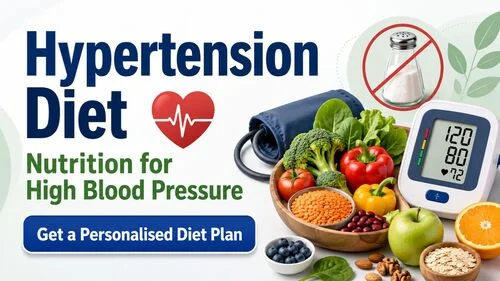
The goal is not to find a special “BP food”. A practical pattern gives more space to familiar, minimally processed foods while paying closer attention to concentrated sodium sources and convenience foods that appear frequently. Indian foods can fit this approach without replacing normal household ingredients with special diet products.
Examples of food categories that can fit a blood-pressure-friendly pattern include:
- Vegetables and fruits as sources of potassium, fibre and micronutrients.
- Dal, pulses and legumes as familiar, minimally processed foods.
- Whole grains and less-refined staple choices where they suit the person’s usual eating pattern.
- Milk or curd where appropriate for the individual.
- Nuts and seeds as part of the broader food pattern.
This is an example food list, not a prescription. The suitable quantity, preparation method and balance depend on appetite, body composition, activity, health needs, preferences and the rest of the person’s diet.
Why reducing table salt may not be enough
Salt is an obvious source of sodium, but it is not the only one. Sodium can also enter the diet through foods and ingredients used for flavour, preservation and convenience. A person can therefore stop adding salt at the table and still have a sodium-heavy eating pattern.
Salt and sodium are related, but they are not identical
Table salt contains sodium, while food labels usually report sodium itself. For hypertension, total sodium exposure is more useful than judging a food only by how salty it tastes. Foods that seem only mildly salty can still contribute meaningfully when they are eaten often.
Where can sodium hide in an Indian diet?
The aim is not to label familiar foods as permanently off-limits. It is to notice which sodium sources appear often enough to matter. Depending on the household and routine, these may include pickles, papad, namkeen, packaged savoury snacks, instant foods, ready-made mixes, sauces, some chutneys or condiments, and prepared restaurant gravies. Using several of these on the same day can matter more than focusing on any one item in isolation.
Is rock salt, pink salt or sea salt better for high blood pressure?
Changing the type of salt does not remove the need to consider quantity. Rock salt, pink salt, sea salt and regular table salt all contribute sodium. For blood-pressure nutrition, the useful question is how much sodium the overall diet provides, not the colour, price or marketing description of the salt.
Potassium matters, but one food is not the answer
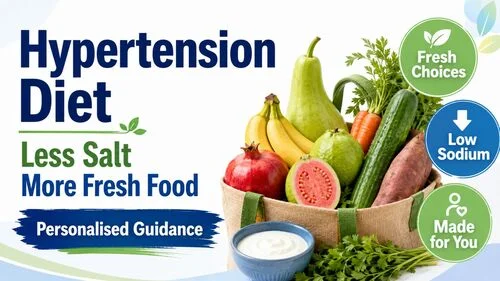
Potassium is involved in fluid balance and blood-pressure regulation. Vegetables, fruits, pulses and dairy foods where suitable are familiar food sources. Including a variety of these foods can support a dietary pattern that is naturally richer in potassium.
The mistake is to treat one potassium-rich food as if it can cancel out a sodium-heavy diet. It cannot. A general article also cannot determine the appropriate potassium intake for a particular person, so the emphasis should remain on the overall food pattern rather than chasing a single food.
What is the DASH diet for high blood pressure?
DASH stands for Dietary Approaches to Stop Hypertension. It is a structured eating pattern that emphasises minimally processed plant foods and suitable dairy foods while keeping sodium in check. DASH is better understood as a set of principles than as a fixed diet chart that everyone should copy.
Can DASH principles fit Indian food?
Yes. DASH principles can be applied with familiar Indian foods and do not require imported ingredients or a Western-style menu. The important part is adapting the principles to regional preferences, household cooking, vegetarian or non-vegetarian choices, work schedules, food affordability and the frequency of eating outside the home.
Food quality matters beyond sodium
Hypertension nutrition is not only a sodium discussion. Fibre-rich whole foods and appropriate fat choices contribute to overall diet quality, while highly processed foods can bring several less favourable dietary features together. For hypertension, the main emphasis remains on sodium exposure, food quality and the overall eating pattern rather than detailed fat or fibre targets.
How to read a food label when blood pressure is high
For hypertension, read the label with sodium as the first priority. Compare similar products on the same basis, check what quantity the nutrition information refers to, and look at the ingredient list for clues about why a product may contain more sodium than expected.
Front-of-pack words such as “baked”, “multigrain”, “light” or “healthy” do not tell you whether a product is low in sodium. A label is most useful for comparing realistic options, not for dividing every packaged food into a simple good-or-bad category.
Eating out: make the advice fit your routine
Restaurant and takeaway food can make sodium harder to judge because much of it is added during preparation. Gravies, sauces, seasoning mixes, marinades and prepared ingredients can contribute even when a dish does not taste unusually salty.
Frequency changes the practical importance. Someone who eats out occasionally has a different situation from someone who depends on prepared food through most working days. Useful nutrition guidance needs to account for work, travel and family routines instead of assuming that every meal is cooked at home.
Does body weight matter for high blood pressure?
Body weight can be relevant to blood pressure for some people, but hypertension does not automatically mean weight loss is required. When weight management is appropriate, the approach should consider body composition, appetite, activity, sleep, food habits and sustainability rather than simply reducing food as much as possible.
If blood-pressure goals overlap with a genuine weight concern, Newtrist’s personalised weight management information explains why individual planning involves more than calorie restriction or copying a standard diet.
Common mistakes when changing your diet for high blood pressure
- Making several restrictions at once before identifying which repeated habits are most relevant.
- Creating a separate “hypertension diet” for one family member when many basic household foods can often remain familiar.
- Buying special diet products instead of first comparing ordinary foods and ingredients already used at home.
- Treating an occasional restaurant meal or family occasion as failure instead of looking at the repeated pattern across normal weeks.
- Copying another person’s restriction list even though appetite, routine, food preferences and nutritional needs differ.
A useful change is usually one that addresses a meaningful issue in the person’s usual routine and can still be maintained on ordinary workdays, weekends and family occasions.
What if you also have high cholesterol?
High blood pressure and high cholesterol can occur together, but their dietary priorities are not identical. This article deliberately stays focused on blood-pressure nutrition. If your lipid report is also a concern, the Newtrist high cholesterol diet guide explains the separate nutrition priorities related to LDL cholesterol and triglycerides.
Where nutrition fits in hypertension care
Nutrition can support blood-pressure management, but food choices cannot show whether blood pressure is adequately controlled. Blood-pressure readings and concerning symptoms need appropriate medical evaluation. If a reading is unexpectedly high for you or you feel unwell, seek medical care rather than trying to correct the situation through food changes alone.
Frequently asked questions about a hypertension diet
Does hypertension mean I need to stop eating rice or roti?
No. High blood pressure does not require automatic avoidance of rice or roti. The more relevant issues are sodium exposure, food preparation, the degree of processing and the overall dietary pattern. Staple foods can be considered in the context of the person’s usual diet rather than removed simply because hypertension is present.
Can a vegetarian eating pattern support blood-pressure nutrition?
Yes. A vegetarian pattern can include vegetables, fruits, pulses, whole grains, dairy foods where used, nuts and seeds. The label “vegetarian” does not by itself determine sodium intake or food quality, so preparation methods, packaged foods and salty accompaniments still deserve attention.
Can the whole family eat the same foods when one person has hypertension?
Family members can often share many basic foods, but their nutritional requirements are not automatically identical. Age, appetite, activity, growth, body composition and health needs can differ. Household cooking can support healthier habits while individual quantities and restrictions remain specific to the person who needs them.
Is spicy food the same as salty food for hypertension?
No. Spicy flavour and salty flavour are not the same thing. Chilli, pepper and other spices do not become sodium simply because they taste strong. The sodium concern is more often related to added salt, seasoning mixes, sauces, pickles and other prepared ingredients. This distinction can help avoid unnecessary restrictions while keeping attention on the dietary factor that matters.
Conclusion
Hypertension nutrition becomes more useful when the focus shifts from collecting food rules to identifying the repeated choices that shape sodium exposure and overall diet quality. DASH principles and potassium-rich foods provide a direction, but the priorities still need to fit the person’s food habits, body needs and everyday constraints.
When personalised nutrition guidance may help
By this point, the broad principles are clear. The harder task is deciding what actually needs to change in your own day: where most of the sodium is coming from, which familiar foods can stay, which habits deserve attention first, and how the changes can work with appetite, work hours and family routines. A generic diet chart cannot answer those questions.
A personalised assessment can examine the current diet, likely sodium sources, regional food habits, vegetarian or non-vegetarian preferences, work schedule, eating-out frequency, appetite, activity, body composition, weight goals where relevant and health history. This helps identify a small number of meaningful priorities and turn them into practical changes that fit the person’s usual food environment.
Readers who need individual guidance may consult Chief Nutritionist Vasanthi Senthilvel at Newtrist. Through personalised clinical nutrition, those priorities can be translated into a personalised diet plan suited to the individual’s health needs, food preferences and daily routine.
Consult Chief Nutritionist Vasanthi Senthilvel for a personalised diet plan for clinical nutrition, developed around your hypertension-related nutrition needs, food habits, preferences and daily routine.
Author
Chief Nutritionist Vasanthi Senthilvel leads Newtrist Nutritionist Dietitian Dietician, providing personalised diet plans for weight management and clinical nutrition for children, adolescents, adults and families.
She has 21 years of experience in nutrition and has received professional recognition for her work.
- Pride of Bharat Awards 2026: Outstanding Achievement in Holistic Health & Nutrition Innovation
- Doctor of The Year: Nutritionist 2026: Excellence in Clinical Nutrition and Weight Loss.
Her approach considers age, growth, health history, medical conditions, laboratory reports, medication, body composition, weight history, dietary preferences, regional food habits, family routines, activity, sleep and personal health goals. Recommendations are developed according to individual needs rather than using one standard diet for everyone.
Consultations are available in person at Bangalore HSR Layout, Koramangala, Bellandur, Haralur and Electronic City, as well as online across India.
Independent Medical Review Panel
Newtrist health and nutrition articles undergo medical review, where appropriate, by doctors with relevant specialist expertise. The medical professionals listed below contribute to Newtrist’s review process within their respective specialties.
| Speciality | Doctor |
|---|---|
| Endocrinology | Dr Vinay Prasad MBBS, MD, DM |
| Gastroenterology & Hepatology | Dr Sunil kumar N MBBS, MD, DM |
| Gynaecology | Dr Prathiba G MBBS, DNB, FIRM, FMAS |
| Nephrology | Dr Priyashree R MBBS, MD, DNB, DM |