
Written by: Chief Nutritionist Vasanthi Senthilvel
21 years of experience | Newtrist Nutritionist Dietitian Dietician
Best Nutritionist in Bangalore with multiple awards for excellence in clinical nutrition, weight loss, holistic health and nutrition innovation.
Medically reviewed by: Dr Prathiba G MBBS, DNB, FIRM, FMAS | Dr Sunil kumar N MBBS, MD, DM | Dr Vinay Prasad MBBS, MD, DM
Medical Disclaimer: Nutritional needs vary based on an individual’s profile. The information on this page is for general educational purposes only and is not intended to replace personalised medical or nutrition care.
If you are pregnant and have a thyroid condition, the practical question is usually simple: what can you actually eat?
The answers online can make that question unnecessarily difficult. You may be told to stop eating cauliflower, replace rice with millets, avoid soy or search for particular foods that can lower TSH.
A thyroid diet in pregnancy should make food choices clearer, not turn pregnancy eating into a long list of restrictions. The starting point is a nutritionally adequate pregnancy diet. From there, food choices can be adjusted according to the type of thyroid condition, the woman’s usual eating pattern and her individual nutritional needs.
Key takeaway: A thyroid diet in pregnancy should support pregnancy nutrition rather than revolve around a list of special thyroid foods. Familiar Indian foods can usually remain part of the diet, while their balance and suitability may need to change according to the woman’s thyroid condition and individual needs.
Table of Contents
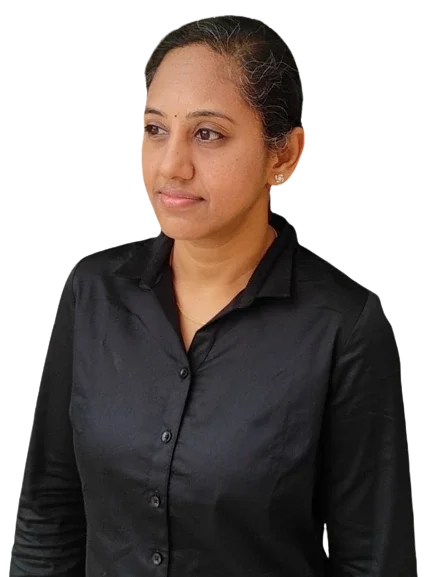
What Should a Thyroid Diet in Pregnancy Include?
A balanced thyroid diet during pregnancy should include suitable staple foods, dependable protein sources, vegetables, fruits and other nutrient-dense foods.
The important question is not which single food is “best for thyroid”. It is whether the complete diet is meeting the woman’s nutritional needs.
Build Around Familiar Indian Foods
Having a thyroid condition does not mean abandoning normal Indian food.
Rice, roti, dal, vegetables, fruits, curd, paneer, eggs, fish and chicken can all have a place depending on the woman’s dietary preference and nutritional requirements.
Regional food habits can remain too. Someone accustomed to rice-based South Indian meals does not need to replace her normal food culture with an unfamiliar “thyroid diet”.
Instead, look at what may be missing within the existing food pattern.
A meal may contain generous rice or roti but very little protein. Another woman’s diet may contain enough protein but limited vegetable or fruit variety.
Correcting these nutritional gaps is generally more useful than replacing familiar food with a separate thyroid menu.
Make Protein a Regular Part of the Diet
Protein-containing foods contribute to the wider nutritional demands of pregnancy.
Depending on food preference, useful options may include:
- dal and pulses
- chickpeas and rajma
- milk and curd
- paneer
- eggs
- fish
- chicken
- soy foods
- nuts and seeds
The aim is not to eat every food on this list. It is to make sure protein-containing foods have a meaningful place in the overall diet.
Vegetarian, egg-based and non-vegetarian eating patterns can all work when protein sources are chosen appropriately.
Aim for Adequate Iodine, Not Maximum Iodine
Iodine is closely related to thyroid function, which is why it receives considerable attention in thyroid diets.
But more is not automatically better.
Everyday food sources can include iodised salt used in household cooking, dairy foods, eggs and some seafood, depending on the woman’s normal food pattern.
The useful goal is adequate dietary intake. Deliberately eating unusually large amounts of an iodine-rich food simply because it is described as “good for thyroid” is not a better nutrition strategy.
Remember That Pregnancy Nutrition Is Bigger Than the Thyroid
A pregnancy diet cannot revolve around iodine alone.
Foods contributing iron, calcium, vitamin B12, fibre and other nutrients continue to matter. Depending on dietary preference, these can come from pulses, greens, dairy foods, eggs, meat, vegetables, fruits and other everyday foods.
This is why variety across food groups matters more than trying to find one special food for every nutritional requirement.
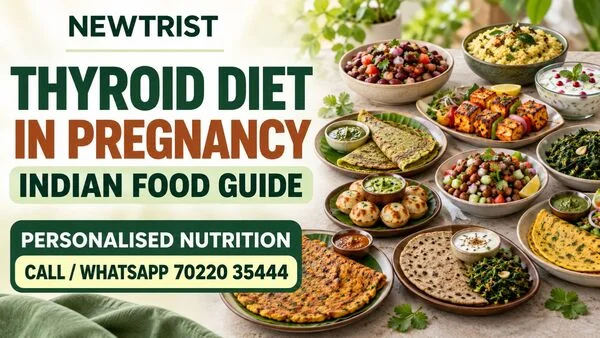
Foods to Avoid for Thyroid During Pregnancy: What Actually Needs Attention?
Most pregnant women with a thyroid condition do not need a long prohibited-food list.
The more useful approach is to separate foods that genuinely deserve consideration from restrictions that are frequently repeated without enough context.
Should Cauliflower, Cabbage and Broccoli Be Avoided?
Not automatically.
Cruciferous vegetables such as cauliflower, cabbage and broccoli commonly appear on thyroid avoidance lists.
Having a thyroid condition alone, however, is not a reason to remove these nutritious vegetables completely.
A broad rule such as “avoid all cruciferous vegetables” can reduce dietary variety without considering how the woman actually eats.
The broader question of food restrictions is covered separately in Newtrist’s Thyroid Foods to Avoid guide.
Does Soy Need to Be Removed?
Not as a universal rule.
Soy foods can provide useful protein and may have a practical place in some vegetarian food patterns.
Whether tofu or other soy foods appear occasionally or more regularly should depend on the woman’s complete diet rather than a blanket rule that everyone with thyroid disease must avoid soy.
Can Excessive Iodine Be a Problem?
Yes.
Iodine is necessary for normal thyroid function, but deliberately seeking very high amounts is not automatically beneficial.
This is an important distinction because thyroid nutrition can easily become focused on maximising one nutrient rather than building an appropriate overall diet.
Should Gluten, Dairy or Carbohydrates Be Eliminated?
Not simply because a woman has a thyroid condition.
Removing several major food groups can reduce food variety and make pregnancy eating much harder.
If an individual woman has a specific reason to exclude a food, that is different from applying the same restriction to every pregnant woman with thyroid disease.
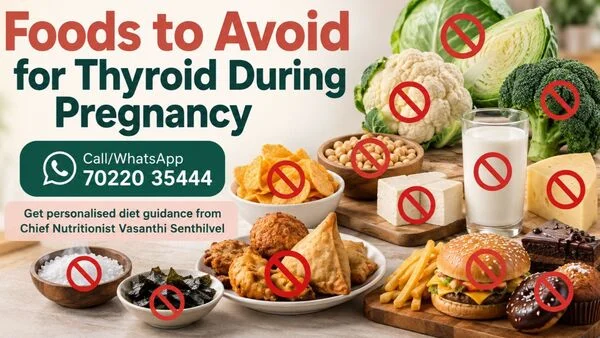
Does Hypothyroidism Change the Diet During Pregnancy?
Yes, but hypothyroidism during pregnancy does not require an entirely separate collection of foods.
What deserves attention depends on the nutritional concerns affecting the individual woman.
For example, bowel regularity can become a practical issue for some women. Maintaining suitable fruits, vegetables, pulses and fibre-containing staple foods can help preserve a varied food pattern.
Weight concerns may create another difficulty.
Pregnancy is not the time to automatically adopt an ordinary weight-loss diet simply because hypothyroidism is associated with changes in body weight. Food choices still need to meet pregnancy nutritional demands.
For the broader condition-specific nutrition principles, see Newtrist’s Hypothyroidism Diet guide. The purpose of this page is narrower: explaining what becomes nutritionally important when hypothyroidism and pregnancy occur together.
Is a Hyperthyroidism Diet During Pregnancy Different?
Yes. Hyperthyroidism can create a different nutritional situation from hypothyroidism.
Changes in appetite, food intake and body weight may become particularly relevant for some women. In these situations, maintaining adequate nutrition may deserve greater attention than restricting foods.
This is why food guidance designed for hypothyroidism should not simply be applied to hyperthyroidism.
Newtrist’s Hyperthyroidism Diet Chart covers the condition-specific diet in greater depth. During pregnancy, the key point is that the type of thyroid condition changes which nutritional concerns require attention.
Why Isn’t There a 7-Day Thyroid Diet Chart on This Page?
Because a 7-day chart can look precise while overlooking the differences that actually determine what a pregnant woman needs.
Consider three women who all have hypothyroidism.
One follows a vegetarian diet and also has anaemia. Another has poor appetite and strong food aversions. A third eats familiar South Indian family meals but also needs to consider blood glucose.
Their thyroid diagnosis may be similar, but their nutritional problems are different.
An individual pregnancy diet may need to consider:
- type of thyroid condition
- stage of pregnancy
- relevant laboratory findings
- appetite and food tolerance
- anaemia or other nutritional concerns
- blood glucose
- digestive concerns
- vegetarian or non-vegetarian preference
- regional food habits
- work and family routines
- other clinical conditions
A standard chart can suggest meals. It cannot determine which of these factors should influence an individual woman’s diet most.
That is where general information reaches its limit.
When Does a Personalised Thyroid Diet During Pregnancy Become Useful?
Personalised nutrition becomes useful when the challenge is no longer knowing that nutritious food matters, but deciding how several nutritional needs should work together for one woman.
Someone may need to manage pregnancy nutrition while also dealing with poor appetite, anaemia, vegetarian food choices, blood glucose concerns or digestive difficulties.
Another woman may have removed so many foods after reading conflicting thyroid advice that she is no longer sure what a balanced diet should look like.
In situations like these, another generic food list may not answer the real problem.
Chief Nutritionist Vasanthi Senthilvel can review the woman’s current food pattern, pregnancy stage, thyroid condition, relevant clinical information, nutritional concerns and daily routine before developing a personalised diet plan.
The purpose is not to make eating more complicated. It is to answer questions that a general article cannot answer for an individual:
What is already working in the current diet?
Where are the nutritional gaps?
Which changes are actually necessary?
How can those changes work with normal Indian family food and everyday routines?
Women who need this level of individual planning can explore Newtrist’s personalised clinical nutrition service.
Frequently Asked Questions About Thyroid Diet in Pregnancy
Are Millets Better Than Rice for Thyroid During Pregnancy?
Not automatically.
Millets and rice are both carbohydrate foods with different nutritional characteristics. Having a thyroid condition does not make one universally superior to the other.
The better choice depends on the complete meal, usual food habits, digestive tolerance and the woman’s other nutritional considerations.
Does a Thyroid Diet Need to Change in Every Trimester?
Not according to a fixed rule.
However, appetite, fullness, food tolerance and nutritional requirements can change as pregnancy progresses. The eating pattern may therefore need adjustment when the woman’s needs change rather than remaining fixed throughout pregnancy.
What If Pregnancy Food Aversions Make Balanced Eating Difficult?
The diet may need to be adapted around foods the woman can comfortably tolerate while still covering important nutritional needs.
The solution is not necessarily to force a particular “thyroid food”. Instead, consider which foods have become difficult to eat, what nutritional role they previously served and what suitable alternatives could replace that role.
If several foods become difficult to tolerate and the diet becomes increasingly limited, individual nutrition planning may be more useful than continuing to follow a standard food list.
Author
Chief Nutritionist Vasanthi Senthilvel leads Newtrist Nutritionist Dietitian Dietician, providing personalised diet plans for weight management and clinical nutrition for children, adolescents, adults and families.
She has 21 years of experience in nutrition and has received professional recognition for her work.
- Pride of Bharat Awards 2026: Outstanding Achievement in Holistic Health & Nutrition Innovation
- Doctor of The Year: Nutritionist 2026: Excellence in Clinical Nutrition and Weight Loss.
Her approach considers age, growth, health history, medical conditions, laboratory reports, medication, body composition, weight history, dietary preferences, regional food habits, family routines, activity, sleep and personal health goals. Recommendations are developed according to individual needs rather than using one standard diet for everyone.
Consultations are available in person at Bangalore HSR Layout, Koramangala, Bellandur, Haralur and Electronic City, as well as online across India.
Independent Medical Review Panel
Newtrist health and nutrition articles undergo medical review, where appropriate, by doctors with relevant specialist expertise. The medical professionals listed below contribute to Newtrist’s review process within their respective specialties.
| Speciality | Doctor |
|---|---|
| Endocrinology | Dr Vinay Prasad MBBS, MD, DM |
| Gastroenterology & Hepatology | Dr Sunil kumar N MBBS, MD, DM |
| Gynaecology | Dr Prathiba G MBBS, DNB, FIRM, FMAS |
| Nephrology | Dr Priyashree R MBBS, MD, DNB, DM |