
Written by: Chief Nutritionist Vasanthi Senthilvel
21 years of experience | Newtrist Nutritionist Dietitian Dietician
Best Nutritionist in Bangalore with multiple awards for excellence in clinical nutrition, weight loss, holistic health and nutrition innovation.
Medically reviewed by: Dr Prathiba G MBBS, DNB, FIRM, FMAS | Dr Sunil kumar N MBBS, MD, DM | Dr Vinay Prasad MBBS, MD, DM
Medical Disclaimer: Nutritional needs vary based on an individual’s profile. The information on this page is for general educational purposes only and is not intended to replace personalised medical or nutrition care.
If you are looking for a hypothyroidism diet, the most useful question is not “Which special thyroid foods should I eat?” It is “What needs changing in the way I already eat?”
For many adults with diagnosed hypothyroidism, familiar Indian meals can remain the foundation. Rice, roti, dal, pulses, vegetables, fruits and preferred vegetarian or non-vegetarian foods can all fit. What deserves closer attention is whether the overall pattern provides enough nourishment, protein and fibre, and whether specific nutritional gaps or digestive concerns are making everyday eating more difficult.
Key takeaway: A hypothyroidism diet should improve the quality and adequacy of the person’s existing food pattern rather than replace it with a rigid menu. The main priorities are balanced meals, suitable protein, comfortable fibre intake and attention to nutrients such as iodine, selenium, iron, vitamin B12, vitamin D and zinc when relevant. The right changes depend on the individual rather than the diagnosis alone.
Table of Contents

What Should a Hypothyroidism Diet Actually Achieve?
A useful hypothyroidism diet should make everyday eating more nutritionally complete, practical and sustainable.
That may mean different things for different people.
One person may be eating very little until evening. Another may eat enough food overall but have very little protein. Someone else may have gradually removed so many foods that meals have become repetitive and difficult to maintain.
So the starting point is not a universal food list. It is identifying what is missing, excessive or unnecessarily complicated in the current diet.
Readers who need a broader overview of how nutrition differs across thyroid conditions can refer to the thyroid diet and nutrition guide.
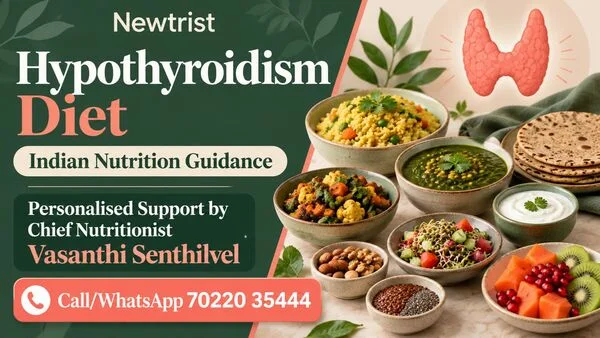
What Changes Nutritionally With Hypothyroidism?
Hypothyroidism does not create one identical nutrition problem for everyone. Appetite, meal regularity, muscle maintenance, bowel comfort and the overall quality of the diet can all influence what deserves attention.
Energy, Appetite and Meal Adequacy
Eating less is not automatically the right dietary response to hypothyroidism.
Some people become so concerned about weight that breakfast becomes minimal, lunch is delayed and dinner carries most of the day’s food. Others have low appetite and unintentionally eat too little.
A more useful check is whether meals are regular, satisfying and nutritionally adequate enough to support the day.
If restriction is making meals smaller but not better, the diet needs reconsideration.
Protein and Muscle Maintenance
Protein matters because maintaining muscle is part of good nutritional health.
The practical problem is often distribution. A person may eat dal, paneer, eggs or fish at dinner but have little protein earlier in the day.
Depending on food preference, protein-containing choices may include dals, pulses, curd, paneer, milk, eggs, fish, chicken or suitable plant-food combinations.
The aim is not to add an unfamiliar “thyroid protein”. It is to use familiar foods more effectively across the person’s normal meals.
Fibre and Constipation
When constipation is a concern, vegetables, fruits, pulses and suitable grain foods can help improve fibre intake.
The best approach is usually gradual. Adding vegetables to regular meals, using pulses consistently and including fruit according to appetite is often more practical than dramatically increasing one fibre-rich food.
Comfort matters. A food change is not useful if it makes the diet harder to tolerate.
Fatigue and Hair Changes: Why Food Context Matters
Tiredness and hair changes do not point to one specific food solution.
They may occur alongside hypothyroidism, but they can also coexist with irregular meals, limited dietary variety or inadequate intake of important nutrients.
That is why symptom-driven restriction can become misleading. Looking at the complete food pattern is usually more informative than repeatedly removing foods in search of one cause.
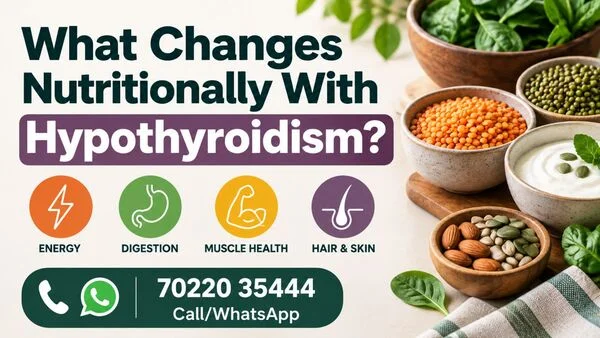
Which Nutrients Matter in Hypothyroidism?
Several nutrients deserve attention in hypothyroidism because they are involved in thyroid physiology or can overlap with common nutritional concerns.
That does not mean every person needs to maximise every nutrient. The important question is whether the individual’s usual diet is likely to provide enough.
Iodine
Iodine is needed for thyroid hormone production, but more iodine is not automatically better.
In many Indian households, iodised salt contributes iodine as part of normal food preparation.
The practical goal is adequacy. A thyroid diagnosis is not a reason to deliberately build meals around unusually iodine-rich foods.
Selenium
Selenium participates in processes involved in thyroid hormone metabolism.
Foods such as eggs, fish, dairy foods, grains, nuts and seeds can contribute selenium depending on the person’s usual eating pattern.
No single food needs to dominate the diet simply because it contains selenium. Dietary variety remains more useful.
Iron
Iron can deserve closer attention when the overall dietary or health picture makes it relevant.
Dals, pulses, leafy vegetables, eggs and non-vegetarian foods where eaten can contribute iron.
The important point is not to infer nutritional status from tiredness alone. The better question is whether the person’s actual diet contains suitable iron-containing foods and whether the wider health context suggests closer assessment is needed.
Vitamin B12, Vitamin D and Zinc
Vitamin B12, vitamin D and zinc contribute to wider health, while zinc also has roles related to thyroid hormone metabolism.
Dietary pattern changes their relevance. A person eating a varied mixed diet may have different priorities from someone eating from a very narrow range of foods.
This is why individual dietary review is more useful than trying to optimise every nutrient independently.
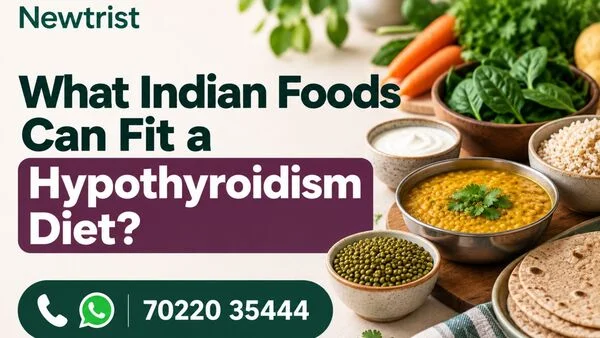
What Indian Foods Can Fit a Hypothyroidism Diet?
Most familiar Indian foods can fit a hypothyroidism diet.
The focus should be on how staple foods, protein foods, vegetables and fruits work together rather than labelling individual foods as “thyroid-friendly”.
Pulses and Other Protein Foods
Dal, rajma, chana, lobia, moong and other pulses can form part of regular meals.
Curd, paneer, eggs, fish, chicken or other preferred protein foods can also fit according to the person’s eating pattern.
Rotating familiar choices usually provides more flexibility than trying to identify one ideal protein source.
Rice, Roti, Millets and Other Staple Foods
Rice, roti, millets and other grains can all have a place in the diet.
A staple should be judged as part of the complete meal. Rice eaten with dal and vegetables creates a different meal from rice eaten largely on its own. The same principle applies to roti or millet preparations.
There is no nutritional advantage in replacing a familiar, well-tolerated staple simply because another grain has acquired a healthier reputation.
Vegetables and Fruits
Seasonal vegetables and fruits can provide fibre, variety and useful nutrients without making the diet complicated or expensive.
Leafy vegetables, gourds, beans, carrots, tomatoes and locally available fruits can all contribute.
Consistency matters more than searching for unusual foods promoted specifically for thyroid health.
Dairy, Eggs, Fish and Other Foods According to Preference
There is no single vegetarian or non-vegetarian pattern that everyone with hypothyroidism must follow.
Curd, milk and paneer may fit where dairy is part of the diet. Eggs, fish, chicken and other foods may fit where they are normally eaten.
The relevant question is whether the chosen pattern meets the individual’s nutritional needs.
Nuts and Seeds
Nuts and seeds can provide variety and can fit naturally into snacks or familiar dishes.
They are useful foods, but they do not need to appear at every meal or be treated as compulsory thyroid foods.
Does Hashimoto’s Disease Need a Different Diet?
Not automatically.
Hashimoto’s disease can be associated with hypothyroidism, but the diagnosis itself does not mean that a person needs to eliminate multiple everyday foods.
The useful question is whether each restriction has a clear reason.
Someone who has already removed several foods may actually need to review whether those exclusions are narrowing the diet without solving an identifiable problem.
A more restrictive diet is not automatically a more appropriate diet.

Which Foods Need Caution or Individual Review?
Most people with hypothyroidism do not need a long prohibited-food list.
A food may require individual review because of allergy, intolerance, digestive difficulty, another clinical condition or the person’s overall dietary pattern. That does not make the same restriction necessary for everyone with an underactive thyroid.
Detailed food-avoidance questions have their own search intent, so readers who need that information can use the guide on thyroid foods to avoid.
How Does Hypothyroidism Relate to Weight Management?
Hypothyroidism can be associated with weight concerns, but thyroid function is only one influence on body weight.
Body composition, appetite, activity, eating habits, sleep, previous dieting and other health factors can all affect the picture.
That is why repeatedly making meals smaller or eliminating staple foods may not resolve the real problem.
When body-weight management becomes the primary goal, the dedicated guide on weight loss with hypothyroidism addresses that question separately.
How Can Hypothyroidism Nutrition Fit Indian Family Food?
A useful hypothyroidism diet should normally fit within everyday family cooking rather than require a separate kitchen.
The practical challenge is adapting familiar food to the individual’s needs without making meals difficult to sustain.
Vegetarian and Vegan Households
Vegetarian households can build varied meals around pulses, grains, vegetables, fruits and dairy foods where used.
Vegan households may rely on a different combination of foods, making variety particularly important.
The goal is to avoid a narrow rotation of only a few meals rather than trying to make the household eat in an entirely different way.
Work, Travel and Family Meal Routines
Nutrition has to work on ordinary days.
A person leaving home early may need a breakfast that can be prepared quickly. Someone travelling regularly may need reliable choices outside the home. A person eating with a large family may find small changes to shared meals far more sustainable than cooking separately.
A plan that works only on ideal days rarely works for long.
Regional and Budget Considerations
A hypothyroidism diet does not require expensive imported ingredients.
Regional staples, local pulses, seasonal vegetables, familiar fruits and preferred protein foods can all be used.
Affordability and availability matter because a sustainable diet needs to work financially and practically as well as nutritionally.
When Does Personalised Hypothyroidism Nutrition Become More Useful?
General information is useful until the remaining questions become specific to your food, your routine and your goals.
You may understand that protein matters but still not know whether you are getting enough. You may know fibre can help bowel regularity but be unsure how to increase it comfortably. You may want to manage body composition without knowing which parts of your existing meals should actually change.
This is where individual assessment becomes more valuable than another food list.
Chief Nutritionist Vasanthi Senthilvel can review the person’s current food intake, appetite, body composition, digestive concerns, dietary preferences, family meals, work routine and wider clinical nutrition needs.
- which meals are already working well
- where meaningful nutritional gaps exist
- which foods should be adjusted rather than removed
- how much food suits the person’s needs
- which restrictions are unnecessary
The purpose is not to make the diet more complicated. It is to make each change more relevant.
Frequently Asked Questions About a Hypothyroidism Diet
Is there one best breakfast for hypothyroidism?
No. The best breakfast is one that fits the person’s appetite, routine and overall diet while contributing useful nutrition. Idli, dosa, poha, upma, pulse-based dishes or other familiar foods may all fit depending on what accompanies them and how the rest of the day is structured.
Can restaurant or canteen food fit occasionally?
Yes. Eating away from home does not automatically make a hypothyroidism diet unsuitable. The practical approach is to choose a reasonably balanced meal from what is available and consider the overall eating pattern rather than expecting every meal to be prepared at home.
Do I need to change my entire diet at once?
Usually not. Large, simultaneous changes can make a diet difficult to maintain and can make it harder to understand which adjustments were genuinely useful. Improving the most relevant gaps first can make the process more practical.
How do I know whether a dietary change is worth continuing?
A dietary change should have a clear purpose. If you cannot explain what problem the change is meant to solve, or if it makes the diet unnecessarily restrictive without improving nutritional quality or practicality, it deserves reconsideration.
Conclusion
A hypothyroidism diet should answer one practical question:
What genuinely needs to change in the way this person already eats?
For many people, familiar Indian food can remain at the centre of the diet. The real work is identifying where meal structure, nutritional adequacy or individual priorities need attention. When those decisions are difficult to make from general guidance alone, Chief Nutritionist Vasanthi Senthilvel can develop a personalised clinical nutrition approach around the person’s usual food, routine and individual nutritional needs.
Author
Chief Nutritionist Vasanthi Senthilvel leads Newtrist Nutritionist Dietitian Dietician, providing personalised diet plans for weight management and clinical nutrition for children, adolescents, adults and families.
She has 21 years of experience in nutrition and has received professional recognition for her work.
- Pride of Bharat Awards 2026: Outstanding Achievement in Holistic Health & Nutrition Innovation
- Doctor of The Year: Nutritionist 2026: Excellence in Clinical Nutrition and Weight Loss.
Her approach considers age, growth, health history, medical conditions, laboratory reports, medication, body composition, weight history, dietary preferences, regional food habits, family routines, activity, sleep and personal health goals. Recommendations are developed according to individual needs rather than using one standard diet for everyone.
Consultations are available in person at Bangalore HSR Layout, Koramangala, Bellandur, Haralur and Electronic City, as well as online across India.
Independent Medical Review Panel
Newtrist health and nutrition articles undergo medical review, where appropriate, by doctors with relevant specialist expertise. The medical professionals listed below contribute to Newtrist’s review process within their respective specialties.
| Speciality | Doctor |
|---|---|
| Endocrinology | Dr Vinay Prasad MBBS, MD, DM |
| Gastroenterology & Hepatology | Dr Sunil kumar N MBBS, MD, DM |
| Gynaecology | Dr Prathiba G MBBS, DNB, FIRM, FMAS |
| Nephrology | Dr Priyashree R MBBS, MD, DNB, DM |