
Written by: Chief Nutritionist Vasanthi Senthilvel
21 years of experience | Newtrist Nutritionist Dietitian Dietician
Best Nutritionist in Bangalore with multiple awards for excellence in clinical nutrition, weight loss, holistic health and nutrition innovation.
Medically reviewed by: Dr Prathiba G MBBS, DNB, FIRM, FMAS | Dr Sunil kumar N MBBS, MD, DM | Dr Vinay Prasad MBBS, MD, DM
Medical Disclaimer: Nutritional needs vary based on an individual’s profile. The information on this page is for general educational purposes only and is not intended to replace personalised medical or nutrition care.
If you are looking for a hyperthyroidism diet chart, the real question is often how to eat when hunger, body weight or digestion has changed. A useful plan should do more than list healthy foods. It should help you build meals that are substantial enough, include protein regularly and remain comfortable to eat.
Familiar Indian food can still form the basis of the diet. What changes from person to person is how much food is needed, how meals are distributed through the day and which combinations fit current appetite and tolerance.
Key takeaway: A hyperthyroidism diet chart should help maintain adequate nutrition, support muscle and reduce the risk of unintentionally eating too little when weight or appetite is changing. Familiar foods such as rice, roti, dals, vegetables, fruits, dairy foods and preferred protein foods can all fit. Meal size, frequency and food combinations need to reflect the individual rather than a fixed prescription.
Table of Contents

What Should a Hyperthyroidism Diet Focus On?
A hyperthyroidism diet should focus on maintaining adequate nutrition while appetite, weight and food tolerance are changing.
This may mean making meals more substantial than before, but simply increasing portion size is not always the best solution.
A useful food pattern considers whether meals are complete, whether protein appears regularly, whether long gaps are affecting intake and whether the person can comfortably eat the foods being offered.
The goal is not to eat as much as possible. It is to make each eating opportunity useful.
Readers who need to compare hyperthyroidism with other thyroid conditions can refer to the broader thyroid diet and nutrition guide.

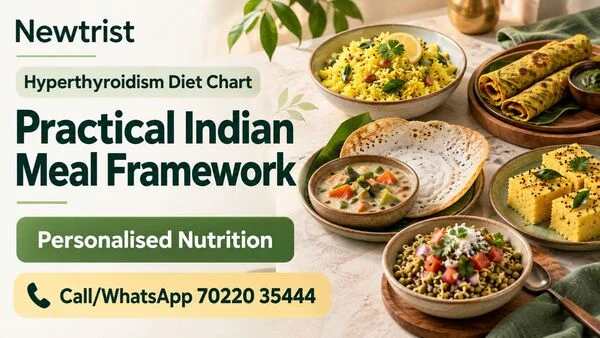
Hyperthyroidism Diet Chart: A Practical Indian Meal Framework
This illustrative hyperthyroidism diet chart uses familiar Indian foods and gives interchangeable meal ideas rather than a rigid seven-day programme.
| Meal | Indian meal examples | What the meal is trying to support |
| Breakfast | Idli with sambar and curd; vegetable poha with curd; besan chilla with paneer or another preferred filling | A substantial first meal with carbohydrate, protein and overall nourishment |
| Lunch | Rice with dal, vegetables and curd; roti with rajma or chana and sabzi; rice with a preferred protein preparation and vegetables | A complete main meal with enough substance and protein |
| Snack | Fruit with curd; roasted chana with fruit; a familiar homemade snack paired with a protein-containing food | Useful nutrition between meals when hunger or long gaps make it helpful |
| Dinner | Roti with dal or paneer and vegetables; rice with sambar and vegetable sides; dosa with sambar and a suitable protein-containing accompaniment | A balanced evening meal without relying on one oversized plate |
How to Use This Chart
Use the chart to understand meal construction, not to copy every dish.
If your household eats different regional foods, similar substitutions can be made. Rice may replace roti, one dal may replace another, and vegetarian or non-vegetarian protein foods can be chosen according to preference.
The final pattern may also differ in the number of eating occasions. Some people manage three substantial meals comfortably, while others find smaller meals easier when appetite or digestion is unsettled.
Why Can Energy and Protein Needs Change in Hyperthyroidism?
Hyperthyroidism can make it harder for some people to maintain body weight and muscle, even when they are eating regularly.
Unintended Weight Loss
Unintended weight loss suggests that the existing food pattern may no longer be meeting the person’s needs.
The first step is not necessarily to double portion sizes. It may be more practical to look for missed meals, long gaps, very light breakfasts or lunches that contain little beyond a staple food.
Making the whole day more nutritionally complete can be easier to sustain than forcing one very large meal.
Increased Appetite
Feeling hungry more often does not guarantee that the diet is adequate.
Someone may eat frequently but choose foods that provide little protein or do not form a complete meal. Hunger can then return quickly while the overall pattern remains poorly balanced.
When appetite is high, food quality and meal structure still matter.
Muscle Maintenance
Muscle deserves particular attention when body weight or strength is changing.
Protein-containing foods can therefore be included regularly across meals rather than saved for dinner alone.
Depending on preference, suitable choices may include dals, pulses, dairy foods where used, eggs, fish, chicken or other familiar protein foods.
The aim is regular inclusion rather than one unusually protein-heavy meal.
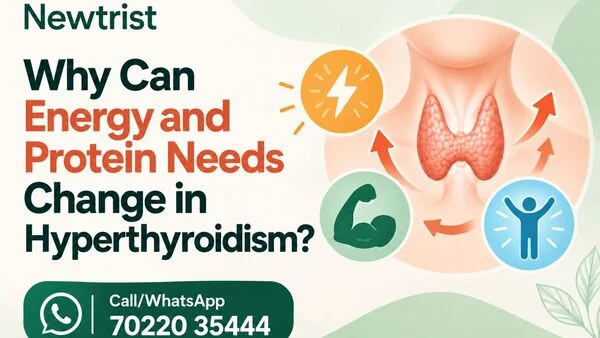
What Indian Foods Can Fit a Hyperthyroidism Diet?
Most familiar Indian foods can fit. The useful question is not whether a food is labelled “good for hyperthyroidism”, but what it contributes to the complete meal.
Protein Foods
Dals and pulses can provide protein in vegetarian meals, while dairy foods, eggs, fish, chicken or other familiar foods may be included according to preference.
Variety can make the diet easier to sustain and reduce dependence on one repeated food.
Rice, Roti and Other Staple Foods
Rice, roti and other familiar grains can remain useful parts of the diet.
For someone struggling to maintain weight, unnecessarily reducing staple foods may make meals less substantial.
The complete meal matters more than the staple alone. Rice with dal and vegetables, or roti with a protein-containing dish and sabzi, provides a different nutritional pattern from eating the staple largely by itself.
Fruits and Vegetables
Fruits and vegetables contribute variety and a range of nutrients, but they should not crowd out more substantial foods when appetite is limited.
For someone who becomes full quickly, a very large raw salad before the main meal may be less useful than including manageable amounts of vegetables alongside more nourishing foods.
Preparation can be adapted according to comfort.
Dairy Foods Where Suitable
Milk, curd and paneer can contribute protein and make meals or snacks more substantial when dairy suits the person.
Curd can accompany rice or roti meals, while paneer may be used in familiar preparations.
These foods are optional rather than compulsory.
Familiar Foods That Can Make Meals More Substantial
When larger portions feel difficult, small changes can sometimes make a meal more useful.
A dosa may be paired with sambar rather than eaten alone. A rice meal may include dal and curd. A snack may combine fruit with another food rather than consist only of fruit.
The principle is simple: improve the completeness of familiar meals before making the diet more complicated.
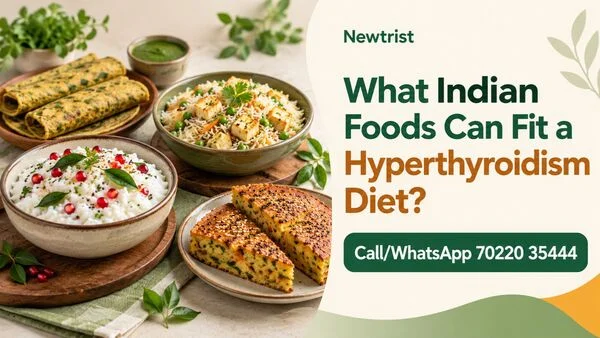
Which Food-Related Issues Need Individual Review?
Some food decisions in hyperthyroidism cannot be handled with a universal rule.
Iodine is one example. Its relevance depends on the thyroid condition and the individual context, so it should not be managed through a blanket instruction to deliberately increase or remove iodine-containing foods.
Very restrictive diets also deserve review. When body weight or food intake is already a concern, removing several foods without a clear reason can make adequate eating harder.
Food tolerance is another individual issue. A food that causes discomfort for one person may suit another perfectly well.
Readers whose main question is specifically about restrictions can use the separate guide on thyroid foods to avoid.
How Can Digestive Symptoms Change Food Choices?
Digestive symptoms can make meal size and preparation more important than choosing completely different foods.
A person experiencing frequent bowel movements or poor tolerance may find large meals uncomfortable. Smaller meals may then be easier to manage.
Cooked vegetables may feel more comfortable than large quantities of raw food for some people, while rich meals may be difficult for others.
The objective is to preserve enough food variety and nourishment while adjusting texture, preparation and meal size to what the person can comfortably eat.
How Should the Diet Change as Weight and Appetite Stabilise?
The diet should be reviewed as the person’s nutritional situation changes.
A pattern that was useful during a period of falling weight or strong hunger may no longer be necessary once weight, appetite and tolerance become more stable.
For example, extra eating occasions or more substantial additions may have served a clear purpose earlier but could become unnecessary later.
This is why a hyperthyroidism diet chart should be treated as a current framework, not a permanent eating prescription.
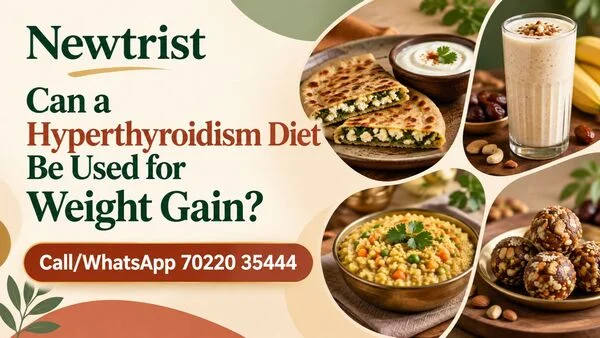
Can a Hyperthyroidism Diet Be Used for Weight Gain?
A hyperthyroidism diet can support nutritional recovery when unintended weight loss has occurred, but it should not automatically become a generic weight-gain programme.
The goal is usually to restore or maintain adequate nutrition rather than pursue weight gain for its own sake.
The appropriate approach depends on whether the person is still losing weight, beginning to stabilise or already maintaining weight comfortably.
That distinction is more useful than simply telling everyone with hyperthyroidism to eat more.
When Is Personalised Hyperthyroidism Nutrition Especially Useful?
A general diet chart becomes less useful when the unanswered questions involve your current body weight, appetite, food tolerance and usual meals.
You may still be losing weight despite eating frequently. You may feel hungry throughout the day but be unsure whether your meals are substantial enough. Digestive symptoms may make certain foods or portions difficult. A vegetarian pattern may also rely on only a few repeated protein foods.
At that point, the useful questions become individual:
- How much food is appropriate for me?
- Would larger meals or more frequent eating occasions work better?
- Are my usual meals providing enough protein and overall nutrition?
- Which foods can remain unchanged?
- Which parts of my current diet are making adequate eating harder?
Chief Nutritionist Vasanthi Senthilvel can assess current food intake, appetite, weight pattern, body composition, digestive tolerance, dietary preferences, family meals and daily routine to translate those questions into a personalised nutrition plan.
The value of individualisation is not a longer food list. It is knowing which changes matter now and which changes are unnecessary.
Frequently Asked Questions About a Hyperthyroidism Diet
Can I repeat the same breakfast several times a week?
Yes. A breakfast does not need to be different every day if it is practical and nutritionally useful. Familiar meals such as idli with sambar, poha with an appropriate accompaniment or another balanced household breakfast can be repeated within the week.
Can restaurant or canteen meals fit a hyperthyroidism diet?
Yes. Eating away from home can fit when the available meal is reasonably substantial and includes more than a very light snack. A practical choice may combine a familiar staple with a protein-containing dish and another suitable accompaniment.
Do I need separate food from the rest of my family?
Usually not. The same basic family meals can often be used while adjusting the individual’s meal size, accompaniments or food combinations. A separate kitchen is not automatically necessary because someone has hyperthyroidism.
How can I manage food on long workdays or while travelling?
The main challenge is often avoiding unexpectedly long periods without a suitable meal. Identifying realistic foods that are available during the day can make the eating pattern more reliable. The best structure depends on appetite, schedule and current nutritional needs.
Conclusion
A hyperthyroidism diet chart should help answer one practical question:
Is my current food pattern adequate for what my body needs now?
For many people, familiar Indian meals can remain the foundation. What may need to change is the substance of meals, how food is distributed through the day and how the pattern responds to appetite, weight and digestive tolerance.
When those decisions cannot be resolved from a general chart, Chief Nutritionist Vasanthi Senthilvel can develop a personalised clinical nutrition approach around the person’s usual foods, current nutritional state and everyday routine.
Author
Chief Nutritionist Vasanthi Senthilvel leads Newtrist Nutritionist Dietitian Dietician, providing personalised diet plans for weight management and clinical nutrition for children, adolescents, adults and families.
She has 21 years of experience in nutrition and has received professional recognition for her work.
- Pride of Bharat Awards 2026: Outstanding Achievement in Holistic Health & Nutrition Innovation
- Doctor of The Year: Nutritionist 2026: Excellence in Clinical Nutrition and Weight Loss.
Her approach considers age, growth, health history, medical conditions, laboratory reports, medication, body composition, weight history, dietary preferences, regional food habits, family routines, activity, sleep and personal health goals. Recommendations are developed according to individual needs rather than using one standard diet for everyone.
Consultations are available in person at Bangalore HSR Layout, Koramangala, Bellandur, Haralur and Electronic City, as well as online across India.
Independent Medical Review Panel
Newtrist health and nutrition articles undergo medical review, where appropriate, by doctors with relevant specialist expertise. The medical professionals listed below contribute to Newtrist’s review process within their respective specialties.
| Speciality | Doctor |
|---|---|
| Endocrinology | Dr Vinay Prasad MBBS, MD, DM |
| Gastroenterology & Hepatology | Dr Sunil kumar N MBBS, MD, DM |
| Gynaecology | Dr Prathiba G MBBS, DNB, FIRM, FMAS |
| Nephrology | Dr Priyashree R MBBS, MD, DNB, DM |