
Written by: Chief Nutritionist Vasanthi Senthilvel
21 years of experience | Newtrist Nutritionist Dietitian Dietician
Best Nutritionist in Bangalore with multiple awards for excellence in clinical nutrition, weight loss, holistic health and nutrition innovation.
Medically reviewed by: Dr Prathiba G MBBS, DNB, FIRM, FMAS | Dr Sunil kumar N MBBS, MD, DM | Dr Vinay Prasad MBBS, MD, DM
Medical Disclaimer: Nutritional needs vary based on an individual’s profile. The information on this page is for general educational purposes only and is not intended to replace personalised medical or nutrition care.
You can see the pickle or papad on your plate. But you cannot see how much salt was stirred into your dal before it reached the table.
Think about a typical Indian lunch. The dal, sabzi and sambar may each be seasoned separately. Someone might add a little salt while cooking and another pinch after tasting. By the time you sit down to eat, estimating the total becomes surprisingly difficult.
This is why following a low sodium diet can be challenging even when you eat mostly home-cooked food.
The solution is not to give up your favourite Indian dishes. It is to identify where sodium enters your meals, make thoughtful changes to familiar recipes and keep the flavours that make those meals enjoyable.
Key Takeaway
A low sodium diet limits the total sodium consumed from food, cooking salt and processed ingredients. The World Health Organization recommends less than 2,000 mg of sodium daily for adults, equivalent to less than 5 g of salt. For Indian meals, the most effective starting points are measuring added salt, choosing fresh ingredients, replacing regularly consumed salty accompaniments and checking sodium per serving.
Table of Contents

How Much Sodium Is in Salt?
Salt and sodium are related, but they are not identical. Regular table salt contains approximately 40% sodium by weight.
Understanding the difference is useful because recipes usually measure salt, while nutrition labels report sodium.
| Salt quantity | Approximate sodium content |
| 1 g | 400 mg |
| 2.5 g | 1,000 mg |
| 5 g | 2,000 mg |
Five grams of salt is roughly one level teaspoon, although the weight varies depending on its texture.
Your total sodium intake includes naturally occurring sodium and sodium added during preparation or processing.
A homemade curry prepared with cooking salt and a ready-made seasoning mixture, for example, receives sodium from both sources.
This is why the sodium content of a dish cannot be determined simply by how salty it tastes.
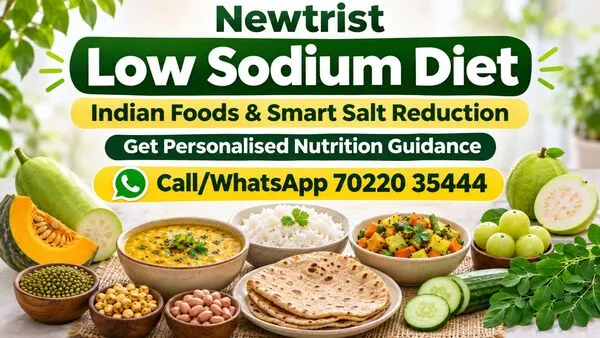
Which Indian Foods Are Suitable for a Low Sodium Diet?
Many everyday Indian ingredients contain relatively little sodium in their plain, minimally processed form.
Choosing fresh grains, pulses, vegetables and fruits gives you greater control over what is added during cooking. Foods such as milk, curd and eggs also contain naturally occurring sodium but can fit into a sodium-conscious eating pattern.
Low Sodium Indian Foods List
| Food category | Indian food choices |
| Cereals and millets | Plain rice, whole wheat, ragi, jowar, bajra |
| Pulses and legumes | Moong dal, masoor dal, toor dal, whole green gram, horse gram, kala chana |
| Vegetables | Bottle gourd, pumpkin, beans, carrot, cabbage, drumstick leaves |
| Fruits | Guava, amla, papaya, apple, pomegranate |
| Dairy foods | Plain milk, homemade curd without added salt, fresh unsalted paneer |
| Nuts and seeds | Unsalted peanuts, almonds, pumpkin seeds |
| Fresh protein foods | Eggs, fresh chicken and fish prepared without salted marinades |
These ingredients offer plenty of flexibility for preparing vegetarian and non-vegetarian Indian meals.
Make Better Use of Familiar Indian Ingredients
Several locally available foods can bring variety to your meals without depending on heavily salted preparations.
Ragi and jowar can be used in homemade rotis and traditional regional dishes. Their plain flours allow you to control the ingredients added during cooking.
Whole green gram and horse gram provide plant protein and fibre. Cooking them from dried pulses gives you control over the final seasoning.
Drumstick leaves contribute micronutrients and a distinctive flavour to cooked vegetable preparations.
Amla offers natural sourness, while guava makes a convenient fresh fruit choice without requiring any seasoning.
These foods do not cancel out sodium consumed elsewhere. Their usefulness lies in helping you create varied, enjoyable meals from simple ingredients.
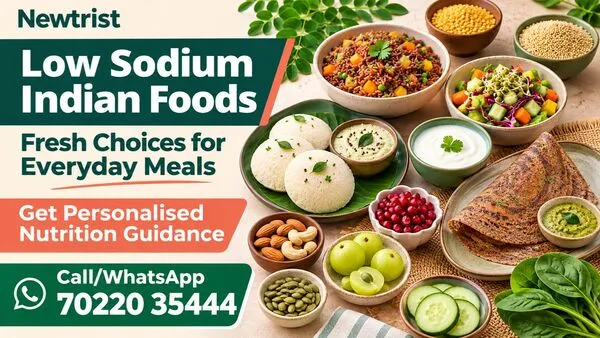
Which Common Indian Foods Can Increase Sodium Intake?
Some foods contain concentrated sodium because salt is used for preservation, processing or seasoning.
These are often accompaniments and convenient cooking ingredients rather than the main dish.
Recognising them helps you make useful substitutions instead of unnecessarily restricting your entire menu.
High Sodium Indian Foods and Practical Alternatives
| Common food or ingredient | Lower-sodium alternative |
| Mango or lemon pickle | Fresh lemon or an unsalted vegetable side |
| Papad | Fresh cucumber or carrot slices |
| Namkeen and savoury mixtures | Plain roasted chana |
| Packaged chaat masala | Amchur, roasted cumin and lemon |
| Ready-made gravy paste | Fresh onion, tomato, ginger and individual spices |
| Instant soup | Homemade vegetable soup with controlled salt |
| Salted peanuts | Unsalted roasted peanuts |
| Packaged salted chutney powder | Homemade chutney with measured seasoning |
The sodium content of these products varies by brand, recipe and serving quantity.
Frequency also matters.
A salty accompaniment eaten every day may contribute more to your usual sodium intake than a similar food consumed only occasionally.
Begin with the foods you eat regularly and choose alternatives that you genuinely enjoy.
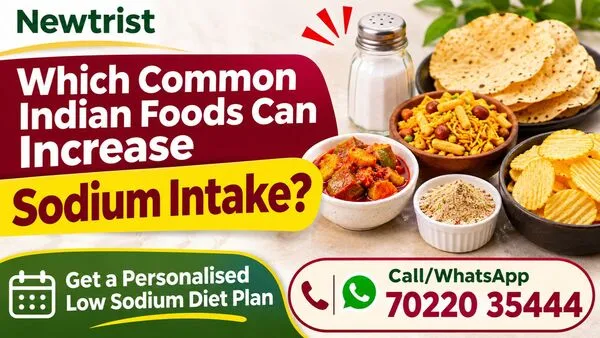
How to Reduce Sodium in Everyday Indian Cooking
Home cooking gives you control over the ingredients and salt used in your meals.
You can make measurable changes without preparing a completely different menu.
1. Calculate the Sodium From Salt in Shared Recipes
Imagine preparing lunch for four people. The meal includes moong dal, vegetable sabzi and plain rice.
Suppose you add 4 g of salt to the dal and 2 g to the sabzi. Both dishes provide four equal servings.
Here is how much sodium the added salt contributes to one person’s lunch.
| Dish | Salt added to the complete recipe | Sodium from added salt per serving |
| Moong dal | 4 g | 400 mg |
| Vegetable sabzi | 2 g | 200 mg |
| Plain rice | No added salt | 0 mg from added salt |
| Total | 600 mg |
This meal contributes approximately 600 mg of sodium from cooking salt alone.
Now reduce the salt in the dal from 4 g to 3 g and in the sabzi from 2 g to 1.5 g.
The sodium from added salt falls to approximately 450 mg per person.
That is 150 mg less sodium in the same lunch without removing any of the dishes.
These illustrative calculations cover added salt only. Naturally occurring sodium and other sodium-containing ingredients contribute separately.
The example shows why changing a recipe prepared regularly can be more meaningful than avoiding an occasional food.
2. Stop Adding Salt to Foods That Do Not Need It
Some everyday Indian preparations can be made without added salt.
Plain rice can be cooked in unsalted water. Phulka dough can be prepared using flour and water. Fresh cucumber and carrot can be served without salty seasoning.
This gives you greater flexibility to control the salt used in dishes where seasoning has a stronger influence on flavour.
3. Build Flavour With Indian Spices and Aromatics
Reducing salt becomes easier when food develops flavour through several ingredients.
Indian cooking offers many combinations that add aroma, warmth and tanginess.
| Flavour combination | Suitable preparation |
| Ginger, garlic and roasted cumin | Dal and lentil curries |
| Curry leaves, mustard seeds and grated coconut | Vegetable poriyal |
| Lemon and fresh coriander | Cooked vegetables |
| Tamarind and individual spices | Homemade sambar |
| Kokum and fresh aromatics | Suitable regional curries |
| Mint, coriander and green chilli | Fresh homemade chutney |
For example, beans poriyal prepared with curry leaves, mustard seeds, grated coconut and lemon can develop a satisfying flavour with less added salt.
If your family is accustomed to strongly salted food, reduce the quantity gradually in recipes prepared frequently.
Keeping the other ingredients familiar makes it easier to adjust to milder seasoning.
How to Check Sodium in Packaged Foods
Packaged food labels can help you compare similar products using their actual sodium content.
Look for sodium expressed in milligrams, usually written as mg.
The amount per 100 g helps you compare products, while the quantity in your actual serving tells you how much sodium you consume.
Calculate Sodium From Your Serving Size
Suppose a packaged snack contains 600 mg of sodium per 100 g.
If you eat 30 g:
600 × 30 ÷ 100 = 180 mg sodium
If you consume 60 g, the sodium contribution increases to 360 mg.
The distinction matters because the serving size printed on a packet may be smaller than the amount you normally eat.
Under Indian food-labelling standards, a product carrying a regulated low sodium claim generally must contain no more than 120 mg sodium per 100 g of solid food or 100 ml of liquid.
A product labelled no added salt can still contain naturally occurring sodium.
When choosing packaged foods, compare the actual sodium values instead of relying only on descriptions such as baked, multigrain or healthy.
Sample 1-Day Low Sodium Indian Meal Plan
A sodium-conscious day can include familiar Indian food without requiring a completely different menu.
The following example demonstrates how everyday meals can be prepared with controlled amounts of cooking salt.
| Meal | Menu | Illustrative added salt in the portion eaten |
| Breakfast | Vegetable poha with unsalted peanuts | 0.5 g |
| Mid-morning | 1 medium guava | No added salt |
| Lunch | 2 unsalted phulkas, moong dal, bottle gourd sabzi and cucumber salad | 1 g across the meal |
| Evening snack | A small handful of unsalted roasted chana | No added salt |
| Dinner | Plain rice, homemade vegetable sambar, beans poriyal and plain curd | 1 g across the meal |
| Daily total | 2.5 g added salt |
In this illustrative menu, 2.5 g of added salt contributes approximately 1,000 mg of sodium across the day.
The complete sodium intake will also include sodium naturally present in the ingredients and any other sodium-containing components.
The exact food quantities and the appropriate combination of grains, pulses, vegetables and protein foods depend on individual nutritional requirements.
This example shows how the salt used in a familiar day’s meals can be accounted for, rather than simply labelling a menu as low sodium without considering its preparation.
How Can You Identify the Biggest Sodium Sources in Your Own Diet?
You may already be making lower-sodium choices, but it is not always obvious which changes are making the greatest difference.
A simple three-day food review can help you understand the pattern.
For three ordinary days, record:
- Home-cooked meals: The salt added to each recipe, the number of servings prepared and the portion you consume.
- Packaged foods: The quantity eaten and sodium listed on the nutrition label.
- Meals prepared outside the home: The dish, portion and any available information about its preparation.
Once you review your meals, look for ingredients or cooking practices that repeatedly contribute sodium.
You may discover that the biggest opportunity is adjusting a family recipe prepared every day. Alternatively, a packaged ingredient used frequently may deserve more attention.
A general food list can guide your choices, but it cannot determine the sodium content of your particular meals.
That requires examining what you actually eat.
Frequently Asked Questions About a Low Sodium Diet
Can idli and dosa batter be prepared without salt?
Yes. Idli and dosa batter can be fermented without adding salt. The sodium content of the finished preparation depends on its ingredients and any salt added before cooking.
Is pink salt or rock salt lower in sodium than regular salt?
Pink salt and rock salt are predominantly sodium chloride, like regular table salt. Their sodium content by weight is broadly similar, so changing salt varieties does not automatically reduce sodium intake.
Does baking soda in dhokla increase sodium?
Yes. Baking soda contains sodium bicarbonate and contributes sodium when used in dhokla and other preparations. The quantity added determines its contribution.
Does lemon juice remove sodium from salty food?
No. Lemon juice can change how salty food tastes, but it does not remove sodium already present. Adding lemon to a heavily salted curry does not make it lower in sodium.
When Your Own Meals Need a More Personal Approach
You may now know which ingredients are suitable, how to measure cooking salt and how to compare sodium in packaged products.
But there is a difference between understanding these principles and knowing exactly how to apply them to your own meals.
Perhaps your family cooks one large batch of food that everyone shares. Perhaps you depend on workplace lunches, or your serving sizes vary considerably throughout the week.
Even when two people eat similar Indian meals, the sodium contributed by those dishes can differ because of the quantities, preparation methods and additional ingredients.
The more useful question is which adjustments will make the greatest difference to your diet while still meeting your nutritional requirements.
At Newtrist Nutritionist Dietitian Dietician, Chief Nutritionist Vasanthi Senthilvel, with 21 years of experience in nutrition, provides personalised diet and nutrition guidance based on individual requirements, regional food preferences, household cooking practices and daily routines.
A personalised assessment can help identify your main dietary sodium sources, review the recipes you prepare frequently and determine which changes deserve priority.
You can start with a three-day record of your usual meals, the salt used in household recipes and the packaged ingredients you consume regularly.
These details provide a practical foundation for developing a personalised nutrition plan around the foods you actually enjoy.
Want to find out which sodium-reduction changes are most relevant to your everyday Indian meals?
Consult Chief Nutritionist Vasanthi Senthilvel at Newtrist Nutritionist Dietitian Dietician for personalised nutrition guidance based on your food habits, household recipes and individual nutritional requirements.
The aim is not to make your meals unfamiliar or unnecessarily restrictive. It is to make meaningful changes that fit your nutritional needs and are realistic enough to maintain.
Author
Chief Nutritionist Vasanthi Senthilvel leads Newtrist Nutritionist Dietitian Dietician, providing personalised diet plans for weight management and clinical nutrition for children, adolescents, adults and families.
She has 21 years of experience in nutrition and has received professional recognition for her work.
- Pride of Bharat Awards 2026: Outstanding Achievement in Holistic Health & Nutrition Innovation
- Doctor of The Year: Nutritionist 2026: Excellence in Clinical Nutrition and Weight Loss.
Her approach considers age, growth, health history, medical conditions, laboratory reports, medication, body composition, weight history, dietary preferences, regional food habits, family routines, activity, sleep and personal health goals. Recommendations are developed according to individual needs rather than using one standard diet for everyone.
Consultations are available in person at Bangalore HSR Layout, Koramangala, Bellandur, Haralur and Electronic City, as well as online across India.
Independent Medical Review Panel
Newtrist health and nutrition articles undergo medical review, where appropriate, by doctors with relevant specialist expertise. The medical professionals listed below contribute to Newtrist’s review process within their respective specialties.
| Speciality | Doctor |
|---|---|
| Endocrinology | Dr Vinay Prasad MBBS, MD, DM |
| Gastroenterology & Hepatology | Dr Sunil kumar N MBBS, MD, DM |
| Gynaecology | Dr Prathiba G MBBS, DNB, FIRM, FMAS |
| Nephrology | Dr Priyashree R MBBS, MD, DNB, DM |