
Written by: Chief Nutritionist Vasanthi Senthilvel
21 years of experience | Newtrist Nutritionist Dietitian Dietician
Best Nutritionist in Bangalore with multiple awards for excellence in clinical nutrition, weight loss, holistic health and nutrition innovation.
Medically reviewed by: Dr Prathiba G MBBS, DNB, FIRM, FMAS | Dr Sunil kumar N MBBS, MD, DM | Dr Vinay Prasad MBBS, MD, DM
Medical Disclaimer: Nutritional needs vary based on an individual’s profile. The information on this page is for general educational purposes only and is not intended to replace personalised medical or nutrition care.
An Indian meal of rice, dal, vegetable sabzi and curd may be nutritious, but it is unlikely to fit a strict keto diet in its usual portions.
Remove the rice and dal, and a new question arises. What will replace the energy, protein and fibre those foods provided?
That is where following keto becomes more complicated than simply avoiding carbohydrates.
You may succeed in entering ketosis without knowing whether your new eating pattern meets your nutritional needs. And the food changes that feel manageable for a few days may become difficult when they affect your family meals, work routine and food preferences.
Before following a ketogenic food chart, it helps to understand what keto actually changes inside your body and whether those changes are worth making.
Key Takeaway
The keto diet, or ketogenic diet, is a very-low-carbohydrate, high-fat eating pattern that typically restricts carbohydrates to around 20 to 50 grams daily to promote ketosis. During ketosis, the liver produces ketones from fat for energy. Indian foods such as paneer, eggs, fish and non-starchy vegetables can fit, while usual portions of rice, roti and many pulses are difficult to accommodate. Keto may offer short-term metabolic benefits, but nutritional quality, potential side effects and individual suitability matter.

Table of Contents
What Is the Keto Diet?
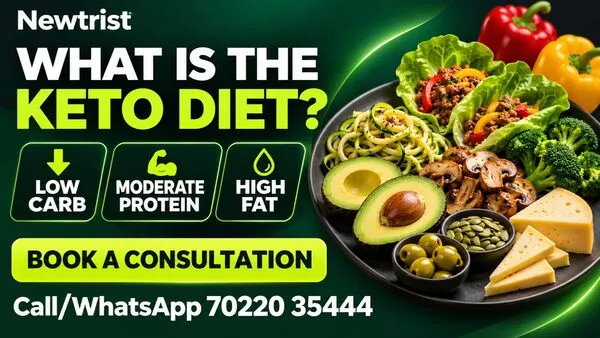
The ketogenic diet substantially reduces carbohydrate intake, maintains moderate protein consumption and obtains most daily calories from dietary fat.
Unlike a general low-carbohydrate diet, keto specifically aims to produce nutritional ketosis.
A typical ketogenic eating pattern may have the following macronutrient distribution:
| Macronutrient | Approximate share of daily calories |
| Carbohydrates | 5% to 10% |
| Protein | 15% to 25% |
| Fat | 65% to 80% |
These proportions vary between ketogenic approaches.
For example, if carbohydrates provide 5% of a 2,000-calorie diet, they contribute approximately 25 grams for the entire day.
That allowance is small when compared with the carbohydrate content of many familiar Indian meals.
Keto is therefore not defined by eating unlimited paneer, butter or ghee. Its defining feature is sufficiently low carbohydrate availability to encourage the production of ketones.
How Does the Ketogenic Diet Work?
Your body normally uses glucose as an important source of energy. When carbohydrate availability becomes very low, it adapts by relying more heavily on fatty acids and ketones.
What Happens During Ketosis?
The process involves four metabolic changes:
1. Glycogen stores decrease. The body uses some of the glucose stored in the liver and muscles.
2. Fat utilisation increases. Fatty acids become a more important energy source for several tissues.
3. The liver produces ketones. Some fatty acids are converted into ketone bodies, including beta-hydroxybutyrate and acetoacetate.
4. Ketones supply alternative energy. The brain and other tissues can use ketones for part of their energy requirements.
The body continues producing glucose internally for tissues and functions that require it.
How Long Does It Take to Enter Ketosis?
Nutritional ketosis may begin within approximately two to five days of sustained, substantial carbohydrate restriction.
The timing depends on factors such as previous carbohydrate intake, physical activity, glycogen availability and individual metabolism.
Does Ketosis Automatically Mean Body Fat Loss?
No. Ketosis changes how your body obtains energy, but it does not automatically produce a reduction in stored body fat.
The body can use both dietary fat and stored fat as fuel. Changes in body fat depend substantially on overall energy intake relative to energy expenditure.
This is why the presence of ketones alone does not establish whether a particular weight-management outcome is being achieved.

Which Indian Foods Can You Eat on a Keto Diet?
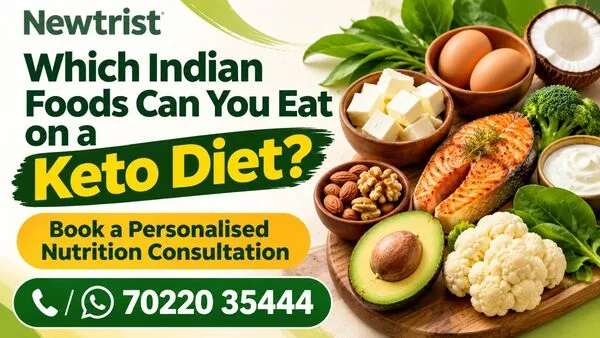
Several familiar Indian foods can fit ketogenic eating without relying on specialised packaged products.
The most useful choices combine relatively low carbohydrate content with protein, fibre and beneficial dietary fats.
Vegetarian and Plant-Based Keto Food Options
Paneer and tofu can provide substantial protein in vegetarian ketogenic meals. Nuts and seeds contribute dietary fats, fibre and micronutrients.
| Indian food | Main nutritional contribution | Example use |
| Paneer | Protein and calcium | Palak paneer, paneer bhurji |
| Tofu | Plant-based protein | Tofu bhurji, tofu sabzi |
| Almonds and walnuts | Unsaturated fats, fibre and minerals | Measured snack portions |
| Flaxseeds (alsi) | Fibre and plant omega-3 fatty acids | Ground into vegetable dishes |
| Sesame seeds (til) | Dietary fats and minerals | Added to vegetable preparations |
| Peanuts | Protein, fats and fibre | Unsweetened roasted peanuts |
| Fresh coconut | Fat and fibre | Coconut chutney |
Plain, unsweetened curd may also be included in suitable quantities, although its naturally occurring lactose contributes carbohydrates.
For vegetarian keto meals, getting sufficient protein without relying heavily on nuts and other fat-rich foods can be challenging.
Eggs, Fish and Meat Options
Eggs, fish and unprocessed poultry provide substantial protein with little or no carbohydrate before additional cooking ingredients are introduced.
Familiar dishes such as egg bhurji, masala omelettes, grilled fish and chicken sukka may fit ketogenic eating.
Indian mackerel (bangda or ayala) and sardines (mathi) also provide long-chain omega-3 fatty acids.
Preparation affects the finished dish. Flour coatings, starch-thickened gravies and sweetened sauces can increase its carbohydrate content.
Non-Starchy Indian Vegetables and Dietary Fats
Vegetables contribute fibre, vitamins and minerals to ketogenic meals. Useful Indian choices include:
• Palak: Provides folate, vitamin K and carotenoids.
• Methi leaves: Contribute fibre and micronutrients.
• Drumstick leaves (moringa leaves): Supply carotenoids, calcium and other minerals.
• Bhindi: Provides fibre and vitamin C.
• Cauliflower: Can be prepared as an alternative to rice.
• Cabbage: Contributes fibre and vitamin C.
• Lauki and ridge gourd: Contain relatively little carbohydrate in typical portions.
• Brinjal: Adds variety to vegetable-based dishes.
Groundnut, mustard and sesame oils provide predominantly unsaturated fats.
Ghee and coconut may also feature in traditional preparations, although they contain a greater proportion of saturated fat.
The type of dietary fat matters because ketogenic meals with similar carbohydrate content can differ considerably in overall nutritional quality.
Which Indian Foods Are Usually Restricted on Keto?
Many familiar Indian staples are difficult to accommodate because their usual portions contribute substantial carbohydrates.
| Food group | Common Indian examples | Reason for restriction |
| Rice and rice-based foods | White rice, brown rice, poha, idli | High starch content |
| Wheat and millets | Chapati, paratha, ragi, jowar, bajra | Substantial carbohydrate contribution |
| Pulses and legumes | Toor dal, moong dal, chana, rajma | Contain carbohydrates alongside protein and fibre |
| Starchy vegetables | Potato, sweet potato, yam, arbi | Higher starch concentration |
| Fruits | Banana, mango, chikoo, grapes | Natural sugars contribute to carbohydrate intake |
| Sweets and sweetened foods | Sugar, jaggery, halwa, laddoo | Concentrated carbohydrate sources |
These restrictions do not mean the foods are inherently unhealthy.
Dal provides plant protein, fibre and minerals. Whole grains and millets contribute valuable nutrients, while fruits supply vitamins and beneficial plant compounds.
Their limitation is specific to the strict carbohydrate requirements of ketogenic eating.
A nutritious food is not necessarily keto-compatible, and a keto-compatible food is not automatically a better nutritional choice.
Sample 1-Day Indian Keto-Style Menu
A ketogenic eating pattern can retain Indian flavours while changing the usual combination of ingredients.
The following example illustrates possible low-carbohydrate meals for one person.
| Meal | Menu |
| Breakfast | Two-egg methi omelette with 50 g methi leaves, prepared using 1 tsp groundnut oil, with 15 g walnuts |
| Lunch | Palak paneer using 150 g paneer, served with 150 g cauliflower rice and 100 g cucumber salad |
| Evening snack | 25 g unsweetened roasted peanuts |
| Dinner | 150 g grilled Indian mackerel with 120 g bhindi sabzi and 100 g sautéed cabbage |
For a vegetarian variation, tofu bhurji can replace the egg-based breakfast, while tofu can replace fish at dinner.
The final nutritional composition depends on complete recipes, including cooking fats, onions, tomatoes and other ingredients.
The example demonstrates food combinations rather than a calculated daily ketogenic prescription.
What Are the Potential Benefits of the Keto Diet?
Research has examined ketogenic diets for their effects on body weight, appetite and selected metabolic indicators. Some findings are promising over shorter periods, although individual outcomes differ.
Short-Term Weight Changes
Some people experience noticeable weight reduction after beginning keto. Initially, part of the change comes from water loss associated with declining glycogen stores.
Further reductions in body fat depend substantially on overall energy intake relative to energy expenditure.
Long-term research has not consistently established that ketogenic eating produces greater weight loss than other appropriately structured dietary approaches.
Changes in Appetite
Some individuals report reduced hunger or greater satisfaction between meals.
Protein intake, food composition and metabolic responses may contribute to these experiences. However, appetite responses vary, and not everyone finds ketogenic eating easier to maintain.
Changes in Metabolic Markers
Some ketogenic interventions have shown improvements in triglycerides and selected measures of glucose regulation.
These outcomes depend on starting metabolic health, body-weight changes and dietary composition. The findings do not establish that ketogenic eating is necessarily the most suitable approach for every individual.
What Are the Side Effects and Health Risks of Keto?
Substantial carbohydrate restriction can influence fluid balance, digestion, nutritional intake and blood lipid levels.
Early Symptoms and Keto Flu
During the initial adaptation period, some individuals experience symptoms commonly called keto flu. These may include:
• Headache or dizziness
• Fatigue and reduced exercise tolerance
• Nausea
• Muscle cramps
• Irritability or difficulty concentrating
• Changes in bowel movements
Changes in fluid balance, electrolyte handling and energy metabolism may contribute to these symptoms. Their intensity and duration vary.
Fibre and Micronutrient Inadequacy
Restricting substantial portions of grains, legumes and fruits can reduce dietary fibre and food variety.
Insufficient fibre may contribute to constipation, while limited food diversity can make it more difficult to obtain adequate amounts of certain vitamins and minerals.
Changes in Blood Cholesterol
Some people experience increased LDL cholesterol during ketogenic eating, particularly when large amounts of saturated fat are consumed.
Triglycerides may decrease even when LDL cholesterol increases. Different blood lipid markers can therefore respond differently to the same dietary pattern.
Longer-Term Health Considerations
Kidney stones and nutritional inadequacies have been reported with ketogenic dietary approaches, particularly in highly restrictive settings.
Evidence concerning the long-term effects of different ketogenic patterns remains limited. These findings make the nutritional composition of the diet important beyond whether ketosis has been achieved.
Is the Keto Diet Practical for Indian Eating Habits?
The difficulty with keto is not necessarily finding a low-carbohydrate dish. It is maintaining the required food changes across everyday meals.
For example, someone who regularly enjoys eggs, fish and vegetable-based preparations may find ketogenic food selection relatively straightforward.
A person following a strictly plant-based diet and depending heavily on cereals and pulses may find the restrictions more demanding.
There are also everyday considerations:
• Family meals: Preparing different dishes may become inconvenient when others follow the usual eating pattern.
• Eating outside: Restaurant gravies, marinades and accompaniments may contain ingredients that are difficult to account for.
• Food preferences: Repeatedly relying on a limited range of meals may reduce enjoyment.
• Consistency: Travel, work schedules and celebrations may make strict carbohydrate targets difficult to maintain.
These factors do not determine whether keto works metabolically, but they influence whether the eating pattern can fit into daily life.
Is the Keto Diet Right for You?
You may understand how ketosis works and recognise which Indian foods fit ketogenic eating.
But knowing the rules of keto does not answer the most important personal question.
Would following keto offer a meaningful nutritional advantage for you compared with another eating approach?
Perhaps you are considering keto for weight management but are unsure whether strict carbohydrate restriction is necessary.
You may prefer vegetarian food and find yourself relying on the same limited protein sources.
Or you might already have concerns about cholesterol and wonder whether increasing dietary fat would be appropriate.
These situations require different considerations. A standard keto food chart cannot determine the right approach for all of them.
Personalised Nutrition With Chief Nutritionist Vasanthi Senthilvel
At Newtrist, Chief Nutritionist Vasanthi Senthilvel provides personalised diet and nutrition guidance based on individual health needs, current eating habits, dietary preferences, lifestyle and nutritional goals.
A personalised nutrition assessment can help answer questions that a general keto chart cannot:
1. Is ketogenic eating appropriate for your nutritional needs and health profile?
2. Can your preferred Indian meals provide enough protein, fibre and essential nutrients within the restrictions?
3. Would a different eating pattern offer a more practical way to work towards your goals?
The objective is not to recommend keto simply because it is popular. It is to identify a suitable nutritional approach based on your individual requirements and everyday food habits.
Considering keto but unsure whether its restrictions are right for you?
Explore personalised diet and nutrition guidance with Chief Nutritionist Vasanthi Senthilvel to learn more about Newtrist and how to enquire about a consultation.
Frequently Asked Questions About the Keto Diet
What Is the Difference Between Total and Net Carbohydrates on Keto?
Net carbohydrates are commonly calculated by subtracting dietary fibre from total carbohydrates. However, food labelling conventions differ, and some labels already report available carbohydrates separately from fibre. The counting method should match the carbohydrate target being followed.
Is Fasting Necessary to Follow a Keto Diet?
No. A ketogenic diet does not require skipping meals or following a particular eating window. Carbohydrate restriction and meal timing are separate dietary considerations.
Can One High-Carbohydrate Meal Interrupt Ketosis?
Yes. A sufficiently carbohydrate-rich meal may temporarily reduce ketone production as glucose availability increases. The response depends on the amount consumed and individual metabolism.
How Can You Tell Whether Your Body Is in Ketosis?
Ketones can be assessed through blood, breath or urine measurements. These methods assess different indicators and vary in reliability. Ketone measurements do not directly indicate how much stored body fat has been lost.
Are Packaged Foods Labelled Keto-Friendly Necessary?
No. Ordinary foods can form the basis of ketogenic meals. A keto-friendly label does not automatically establish nutritional quality or whether the product fits a particular daily carbohydrate allowance.
Is Nutritional Ketosis the Same as Diabetic Ketoacidosis?
No. Nutritional ketosis is a regulated metabolic adaptation involving increased ketone availability. Diabetic ketoacidosis is a dangerous condition involving excessive ketone accumulation and increased blood acidity. They are physiologically different.
Author
Chief Nutritionist Vasanthi Senthilvel leads Newtrist Nutritionist Dietitian Dietician, providing personalised diet plans for weight management and clinical nutrition for children, adolescents, adults and families.
She has 21 years of experience in nutrition and has received professional recognition for her work.
- Pride of Bharat Awards 2026: Outstanding Achievement in Holistic Health & Nutrition Innovation
- Doctor of The Year: Nutritionist 2026: Excellence in Clinical Nutrition and Weight Loss.
Her approach considers age, growth, health history, medical conditions, laboratory reports, medication, body composition, weight history, dietary preferences, regional food habits, family routines, activity, sleep and personal health goals. Recommendations are developed according to individual needs rather than using one standard diet for everyone.
Consultations are available in person at Bangalore HSR Layout, Koramangala, Bellandur, Haralur and Electronic City, as well as online across India.
Independent Medical Review Panel
Newtrist health and nutrition articles undergo medical review, where appropriate, by doctors with relevant specialist expertise. The medical professionals listed below contribute to Newtrist’s review process within their respective specialties.
| Speciality | Doctor |
|---|---|
| Endocrinology | Dr Vinay Prasad MBBS, MD, DM |
| Gastroenterology & Hepatology | Dr Sunil kumar N MBBS, MD, DM |
| Gynaecology | Dr Prathiba G MBBS, DNB, FIRM, FMAS |
| Nephrology | Dr Priyashree R MBBS, MD, DNB, DM |