
Written by: Chief Nutritionist Vasanthi Senthilvel
21 years of experience | Newtrist Nutritionist Dietitian Dietician
Best Nutritionist in Bangalore with multiple awards for excellence in clinical nutrition, weight loss, holistic health and nutrition innovation.
Medically reviewed by: Dr Prathiba G MBBS, DNB, FIRM, FMAS | Dr Sunil kumar N MBBS, MD, DM | Dr Vinay Prasad MBBS, MD, DM
Medical Disclaimer: Nutritional needs vary based on an individual’s profile. The information on this page is for general educational purposes only and is not intended to replace personalised medical or nutrition care.
You finish two soft idlis with coconut chutney, feel comfortably full and get on with your morning.
But by 10:30, you’re already thinking about your next meal.
Should you have eaten three idlis instead? Or does your usual breakfast need something other than an extra idli?
It’s a question worth asking, especially if idli is part of your regular breakfast routine.
Idli provides energy and some protein, but the number of pieces you eat doesn’t tell you everything about the nutritional value of your meal.
Understanding what idli contributes, and what its accompaniments add, can help you make better breakfast choices without giving up a food you enjoy.
Key Takeaway
One regular plain idli weighing approximately 50 g provides 73 calories and 2.2 g of protein. Two idlis provide around 146 calories and 4.5 g of protein, excluding accompaniments. Because idli mainly supplies carbohydrates, pairing it with dal-rich sambar and suitable protein-containing foods can help create a more balanced breakfast.
Table of Contents
How Many Calories and How Much Protein Are in Idli?
Traditional plain idli is made from fermented rice and urad dal batter that is steamed until soft.
Its nutritional content depends on the rice-to-dal ratio, the amount of batter used and the final serving size.
Calories and Protein in 1, 2 and 3 Idlis
The table below shows approximate nutritional values for regular plain idlis weighing 50 g each.
| Nutrient | 1 Idli (50 g) | 2 Idlis (100 g) | 3 Idlis (150 g) |
| Calories | 73 kcal | 146 kcal | 218 kcal |
| Protein | 2.2 g | 4.5 g | 6.7 g |
| Carbohydrates | 15.2 g | 30.3 g | 45.5 g |
| Fat | 0.3 g | 0.7 g | 1.0 g |
| Dietary fibre | 1.3 g | 2.6 g | 3.9 g |
Values are rounded estimates based on cooked plain idli weight, excluding sambar, chutney, ghee and other accompaniments.
The numbers show that idli contributes considerably more carbohydrates than protein.
Adding another idli increases energy intake, but it may not be the most effective way to increase the protein content of your breakfast.
Why Do Calories Vary Between Idlis?
The size of the idli makes a difference.
A small idli weighing approximately 25 g may provide around 36 calories, while a regular 50 g idli provides approximately 73 calories.
Larger idlis contain more batter and generally provide more calories.
The ingredients and their proportions also matter. Homemade and restaurant idlis may use different rice-to-dal ratios and mould sizes.
If you’re estimating your breakfast calories, knowing the approximate size of your usual idlis is more useful than relying only on the number of pieces.
What Makes Up the Nutritional Value of Plain Idli?
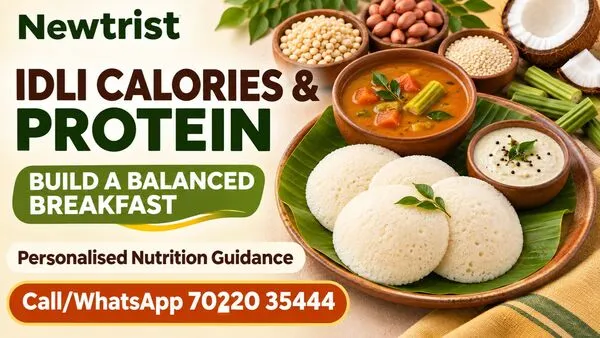
Idli combines two familiar Indian ingredients that contribute different nutrients.
Rice supplies most of the carbohydrates, which provide energy for everyday activities.
Urad dal contributes plant protein, dietary fibre and minerals. Combining rice and urad dal also provides a complementary mix of amino acids.
However, traditional idli batter generally contains a larger proportion of rice than dal. This helps explain why the finished food is predominantly carbohydrate-rich.
Steaming prepares idli without requiring the cooking fat commonly used for frying.
These characteristics make plain idli a useful part of breakfast, although they do not automatically make it a nutritionally complete meal.
Is Plain Idli a Balanced Breakfast on Its Own?
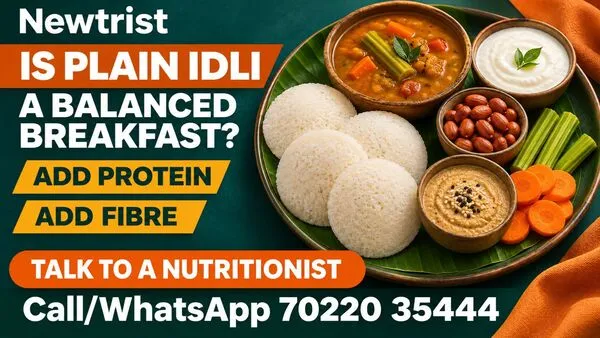
Plain idli can be part of a balanced breakfast, but idli alone may not provide enough protein, fibre and nutrient variety to meet your morning nutritional needs.
Imagine eating three idlis without any substantial accompaniment.
You receive carbohydrates for energy and some protein, but relatively little dietary fat and a modest amount of protein.
Whether the meal keeps you satisfied depends on several factors, including your total food intake, appetite and individual requirements.
This doesn’t mean you should stop eating idli.
A more useful approach is to look at the complete plate and identify which nutrients the accompaniments can contribute.
How Can You Make an Idli Breakfast More Balanced?
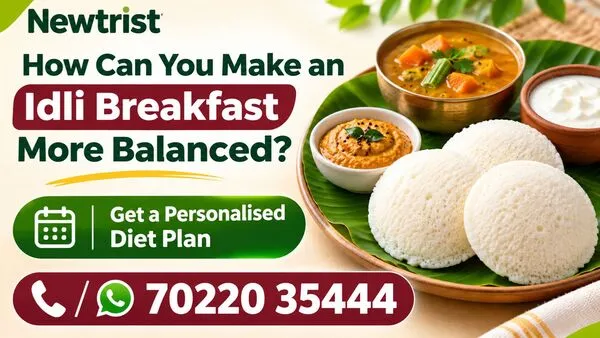
You don’t need to replace your usual breakfast with unfamiliar foods.
Traditional accompaniments can complement idli when their ingredients and portions are chosen thoughtfully.
Add Dal-Rich Vegetable Sambar
Sambar can improve the protein and fibre contribution of an idli breakfast.
Toor dal supplies plant protein, while vegetables such as drumstick, pumpkin, carrot and beans contribute fibre and micronutrients.
The amount of dal makes a difference.
A bowl of thick, dal-rich sambar generally contributes more protein than a thin preparation containing very little dal.
If you already enjoy idli with sambar, the quantity and composition of the sambar are worth considering.
Choose Accompaniments Based on Their Nutritional Contribution
Different traditional accompaniments provide different nutrients.
- Groundnut chutney: Contributes unsaturated fats and some protein.
- Sesame chutney: Provides fats and minerals, including calcium.
- Coconut chutney: Contributes flavour and fat, with relatively modest protein in small portions.
- Plain curd: Provides additional protein and calcium.
These accompaniments do not have identical nutritional roles.
For example, coconut chutney can complement the flavour of idli, while plain curd may be more useful when additional protein is needed.
The goal is not to include every side dish. It is to select a combination that suits your nutritional requirements.
Example of a Balanced Idli Breakfast Plate
Here is one practical way to combine familiar Indian foods.
| Food | Sample Portion | Main Nutritional Contribution |
| Plain idli | 2 regular idlis, 50 g each | Carbohydrates and some protein |
| Dal-rich vegetable sambar | 150 to 200 ml | Protein, fibre and vegetables |
| Groundnut chutney | 1 tablespoon | Unsaturated fats and some protein |
| Plain curd | 100 g | Additional protein and calcium |
This breakfast retains the familiar idli-and-sambar combination while including additional protein-containing foods.
The portions are illustrative and can be adjusted to individual needs.
A balanced idli breakfast is not necessarily about adding more food. It’s about choosing foods that complement one another nutritionally.
How Do Sambar, Chutney and Ghee Affect Idli Breakfast Calories?
The calories in plain idli are only part of your breakfast’s total energy content.
Sambar, chutney and ghee also contribute calories, but their nutritional benefits differ.
| Accompaniment | Effect on Breakfast Nutrition |
| Dal-rich sambar | Adds calories, protein, fibre and micronutrients |
| Groundnut chutney | Adds calories, unsaturated fats and some protein |
| Coconut chutney | Adds calories primarily through fat-containing ingredients |
| Ghee | Adds calories mainly from fat, without meaningful protein |
The quantities consumed influence the final calorie total.
For example, a tablespoon of groundnut chutney and several generous tablespoons will contribute different amounts of energy.
Similarly, the nutritional value of sambar depends on its dal content, vegetables and added fat.
This explains why two people eating the same number of idlis may consume different amounts of calories and protein.
When evaluating your breakfast, consider both its total energy and the nutrients contributed by each food.
How Many Idlis Should You Eat for Breakfast?
There is no fixed number of idlis that suits everyone.
Your ideal portion depends on factors such as your energy requirements, physical activity, appetite and the nutritional composition of the complete breakfast.
For example, someone eating two idlis with a generous serving of dal-rich sambar and curd may consume a different balance of nutrients from someone eating three idlis with a small amount of chutney.
The second person eats more idlis, but that does not automatically mean their breakfast is more balanced.
Rather than deciding your portion from calorie numbers alone, consider how the complete meal contributes to your nutritional needs.
Frequently Asked Questions
1. Does Fermentation Make Idli a High-Protein Food?
No. Fermentation can influence the availability and digestibility of some nutrients, but it does not turn traditional rice-and-urad idli into a high-protein food. Its protein content remains largely dependent on the ingredients used.
2. Are Idli Nutrition Values Calculated Using Raw Batter or Cooked Weight?
The values in this article are based on the weight of the finished, steamed idli. A 50 g idli means 50 g of cooked food, not 50 g of uncooked rice, urad dal or batter.
3. Does Greasing Idli Moulds Add Calories?
Using oil or ghee to grease idli moulds can add a small amount of fat and calories to the finished food. The actual amount depends on how much is used and retained on the idlis.
Is Your Usual Idli Breakfast Giving You the Nutrition You Need?
You may already eat idli several mornings a week.
Perhaps two idlis leave you hungry long before lunch. Or you regularly eat four because that’s what you’ve always been comfortable with.
You’ve seen the nutritional numbers. But how do you know whether your usual portion is appropriate for you?
Should you eat another idli, include more dal-rich sambar or add a protein-containing accompaniment?
The answer depends on your overall nutritional requirements, not simply the calories in one idli.
Knowing the calories in your breakfast is useful. Knowing whether that breakfast gives you the nutrition you need is what makes the information practical.
At Newtrist, Chief Nutritionist Vasanthi Senthilvel, with 21 years of experience in nutrition, provides personalised nutrition guidance based on your food habits, dietary preferences, lifestyle, health information and individual goals.
A personalised nutrition assessment can help you understand whether your current idli portions are appropriate, how much protein your breakfast contributes and which practical changes may suit your needs.
You can start by sharing three simple details: how many idlis you usually eat, what you serve alongside them and how satisfied you feel afterwards.
Rather than replacing your favourite South Indian breakfast, the focus can be on making your familiar meals better suited to your individual requirements.
If you’re unsure whether your idli breakfast provides the right balance of calories and protein, consult Chief Nutritionist Vasanthi Senthilvel at Newtrist for a personalised nutrition assessment and practical Indian meal guidance tailored to your needs.
You don’t need to give up idli to improve your breakfast. You need to understand what your usual meal provides and what your body requires.
Author
Chief Nutritionist Vasanthi Senthilvel leads Newtrist Nutritionist Dietitian Dietician, providing personalised diet plans for weight management and clinical nutrition for children, adolescents, adults and families.
She has 21 years of experience in nutrition and has received professional recognition for her work.
- Pride of Bharat Awards 2026: Outstanding Achievement in Holistic Health & Nutrition Innovation
- Doctor of The Year: Nutritionist 2026: Excellence in Clinical Nutrition and Weight Loss.
Her approach considers age, growth, health history, medical conditions, laboratory reports, medication, body composition, weight history, dietary preferences, regional food habits, family routines, activity, sleep and personal health goals. Recommendations are developed according to individual needs rather than using one standard diet for everyone.
Consultations are available in person at Bangalore HSR Layout, Koramangala, Bellandur, Haralur and Electronic City, as well as online across India.
Independent Medical Review Panel
Newtrist health and nutrition articles undergo medical review, where appropriate, by doctors with relevant specialist expertise. The medical professionals listed below contribute to Newtrist’s review process within their respective specialties.
| Speciality | Doctor |
|---|---|
| Endocrinology | Dr Vinay Prasad MBBS, MD, DM |
| Gastroenterology & Hepatology | Dr Sunil kumar N MBBS, MD, DM |
| Gynaecology | Dr Prathiba G MBBS, DNB, FIRM, FMAS |
| Nephrology | Dr Priyashree R MBBS, MD, DNB, DM |