
Written by: Chief Nutritionist Vasanthi Senthilvel
21 years of experience | Newtrist Nutritionist Dietitian Dietician
Best Nutritionist in Bangalore with multiple awards for excellence in clinical nutrition, weight loss, holistic health and nutrition innovation.
Medically reviewed by: Dr Prathiba G MBBS, DNB, FIRM, FMAS | Dr Sunil kumar N MBBS, MD, DM | Dr Vinay Prasad MBBS, MD, DM
Medical Disclaimer: Nutritional needs vary based on an individual’s profile. The information on this page is for general educational purposes only and is not intended to replace personalised medical or nutrition care.
Aloo paratha tastes even better when it’s fresh off the tawa. But when you’re trying to eat more thoughtfully, that second paratha can leave you wondering whether you’re having too much.
What makes this tricky is that no two aloo parathas are necessarily alike.
Your homemade version may be small, with thin dough and a generous potato filling. The one at your favourite restaurant might be larger, thicker and topped with butter.
If both count as one paratha, how do you know how much is right for you?
The answer is more practical than simply limiting yourself to a number. You can enjoy your favourite aloo paratha by understanding its portion and choosing foods that complement it.
Key Takeaway
One medium homemade aloo paratha with a protein-rich accompaniment and vegetables is a practical starting portion for many adults. Whether one or two parathas suit you depends on their size, ingredients, your appetite and nutritional requirements. Focus on the complete serving rather than following a fixed one-paratha rule.

Table of Contents
What Is a Suitable Aloo Paratha Portion Size?
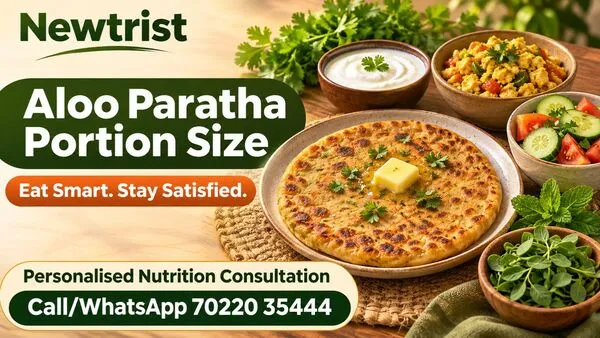
A medium homemade aloo paratha can be prepared using approximately 40 g of uncooked whole wheat atta, 70 g of boiled potato filling and one teaspoon of oil or ghee.
Here is an illustrative serving.
| Ingredient | Example quantity |
| Whole wheat atta, uncooked | 40 g |
| Boiled, mashed potato | 70 g |
| Oil or ghee for cooking | 1 teaspoon |
| Spices and fresh coriander | Small amounts for flavour |
These quantities provide a practical reference rather than a fixed portion requirement.
Whole wheat atta and potato both contribute carbohydrates. Atta also supplies some protein and fibre, while potato provides potassium.
The amount of cooking fat influences the energy content. One teaspoon of ghee contributes approximately 45 calories, and additional butter increases the total further.
The dough-to-filling ratio is particularly important.
A paratha prepared with 40 g of atta and 70 g of potato is different from one containing 70 g of atta and the same amount of filling.
Even if both appear similar once cooked, their nutritional composition will differ.
If your family prepares aloo paratha regularly, knowing how much atta and potato goes into each serving can be more useful than judging the portion by its diameter or thickness alone.
How Many Aloo Parathas Should You Eat in One Meal?
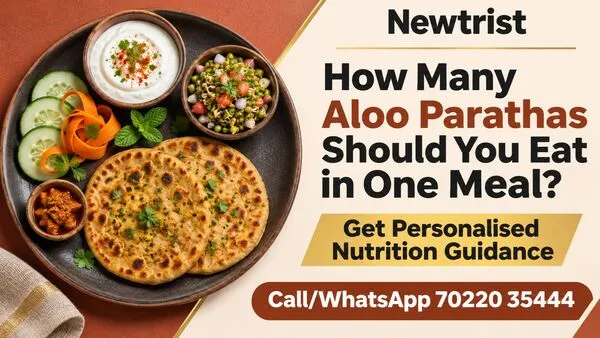
One medium aloo paratha may be sufficient for some adults, while two smaller parathas may be suitable for others. The appropriate amount depends on the actual serving and individual energy requirements.
Suppose your family prepares two small parathas using 30 g of atta each. Together, they contain 60 g of atta.
A single large paratha prepared with 60 g of atta contains the same amount of flour, although its filling and cooking fat may differ.
This helps explain why counting pieces does not necessarily reflect the quantity eaten.
Your appetite and daily activity also matter.
If your usual breakfast leaves you comfortably satisfied, that may be an appropriate amount.
If you regularly become hungry much earlier than your next meal, the serving or overall meal combination may need adjustment.
Someone with a physically demanding morning may also require a different quantity from someone with a more sedentary routine.
The goal is to find a serving that supports your nutritional needs without leaving you unnecessarily hungry or uncomfortably full.
What to Eat With Aloo Paratha for a Balanced Meal
Yes, aloo paratha can be part of a healthy, balanced meal when its carbohydrate-rich base is complemented by protein and vegetables.
You don’t need several elaborate accompaniments. A few familiar Indian foods can help provide nutrients that the paratha contributes in smaller amounts.
Choose a Protein-Rich Accompaniment
Plain curd is a traditional pairing with aloo paratha.
Its mild, tangy flavour complements the warm potato filling, and it provides calcium and some protein.
However, the protein content depends on the type and quantity of curd served.
Paneer bhurji, eggs and cooked moong are other practical choices that can increase the meal’s protein contribution.
You can choose an option you enjoy and a serving that suits your nutritional requirements.
Add Vegetables That Complement the Flavour
Cucumber, carrot and tomato make a refreshing side for a hot aloo paratha.
They contribute fibre, vitamins and minerals while adding colour and crunch.
You can also include finely chopped methi leaves in the potato filling. Methi provides fibre and micronutrients along with a distinctive earthy flavour.
Fresh coriander and mint work well with curd or vegetable accompaniments.
These familiar ingredients improve nutritional variety without changing the traditional character of the meal.
Enjoy Ghee, Butter and Pickle in Sensible Amounts
Ghee contributes to the familiar aroma and taste of a freshly cooked aloo paratha.
However, the cooking fat and any additional butter both contribute to the meal’s total energy content.
Using a measured amount allows you to enjoy the flavour while understanding how much has been added.
Pickle provides a tangy contrast, but traditional preparations are often high in salt. A small serving is generally enough for taste.
What Does a Balanced Aloo Paratha Breakfast Look Like?
You don’t need a complicated breakfast menu to enjoy aloo paratha as part of a satisfying meal.
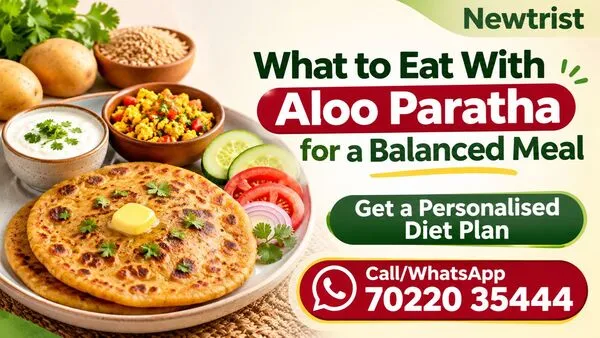
Here is one practical vegetarian combination.
| Food | Example portion |
| Homemade aloo paratha | 1 medium |
| Paneer bhurji | Prepared with 75 g paneer |
| Cucumber and tomato salad | 1 cup |
| Fresh coriander and roasted jeera | For flavour |
The paratha provides the carbohydrate-rich main dish, paneer contributes protein and calcium, and the vegetables add fibre and nutritional variety.
You can prepare the paneer bhurji with onion, tomato and coriander to complement the potato filling.
If you prefer eggs, two eggs prepared as bhurji can replace the paneer.
These quantities are examples and can be adjusted according to individual nutritional requirements.
The appeal is simple: your favourite aloo paratha remains the centre of breakfast, while the accompaniments help make the complete meal more balanced.
Does a Restaurant Aloo Paratha Count as One Normal Serving?
Not necessarily.
Restaurant aloo parathas can be considerably larger than homemade versions. Some contain thicker dough, more potato filling or additional cooking fat.
Butter may also be added before serving.
When you don’t know the exact ingredients, compare the restaurant paratha with the approximate size of your usual homemade one.
If it is substantially larger, you can begin with a comfortable portion and decide whether you want more.
You can also request additional butter or ghee separately when that option is available.
This allows you to enjoy eating out while recognising that one restaurant paratha may represent a very different serving from one prepared at home.
Frequently Asked Questions About Aloo Paratha Portions
Should I Measure the Atta Before or After Making the Dough?
Measure the dry atta when comparing servings. Dough weight also includes water, so weighing the finished dough alone does not directly reveal how much flour it contains.
Does Adding Paneer to the Potato Filling Reduce the Need for a Separate Protein Side?
It can. Paneer contributes protein and calcium, so including a substantial quantity in the filling may reduce the need for another protein-rich accompaniment. The overall protein contribution depends on how much paneer is used.
Can Vegetable Raita Replace Separate Curd and Salad?
Yes. Vegetable raita prepared with plain curd, cucumber, carrot and coriander can combine a dairy accompaniment with vegetables. The nutritional contribution depends on the quantities of curd and vegetables included.
Is Your Usual Aloo Paratha Portion Right for You?
You now have a practical example of a medium aloo paratha and a way to enjoy it as part of a balanced meal.
But your family’s recipe may be quite different.
Perhaps your parathas contain more atta, a thicker potato filling or additional ghee. Maybe one leaves you hungry, while two feel too heavy.
You might enjoy aloo paratha with curd and pickle but be unsure whether your usual breakfast provides enough protein.
Would adjusting the paratha size, changing the filling or choosing a different accompaniment make the greatest difference for you?
The answer depends on your food intake, nutritional requirements, activity and personal health goals.
That is where personalised nutrition guidance becomes valuable.
Find Your Right Portions With Chief Nutritionist Vasanthi Senthilvel
At Newtrist, Chief Nutritionist Vasanthi Senthilvel provides personalised diet and nutrition guidance built around individual food habits, nutritional requirements and everyday routines.
Your regular aloo paratha breakfast can be a useful starting point for a personalised assessment.
Instead of following a generic serving recommendation, you can discuss the meal your family actually prepares.
For your consultation, consider noting how much atta, potato and cooking fat goes into your usual paratha, what you serve alongside it and whether the meal leaves you comfortably satisfied.
These details can help identify practical portion adjustments and food combinations suited to your nutritional needs.
Personalised guidance does not have to mean replacing familiar Indian meals with foods you don’t enjoy. It can help you make more informed decisions about the foods already on your plate.
You know how you like your aloo paratha. Find out which portion works for you.
To receive personalised guidance on your everyday Indian meals, connect with Newtrist to enquire about a diet and nutrition consultation with Chief Nutritionist Vasanthi Senthilvel.
Author
Chief Nutritionist Vasanthi Senthilvel leads Newtrist Nutritionist Dietitian Dietician, providing personalised diet plans for weight management and clinical nutrition for children, adolescents, adults and families.
She has 21 years of experience in nutrition and has received professional recognition for her work.
- Pride of Bharat Awards 2026: Outstanding Achievement in Holistic Health & Nutrition Innovation
- Doctor of The Year: Nutritionist 2026: Excellence in Clinical Nutrition and Weight Loss.
Her approach considers age, growth, health history, medical conditions, laboratory reports, medication, body composition, weight history, dietary preferences, regional food habits, family routines, activity, sleep and personal health goals. Recommendations are developed according to individual needs rather than using one standard diet for everyone.
Consultations are available in person at Bangalore HSR Layout, Koramangala, Bellandur, Haralur and Electronic City, as well as online across India.
Independent Medical Review Panel
Newtrist health and nutrition articles undergo medical review, where appropriate, by doctors with relevant specialist expertise. The medical professionals listed below contribute to Newtrist’s review process within their respective specialties.
| Speciality | Doctor |
|---|---|
| Endocrinology | Dr Vinay Prasad MBBS, MD, DM |
| Gastroenterology & Hepatology | Dr Sunil kumar N MBBS, MD, DM |
| Gynaecology | Dr Prathiba G MBBS, DNB, FIRM, FMAS |
| Nephrology | Dr Priyashree R MBBS, MD, DNB, DM |