
Written by: Chief Nutritionist Vasanthi Senthilvel
21 years of experience | Newtrist Nutritionist Dietitian Dietician
Best Nutritionist in Bangalore with multiple awards for excellence in clinical nutrition, weight loss, holistic health and nutrition innovation.
Medically reviewed by: Dr Prathiba G MBBS, DNB, FIRM, FMAS | Dr Sunil kumar N MBBS, MD, DM | Dr Vinay Prasad MBBS, MD, DM
Medical Disclaimer: Nutritional needs vary based on an individual’s profile. The information on this page is for general educational purposes only and is not intended to replace personalised medical or nutrition care.
Your friend skips breakfast, eats within a fixed window and says intermittent fasting has made weight management easier.
You decide to try something similar.
But by mid-morning, you are thinking about food more than your work. You feel hungry, your usual routine is disrupted, and you wonder whether you simply need more determination.
Here is a question worth asking before pushing yourself further:
What if intermittent fasting is not the right eating approach for you?
An eating pattern that feels effortless for one person can be uncomfortable or impractical for another.
Your health, appetite, nutritional requirements, work schedule and family meal timings all influence whether fasting is suitable.
Before deciding how many hours to fast, it is more useful to understand whether this approach fits your body and everyday life.
Key Takeaway
Intermittent fasting may suit some generally healthy adults who naturally prefer fewer meals, have predictable eating times and can meet their nutritional needs within a shorter eating window.
It is generally unsuitable for children, teenagers, pregnant or breastfeeding women, and people with a history of eating disorders. People with diabetes or other relevant health conditions need individual clinical assessment.
If fasting causes repeated weakness, overwhelming hunger or unhealthy eating patterns, regular meals may be a better choice. Intermittent fasting is not essential for weight loss and has not consistently shown better weight-loss results than conventional dietary approaches.

Table of Contents
What Determines Whether Intermittent Fasting Is Right for You?
Intermittent fasting is an eating approach that alternates periods of eating with periods of fasting.
Its main focus is when you eat rather than prescribing a particular combination of foods.
For some people, having a defined eating period creates a convenient routine. For others, it introduces restrictions that make ordinary meals difficult to manage.
A fasting schedule does not automatically improve the nutritional quality of your diet.
You still need sufficient energy, protein, fibre, vitamins and minerals, regardless of when you eat.
The real test is whether the eating pattern allows you to meet those requirements while remaining comfortable, functional and consistent in everyday life.
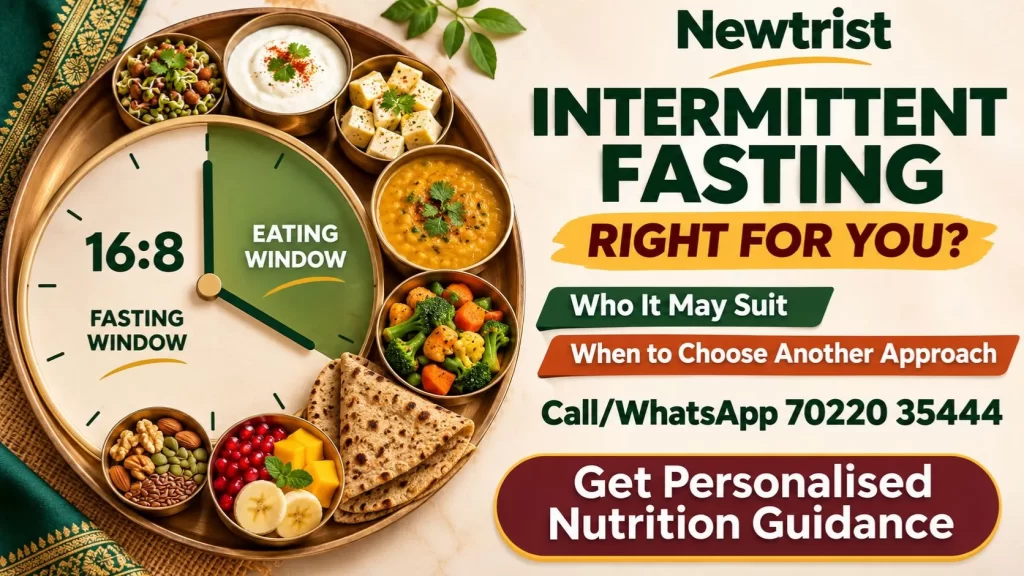
Who May Find Intermittent Fasting Suitable?
Certain eating preferences and lifestyle patterns can make intermittent fasting easier to follow.
However, finding an eating schedule convenient is different from establishing that it is medically appropriate.
1. People Who Naturally Prefer Fewer Eating Occasions
Some people wake up without much appetite and feel comfortable eating their first meal later.
Others naturally prefer fewer, more substantial eating occasions instead of several smaller meals.
For these individuals, a defined eating window may fit an existing preference rather than requiring a major change.
But there is an important difference between naturally eating later and deliberately suppressing strong hunger.
If you regularly wake up hungry and feel better after breakfast, that preference deserves consideration.
A fasting schedule should not require you to disregard the way your appetite normally functions simply because someone else finds it convenient.
2. People With Predictable Daily Routines
Imagine someone whose workday starts and ends at approximately the same time.
They have a consistent lunch break, predictable evening commitments and regular opportunities to eat.
Maintaining a defined eating period may be relatively straightforward for them.
They do not have to rearrange their entire day around the schedule.
However, predictability alone does not establish suitability.
The person must still be able to eat adequately, remain comfortable and have no health-related reason that makes fasting inappropriate.
3. People Who Can Meet Their Nutritional Needs Within Fewer Hours
This is often overlooked when people focus entirely on completing their fasting hours.
Your nutritional requirements do not disappear because your eating window becomes shorter.
A suitable eating pattern still needs to provide enough nourishment.
For someone eating familiar Indian meals, this might involve appropriate combinations of dal, chana, rajma, curd, paneer, seasonal vegetables, fruit, whole grains and other preferred protein sources.
The specific foods and amounts depend on the individual.
If a shorter eating window consistently makes it difficult to consume sufficient food, following the timing perfectly does not make the approach nutritionally appropriate.
The ability to eat adequately matters more than the ability to complete a fasting window.

Who Should Avoid Intermittent Fasting or Seek Medical Guidance First?
Intermittent fasting is not suitable for everyone.
Some life stages and nutritional circumstances make restrictive fasting inappropriate, while certain health conditions require individual clinical assessment.
Children, Teenagers, Pregnant and Breastfeeding Women
Children and teenagers need adequate nourishment to support growth and development.
Pregnancy and breastfeeding also involve changing nutritional requirements.
Restricting the hours available for eating is generally not appropriate during these life stages.
The priority is a reliable eating pattern that provides the nourishment needed for growth, development or maternal and infant health.
People With a Current or Previous Eating Disorder
Intermittent fasting is generally unsuitable for people with a current or previous eating disorder.
Strict rules about when eating is permitted may reinforce restrictive behaviours, food-related anxiety or excessive concern about controlling intake.
An approach that appears organised from the outside can become psychologically difficult when eating is already associated with rigid rules.
A stable, adequately nourishing eating pattern is the more appropriate priority.
People Who Are Underweight, Frail or Eating Insufficiently
Some individuals already struggle to consume enough food to meet their requirements.
This may include people who are underweight, experiencing frailty or having difficulty maintaining adequate nutritional intake.
Reducing eating opportunities can make those challenges greater.
For such individuals, protecting nutritional status, muscle and physical function takes priority over adopting a restricted eating window.
People With Diabetes or Other Relevant Medical Conditions
Diabetes and certain other health conditions can make prolonged gaps between meals more complicated.
Suitability depends on the individual’s clinical circumstances, including how their body regulates blood glucose and whether changes in meal timing are appropriate.
People with diabetes are not all in the same situation.
Some may be able to consider a structured fasting approach after clinical assessment, while others may be better served by regular meals.
A decision involving an existing medical condition should be made with the relevant treating clinician rather than based on a general fasting recommendation.
What Are the Signs That Intermittent Fasting Does Not Suit You?
Suppose you have already tried intermittent fasting.
You are following the hours you selected, but something about the routine does not feel right.
Should you continue simply because you have managed to complete the fasting period?
Not necessarily.
How the eating pattern affects your body, appetite and relationship with food matters more than completing the hours.
You Repeatedly Feel Weak, Dizzy or Unable to Concentrate
Feeling consistently weak, dizzy or unable to focus on normal activities is not a measure of successful fasting.
Some discomfort can occur when eating patterns change, but persistent or concerning symptoms are reasons to stop fasting and obtain appropriate clinical assessment.
Your eating routine should support everyday functioning rather than repeatedly interfere with it.
You Become Overwhelmingly Hungry When the Fast Ends
Imagine watching the clock throughout the final hours of your fast.
When you finally begin eating, you feel so hungry that you eat quickly and continue beyond comfortable fullness.
If this becomes a repeated pattern, the restricted eating period may be making your appetite harder to manage.
There is little practical benefit in maintaining a routine that regularly leads to extreme hunger followed by uncomfortable eating.
You Become Increasingly Anxious About Eating Times
Perhaps you begin declining family meals because they fall outside your eating window.
Or you become distressed when a work meeting delays your first meal.
You may notice that planning your day increasingly revolves around when you are permitted to eat.
If a fasting schedule creates persistent stress or unhealthy preoccupation with food, it deserves reconsideration.
A sustainable eating approach should fit into your life rather than make your life revolve around eating rules.
When Might Regular Meals Be Better Than Intermittent Fasting?
Regular meals are not a less serious approach to nutrition or weight management.
They offer a different structure, one that may be easier to adapt to your hunger, responsibilities and nutritional requirements.
For example, someone with changing work shifts might find it easier to adjust meal timing around their schedule rather than maintain a rigid fasting window.
A person who feels more comfortable eating smaller meals may prefer spreading food across the day instead of consuming larger quantities within fewer hours.
Someone who values breakfast with family and dinner together may also find that regular meals fit naturally into an enjoyable routine.
In these situations, there may be little reason to introduce an eating restriction that complicates daily life.
Regular meals can still be planned with appropriate portions, protein-rich foods, vegetables, whole grains and other nourishing ingredients.
Choosing regular meals does not mean choosing an approach that is less effective simply because it does not involve fasting.
Does Intermittent Fasting Work Better Than Regular Meals for Weight Loss?
Many people consider intermittent fasting because they believe it produces faster or greater weight loss.
But the evidence does not consistently support that expectation.
Research involving adults with overweight or obesity suggests that intermittent fasting may produce little to no additional weight loss compared with conventional dietary advice.
Longer-term evidence also remains limited.
Some people find restricting their eating hours helps them manage total food intake. Others find that regular meals with suitable portions work just as well for their weight-management routine.
The fasting window alone does not guarantee an appropriate overall food intake.
For weight loss, intermittent fasting is an option rather than a requirement. Its practical value depends on whether the eating pattern can be followed comfortably while meeting nutritional needs.
How Can You Decide Whether Intermittent Fasting Is Right for You?
Before choosing a fasting routine, ask yourself what you actually need from your eating pattern.
The following questions can help organise your decision.
| Question to consider | What your answer may indicate |
| Is intermittent fasting appropriate for my health circumstances? | Clinical suitability comes before choosing an eating window |
| Can I comfortably eat enough nutritious food within fewer hours? | If not, spreading meals across the day may be more practical |
| Does delaying meals interfere with my normal functioning? | Repeated difficulty suggests the approach needs reassessment |
| Can the eating pattern fit my working and family routine? | A routine that repeatedly conflicts with daily life may be difficult to maintain |
| Am I choosing fasting because it suits me or because someone else recommends it? | Personal suitability is more important than following a popular trend |
There is no single answer that makes intermittent fasting the best approach for everyone.
The decision should reflect your health, nutritional requirements and the realities of your day.
Frequently Asked Questions About Intermittent Fasting Suitability
Does Intermittent Fasting Always Mean Skipping Breakfast?
No. Intermittent fasting refers to different patterns of alternating fasting and eating periods. Skipping breakfast is not a universal requirement. The suitability of a particular eating window depends on individual circumstances, not whether breakfast is included or excluded.
Is Accidentally Missing Lunch the Same as Following Intermittent Fasting?
No. Missing lunch because of a busy schedule is not the same as following a deliberate, structured eating pattern. Unplanned missed meals may simply make it harder to consume adequate food during the day.
Can a Vegetarian Indian Diet Fit Intermittent Fasting?
Potentially, yes. A vegetarian eating pattern can provide balanced nutrition, but the available eating hours must allow sufficient energy, protein and other essential nutrients. Being vegetarian alone does not determine whether fasting is suitable.
Can Older Adults Consider Intermittent Fasting?
Age alone does not establish suitability. Nutritional status, muscle health, frailty, appetite and existing health conditions are particularly important considerations in older adults. Individual clinical assessment is appropriate before adopting a restrictive fasting pattern.
Can You Return to Regular Meals After Trying Intermittent Fasting?
Yes. There is no requirement to continue a fasting schedule that does not suit your needs. A balanced regular-meal routine remains a valid approach to nutrition and weight management.
How Can Chief Nutritionist Vasanthi Senthilvel Help You Choose the Right Eating Pattern?
You may now understand which circumstances make intermittent fasting more or less appropriate.
But the most important question is still personal:
Would changing your meal timings genuinely improve your eating routine, or would adjusting your existing meals be more useful?
Perhaps you have a predictable work schedule but struggle with hunger in the evening.
Maybe you naturally prefer a later breakfast, yet find it difficult to eat enough during the remaining hours.
Or you may be considering fasting for weight loss while wondering whether you could achieve your goals without changing your normal family meal timings.
These are not questions that can be answered simply by choosing a popular fasting window.
At Newtrist, Chief Nutritionist Vasanthi Senthilvel provides personalised diet and nutrition guidance based on individual eating habits, food preferences, meal timings, daily routines and nutritional requirements.
A personalised nutrition assessment can examine what your current meals provide, how your appetite changes throughout the day and which adjustments may fit your goals.
Where relevant medical conditions influence fasting suitability, appropriate clinical assessment is also part of making an informed decision.
You may find that a suitable eating window fits your lifestyle. Or you may benefit more from a balanced regular-meal routine using the Indian foods you already enjoy.
The objective is not to make you follow intermittent fasting.
It is to identify an eating approach that makes nutritional sense for your individual circumstances.
You Do Not Have to Follow Someone Else’s Fasting Routine
Your friend may enjoy intermittent fasting.
Your colleague may prefer regular meals.
Neither experience tells you exactly what your own body and lifestyle require.
The right nutrition approach should consider your health, hunger, food intake and ability to maintain the routine comfortably.
If you are considering intermittent fasting but remain uncertain whether it is appropriate, you do not have to keep experimenting with different eating windows.
Chief Nutritionist Vasanthi Senthilvel at Newtrist can help you develop a personalised Indian diet and nutrition plan based on your actual eating habits, nutritional needs and lifestyle.
Rather than trying to make your day fit a fasting schedule, find an eating pattern designed around you.
Wondering whether intermittent fasting is right for you, or whether regular meals would be a better choice?
Enquire about a personalised diet and nutrition consultation with Chief Nutritionist Vasanthi Senthilvel at Newtrist.
Author
Chief Nutritionist Vasanthi Senthilvel leads Newtrist Nutritionist Dietitian Dietician, providing personalised diet plans for weight management and clinical nutrition for children, adolescents, adults and families.
She has 21 years of experience in nutrition and has received professional recognition for her work.
- Pride of Bharat Awards 2026: Outstanding Achievement in Holistic Health & Nutrition Innovation
- Doctor of The Year: Nutritionist 2026: Excellence in Clinical Nutrition and Weight Loss.
Her approach considers age, growth, health history, medical conditions, laboratory reports, medication, body composition, weight history, dietary preferences, regional food habits, family routines, activity, sleep and personal health goals. Recommendations are developed according to individual needs rather than using one standard diet for everyone.
Consultations are available in person at Bangalore HSR Layout, Koramangala, Bellandur, Haralur and Electronic City, as well as online across India.
Independent Medical Review Panel
Newtrist health and nutrition articles undergo medical review, where appropriate, by doctors with relevant specialist expertise. The medical professionals listed below contribute to Newtrist’s review process within their respective specialties.
| Speciality | Doctor |
|---|---|
| Endocrinology | Dr Vinay Prasad MBBS, MD, DM |
| Gastroenterology & Hepatology | Dr Sunil kumar N MBBS, MD, DM |
| Gynaecology | Dr Prathiba G MBBS, DNB, FIRM, FMAS |
| Nephrology | Dr Priyashree R MBBS, MD, DNB, DM |