
Written by: Chief Nutritionist Vasanthi Senthilvel
21 years of experience | Newtrist Nutritionist Dietitian Dietician
Best Nutritionist in Bangalore with multiple awards for excellence in clinical nutrition, weight loss, holistic health and nutrition innovation.
Medically reviewed by: Dr Prathiba G MBBS, DNB, FIRM, FMAS | Dr Sunil kumar N MBBS, MD, DM | Dr Vinay Prasad MBBS, MD, DM
Medical Disclaimer: Nutritional needs vary based on an individual’s profile. The information on this page is for general educational purposes only and is not intended to replace personalised medical or nutrition care.
One roti barely covers your palm. Another is nearly as wide as your dinner plate.
Yet both are called one roti.
So when you search for the calories in one roti, which one are you actually measuring?
That is why nutrition estimates can be confusing. A small homemade phulka and a thick bajra roti may look like similar parts of an Indian meal, but they do not necessarily contain the same amount of flour.
And calories are only part of the picture. The protein and fibre content also changes depending on the grain used.
The simplest way to understand roti nutrition is to start with the flour, not just the finished roti.
Here is how the numbers compare for familiar Indian rotis, using consistent quantities.
Key Takeaway
One medium plain wheat roti made with 30 g of whole-wheat atta contains approximately 96 calories, 3.2 g protein and 3.4 g fibre.
A small roti made with 20 g of atta provides about 64 calories, while a larger one made with 40 g provides about 128 calories. Jowar, bajra, ragi and makki have different protein and fibre values when compared at the same dry-flour weight.
The numbers change with the amount and type of flour used. Added ghee or oil increases the calorie total.

Table of Contents
How Many Calories, Protein and Fibre Are in 1 Wheat Roti?
A medium homemade wheat roti is a useful starting point because whole-wheat atta is common in Indian kitchens.
For a plain roti prepared with 30 g of dry whole-wheat atta and water, the approximate nutrition is:
| Nutrient | Amount per medium roti |
| Calories | 96 kcal |
| Protein | 3.2 g |
| Dietary fibre | 3.4 g |
| Dry atta used | 30 g |
These values are calculated from the dry atta before cooking, without added oil or ghee.
The cooked roti may weigh more or less than expected because of the water added to the dough and the moisture lost during cooking.
That is why a roti weighing 40 g after cooking should not automatically be assigned the nutrition of 40 g of dry flour.
The dry-flour quantity provides a more consistent basis for estimating calories, protein and fibre.
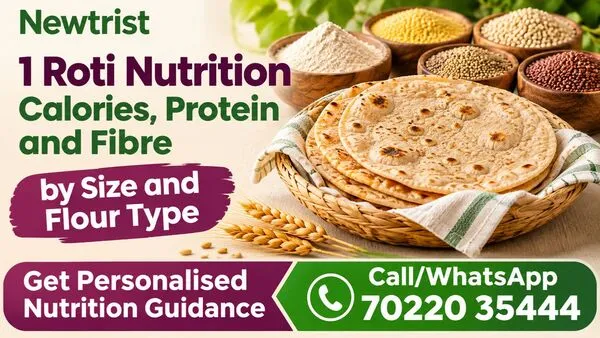
How Do Roti Calories Change With Size?
A small phulka generally contains less flour than a large, thick roti.
However, diameter alone is not a reliable measurement. Two rotis can be equally wide while having different thicknesses.
To make the comparison meaningful, the table below uses four defined quantities of whole-wheat atta.
| Roti size | Dry atta used | Calories | Protein | Fibre |
| Small, thin roti | 20 g | 64 kcal | 2.1 g | 2.3 g |
| Medium roti | 30 g | 96 kcal | 3.2 g | 3.4 g |
| Large roti | 40 g | 128 kcal | 4.2 g | 4.5 g |
| Extra-large, thick roti | 50 g | 160 kcal | 5.3 g | 5.7 g |
Estimates are for plain wheat rotis without added fat.
Small Roti or Phulka
A thin phulka prepared with around 20 g of atta provides approximately 64 calories.
Its lighter appearance reflects the smaller quantity of flour used, rather than a special calorie-reducing property of puffing.
Medium Homemade Roti
A roti containing 30 g of atta provides approximately 96 calories.
This is the standard reference used for the wheat-roti comparisons in this article.
Large or Thick Roti
A roti containing 40 to 50 g of atta provides approximately 128 to 160 calories.
A thick homemade chapati may therefore contain considerably more energy than a thin phulka, even when both are counted as one piece.
The useful distinction is not whether a roti is called small or large. It is how much flour that particular roti contains.
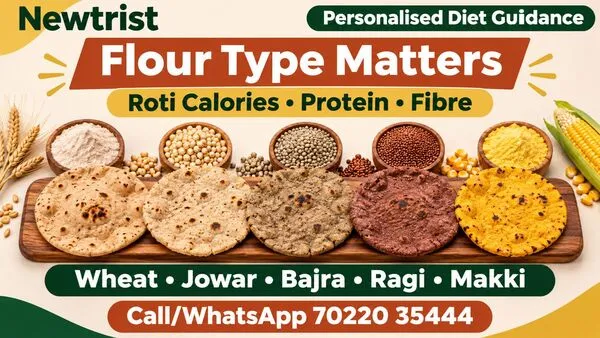
How Does Flour Type Affect Roti Calories, Protein and Fibre?
You may have heard that switching from wheat to jowar, bajra or ragi automatically reduces calories.
But a comparison using the same quantity of flour tells a different story.
These grains have broadly similar calorie values. Their protein and fibre content, however, can vary.
Nutrition Comparison: Wheat, Jowar, Bajra, Ragi and Makki
| Flour or grain type | Dry quantity | Calories | Protein | Fibre |
| Whole-wheat atta | 30 g | 96 kcal | 3.2 g | 3.4 g |
| Jowar | 30 g | 100 kcal | 3.0 g | 3.1 g |
| Bajra | 30 g | 104 kcal | 3.3 g | 3.4 g |
| Ragi | 30 g | 96 kcal | 2.1 g | 3.4 g |
| Makki, whole grain | 30 g | 100 kcal | 2.6 g | 3.7 g |
Approximate figures based on Indian food-composition values for dry wheat atta and whole grains. The millet and maize figures represent whole-grain equivalents; commercial flours can vary with processing. All values exclude added fat.
The table reveals something worth remembering.
The difference between 30 g of wheat atta and 30 g of bajra is only about eight calories.
Changing the flour does not automatically make the finished roti much lower in calories.
The more useful comparison is what each grain contributes nutritionally.
Whole-Wheat Roti
Whole-wheat atta provides a combination of carbohydrate, protein and dietary fibre.
Its protein content is broadly comparable with jowar and bajra in this comparison, making it a practical reference for evaluating other rotis.
The value also depends on whether the flour retains the grain’s fibre-rich components.
Jowar Roti
Jowar contributes protein and fibre, with an energy value close to wheat.
A jowar bhakri may be considerably larger or thicker than a household wheat phulka.
Therefore, comparing one complete bhakri against one phulka is different from comparing equal quantities of their flours.
Bajra Roti
Bajra contributes slightly more calories than wheat for the same 30 g quantity.
It also provides a comparable amount of protein and fibre.
The idea that bajra roti must be lower in calories than wheat roti is not supported by an equal-weight comparison.
Ragi Roti
Ragi contains dietary fibre and is also known for its calcium content.
However, its protein content is lower than that of wheat, jowar or bajra in this comparison.
A ragi roti is therefore nutritionally different from a wheat roti, but not dramatically lower in calories simply because it is made from millet.
Makki Roti
Makki contributes carbohydrate, protein and fibre.
The figures shown are based on whole-grain maize. Actual makki flour may differ depending on its processing and the grain components retained.
The amount of flour used in a thick makki roti can also be substantially different from that used in a thin wheat phulka.
Multigrain Roti
Multigrain roti does not have one standard nutritional value.
One flour blend might contain mostly wheat with a little bajra and jowar. Another may contain different proportions of wheat, ragi, maize and other grains.
As those proportions change, the calories, protein and fibre also change.
For a packaged multigrain atta, the ingredient list and nutrition label provide more useful information than the word multigrain on the front of the pack.
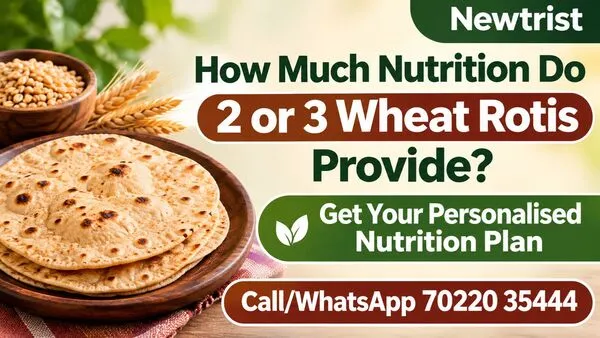
How Much Nutrition Do 2 or 3 Wheat Rotis Provide?
If your rotis are made with the same quantity of atta, their nutritional contribution can be added together.
Using medium wheat rotis containing 30 g atta each:
- 2 rotis: Approximately 192 calories, 6.3 g protein and 6.8 g fibre.
- 3 rotis: Approximately 288 calories, 9.5 g protein and 10.2 g fibre.
These figures describe the rotis themselves, not the complete meal.
They also show why the protein content of rotis should not be overlooked. Wheat atta contributes some protein, although the total protein content of a meal also depends on its other ingredients.
The quantity of roti appropriate for an individual is a separate nutrition-planning question. Here, the purpose is to understand what the rotis contribute.
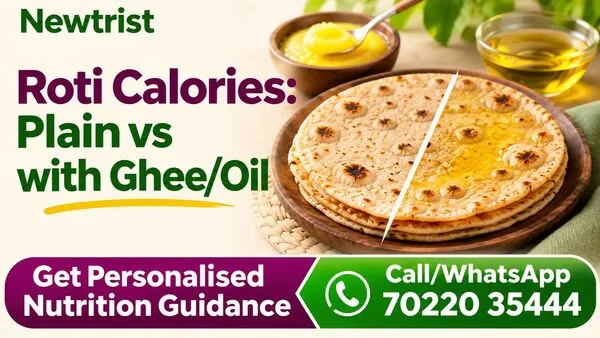
How Does Adding Ghee or Oil Affect Roti Calories?
A plain roti and a ghee-brushed roti may contain exactly the same amount of flour, but their total calories will differ.
Consider a medium wheat roti prepared with 30 g atta.
| Preparation | Approximate calories |
| Plain wheat roti | 96 kcal |
| Roti with 2.5 g ghee | 119 kcal |
| Roti with 5 g ghee | 141 kcal |
Ghee and oil add energy primarily through fat.
They do not meaningfully increase the protein or fibre contributed by the atta.
So, when comparing two rotis, the cooking and finishing ingredients matter alongside the flour.
This also explains why a restaurant roti prepared with added fat may not match the nutritional figures for a plain homemade phulka.
Why Do Roti Nutrition Figures Differ Between Websites?
Perhaps you have already seen several different calorie values for one chapati.
That does not always mean one calculation is correct and the others are wrong.
The numbers may describe different things.
First, serving size varies. One source may define a roti using 25 g of flour, while another assumes 40 g.
Second, flour composition varies. Whole-wheat atta, refined flour and commercial grain blends do not necessarily contain identical amounts of fibre and protein.
Third, preparation varies. A plain dry-cooked phulka and a roti prepared with additional fat have different calorie totals.
Nutrition databases may also use different analytical methods and food samples, producing modest differences even for similar ingredients.
The most useful question when reading a roti calorie chart is:
What quantity of which flour does this figure represent?
Once that is clear, the reported nutrition becomes much easier to interpret.
Frequently Asked Questions About Roti Nutrition
Does Puffing a Phulka Change Its Calories?
No. A phulka puffs because steam expands within the roti during cooking. Puffing changes its shape and texture but does not add calories. The nutritional contribution still comes from the ingredients used.
Is Roti Different From Chapati in Nutritional Value?
The terms are often used interchangeably for Indian flatbreads. When a roti and chapati use the same flour quantity and preparation method, their nutritional values are essentially similar. Their names do not determine their calorie content.
Does Reheating a Roti Increase Its Calories?
Reheating a plain roti without adding ingredients does not introduce extra calories. If oil or ghee is added while reheating, its energy contribution becomes part of the total.
Does a Darker Roti Contain More Fibre?
Not necessarily. A darker colour can result from the grain variety, added ingredients or cooking process. Fibre content is better assessed from the flour composition than from the roti’s appearance.
Are Packaged Rotis Nutritionally Identical to Homemade Rotis?
No. Packaged rotis may differ in flour blend, serving weight and additional ingredients. Some labels provide nutrition per piece, while others provide values per 100 g. Checking that distinction helps avoid inaccurate comparisons.
How Can Chief Nutritionist Vasanthi Senthilvel Help You Understand Your Everyday Roti Nutrition?
Now you know the approximate nutrition in a small wheat phulka, a medium chapati and rotis made from different grains.
You may even discover that the wheat and millet rotis you regularly eat are closer in calories than you expected.
But a nutrition table cannot answer another important question:
How much protein and fibre does your complete daily diet provide, and where do your usual rotis fit into that picture?
Perhaps you alternate between wheat, jowar and ragi but are unsure about the nutritional contribution of your meals.
Maybe you have been counting rotis without understanding their actual flour quantity.
Or you are trying to improve your protein and fibre intake while continuing to enjoy familiar Indian food.
At Newtrist, Chief Nutritionist Vasanthi Senthilvel provides personalised diet and nutrition guidance based on your current eating habits, food preferences, daily activity and individual nutritional requirements.
A personalised nutrition assessment can help you understand the contribution of your usual foods, identify meaningful nutritional gaps and plan portions appropriate for your needs.
You do not need to replace familiar foods simply to make your diet more nutritionally informed.
The next step is understanding how those foods work together in your own eating pattern. For personalised Indian diet and nutrition planning, enquire about a consultation with Chief Nutritionist Vasanthi Senthilvel at Newtrist.
Author
Chief Nutritionist Vasanthi Senthilvel leads Newtrist Nutritionist Dietitian Dietician, providing personalised diet plans for weight management and clinical nutrition for children, adolescents, adults and families.
She has 21 years of experience in nutrition and has received professional recognition for her work.
- Pride of Bharat Awards 2026: Outstanding Achievement in Holistic Health & Nutrition Innovation
- Doctor of The Year: Nutritionist 2026: Excellence in Clinical Nutrition and Weight Loss.
Her approach considers age, growth, health history, medical conditions, laboratory reports, medication, body composition, weight history, dietary preferences, regional food habits, family routines, activity, sleep and personal health goals. Recommendations are developed according to individual needs rather than using one standard diet for everyone.
Consultations are available in person at Bangalore HSR Layout, Koramangala, Bellandur, Haralur and Electronic City, as well as online across India.
Independent Medical Review Panel
Newtrist health and nutrition articles undergo medical review, where appropriate, by doctors with relevant specialist expertise. The medical professionals listed below contribute to Newtrist’s review process within their respective specialties.
| Speciality | Doctor |
|---|---|
| Endocrinology | Dr Vinay Prasad MBBS, MD, DM |
| Gastroenterology & Hepatology | Dr Sunil kumar N MBBS, MD, DM |
| Gynaecology | Dr Prathiba G MBBS, DNB, FIRM, FMAS |
| Nephrology | Dr Priyashree R MBBS, MD, DNB, DM |