
Written by: Chief Nutritionist Vasanthi Senthilvel
21 years of experience | Newtrist Nutritionist Dietitian Dietician
Best Nutritionist in Bangalore with multiple awards for excellence in clinical nutrition, weight loss, holistic health and nutrition innovation.
Medically reviewed by: Dr Prathiba G MBBS, DNB, FIRM, FMAS | Dr Sunil kumar N MBBS, MD, DM | Dr Vinay Prasad MBBS, MD, DM
Medical Disclaimer: Nutritional needs vary based on an individual’s profile. The information on this page is for general educational purposes only and is not intended to replace personalised medical or nutrition care.
Your morning tea contains milk, curd accompanies lunch, and paneer is a family favourite. When regular milk causes digestive discomfort, even familiar Indian meals can raise questions. Which dairy foods need changing, and which can stay?
A lactose intolerance diet is not necessarily a dairy-free diet. Many Indian staples naturally contain no lactose, while some dairy foods may be tolerated in smaller amounts.
The challenge is replacing foods without losing the nutrition they previously provided. Knowing what contains lactose is useful; choosing an appropriate substitute is the next decision.
Key takeaway: A lactose intolerance diet can include rice, roti, dal, millets, vegetables, fruits and other naturally lactose-free foods. Regular milk and some milk-based preparations may need to be limited, but complete dairy avoidance is not always necessary. Lactose-free dairy milk and suitable fortified plant-based alternatives can help preserve protein and calcium intake; choices depend on individual tolerance and nutritional needs.
Table of Contents

What Can You Eat on a Lactose Intolerance Diet?
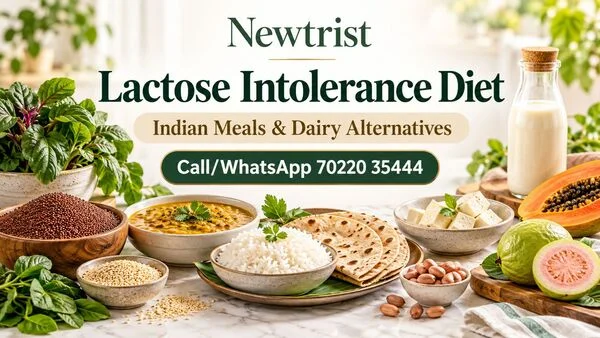
Most familiar Indian staples are naturally free from lactose, the sugar present in milk. Their suitability depends on ingredients added during preparation, not on whether the dish contains carbohydrates.
Naturally Lactose-Free Indian Foods
| Food group | Indian examples |
| Grains and millets | Rice, wheat, poha, oats, ragi, jowar, bajra |
| Pulses and legumes | Moong dal, toor dal, masoor dal, chana, rajma |
| Vegetables and greens | Beans, gourds, pumpkin, drumstick leaves, amaranth leaves |
| Fruit | Guava, papaya, banana, orange, amla |
| Nuts and seeds | Peanuts, almonds, sesame seeds, flaxseeds |
| Other protein foods | Tofu, eggs, fish, chicken |
Plain rice and dal, for example, do not inherently contain lactose; adding cream to dal changes the finished dish. Similarly, chapati prepared with flour and water differs from a bread containing milk powder. Checking a recipe often allows you to keep the food you enjoy.
Which Foods Should You Limit or Avoid?
Regular milk and products made with substantial amounts of milk are the main dietary sources of lactose. Food quantity and preparation both affect exposure.
| Food | Lactose consideration |
| Cow, buffalo or goat milk | Naturally contains lactose |
| Condensed milk and milk powder | Contain lactose and may be used in prepared foods |
| Ice cream, rabri, basundi | Generally contain milk-based lactose |
| Kheer, payasam, khoya sweets | Contain lactose when made with conventional dairy |
| Milk chocolate and creamy gravies | Amount depends on the milk-derived ingredients used |
Smaller portions of certain dairy foods may be tolerated, particularly with meals. This does not mean every dairy-containing food is suitable in any quantity.
How to Spot Hidden Lactose
Packaged biscuits, bakery foods, flavoured snacks, soups, sauces and desserts may contain milk powder, milk solids, whey, buttermilk powder or lactose. Read the ingredient list: these terms show possible exposure, not a precise lactose quantity. For restaurant food, ask whether milk, curd or cream is added.
Can You Eat Curd, Paneer, Buttermilk and Ghee?
Different dairy foods contain different amounts of lactose because of fermentation and processing. They should not be treated as interchangeable.
| Dairy food | Practical consideration |
| Plain curd | Fermentation reduces some lactose; some people tolerate it better than milk |
| Buttermilk and lassi | Contain lactose; amount varies with preparation and added milk |
| Paneer | Contains residual lactose; not reliably lactose-free |
| Aged hard cheese | Generally contains very little lactose |
| Fresh cheese | Lactose content varies by type |
| Butter | Usually contains small amounts of lactose |
| Properly clarified ghee | Typically contains negligible lactose; provides mainly fat |
Curd with live cultures may be better tolerated because fermentation reduces some lactose and the cultures can aid its digestion. Paneer retains residual lactose, whereas ghee contains little lactose but cannot replace the protein or calcium obtained from milk. Actual tolerance matters more than blanket rules.
Which Milk and Dairy Alternatives Make Sense?
Replacing a splash of milk in tea is different from replacing a daily serving that supplied meaningful protein and calcium. Compare the nutritional profile, not just the lactose-free claim.
Lactose-Free Milk vs Plant-Based Milk
| Alternative | Nutritional difference |
| Lactose-free dairy milk | Protein and calcium broadly comparable to regular milk |
| Fortified unsweetened soy milk | Often closer to dairy milk in protein than other plant-based drinks |
| Almond milk | Usually low in protein; calcium depends on fortification |
| Oat milk | Typically lower in protein than dairy milk |
| Coconut milk beverage | Usually low in protein; composition varies |
Lactose-free dairy milk retains milk proteins and is not suitable for someone with a milk protein allergy. For plant-based products, check the label for protein, calcium, vitamin D and added sugar. A fortified drink may replace more of milk’s nutritional contribution than an unfortified one.
Alternatives for Paneer, Curd and Cream
Tofu can replace paneer in some savoury dishes, while unsweetened soy-based curd can substitute for regular curd. Cashew paste or coconut-based ingredients may give a gravy a creamy texture, but they do not replace paneer’s protein contribution. Choose based on the role of the original ingredient in the meal.
How Can You Adapt Everyday Indian Meals?
Most households do not need a separate set of recipes. Often the change concerns one dairy ingredient.
Breakfast
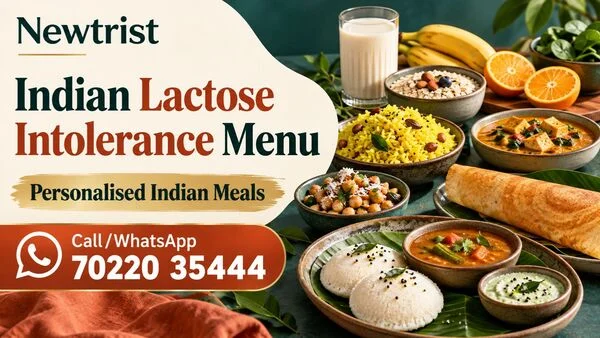
Idli, plain dosa, vegetable poha and upma can be prepared without dairy. For milk-based porridge, a lactose-free dairy milk or appropriate fortified plant-based option may work; check whether the replacement provides comparable protein.
Lunch and Dinner
Rice, roti, dal and vegetable dishes can remain central. Check for paneer, curd marinades, butter, milk and cream in gravies. A cream-based vegetable curry may be adapted with a non-dairy base while retaining its familiar vegetables and spices.
Snacks and Sweets
Roasted chana, plain peanuts and sundal without dairy are familiar options. Indian sweets are more variable: a coconut sweet prepared without milk may be lactose-free, while one made with condensed milk is not.
1-Day Indian Lactose Intolerance Menu
This example shows possible food combinations for an adult; it is not a personalised prescription or proof of nutritional adequacy.
| Meal | Menu |
| Breakfast | Vegetable poha with peanuts and unsweetened fortified soy milk |
| Mid-morning | Guava or papaya |
| Lunch | Rice, moong dal, beans poriyal and sesame chutney |
| Evening | Roasted chana and seasonal fruit |
| Dinner | Jowar roti, tofu-and-vegetable curry and cooked amaranth leaves |
Food quantities and combinations depend on age, appetite, activity, health needs and personal preferences. A lactose-free menu may still need adjustments to meet someone’s nutrition requirements.
How Can You Maintain Calcium and Vitamin D Intake?
Substantially reducing milk and other dairy foods may reduce calcium intake. Familiar foods can contribute, but their calcium content, usual portions and absorption differ.
| Food | Contribution |
| Ragi and sesame seeds | Contain calcium; normal serving sizes and absorption matter |
| Drumstick and amaranth leaves | Contribute calcium and other nutrients |
| Calcium-set tofu | Can provide both calcium and protein |
| Small fish with edible bones | Provide calcium for people who eat fish |
| Calcium-fortified milk alternatives | May provide useful, measurable calcium amounts |
Vitamin D helps the body absorb calcium. Eggs, certain fish and some fortified foods contribute vitamin D. Rather than depending on one ingredient, consider the full eating pattern after dairy has been reduced.
When Is a Personalised Lactose Intolerance Diet Helpful?
A food list can identify lactose, but it cannot determine whether a replacement meets your needs. Swapping paneer for vegetables may remove a protein source; switching from milk to unfortified almond drink may reduce both protein and calcium. Neither swap is automatically nutritionally equivalent.
Personalised Nutrition with Chief Nutritionist Vasanthi Senthilvel
At Newtrist, Chief Nutritionist Vasanthi Senthilvel considers your existing Indian meals, food tolerance, nutritional requirements and daily routine when developing a personalised diet plan. Guidance can help establish which dairy foods may remain, what substitutes provide, and how to retain familiar regional dishes without unnecessary restriction.
If your dairy restrictions have made everyday eating confusing, a personalised review can help translate general food advice into decisions that suit your meals and nutritional requirements.
Frequently Asked Questions
Does boiling milk remove lactose?
No. Boiling does not significantly remove lactose from regular milk.
Is buffalo milk better than cow’s milk for lactose intolerance?
No. Both contain lactose; changing the animal source does not reliably prevent discomfort.
Can lactose-free milk be used in kheer or payasam?
Yes, but conventional khoya, condensed milk or milk powder added to the same preparation will still introduce lactose.
Are lactose-free and dairy-free the same?
No. Lactose-free dairy still contains milk-derived components. Dairy-free products do not contain dairy ingredients.
Can children follow an adult lactose intolerance menu?
No. Children need age-appropriate dietary assessment to support growth, especially when milk and dairy foods are restricted.
Conclusion
A lactose intolerance diet can preserve the variety of Indian food. Understanding ingredients and choosing suitable dairy replacements is more useful than eliminating entire food groups. When several replacements are needed, Chief Nutritionist Vasanthi Senthilvel can help adapt familiar meals to individual nutritional requirements.
Author
Chief Nutritionist Vasanthi Senthilvel leads Newtrist Nutritionist Dietitian Dietician, providing personalised diet plans for weight management and clinical nutrition for children, adolescents, adults and families.
She has 21 years of experience in nutrition and has received professional recognition for her work.
- Pride of Bharat Awards 2026: Outstanding Achievement in Holistic Health & Nutrition Innovation
- Doctor of The Year: Nutritionist 2026: Excellence in Clinical Nutrition and Weight Loss.
Her approach considers age, growth, health history, medical conditions, laboratory reports, medication, body composition, weight history, dietary preferences, regional food habits, family routines, activity, sleep and personal health goals. Recommendations are developed according to individual needs rather than using one standard diet for everyone.
Consultations are available in person at Bangalore HSR Layout, Koramangala, Bellandur, Haralur and Electronic City, as well as online across India.
Independent Medical Review Panel
Newtrist health and nutrition articles undergo medical review, where appropriate, by doctors with relevant specialist expertise. The medical professionals listed below contribute to Newtrist’s review process within their respective specialties.
| Speciality | Doctor |
|---|---|
| Endocrinology | Dr Vinay Prasad MBBS, MD, DM |
| Gastroenterology & Hepatology | Dr Sunil kumar N MBBS, MD, DM |
| Gynaecology | Dr Prathiba G MBBS, DNB, FIRM, FMAS |
| Nephrology | Dr Priyashree R MBBS, MD, DNB, DM |