
Written by: Chief Nutritionist Vasanthi Senthilvel
21 years of experience | Newtrist Nutritionist Dietitian Dietician
Best Nutritionist in Bangalore with multiple awards for excellence in clinical nutrition, weight loss, holistic health and nutrition innovation.
Medically reviewed by: Dr Prathiba G MBBS, DNB, FIRM, FMAS | Dr Sunil kumar N MBBS, MD, DM | Dr Vinay Prasad MBBS, MD, DM
Medical Disclaimer: Nutritional needs vary based on an individual’s profile. The information on this page is for general educational purposes only and is not intended to replace personalised medical or nutrition care.
Your plate may have dal, chapati, vegetables and curd. It looks nutritious, but which part of that meal actually provides vitamin B12?
Many familiar Indian foods offer valuable nutrients without supplying dependable amounts of B12. Even some foods known to contain the vitamin contribute less than people assume.
Understanding which vitamin B12 rich foods are reliable can make everyday food choices clearer, particularly if you are vegetarian or consume animal-derived foods infrequently.
The important question is not simply whether your meals are healthy, but where their B12 comes from.
Key Takeaway: Vitamin B12 is naturally found mainly in animal-derived foods, including fish, seafood, meat, dairy products and eggs. Certain seafood and organ meats are especially concentrated sources, while specifically fortified foods can provide dependable B12 for people avoiding animal products. Ordinary fruits, vegetables, pulses and grains are not reliable natural sources. Food can support adequate intake, but an existing deficiency may not be corrected through dietary changes alone.
Table of Contents

Which Indian Foods Are Rich in Vitamin B12?
Vitamin B12 supports normal nerve function, red blood cell formation and DNA production.
The amount available from food differs considerably between sources. For example, an egg contains B12, but certain seafood provides substantially more.
The following table compares selected foods using representative international food-composition values.
| Food | Approximate B12 Content | Dietary Significance |
| Milk, reduced-fat | 1.3 mcg per 240 ml | Useful natural dairy source |
| Plain fat-free yoghurt | 1.0 mcg per 170 g | Contributes B12 |
| Whole cooked egg | 0.5 mcg per large egg | Modest contribution |
| Salmon, cooked | 2.6 mcg per 85 g | Rich natural source |
| Tuna, canned in water | 2.5 mcg per 85 g | Rich natural source |
| Clams, cooked | 17 mcg per 85 g | Very concentrated natural source |
| Fortified breakfast cereal | Varies by product | Depends on added B12 |
These are representative international reference values, not exact measurements for Indian dairy products, regional fish varieties or homemade preparations. Quantities are included for comparison, not as recommended portions.
Among foods commonly eaten in India, sardines, mackerel, milk, curd, eggs and meat can contribute vitamin B12. Paneer also contains B12, although the amount depends on the milk and processing method.
For context, the commonly used US recommended dietary allowance for most adults is 2.4 micrograms (mcg) daily. Requirements vary by life stage, and applicable Indian dietary reference values may differ.
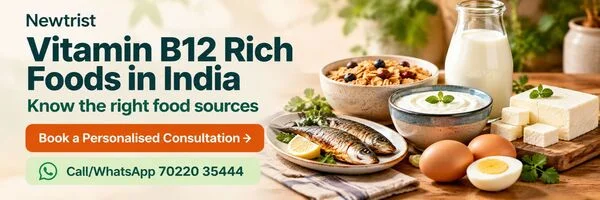
Vitamin B12 Rich Foods for Vegetarians in India
For Indian lacto-vegetarians, dairy products are the main naturally occurring food sources of vitamin B12. However, different dairy foods do not contribute identical amounts.
Milk, Curd and Paneer: How Useful Are They?
Milk contains naturally occurring vitamin B12 and is widely consumed in Indian households. Curd also provides B12, although its concentration varies with the milk used and the finished product.
Paneer contains B12 because it is made from milk. Its value as a protein source, however, should not be confused with being a particularly concentrated B12 source.
Consider the difference between drinking a glass of milk and adding a little milk to tea. Both involve the same ingredient, but the quantities consumed are different. Their nutritional contributions may therefore differ considerably.
Can Vegetarian Indian Food Provide Enough B12?
A lacto-vegetarian diet may meet B12 requirements when appropriate amounts of dairy and fortified foods are consumed.
However, meals centred on rice, chapati, dal, vegetables, fruit and nuts contain few dependable natural B12 sources. These foods remain valuable for their other nutrients. They simply cannot replace a reliable source of B12.
For people following vegan diets, which exclude animal-derived foods, reliably fortified products are particularly important.
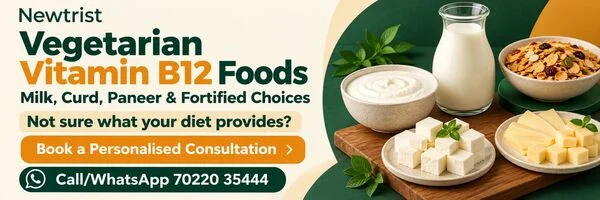
Vitamin B12 Rich Non-Vegetarian Foods
Fish, seafood, eggs, poultry and meat provide natural B12, but their concentrations vary.
Which Indian Fish Are Good Sources of B12?
Sardines and mackerel, commonly consumed in several Indian coastal regions, can provide useful amounts of vitamin B12.
Other varieties, including rohu and pomfret, may also contribute, although concentrations differ by species. Certain shellfish, particularly clams and oysters, are especially concentrated natural sources.
The fish variety matters because two similar dishes prepared with different species may not provide comparable amounts of B12.
How Do Eggs, Chicken and Meat Compare?
Eggs provide vitamin B12 mainly through the yolk. Their contribution is useful but relatively modest compared with several rich seafood sources.
Chicken contains B12, although amounts vary by cut and preparation. Goat meat and other meats also provide varying amounts.
Some organ meats are particularly concentrated sources, although their suitability depends on individual circumstances. Liver, for example, is generally avoided during pregnancy because of its high preformed vitamin A content.
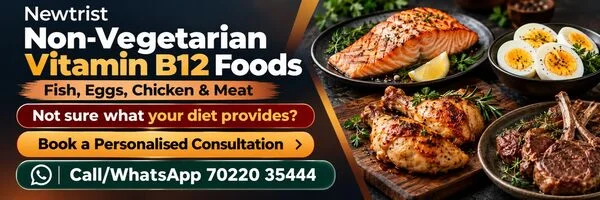
Foods Fortified With Vitamin B12
Fortified foods contain vitamin B12 deliberately added during manufacturing. They are particularly relevant for people who exclude animal-derived foods.
Which Fortified Foods Can Provide B12?
Depending on the manufacturer, fortified options may include breakfast cereals, soy milk, oat milk, almond milk and nutritional yeast. However, not every product in these categories contains added B12.
Ordinary oats, for example, do not naturally provide reliable B12. An oat-based cereal may contain it if the manufacturer has added the nutrient.
Similarly, homemade almond milk should not be assumed to provide B12 merely because some commercial almond milk products are fortified.
How Can You Identify a Reliable Fortified Product?
Check the nutrition label for vitamin B12, usually expressed in micrograms or as a percentage of a daily reference value. Read the serving size alongside the declared nutrient amount.
A food described as healthy, natural or plant-based may still contain little or no B12. For fortified products, the declared nutrient content is a better guide than marketing claims.
Naturally occurring B12 in foods such as milk may not always appear on the nutrition label. Therefore, the absence of a B12 declaration on ordinary dairy products does not establish that they contain none.
Do Fruits, Vegetables and Fermented Indian Foods Provide Vitamin B12?
Many nutritious Indian foods are incorrectly promoted as B12 sources because they provide other valuable nutrients.
Are Spinach, Beetroot, Moringa Leaves and Fruits B12 Sources?
No. Ordinary fruits and vegetables are not reliable natural sources of vitamin B12.
Spinach and moringa leaves contribute useful micronutrients, while beetroot, amla, guava and other fruits and vegetables provide vitamins, minerals and fibre.
Similarly, ragi, millets, rajma, chickpeas, moong dal, peanuts and sesame seeds offer nutritional benefits but are not dependable B12 sources.
Some of these foods provide folate, which is also involved in normal red blood cell formation. However, folate cannot replace vitamin B12.
Can Idli, Dosa, Mushrooms or Seaweed Provide B12?
Certain microorganisms can produce B12 or related compounds, which has led to claims about fermented foods.
However, traditionally prepared idli and dosa do not consistently provide nutritionally meaningful amounts of biologically active B12.
Some mushrooms and seaweed varieties may contain measurable B12-related compounds, but their amounts and biological activity vary. These foods can remain part of a varied diet without being relied upon as dependable vitamin B12 sources.
Why Vitamin B12 Rich Foods May Not Correct an Existing Deficiency
Choosing suitable B12-containing foods can help maintain adequate dietary intake. However, an established deficiency may involve more than food selection.
Vitamin B12 must be released from food during digestion and absorbed before the body can use it. This process depends partly on digestive function and intrinsic factor, a protein involved in B12 absorption.
When absorption is impaired, even suitable dietary sources may not provide enough usable B12. An established deficiency may also reflect depleted body stores following prolonged inadequate intake.
Important: Maintaining adequate B12 intake and correcting an established deficiency are not necessarily the same thing.
If a deficiency has already been identified, appropriate medical assessment is important. Dietary evaluation can help clarify whether habitual food intake is contributing to the problem.
Is Your Everyday Indian Diet Providing Enough Vitamin B12?
A food list can identify sources of vitamin B12. It cannot establish what your regular meals provide.
Consider a person who follows a vegetarian diet but consumes very little dairy. Another person may eat eggs and fish, although these foods appear only occasionally during the week. A vegan may regularly choose plant-based milk without checking whether it contains added B12.
All three may have nutritious eating patterns, yet their B12 intake could differ substantially. This is where assessing actual food habits becomes more useful than simply following a general food list.
When Personalised Nutrition Guidance Makes a Difference
If you follow a vegetarian or vegan diet, avoid certain food groups or are concerned about inadequate B12 intake, a personalised assessment can help clarify what your existing diet provides.
It can identify dependable B12 sources already present in your meals, estimate their contribution and highlight appropriate dietary improvements suited to your preferences.
At Newtrist, Chief Nutritionist Vasanthi Senthilvel provides personalised clinical nutrition guidance based on your usual Indian food habits, dietary restrictions and individual nutritional needs.
The focus is not on unnecessarily replacing familiar home-cooked meals. It is on identifying genuine dietary gaps and developing practical food choices that fit your daily routine.
Frequently Asked Questions About Vitamin B12 Rich Foods
Does boiling milk destroy vitamin B12?
Boiling does not eliminate all vitamin B12 from milk. However, prolonged or repeated heating may reduce some of its content. The amount retained depends on the heating conditions.
Does buttermilk contain vitamin B12?
Buttermilk prepared from curd can contain some B12 because it is dairy-based. Its contribution depends on how much curd is used and how much the drink is diluted.
Is homemade paneer higher in B12 than packaged paneer?
Not necessarily. Vitamin B12 content depends on the milk used and preparation method. Homemade paneer does not automatically contain more B12.
Does cooking reduce B12 in fish and meat?
Yes. Cooking may reduce vitamin B12 content, depending on temperature, duration and handling of cooking liquids.
Conclusion
Reliable vitamin B12 food sources matter more than adding another food simply because it is described as nutritious.
Understanding what your familiar Indian meals actually provide can help you make better dietary choices. Where intake remains uncertain, personalised nutrition guidance can help identify food-related gaps and practical improvements.
Author
Chief Nutritionist Vasanthi Senthilvel leads Newtrist Nutritionist Dietitian Dietician, providing personalised diet plans for weight management and clinical nutrition for children, adolescents, adults and families.
She has 21 years of experience in nutrition and has received professional recognition for her work.
- Pride of Bharat Awards 2026: Outstanding Achievement in Holistic Health & Nutrition Innovation
- Doctor of The Year: Nutritionist 2026: Excellence in Clinical Nutrition and Weight Loss.
Her approach considers age, growth, health history, medical conditions, laboratory reports, medication, body composition, weight history, dietary preferences, regional food habits, family routines, activity, sleep and personal health goals. Recommendations are developed according to individual needs rather than using one standard diet for everyone.
Consultations are available in person at Bangalore HSR Layout, Koramangala, Bellandur, Haralur and Electronic City, as well as online across India.
Independent Medical Review Panel
Newtrist health and nutrition articles undergo medical review, where appropriate, by doctors with relevant specialist expertise. The medical professionals listed below contribute to Newtrist’s review process within their respective specialties.
| Speciality | Doctor |
|---|---|
| Endocrinology | Dr Vinay Prasad MBBS, MD, DM |
| Gastroenterology & Hepatology | Dr Sunil kumar N MBBS, MD, DM |
| Gynaecology | Dr Prathiba G MBBS, DNB, FIRM, FMAS |
| Nephrology | Dr Priyashree R MBBS, MD, DNB, DM |