
Written by: Chief Nutritionist Vasanthi Senthilvel
21 years of experience | Newtrist Nutritionist Dietitian Dietician
Best Nutritionist in Bangalore with multiple awards for excellence in clinical nutrition, weight loss, holistic health and nutrition innovation.
Medically reviewed by: Dr Prathiba G MBBS, DNB, FIRM, FMAS | Dr Sunil kumar N MBBS, MD, DM | Dr Vinay Prasad MBBS, MD, DM
Medical Disclaimer: Nutritional needs vary based on an individual’s profile. The information on this page is for general educational purposes only and is not intended to replace personalised medical or nutrition care.
Arunachal Pradesh alone contains many tribal food traditions, Assam has its own sour, alkaline and leafy preparations, and the cuisines of Manipur, Meghalaya, Mizoram, Nagaland, Sikkim and Tripura each use local ingredients in distinct ways.
A North-East Indian diet plan for weight loss should preserve that diversity. The job is not to turn traditional food into ‘diet food’, but to understand which preparations are everyday, how fermentation or smoke-curing is used, where richness enters the pattern and what the individual actually needs.
Key takeaway: A North-East Indian diet plan for weight loss can retain regional rice, local vegetables, herbs, fermented foods, soy foods, bamboo shoots, fish and meat where preferred. No fermentation method, smoked food or indigenous ingredient automatically causes weight loss. The useful plan respects the person’s state and community food culture while reviewing preparation, frequency, nutritional balance, appetite and individual health needs.
Table of Contents

How Can a North-East Indian Diet Plan for Weight Loss Use Regional Foods?
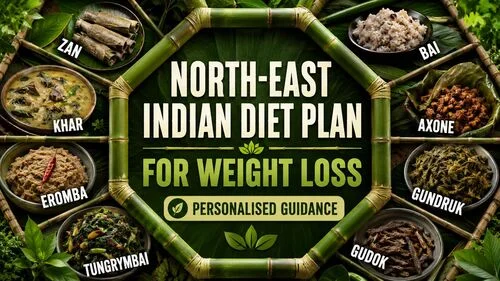
North-Eastern cuisines often rely on local produce and preservation techniques that are very different from mainstream restaurant versions of Indian food. Boiling, steaming, smoke-curing, drying and fermenting are common in different communities, while rice, leafy vegetables, bamboo shoots, soybeans, fish and meat appear in many forms.
That does not make the region one uniform ‘light’ cuisine. Some smoked meats are fatty, some fermented foods are salty, some rice preparations are energy-dense, and some festive dishes differ greatly from everyday food. A personalised approach therefore needs to identify the person’s actual household pattern instead of treating a cooking technique as a health claim.
Arunachal Pradesh Diet Plan for Weight Loss: Regional Foods and Dishes
An Arunachal Pradesh diet plan for weight loss needs to begin with community and location because food traditions differ across the state’s many tribes. Rice, bamboo shoots, local greens, fish and meat are common themes, while foods such as zan in Monpa-influenced areas, pehak, churpi, boiled beans, banana-flower dishes and bamboo-cooked fish show the wider range.
Zan, a millet-based preparation associated with parts of western Arunachal Pradesh, can keep a plan connected to local grain traditions without being promoted as a special weight-loss food. Bamboo shoots may be fresh, dried, pickled or fermented, and each form can bring different salt, flavour and preparation considerations.
Arunachal cuisine also uses smoke-curing and drying for preservation. Those methods deserve context rather than automatic praise or concern. The type of meat or fish, added fat, salt, portion, accompanying foods and the individual’s medical needs all matter more than the label ‘traditional’.
| Meal | Diet plan |
| Breakfast | Zan with boiled beans and local greens |
| Mid-morning | Seasonal local fruit |
| Lunch | Rice with bamboo-cooked fish, local greens and a banana-flower preparation |
| Evening | Chhurpi with a light vegetable accompaniment |
| Dinner | Rice with a mild bamboo-shoot and vegetable preparation with fish or lean meat |
Assam Diet Plan for Weight Loss: Assamese Foods and Dishes
An Assam diet plan for weight loss can keep Assamese foods such as khar, masor tenga, koldil or banana-flower preparations, lai xaak and other leafy greens, rice, pulses, fish and seasonal vegetables. Assamese food is often built around subtle sour, bitter, alkaline and fresh flavours rather than the heavy gravies associated with some other Indian restaurant cuisines.
Khar and masor tenga illustrate why the state needs its own discussion. Khar uses an alkaline preparation in traditional cooking, while tenga uses souring agents with fish. Neither dish should be assigned a weight-loss effect; the practical questions are the rest of the meal pattern, fish preparation, salt, added fat and how frequently richer snacks or sweets appear.
Assam also has a strong pitha and festival-food tradition. Those foods can remain part of cultural life without being treated as everyday necessities or forbidden items. A useful plan distinguishes routine home food from festival and social eating.
| Meal | Diet plan |
| Breakfast | Rice-based breakfast with lai xaak and a small pulse preparation |
| Mid-morning | Seasonal fruit |
| Lunch | Rice with masor tenga, khar and seasonal vegetables |
| Evening | A light home-prepared pitha or fruit |
| Dinner | Rice with dal, koldil preparation and leafy greens |
Manipur Diet Plan for Weight Loss: Manipuri Foods and Dishes
A Manipur diet plan for weight loss can work with eromba, singju, kangsoi, seasonal vegetables, rice, herbs and fish according to the household. Manipuri cuisine often uses fresh herbs, vegetables and fermented fish in ways that give the food a distinctive flavour profile without relying on rich creamy gravies.
Eromba combines vegetables with fermented fish and chilli, while singju brings together shredded vegetables, herbs and other ingredients in a salad-like preparation. These dishes can add vegetable variety, but their suitability still depends on ingredients, salt, individual tolerance and the rest of the person’s food pattern.
Fermented fish is culturally important in several Manipuri preparations. It should not be marketed as a universal probiotic or weight-loss ingredient. People with specific medical or sodium-related needs may require individual review, while others may continue familiar preparations without unnecessary restriction.
| Meal | Diet plan |
| Breakfast | Rice with kangsoi and seasonal vegetables |
| Mid-morning | Seasonal fruit |
| Lunch | Rice with eromba, singju and a fish preparation |
| Evening | A light vegetable or pulse-based snack |
| Dinner | Rice with kangsoi, local greens and fish or another household protein source |
Meghalaya Diet Plan for Weight Loss: Regional Foods and Dishes
A Meghalaya diet plan for weight loss should reflect Khasi, Garo and Jaintia food traditions rather than assume one Meghalayan menu. Jadoh, tungrymbai, local greens, rice, black-sesame preparations, meat and seasonal produce all appear in different communities and households.
Tungrymbai, made from fermented soybeans, is especially useful for understanding the difference between a food ingredient and a complete dish. Fermented soy can contribute protein, but some versions also include pork or other ingredients that change the nutritional profile. Jadoh similarly combines rice and meat, so the balance depends on the actual preparation rather than the regional name.
Meghalaya’s fruit and vegetable diversity can also support a varied pattern. The plan does not need to turn pineapple, fermented soybean or black sesame into a superfood. It needs to fit local foods into the individual’s broader appetite, activity and health context.
| Meal | Diet plan |
| Breakfast | Rice with tungrymbai and local greens |
| Mid-morning | Seasonal fruit such as pineapple |
| Lunch | Jadoh with a generous side of local vegetables |
| Evening | A small black-sesame or local pulse-based snack |
| Dinner | Rice with fermented soybean preparation, greens and a lean meat or vegetable dish |
Mizoram Diet Plan for Weight Loss: Mizo Foods and Dishes
A Mizoram diet plan for weight loss can include bai, sawhchiar, chhum han, rice, fresh vegetables, bamboo shoots and meat where preferred. Mizo cooking is often associated with boiling and steaming, which can reduce the need for heavy frying, but the cooking method alone does not decide whether the whole diet suits one person’s needs.
Bai may combine vegetables, bamboo shoots and sometimes meat or fermented ingredients, while sawhchiar is a rice-and-meat preparation. These are different nutritional situations even though both are recognisably Mizo. Chhum han, based on boiled or steamed vegetables, adds another contrast within the same cuisine.
The useful review asks how often meat-rich or smoked preparations appear, whether vegetables and other protein sources are varied, and how the traditional pattern has changed with urban food, packaged snacks or restaurant eating.
| Meal | Diet plan |
| Breakfast | Chhum han with rice and a light protein accompaniment |
| Mid-morning | Seasonal fruit |
| Lunch | Rice with bai and fresh vegetables |
| Evening | A light boiled or steamed vegetable snack |
| Dinner | Sawhchiar with additional vegetables and a moderate meat portion |
Nagaland Diet Plan for Weight Loss: Naga Foods and Dishes
A Nagaland diet plan for weight loss can respect foods such as axone or akhuni, anishi, galho, bamboo-shoot preparations, local greens, rice, fish and meat. Nagaland’s many tribes have distinct food traditions, so smoked pork with axone should not be treated as the state’s only representative dish.
Axone is fermented soybean and can be used with vegetables, fish or meat. The soybean itself can contribute protein, but the final dish changes substantially when combined with fatty smoked meat or large amounts of salt. Anishi, made from processed colocasia leaves, and boiled vegetable dishes show a different side of Naga cuisine.
Smoke-curing is a preservation and flavour technique, not a weight-management strategy. A plan needs to consider the type and amount of meat, salt, vegetables, rice, cooking fats, frequency and any medical advice relevant to the individual.
| Meal | Diet plan |
| Breakfast | Rice with boiled local greens and a light axone-based vegetable preparation |
| Mid-morning | Seasonal fruit |
| Lunch | Rice with anishi, bamboo-shoot vegetables and fish or lean meat |
| Evening | Boiled vegetables or a light soybean-based snack |
| Dinner | Galho with vegetables and a moderate portion of fish or meat |
Sikkim Diet Plan for Weight Loss: Sikkimese Foods and Dishes
A Sikkim diet plan for weight loss can keep gundruk, kinema, chhurpi, thukpa, local greens, rice and seasonal vegetables according to the person’s community and preferences. Sikkimese food reflects Nepali, Bhutia and Lepcha influences, so no single dish can represent every household.
Gundruk uses fermented leafy vegetables, while kinema is fermented soybean. Both can bring distinctive flavour and, in the case of kinema, a useful protein source, but fermentation does not guarantee digestive or weight-loss benefits for every person. Salt, preparation and individual tolerance still matter.
Thukpa and dumpling-style foods raise a different question because restaurant versions can vary widely in noodles, fillings, broth, oil and accompaniments. The state-specific plan should therefore distinguish everyday local food from convenience and restaurant patterns.
| Meal | Diet plan |
| Breakfast | Thukpa with vegetables and a suitable protein source |
| Mid-morning | Seasonal fruit |
| Lunch | Rice with gundruk, local greens and a kinema preparation |
| Evening | Chhurpi with a light vegetable accompaniment |
| Dinner | Rice with seasonal vegetables and a fermented soybean or lean protein preparation |
Tripura Diet Plan for Weight Loss: Tripuri Foods and Dishes
A Tripura diet plan for weight loss should distinguish indigenous Tripuri food from the Bengali-influenced food patterns also present in the state. Gudok, chakhwi, mosdeng serma, bamboo-shoot preparations, rice, vegetables, fish and meat may all appear, with fermented fish or berma providing a distinctive flavour in several traditional dishes.
Gudok and chakhwi show how bamboo shoots, vegetables, pulses or other local ingredients can be used in regional cooking. Mosdeng serma is a strong-flavoured chutney-style preparation, so the amount used and its salt content may matter more than trying to classify it as a weight-loss food.
A useful Tripura plan respects both tribal and Bengali household influences. It should reflect the foods the person actually eats rather than assigning one ‘correct’ Tripuri menu to a culturally diverse state.
| Meal | Diet plan |
| Breakfast | Rice with a light chakhwi preparation |
| Mid-morning | Seasonal fruit |
| Lunch | Rice with gudok, vegetables and fish or lean meat |
| Evening | A light home-prepared vegetable or pulse snack |
| Dinner | Rice with bamboo-shoot vegetables and a small serving of mosdeng serma with fish or another protein source |

Fermented, Smoked and Bamboo-Shoot Foods Need Individual Context
Fermentation, smoke-curing and bamboo-shoot use are important parts of several North-Eastern food traditions, but none should be turned into a universal health claim. Fermentation can preserve food and create characteristic flavours. smoke-curing can preserve and intensify flavour. Bamboo shoots can add texture and variety. Their nutritional role depends on the complete preparation.
For some people, salt content, digestive tolerance, medical conditions or medication may influence how often certain fermented or preserved foods fit. That is a different question from whether the cuisine itself is suitable for weight management.
When a Personalised North-East Indian Diet Plan May Help
A personalised approach can be especially useful when a standard urban Indian diet chart does not recognise the foods a person actually eats. Community cuisine, fermented or smoked foods, local greens, access to regional ingredients, vegetarian or non-vegetarian preference, work routine, appetite, activity, body composition, health conditions and medication can all change what is practical.
Chief Nutritionist Vasanthi Senthilvel at Newtrist Nutritionist Dietitian Dietician provides personalised diet plans for weight management. Assessment can begin with the person’s real Arunachali, Assamese, Manipuri, Meghalayan, Mizo, Naga, Sikkimese or Tripuri pattern and decide how to preserve culturally familiar foods while addressing nutritional gaps or eating patterns that need attention.
Consult Chief Nutritionist Vasanthi Senthilvel for personalised weight-management guidance that respects your North-East Indian food culture and the realities of your health and routine.
Author
Chief Nutritionist Vasanthi Senthilvel leads Newtrist Nutritionist Dietitian Dietician, providing personalised diet plans for weight management and clinical nutrition for children, adolescents, adults and families.
She has 21 years of experience in nutrition and has received professional recognition for her work.
- Pride of Bharat Awards 2026: Outstanding Achievement in Holistic Health & Nutrition Innovation
- Doctor of The Year: Nutritionist 2026: Excellence in Clinical Nutrition and Weight Loss.
Her approach considers age, growth, health history, medical conditions, laboratory reports, medication, body composition, weight history, dietary preferences, regional food habits, family routines, activity, sleep and personal health goals. Recommendations are developed according to individual needs rather than using one standard diet for everyone.
Consultations are available in person at Bangalore HSR Layout, Koramangala, Bellandur, Haralur and Electronic City, as well as online across India.
Independent Medical Review Panel
Newtrist health and nutrition articles undergo medical review, where appropriate, by doctors with relevant specialist expertise. The medical professionals listed below contribute to Newtrist’s review process within their respective specialties.
| Speciality | Doctor |
|---|---|
| Endocrinology | Dr Vinay Prasad MBBS, MD, DM |
| Gastroenterology & Hepatology | Dr Sunil kumar N MBBS, MD, DM |
| Gynaecology | Dr Prathiba G MBBS, DNB, FIRM, FMAS |
| Nephrology | Dr Priyashree R MBBS, MD, DNB, DM |