
Written by: Chief Nutritionist Vasanthi Senthilvel
21 years of experience | Newtrist Nutritionist Dietitian Dietician
Best Nutritionist in Bangalore with multiple awards for excellence in clinical nutrition, weight loss, holistic health and nutrition innovation.
Medically reviewed by: Dr Prathiba G MBBS, DNB, FIRM, FMAS | Dr Sunil kumar N MBBS, MD, DM | Dr Vinay Prasad MBBS, MD, DM
Medical Disclaimer: Nutritional needs vary based on an individual’s profile. The information on this page is for general educational purposes only and is not intended to replace personalised medical or nutrition care.
You have been eating carefully, yet the weighing scale shows a higher number. Your period is approaching, and a friend following a similar eating routine seems to be losing weight more easily. You begin wondering whether you should reduce your portions again.
Weight loss for women can become frustrating when the results do not match the effort. But a change on the scale does not always mean a change in body fat. Understanding how energy needs, menstrual fluctuations and nutritional requirements influence progress can help you decide what deserves attention before making another dietary restriction.
Key Takeaway: Healthy weight loss for women involves an appropriate energy deficit while maintaining adequate protein, essential nutrients and physical activity to protect muscle and health. Menstrual-related fluid changes can temporarily increase body weight without equivalent fat gain. Sustainable progress depends on individual energy needs, nutritional adequacy and longer-term changes rather than following another person’s diet or reacting to isolated scale readings.
Table of Contents

What Does Healthy Weight Loss for Women Actually Involve?
Healthy weight loss involves reducing excess body fat while maintaining muscle, nutritional health and normal physical functioning.
Body fat generally decreases when the body uses more energy than it receives from food over time. This is known as an energy deficit.
However, achieving an energy deficit does not mean eating as little as possible.
A woman who substantially reduces her food intake may notice an initial decrease in weight, but that change may include water and lean tissue as well as body fat.
Excessive restriction can also make it harder to meet nutritional requirements and maintain strength.
The aim is therefore not simply to achieve the fastest reduction in kilograms. It is to support body-fat reduction through an approach that provides sufficient nourishment and can be maintained without unnecessary restrictions.
Physical activity contributes to this process. Everyday movement supports energy expenditure, while suitable muscle-strengthening activity helps preserve muscle during weight reduction.
Neither food restriction nor physical activity should be considered in isolation from overall health.
Why Can Two Women Following Similar Diets Get Different Results?
Two women can weigh the same, eat comparable meals and experience different changes in body weight.
This does not necessarily mean one woman is following her diet more carefully.
Their bodies may require different amounts of energy.
Body Composition Influences Energy Needs
Muscle mass contributes to the energy the body uses, including while resting.
A woman with more muscle may have different energy requirements from another woman of similar weight with less muscle.
Height and age also influence energy expenditure.
Women generally have less muscle mass than men of comparable age and body size, although individual differences are substantial.
These factors help explain why a food quantity that supports weight loss for one person may not produce the same result for another.
Daily Activity Makes a Difference
Consider two women who both work full-time.
One spends most of her day sitting at a desk. The other walks frequently and has a physically demanding routine.
Even when their food choices look similar, their daily energy expenditure may differ.
The same intake might therefore create an energy deficit for one woman but not the other.
This is why copying a friend’s portions or calorie target does not guarantee similar results.
The important consideration is whether the amount of food you consume is appropriate for your body composition, activity and health.
Why Does Weight Increase Before Menstruation?
For some women, body weight increases in the days before menstruation and decreases again afterwards, even when eating habits remain relatively consistent.
Menstrual-cycle changes can influence fluid balance and appetite, making progress appear less predictable.
Temporary Water Retention Is Not Body-Fat Gain
Hormonal fluctuations during the menstrual cycle can contribute to temporary fluid retention.
Some women notice bloating and a higher scale reading before their period. This additional fluid may decrease as the cycle progresses.
Such changes do not necessarily represent an equivalent increase in body fat.
The extent of these fluctuations varies considerably. Some women notice a predictable monthly pattern, while others experience little change.
Understanding this difference matters because a temporary increase in weight does not automatically mean that your dietary approach has stopped working.
Appetite Can Change Before Your Period
Some women experience stronger hunger or changes in food preferences during the days leading up to menstruation.
A meal that normally feels satisfying may seem less filling at this time.
These changes do not make fat loss impossible, but they can influence food intake and how manageable an eating pattern feels.
Recognising a recurring appetite pattern can help you understand your experience without assuming that every difficult day reflects poor dietary discipline.
Not every woman experiences these changes, and individual responses differ.
Which Nutrients Should Women Protect While Losing Weight?
When women reduce their food intake, they may also reduce the nutrients they receive.
This becomes particularly important when dieting involves eating very small quantities or eliminating several food groups.
Protein, iron and calcium deserve attention because they support muscle maintenance, blood health and bone health.
Protein Helps Preserve Muscle During Fat Loss
Protein is important for maintaining and repairing muscle tissue. It can also contribute to fullness after eating.
During weight reduction, adequate protein intake combined with suitable muscle-strengthening activity helps limit unnecessary muscle loss.
Several familiar Indian foods can contribute protein, including moong dal, whole green gram, chickpeas, rajma, soybeans, curd, paneer, eggs, fish and chicken.
However, including a protein-rich food does not automatically mean the total intake is sufficient.
For example, dal contributes protein, but the quantity provided depends on how much is eaten and what else is consumed throughout the day.
The amount required depends on body weight, activity, age and health.
Iron and Calcium Should Not Be Overlooked
Iron supports healthy red blood cells and oxygen transport. Women who menstruate lose iron through menstrual bleeding, making adequate dietary intake particularly important.
Lentils, chickpeas and amaranth leaves can contribute plant-based iron. Guava and amla provide vitamin C, which helps improve its absorption.
Calcium supports bone health and normal muscle function.
Milk, curd, ragi and sesame seeds can contribute calcium, although the amounts provided and absorbed vary between foods.
These foods do not directly cause fat loss. Their value lies in helping maintain nutritional adequacy when overall energy intake is being adjusted.
Can Familiar Indian Foods Meet These Needs?
Yes. A suitable weight-loss diet does not automatically require unfamiliar ingredients or expensive food replacements.
Traditional Indian diets offer pulses, dairy products, vegetables, fruits, grains and other foods that contribute to essential nutritional requirements.
The challenge is not identifying a single ideal food. It is determining whether the overall diet supplies appropriate nutrients and energy.
For example, a woman following a vegetarian eating pattern may need a different combination of protein sources from someone who regularly includes eggs or fish.
Neither approach is automatically better for fat loss.
What matters is the nutritional contribution of the complete eating pattern and whether the quantities suit the woman.

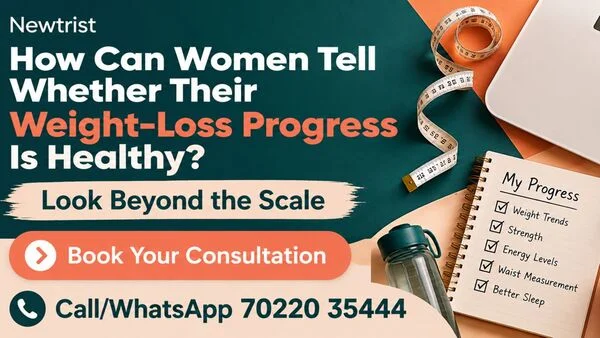
How Can Women Tell Whether Their Weight-Loss Progress Is Healthy?
The weighing scale provides useful information, but it cannot reveal exactly what has changed inside the body.
Body weight includes fat, muscle, water and other tissues.
A meaningful assessment therefore considers the pattern of weight change and whether physical functioning and nutritional health are being maintained.
Look at Trends Rather Than Individual Readings
Body weight naturally fluctuates because of changes in fluid balance, food intake and digestive contents.
Measurements taken under reasonably consistent conditions are generally easier to compare.
For women who menstruate, comparing readings at similar stages of successive menstrual cycles may provide additional context.
A temporary increase should not automatically lead to a complete change in dietary approach.
Looking at weight trends over a meaningful period provides more useful information than expecting the number to decrease every day.
Consider Body Measurements and Strength
Two women can weigh the same but have different proportions of muscle and body fat.
Depending on individual circumstances, waist measurements, physical strength and body-composition assessment may provide useful additional information.
For example, a woman may notice changes in waist measurements even when her total body weight changes slowly.
This does not make the scale irrelevant. It means the number should be considered alongside other information appropriate to her health and goals.
Specialised body-composition testing is not necessary for everyone.
Know When Your Approach Needs Reassessment
Weight loss should not make everyday life increasingly difficult.
Persistent exhaustion, frequent dizziness, noticeable weakness or difficulty carrying out usual activities deserve attention.
Severe dietary restriction or substantial, rapid weight reduction can also affect menstrual regularity in some women.
These symptoms can have several causes and require appropriate healthcare assessment rather than simply another dietary adjustment.
If your approach is affecting your health, achieving a lower weight more quickly should not be the immediate priority.
Frequently Asked Questions About Weight Loss for Women
Can Women Lose Weight at Home Without Joining a Gym?
Yes. Gym membership is not essential for weight loss.
Walking, everyday movement and suitable muscle-strengthening activities can support energy expenditure, physical fitness and muscle health.
The appropriate activities depend on individual health and physical ability. Dietary intake also remains an important factor in reducing excess body fat.
Do Women Need to Stop Eating Rice or Roti to Lose Weight?
No. Rice and roti can remain part of a suitable weight-loss diet.
Both provide carbohydrates that the body uses for energy. Their suitability depends on preparation, quantities, accompanying foods and overall dietary intake.
Neither food automatically prevents fat loss, and removing familiar Indian staples is not necessary for every woman.
Do Women Need a Different Diet During Every Menstrual Phase?
No. There is no established requirement for every woman to follow a separate diet during each menstrual phase.
Some women experience changes in hunger or food preferences throughout the month, but nutritional adequacy remains important throughout the cycle.
Any adjustments should reflect individual needs rather than a rigid menstrual-phase eating schedule.
Does Every Woman Need to Lose Weight to Become Healthier?
No. Weight reduction is not necessary or appropriate for every woman.
Body composition, waist measurements, nutritional status and relevant health information help determine whether losing weight would be beneficial.
For some women, improving strength, fitness or nutritional health may be more appropriate than pursuing a lower body weight.
When Does Personalised Nutrition Guidance Become Useful?
You may now understand why two women can experience different results, why weight changes around menstruation and which nutrients matter during fat loss.
But knowing these principles does not automatically tell you what needs to change in your own diet.
Perhaps you are unsure whether your portions are appropriate. Your weight may have changed, but you cannot tell whether your nutritional needs are being met. Or you may have reduced your food intake substantially and wonder whether further restriction is suitable.
These are questions that depend on your individual circumstances.
The Same Weight Goal May Require Different Decisions
Consider two women who both want to reduce excess body fat.
One notices recurring weight fluctuations around menstruation but otherwise feels comfortable with her eating pattern.
Another has reduced her food intake considerably and now experiences persistent tiredness.
Although both want to lose weight, their concerns are different.
The first may need help interpreting her weight pattern. The second needs a closer review of nutritional adequacy and health before considering further restriction.
Giving both women an identical diet chart may overlook what matters most in their situations.
A personalised nutrition assessment can help determine which dietary changes, if any, are appropriate.
Consult Chief Nutritionist Vasanthi Senthilvel at Newtrist
If you have been trying to manage your weight but remain uncertain whether your current diet suits your body, individual nutrition guidance can help clarify your next step.
At Newtrist, Chief Nutritionist Vasanthi Senthilvel, with 21 years of experience in nutrition, provides personalised weight-management guidance.
Her assessment considers your weight history, current food intake, nutritional requirements, relevant health information, dietary preferences and daily routine.
The aim is not to give every woman the same food quantities or restrictions. It is to identify changes that are appropriate for her circumstances and can work with familiar Indian foods.
Before reducing your portions again, find out whether your current eating pattern is providing what your body needs and which changes would actually be useful.
If this is the question you are struggling to answer, consult Chief Nutritionist Vasanthi Senthilvel for a personalised nutrition assessment and a weight-management diet plan suited to your needs.
Author
Chief Nutritionist Vasanthi Senthilvel leads Newtrist Nutritionist Dietitian Dietician, providing personalised diet plans for weight management and clinical nutrition for children, adolescents, adults and families.
She has 21 years of experience in nutrition and has received professional recognition for her work.
- Pride of Bharat Awards 2026: Outstanding Achievement in Holistic Health & Nutrition Innovation
- Doctor of The Year: Nutritionist 2026: Excellence in Clinical Nutrition and Weight Loss.
Her approach considers age, growth, health history, medical conditions, laboratory reports, medication, body composition, weight history, dietary preferences, regional food habits, family routines, activity, sleep and personal health goals. Recommendations are developed according to individual needs rather than using one standard diet for everyone.
Consultations are available in person at Bangalore HSR Layout, Koramangala, Bellandur, Haralur and Electronic City, as well as online across India.
Independent Medical Review Panel
Newtrist health and nutrition articles undergo medical review, where appropriate, by doctors with relevant specialist expertise. The medical professionals listed below contribute to Newtrist’s review process within their respective specialties.
| Speciality | Doctor |
|---|---|
| Endocrinology | Dr Vinay Prasad MBBS, MD, DM |
| Gastroenterology & Hepatology | Dr Sunil kumar N MBBS, MD, DM |
| Gynaecology | Dr Prathiba G MBBS, DNB, FIRM, FMAS |
| Nephrology | Dr Priyashree R MBBS, MD, DNB, DM |