
Written by: Chief Nutritionist Vasanthi Senthilvel
21 years of experience | Newtrist Nutritionist Dietitian Dietician
Best Nutritionist in Bangalore with multiple awards for excellence in clinical nutrition, weight loss, holistic health and nutrition innovation.
Medically reviewed by: Dr Prathiba G MBBS, DNB, FIRM, FMAS | Dr Sunil kumar N MBBS, MD, DM | Dr Vinay Prasad MBBS, MD, DM
Medical Disclaimer: Nutritional needs vary based on an individual’s profile. The information on this page is for general educational purposes only and is not intended to replace personalised medical or nutrition care.
Rajma chawal for lunch. Vegetable poha for breakfast. Chapati and sabzi for dinner.
These are familiar vegetarian meals. But if you are trying to lose weight, knowing what to eat is only half the picture.
How much rajma should accompany your rice? Is your breakfast providing enough protein? Could the extra handful of peanuts or generous serving of paneer be adding more calories than you realise?
You may have already tried cutting down on rice, skipping favourite foods or following a diet chart that left you hungry.
A more practical approach starts with understanding how to build vegetarian meals that satisfy your appetite while supporting your weight loss goal.
Key Takeaway
A vegetarian diet can support weight loss when overall calorie intake is appropriate and meals provide sufficient protein, fibre and essential nutrients. An Indian vegetarian weight loss plan can include rice, roti, millets, dal, chana, paneer, soy foods and vegetables. The most useful approach combines these foods in suitable portions rather than eliminating entire food groups.
Table of Contents
Can a Vegetarian Diet Help You Lose Weight?
Yes. A vegetarian diet can help you lose weight when your daily energy intake is lower than your body’s energy expenditure, while still providing adequate nutrition.
However, being vegetarian does not automatically mean a meal is suitable for weight loss.
For example, a large serving of rice with a small amount of potato curry may contain plenty of carbohydrates but relatively little protein.
A meal containing an appropriate serving of rice, rajma and vegetables provides a different combination of nutrients.
Both meals use vegetarian ingredients, but they may differ in how satisfying they are and how they contribute to your daily nutritional requirements.
Similarly, dishes containing generous amounts of ghee, oil, cream or cheese may be higher in calories than expected.
The goal is not to divide vegetarian foods into those you can and cannot eat.
It is to understand how their portions, combinations and preparation affect your overall intake.
What Should an Indian Vegetarian Weight Loss Diet Include?
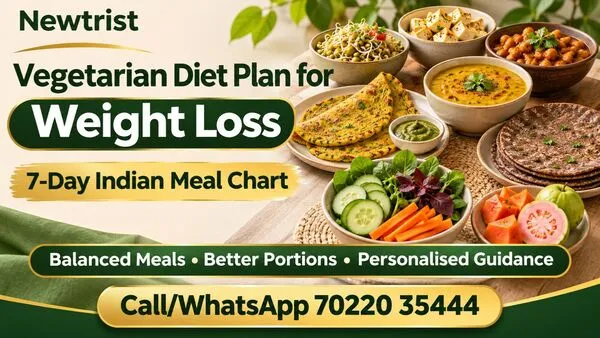
A practical vegetarian weight loss meal combines a meaningful protein source, a suitable portion of cereals or millets, vegetables and an appropriate amount of fat.
The ingredients can come from your usual kitchen.
Include Protein-Rich Vegetarian Foods
Protein helps support fullness and the maintenance of body tissues, including muscle.
It deserves particular attention in vegetarian meal planning because some familiar combinations are dominated by cereals.
For instance, plain vegetable upma may contribute relatively little protein compared with upma accompanied by curd and a suitable protein-rich addition.
You can build variety through foods such as:
- Pulses and legumes: Moong dal, masoor dal, chana, rajma, whole green gram and black chana.
- Soy foods: Tofu, soy chunks and soybeans.
- Milk-based foods: Curd, paneer and milk.
- Other contributors: Besan, peanuts, nuts and seeds.
These foods contribute different quantities of protein, energy and other nutrients.
That is why including a protein-containing ingredient is useful, but choosing an adequate serving is equally important.
Keep Rice, Roti and Millets in the Plan
You do not have to stop eating rice or chapati simply because you want to lose weight.
Rice, wheat and millets provide energy, and their portions can be adjusted according to your nutritional needs.
Ragi, jowar and bajra can add variety to Indian meals, but they are not calorie-free substitutes for rice.
A plate containing jowar roti, dal and vegetable sabzi may work well, provided the quantities suit the individual.
The same principle applies to rice with chole or whole-wheat roti with paneer curry.
The important consideration is the amount of cereal alongside the accompanying foods.
Add Vegetables, Fruits and Fats Thoughtfully
Vegetables contribute dietary fibre and nutrients while adding variety and volume to meals.
Indian ingredients such as palak, amaranth leaves, drumstick leaves, beans, gourds, cabbage and carrots can fit easily into vegetarian preparations.
Whole fruits such as guava, papaya, orange and amla can contribute additional nutrients.
Nuts, seeds and cooking oils also have a place in a balanced diet, but they contain substantial energy in relatively small quantities.
A nutritious ingredient does not become more useful simply because you add more of it.
7-Day Indian Vegetarian Diet Plan for Weight Loss
A useful vegetarian diet chart should help you decide what to prepare, rather than require complicated recipes or unfamiliar ingredients.
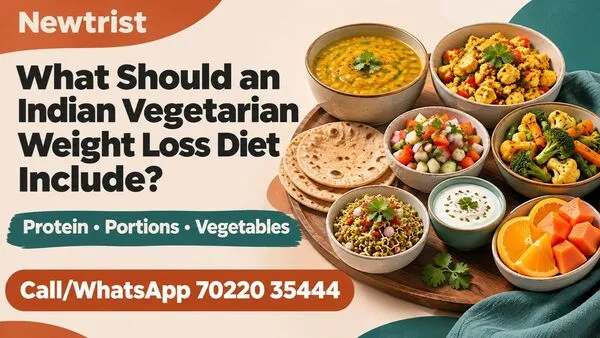
This seven-day example includes everyday Indian meals with varied vegetarian protein sources.
Sample 7-Day Vegetarian Meal Chart
| Day | Breakfast | Lunch | Evening snack | Dinner |
| Monday | Moong dal chilla with curd | Whole-wheat roti, rajma, lauki sabzi and cucumber salad | Roasted chana and guava | Vegetable moong dal khichdi with cucumber raita |
| Tuesday | Vegetable poha with peanuts and curd | Rice, chole, cabbage sabzi and salad | Papaya and a small portion of peanuts | Jowar roti, palak paneer and carrot salad |
| Wednesday | Idli with vegetable sambar | Phulka, whole green gram curry and beans poriyal | Orange and roasted chana | Soy chunk curry, chapati and mixed vegetables |
| Thursday | Besan chilla with vegetables and curd | Bajra roti, masoor dal and bhindi sabzi | Guava and a small portion of nuts | Vegetable dalia with moong dal and curd |
| Friday | Ragi dosa with sambar | Rice, rajma, beetroot sabzi and cucumber salad | Sprouted moong chaat | Tofu bhurji, whole-wheat roti and sautéed beans |
| Saturday | Vegetable upma with curd and roasted chana | Chapati, chana masala and methi sabzi | Seasonal fruit | Soy chunk curry, rice and mixed vegetable sabzi |
| Sunday | Vegetable uthappam with sambar | Phulka, thick dal, amaranth leaves sabzi and curd | Papaya and roasted chana | Jowar roti, paneer tikka and mixed vegetables |
This menu provides a range of Indian vegetarian meal combinations. It does not prescribe the same calorie intake or serving quantities for every reader.
The meals can be rearranged to suit your schedule, regional food preferences and availability of ingredients.
The most important next step is deciding how much of each food is appropriate for you.
How Should You Adjust Portions in the Vegetarian Diet Chart?
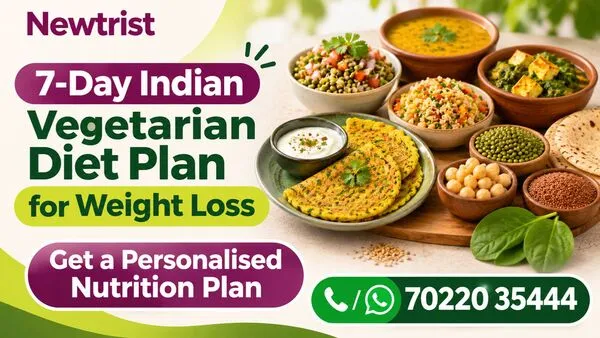
A meal chart may tell you to eat rajma rice for lunch, but it cannot establish your ideal rice or rajma quantity without considering your nutritional needs.
Someone who is physically active throughout the day may require different portions from someone with a predominantly sedentary routine.
Body composition, appetite and individual weight loss goals also influence appropriate quantities.
Use Portions That Reflect the Complete Meal
Consider a lunch of rice, rajma, vegetable sabzi and curd.
An illustrative serving might include one small katori of cooked rice, a substantial serving of rajma and vegetables, with curd if it fits the meal.
Some individuals may need more rice, while others may require a smaller cereal portion or different quantities of the accompanying foods.
Similarly, one or two medium chapatis may fit some meals, but the appropriate number depends on their size and the other foods being eaten.
The objective is to find a combination that is nutritionally suitable and satisfying within your overall daily intake.
Account for How Vegetarian Dishes Are Prepared
Two meals with the same name can have very different calorie contents.
For example, paneer curry prepared with a modest amount of oil differs from one made with generous amounts of cream, ghee and cashew paste.
A bowl of dal can also vary according to its thickness, the quantity of pulses used and the tempering added.
Keep these details in mind when following a diet chart:
| Meal component | What affects the portion and nutritional contribution |
| Rice | Cooked serving size and the quantity eaten with other cereals |
| Chapati | Size, amount of flour and added fat |
| Dal | Quantity of pulses, consistency and tempering |
| Paneer | Serving quantity and preparation method |
| Nuts and seeds | Small portions can contribute substantial calories |
| Vegetable curry | Vegetable quantity, oil and richness of gravy |
This is why following a meal chart by dish name alone may not produce the same nutritional intake from one household to another.
How Can You Make a Vegetarian Weight Loss Plan Fit Your Routine?
You may like the seven-day chart but prefer different regional foods, have limited cooking time or share meals with family members.
You do not need to follow every dish exactly.
A practical way to adapt the menu is to preserve the nutritional role of a food when replacing it.
Choose Suitable Alternatives Without Changing the Entire Menu
| Food in the meal chart | Practical vegetarian alternative |
| Rajma | Chole or whole green gram curry |
| Moong dal chilla | Besan chilla with an appropriate accompaniment |
| Paneer | Tofu or a suitable soy-based preparation |
| Wheat chapati | Jowar or bajra roti, with portions adjusted |
| Guava | Orange, papaya or another seasonal fruit |
| Vegetable moong dal khichdi | Rice and dal served separately with vegetables |
These are practical alternatives, not necessarily equal-calorie or equal-protein exchanges.
The purpose is to make the plan flexible enough to follow without losing sight of the nutritional contribution of each meal.
Avoid Turning the Plan Into a Hunger Challenge
If you consistently feel hungry soon after eating, it may be worth reviewing how the meals are composed and whether the total portions are appropriate.
For example, a small serving of vegetable poha may not satisfy you for long if it contains little protein.
Improving the meal combination may be more useful than trying to tolerate hunger until the next mealtime.
A workable vegetarian weight loss plan should support your nutritional needs while being practical enough to follow consistently.
Frequently Asked Questions
Can Potatoes Be Included in a Vegetarian Weight Loss Diet?
Yes. Potatoes can fit into a vegetarian weight loss diet. Their contribution depends on the portion and preparation. A moderate serving of boiled potato in a mixed vegetable dish differs from a large serving of deep-fried potatoes.
Can You Follow a Vegetarian Weight Loss Diet Without Dairy Products?
Yes. Dairy-free vegetarian meals can include tofu, soybeans, soy chunks, dals, chana, rajma and other plant foods. Meal combinations should still provide suitable amounts of protein, calcium and other essential nutrients.
Can You Eat Bananas While Following a Vegetarian Weight Loss Plan?
Yes. Bananas can be included as a whole-fruit choice. Their quantity should fit your overall food intake, just as it would for other fruits. There is no need to exclude bananas simply because you are trying to lose weight.
Can You Eat Vegetarian Restaurant Food During a Weight Loss Plan?
Yes. A vegetarian restaurant meal can fit into your eating pattern. Consider the portion of rice or roti, whether the meal includes a suitable protein source and how rich the gravy or preparation is. Restaurant dishes may contain more oil, cream or ghee than similar home-cooked meals.
Will Following a Seven-Day Vegetarian Diet Chart Guarantee Weight Loss in One Week?
No. A seven-day chart provides meal ideas and structure, not a guaranteed weight loss result. Actual changes depend on the overall energy balance, individual requirements, consistency and other personal factors. The chart is more useful as a starting framework than as a promise of results within seven days.
When Is a Personalised Vegetarian Weight Loss Plan More Useful?
You now have seven days of vegetarian meal ideas.
But you may still be wondering about something more important.
How much rice is appropriate for you? Is your usual serving of dal sufficient? Should you reduce the number of chapatis at dinner or make another adjustment?
Perhaps you already eat many of the foods in this chart and still struggle to lose weight.
That is where a standard menu reaches its limit.
The right diet is not simply the one with the healthiest-looking ingredients. It is the one that provides appropriate energy and nutrients for your body, fits your food preferences and works in your everyday routine.
Personalised Weight Loss Nutrition With Chief Nutritionist Vasanthi Senthilvel
At Newtrist, Chief Nutritionist Vasanthi Senthilvel provides personalised nutrition guidance that considers your current vegetarian eating habits, individual nutritional needs, activity, schedule and weight management goals.
A consultation can help you understand whether your existing meal portions are appropriate, how to distribute vegetarian protein across the day and which practical changes may be most relevant to your eating pattern.
You can discuss your own meals rather than trying to fit yourself into a fixed seven-day chart.
For example, if your usual lunch is rajma rice and your dinner is chapati with paneer, personalised guidance can help assess those combinations in the context of your complete daily intake.
The goal is not to make vegetarian eating unnecessarily restrictive.
It is to make your food choices clearer, your portions more appropriate and your plan realistic for your life.
You already know which vegetarian foods you enjoy. The next step is understanding how much of them is right for you.
Book a personalised nutrition consultation with Chief Nutritionist Vasanthi Senthilvel at Newtrist to discuss a vegetarian weight loss eating plan based on your nutritional requirements, food preferences and everyday routine.
Author
Chief Nutritionist Vasanthi Senthilvel leads Newtrist Nutritionist Dietitian Dietician, providing personalised diet plans for weight management and clinical nutrition for children, adolescents, adults and families.
She has 21 years of experience in nutrition and has received professional recognition for her work.
- Pride of Bharat Awards 2026: Outstanding Achievement in Holistic Health & Nutrition Innovation
- Doctor of The Year: Nutritionist 2026: Excellence in Clinical Nutrition and Weight Loss.
Her approach considers age, growth, health history, medical conditions, laboratory reports, medication, body composition, weight history, dietary preferences, regional food habits, family routines, activity, sleep and personal health goals. Recommendations are developed according to individual needs rather than using one standard diet for everyone.
Consultations are available in person at Bangalore HSR Layout, Koramangala, Bellandur, Haralur and Electronic City, as well as online across India.
Independent Medical Review Panel
Newtrist health and nutrition articles undergo medical review, where appropriate, by doctors with relevant specialist expertise. The medical professionals listed below contribute to Newtrist’s review process within their respective specialties.
| Speciality | Doctor |
|---|---|
| Endocrinology | Dr Vinay Prasad MBBS, MD, DM |
| Gastroenterology & Hepatology | Dr Sunil kumar N MBBS, MD, DM |
| Gynaecology | Dr Prathiba G MBBS, DNB, FIRM, FMAS |
| Nephrology | Dr Priyashree R MBBS, MD, DNB, DM |