
Written by: Chief Nutritionist Vasanthi Senthilvel
21 years of experience | Newtrist Nutritionist Dietitian Dietician
Best Nutritionist in Bangalore with multiple awards for excellence in clinical nutrition, weight loss, holistic health and nutrition innovation.
Medically reviewed by: Dr Prathiba G MBBS, DNB, FIRM, FMAS | Dr Sunil kumar N MBBS, MD, DM | Dr Vinay Prasad MBBS, MD, DM
Medical Disclaimer: Nutritional needs vary based on an individual’s profile. The information on this page is for general educational purposes only and is not intended to replace personalised medical or nutrition care.
If you have osteoporosis, knowing that calcium matters is usually the easy part. The harder question is what that actually means for breakfast, lunch and dinner.
Should you add more milk? Is ragi enough? What if you do not eat dairy? Does every meal need a special bone-strengthening food? And how do you know whether your current diet is providing enough of what your bones need?
A useful osteoporosis diet answers those practical questions without turning everyday eating into a complicated set of rules. The aim is to work with familiar foods, identify important nutritional gaps and make bone-supportive nutrition part of a diet you can realistically continue.
Key takeaway: An osteoporosis diet should regularly provide calcium-rich foods, adequate protein, suitable dietary sources of vitamin D and enough overall nutrition to support bone health. No individual food or standard diet chart can be expected to restore lost bone density. The appropriate foods and quantities depend on the person’s overall eating pattern and nutritional needs.
Table of Contents

What Should an Osteoporosis Diet Include?
An osteoporosis diet does not need unusual ingredients or a completely separate style of cooking.
It needs dependable sources of important nutrients to appear consistently within the foods you normally eat.
Calcium-Rich Foods Need to Be Regular, Not Occasional
Calcium is an important structural component of bone. But knowing that calcium is important does not tell you whether your diet actually provides enough calcium-containing foods.
A more practical question is:
Where is my calcium coming from during a normal day?
Milk, curd and paneer can provide calcium for people who consume dairy. Ragi, sesame, calcium-set tofu and some leafy vegetables can also contribute.
For a calcium rich diet for osteoporosis, variety is more useful than placing all the responsibility on one food.
Eating ragi at breakfast, for example, can contribute calcium. It does not automatically mean the rest of the diet is nutritionally adequate. Similarly, adding curd occasionally is different from having reliable calcium sources as part of the usual food pattern.
Think about consistency rather than searching for the single food with the highest calcium content.
Vitamin D Helps the Body Use Calcium
Calcium and vitamin D have connected roles in bone health because vitamin D helps the body absorb and use calcium.
Food sources of vitamin D are relatively limited compared with calcium sources. Egg yolk and oily fish can contribute vitamin D, while certain fortified foods may provide it depending on the product.
A diet rich in calcium and vitamin D therefore requires more thought than simply increasing dairy foods.
For an osteoporosis diet, the practical message is that calcium should not be considered alone. Detailed vitamin D requirements are a separate topic and do not need to turn this page into a complete vitamin D guide.
Protein Is Often the Missing Part of the Conversation
Calcium tends to dominate discussions about osteoporosis, which can make protein easy to overlook.
Bone contains a protein framework as well as minerals, and adequate protein is also important for maintaining muscle.
Depending on food preference, protein can come from dals, beans, chickpeas, peas, soy foods, milk products, eggs, fish or chicken.
At a main meal, ask one simple question:
What is the main protein food on this plate?
If lunch or dinner consists mainly of rice or roti with a small vegetable accompaniment, the answer may not be obvious.
The objective is not to follow an unusually high-protein diet. It is to prevent protein from being consistently underrepresented while attention is focused entirely on calcium.
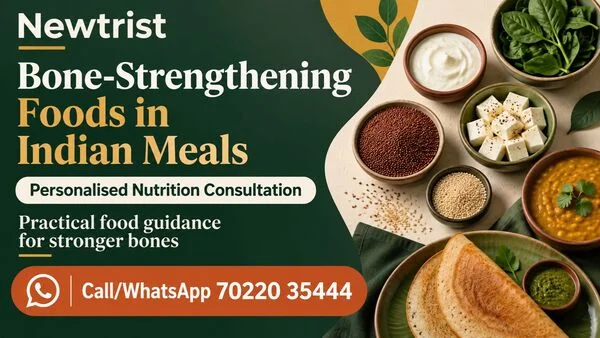
How Should Bone-Strengthening Foods Fit Into Indian Meals?
The internet can give you a long list of bone strengthening foods. What it cannot see is what you normally cook at home.
That distinction matters.
You do not necessarily need to replace rice, roti, dosa, idli or other familiar staples with special “bone-health foods”. Instead, look at what accompanies them.
A dosa breakfast, for example, becomes nutritionally different when accompanied by sambar and curd rather than being eaten largely on its own.
Rice does not need to disappear from lunch. It can sit alongside dal, vegetables and an appropriate calcium-containing food.
Roti does not need to be replaced simply because another grain is promoted as healthier. The more important question may be whether the meal includes a meaningful protein food and enough variety.
This is a more realistic way to use foods for strong bones: improve the nutritional strength of familiar meals rather than rebuilding the entire diet around a list of individual ingredients.
It also makes the diet easier to adapt to regional preferences, household cooking and vegetarian, egg-based or non-vegetarian eating patterns.
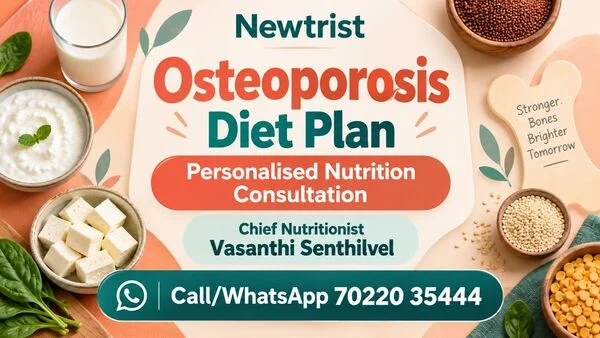
Sample 1-Day Osteoporosis Diet Plan
The following example shows how different foods could be distributed through one familiar Indian-style day.
It is an illustration, not a personalised diet prescription.
| Meal | Sample food combination | Purpose within the day |
| Breakfast | Ragi dosa with sambar and curd | Combines a familiar breakfast with pulses and calcium-containing foods |
| Mid-morning | Seasonal fruit with milk | Adds fruit and another calcium-containing food |
| Lunch | Rice, rajma, cooked vegetables and curd | Combines a staple, protein food, vegetables and calcium |
| Evening | Roasted chana with seasonal fruit | Provides a protein-containing snack and dietary variety |
| Dinner | Phulka with vegetables and paneer, tofu, egg or fish according to food preference | Provides a clear protein choice as part of the evening meal |
The specific foods can be changed according to regional and family preferences.
The quantities should not be copied automatically.
A smaller older adult with limited appetite may require a very different approach from an active adult who is also trying to manage body weight. Body size, appetite, activity, nutritional status and other health concerns can all change what is appropriate.
That is the limitation of any sample osteoporosis diet plan. It can demonstrate how foods might fit together, but it cannot establish what an individual person needs.
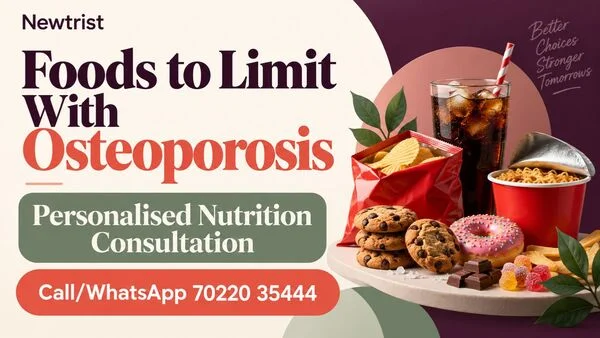
What Foods Should Be Limited With Osteoporosis?
An osteoporosis diet usually does not need a long list of completely forbidden foods.
The more useful question is whether foods with little nutritional value are repeatedly taking the place of foods that could contribute more to the diet.
If sweets, sugary foods, highly refined snacks or packaged snack foods frequently replace proper meals or nourishing snacks, there are fewer opportunities during the day to include foods that provide useful nutrition.
Very restrictive eating creates a different problem.
Removing several foods or whole food groups without suitable replacements can reduce dietary variety and make nutritional adequacy more difficult.
The aim is therefore not to develop anxiety around individual foods. It is to make sure that most eating opportunities contribute meaningfully to the overall diet.
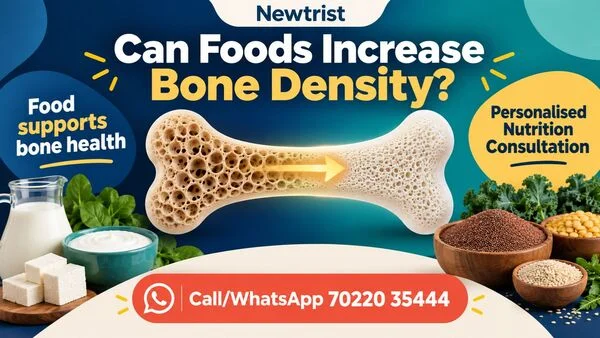
Can Foods Increase Bone Density?
Bone density is influenced by multiple factors, so it would be misleading to describe one food or diet as capable of rebuilding lost bone by itself.
Nutrition still matters because bone tissue requires an adequate supply of nutrients.
Instead of looking for one powerful food, look for dietary problems that can actually be changed:
- Are dependable calcium sources rarely included?
- Are main meals consistently low in protein?
- Is the person’s total food intake very limited?
- Has the diet become unnecessarily restrictive?
- Are nutritious foods regularly being displaced by less useful choices?
Those questions can reveal practical areas for improvement.
They are more useful than repeatedly adding individual “bone foods” without knowing whether the complete diet is appropriate.
When Does a Bone Health Nutritionist Become Useful?
A food list can tell you that curd contains calcium or that dal provides protein.
It cannot tell you whether your current meals provide what you need.
That difference becomes important when the situation is more complicated than choosing healthy foods.
Someone with a small appetite may need to make limited meals nutritionally more useful.
Someone who does not consume dairy foods needs appropriate alternatives rather than simply removing milk and curd.
Someone managing body weight may need to change portions without making the diet nutritionally weak.
Another person may have several nutrition-related health concerns that need to be accommodated within the same meals.
Following a different internet diet for every concern can quickly create contradictory food rules.
This is where a bone health nutritionist can add value: not by producing another generic list of foods, but by assessing how bone-health nutrition fits into the person’s complete eating pattern.
Chief Nutritionist Vasanthi Senthilvel provides personalised clinical nutrition at Newtrist based on the individual’s current diet, nutritional requirements, food preferences, routine and relevant health goals.
The starting point is the food you are already eating.
- Which parts of your diet are working well?
- Where are the important gaps?
- Which recommendations actually fit your preferences and household meals?
- Which foods need suitable alternatives?
- How should portions and combinations change when bone health is only one of several nutritional priorities?
Those are questions a standard osteoporosis chart cannot answer for an individual.
If you already understand that calcium, vitamin D and protein matter but are still unsure what your own meals should look like, a personalised diet with Chief Nutritionist Vasanthi Senthilvel can turn general bone-health advice into a practical eating pattern designed around your needs.
Frequently Asked Questions
Can a Vegetarian Diet Support Bone Health?
Yes. A vegetarian diet can include useful sources of calcium and protein.
The important issue is variety. Depending heavily on cereals while eating only small amounts of pulses, dairy or suitable alternatives may leave the diet less balanced than intended.
A vegetarian osteoporosis diet should therefore be assessed by what it contains rather than by the absence of meat or fish.
Are Fruits Important in an Osteoporosis Diet?
Fruits can contribute vitamins, minerals, fibre and overall dietary variety, but they should not be treated as the main source of calcium or protein.
Their role is to contribute to a nutritious overall eating pattern rather than act as a specific treatment for osteoporosis.
Choose a variety that fits naturally into the person’s normal diet.
Is Ragi Better Than Rice or Wheat for Osteoporosis?
Ragi can contribute more calcium than many commonly used cereal staples, but this does not make rice or wheat unsuitable.
A meal should be assessed as a whole.
Replacing rice with ragi will not solve a diet that is otherwise consistently low in protein, calcium-containing foods or overall nutritional variety.
Ragi can be useful without needing to become the compulsory grain at every meal.
Does an Osteoporosis Diet Need to Change After Menopause?
The nutritional principles remain similar, but individual priorities may change.
After menopause, bone health may become a greater concern while appetite, body weight and other nutritional needs can also change.
The appropriate eating pattern should therefore be based on the individual’s current requirements rather than on a standard post-menopause diet chart.
What if Milk Causes Digestive Discomfort?
Milk does not need to be forced into the diet simply because calcium is important.
Depending on individual tolerance and food preferences, other suitable calcium-containing foods may be used instead.
The important step is to make sure removing milk does not unintentionally remove one of the diet’s main dependable sources of nutrition without an appropriate replacement.
How Long Should an Osteoporosis Diet Be Followed?
Bone-supportive nutrition is better considered part of regular long-term eating rather than a short-term diet.
A seven-day plan can demonstrate combinations, but its value is limited if the underlying eating pattern returns to being nutritionally weak afterwards.
The most useful changes are therefore those that can become part of everyday meals and be maintained consistently.
Author
Chief Nutritionist Vasanthi Senthilvel leads Newtrist Nutritionist Dietitian Dietician, providing personalised diet plans for weight management and clinical nutrition for children, adolescents, adults and families.
She has 21 years of experience in nutrition and has received professional recognition for her work.
- Pride of Bharat Awards 2026: Outstanding Achievement in Holistic Health & Nutrition Innovation
- Doctor of The Year: Nutritionist 2026: Excellence in Clinical Nutrition and Weight Loss.
Her approach considers age, growth, health history, medical conditions, laboratory reports, medication, body composition, weight history, dietary preferences, regional food habits, family routines, activity, sleep and personal health goals. Recommendations are developed according to individual needs rather than using one standard diet for everyone.
Consultations are available in person at Bangalore HSR Layout, Koramangala, Bellandur, Haralur and Electronic City, as well as online across India.
Independent Medical Review Panel
Newtrist health and nutrition articles undergo medical review, where appropriate, by doctors with relevant specialist expertise. The medical professionals listed below contribute to Newtrist’s review process within their respective specialties.
| Speciality | Doctor |
|---|---|
| Endocrinology | Dr Vinay Prasad MBBS, MD, DM |
| Gastroenterology & Hepatology | Dr Sunil kumar N MBBS, MD, DM |
| Gynaecology | Dr Prathiba G MBBS, DNB, FIRM, FMAS |
| Nephrology | Dr Priyashree R MBBS, MD, DNB, DM |