
Written by: Chief Nutritionist Vasanthi Senthilvel
21 years of experience | Newtrist Nutritionist Dietitian Dietician
Best Nutritionist in Bangalore with multiple awards for excellence in clinical nutrition, weight loss, holistic health and nutrition innovation.
Medically reviewed by: Dr Priyashree R MBBS, MD, DNB, DM
Medical Disclaimer: Nutritional needs vary based on an individual’s profile. The information on this page is for general educational purposes only and is not intended to replace personalised medical or nutrition care.
A kidney stone diet usually does not require avoiding calcium, fruits, vegetables or normal Indian meals. The more useful goal is to reduce dietary factors that may contribute to another stone without making the diet unnecessarily restrictive.
For many people, the important areas are fluid intake, excess sodium, calcium balance, protein habits and oxalate when it is relevant. Which one deserves the most attention depends on the type of stone and what the person regularly eats and drinks.
Key Takeaway: Most people with kidney stones do not need every possible food restriction. A kidney stone diet should support regular fluid intake, reduce excess sodium, keep dietary calcium appropriately included and address oxalate or animal-protein intake when relevant. The priorities can differ according to stone type and usual eating habits.
Table of Contents

How Can Diet Affect Kidney Stone Risk?
Diet can influence the conditions that allow some kidney stones to form or recur.
The important factor is usually not one individual food. It is the pattern created by fluid intake, sodium, calcium, protein choices and other relevant foods over time.
That makes prevention less about finding a “perfect” kidney stone food and more about identifying which part of the usual diet deserves changing.
Why does stone type matter?
Different stones can have different nutritional priorities.
A calcium oxalate stone raises important questions about calcium, oxalate, sodium and fluid. A uric acid stone creates a different dietary focus.
Knowing the stone type helps narrow the food strategy instead of applying every kidney-stone restriction at once.
Why is preventing another stone the main dietary goal?
After someone has formed a stone, nutrition is most useful when it addresses habits that may contribute to recurrence.
- Is fluid intake regular throughout the day?
- Are salty foods and accompaniments frequent?
- Have calcium-containing foods been unnecessarily removed?
- Does animal protein dominate many meals?
- Is oxalate actually relevant to the type of stone?
These questions reveal more than a generic list of foods to eat and avoid.

What Foods Can You Eat With Kidney Stones?
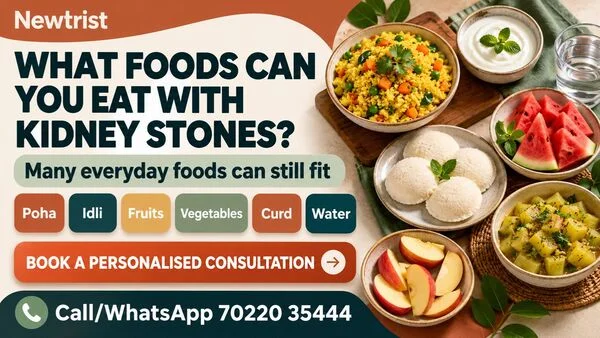
A kidney stone diet can include calcium-containing foods, fruits, vegetables, staple foods and suitable sources of protein.
The aim is to maintain variety while making targeted changes where they are needed.
Calcium-containing foods
Foods such as milk and curd can remain in many kidney stone diets.
The word “calcium” in a stone type should not automatically be interpreted as a reason to remove calcium-containing foods.
The detailed reason calcium needs to be handled carefully becomes particularly important when calcium oxalate stones are involved and is explained below.
Fruits and vegetables
Fruits and vegetables can usually remain an important part of the diet.
There is little value in restricting the entire food group because a person has had a kidney stone. Specific choices become more relevant only when a particular nutritional factor requires closer attention.
Keeping a reasonable variety also makes stone-prevention eating easier to maintain.
Rice, roti and other staple foods
Rice, roti and other familiar grain-based foods can continue to form the base of everyday meals.
Kidney stones alone do not make these staple foods unsuitable.
What may matter more is what regularly accompanies them, particularly when meals include several salty packaged, processed or preserved foods.
Protein choices
Dal, pulses, eggs, dairy foods, fish and chicken may all fit into kidney stone nutrition.
The important consideration is the overall protein pattern rather than labelling individual protein foods as universally suitable or unsuitable.
For some people, the frequency and amount of animal protein may deserve closer attention. That does not require eliminating every animal-protein food.
Which Foods May Need Limiting With Kidney Stones?
Foods may need limiting when they contribute to a dietary factor associated with the person’s stone risk.
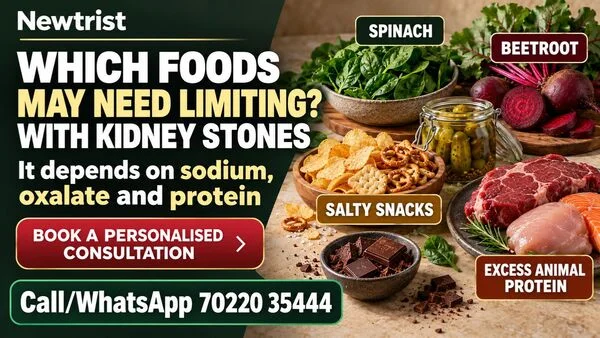
The main areas to consider are high-sodium foods, excessive animal protein and high-oxalate foods when oxalate is relevant.
High-sodium foods
Excess sodium can be important in kidney stone prevention.
Common sources in everyday Indian eating include:
- pickles
- papad
- packaged savoury snacks
- instant foods
- salty sauces and chutneys
- processed foods
- heavily salted restaurant and takeaway meals
The issue is often cumulative. Several moderately salty foods eaten across the day can contribute more sodium than the person realises.
The practical goal is therefore to identify repeated sources of excess sodium rather than make every home-cooked meal unnecessarily bland.
Excessive animal protein
Animal-protein foods do not need to be eliminated, but very frequent or excessive intake may deserve attention for some stone-formers.
The useful question is how strongly these foods dominate the person’s usual eating pattern.
Any adjustment should make sense for the stone type and overall diet rather than becoming a blanket rule to stop eating animal protein.
High-oxalate foods when oxalate is relevant
Oxalate becomes particularly relevant in calcium oxalate stone prevention.
Some foods contain considerably more oxalate than others, but their presence in the diet does not automatically justify a strict restriction.
The first decision is whether oxalate is genuinely an important dietary issue for the person. The dedicated low-oxalate section below explains how that decision changes food choices.
Why should dietary calcium not be restricted automatically?
A calcium-containing stone does not mean that less dietary calcium is always better.
Calcium and oxalate interact within the digestive tract. This means indiscriminately removing calcium-containing foods can work against the nutritional logic of calcium oxalate stone prevention.
The goal is therefore to keep calcium appropriately included while considering whether oxalate, sodium and other dietary factors also require attention.
Does Everyone With Kidney Stones Need a Low-Oxalate Diet?
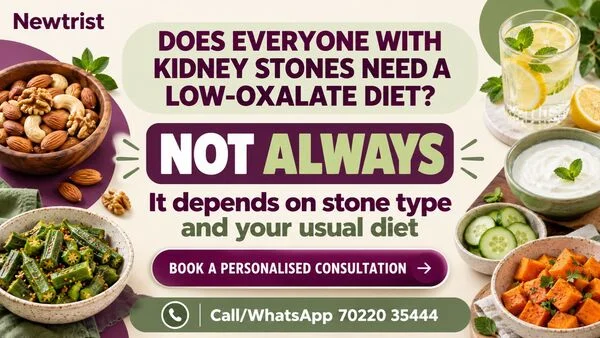
No. A low-oxalate diet is not necessary for every person with kidney stones.
It becomes more relevant when calcium oxalate stones are involved and the person’s usual food intake suggests that oxalate is an important contributor.
Someone with another stone type may have different nutritional priorities.
When does oxalate deserve more attention?
Oxalate deserves closer attention when meaningful amounts are appearing regularly in the person’s diet and calcium oxalate stones are relevant.
The useful question is not simply:
“Does this food contain oxalate?”
It is:
“How much does this food contribute to my usual diet, and how often do I eat it?”
An occasional higher-oxalate food and a daily pattern containing concentrated sources are different situations.
This helps keep the diet targeted instead of removing foods unnecessarily.
Why do food combinations matter?
Kidney stone nutrition needs to consider meals, not just isolated nutrients.
Calcium and oxalate are a good example. How these foods are included within the eating pattern can matter more than placing one food permanently on an “avoid” list.
This is why food combinations can provide a better basis for practical advice than judging every ingredient on its own.
Why Does Fluid Intake Matter for Kidney Stone Prevention?
Adequate fluid intake helps increase urine volume, which makes substances involved in stone formation less concentrated.
For many people who form kidney stones, consistent fluid intake is therefore an important prevention priority.
Individual requirements can vary according to factors such as:
- body size
- physical activity
- sweating
- weather
- work environment
- individual health considerations
People living or working in hot conditions may also need a different practical approach from someone spending most of the day in a cooler environment.
The important habit is regular intake across the day, rather than long periods with very little fluid followed by occasional large amounts.

How Does Diet Differ by Kidney Stone Type?
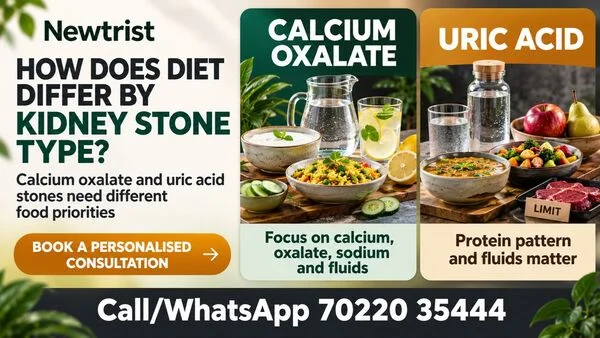
The nutritional emphasis changes according to the type of stone.
Knowing the stone type helps turn general kidney stone advice into a more selective food strategy.
Calcium oxalate stones
For calcium oxalate stones, several dietary factors may need to be considered together:
- fluid intake
- sodium
- dietary calcium
- oxalate
- overall protein pattern
The key point is that oxalate should not be managed in isolation.
Someone can concentrate heavily on avoiding oxalate while overlooking another repeated dietary habit that also deserves attention.
Uric acid stones
Uric acid stones create a different nutritional focus.
The overall pattern and frequency of certain animal-protein foods may become more relevant, alongside fluid intake and the rest of the diet.
Advice developed specifically for calcium oxalate stones should therefore not automatically be copied for someone with a different stone type.
Why can stone analysis change dietary priorities?
Stone analysis gives nutrition advice a clearer target.
Without knowing the stone type, a person may begin several restrictions simply because they are commonly mentioned in kidney-stone information.
Once the stone type is known, it becomes easier to separate broadly useful habits from restrictions that are relevant only to particular stones.
Sample 1-Day Kidney Stone Diet Plan
The following example illustrates a familiar Indian eating pattern for calcium oxalate stone prevention. It is an educational example, not a universal prescription.
Assumptions: This example represents an adult whose main nutritional goal is calcium oxalate stone prevention and who does not have another nutritional condition requiring a substantially different eating pattern.
| Meal | Menu |
|---|---|
| Breakfast | Vegetable poha with curd and fresh fruit |
| Mid-morning | Fresh seasonal fruit |
| Lunch | Rice or roti with dal, a cooked vegetable preparation and curd |
| Evening | A simple homemade low-salt snack |
| Dinner | Rice or roti with vegetables and an appropriate protein food |
Fluid intake would continue regularly through the day rather than being concentrated around individual meals.
This example is meant to show that familiar foods can remain and that calcium-containing foods do not automatically need to disappear.
It would need to change if the person had a different stone type, stones continued to recur, sodium or animal-protein intake required greater adjustment, oxalate became a significant concern or fluid requirements differed.
When Do Recurrent Kidney Stones Need a Personalised Food Strategy?
A personalised food strategy becomes particularly useful when stones recur or general advice has created more restrictions without making the priorities any clearer.
The reason can be very different from one person to another.
One person’s normal diet may contain several frequent sodium sources. Another may have removed calcium-containing foods unnecessarily. Someone else may have a pattern in which oxalate, animal protein or inconsistent fluid intake deserves more attention.
At that point, the useful question is no longer:
“What should everyone with kidney stones avoid?”
It becomes:
“Which part of my usual diet is most relevant to my stone risk?”
Chief Nutritionist Vasanthi Senthilvel can consider the stone type, recurrence pattern and usual food intake together to identify which nutritional priorities deserve attention.
The aim is to turn broad prevention advice into a personalised nutrition plan that makes clear what can stay, what needs changing and how those changes can work within normal Indian meals.
FAQs About a Kidney Stone Diet
Is a kidney stone diet the same as a renal diet for kidney disease?
No. A kidney stone diet focuses on dietary factors involved in stone formation and recurrence. A renal diet for kidney disease is designed around nutritional changes associated with kidney function, so the food priorities can be different.
What if I do not know which type of kidney stone I had?
Avoid assuming that every stone-specific restriction applies. General habits such as keeping fluid intake regular and avoiding excessive sodium may still be relevant, but strict calcium, oxalate or other stone-specific restrictions should not be chosen simply from a generic food list.
Can a vegetarian diet work for kidney stone prevention?
Yes. A vegetarian eating pattern can be adapted for kidney stone prevention. The important consideration is how calcium, oxalate, sodium, protein and fluid fit into the person’s overall eating pattern rather than whether the diet contains meat.
Can eating out fit into a kidney stone diet?
It can, depending on the person’s dietary priorities. Food prepared outside the home can make sodium and ingredient amounts harder to judge, so choices may need to be more selective when those factors are important.
Author
Chief Nutritionist Vasanthi Senthilvel leads Newtrist Nutritionist Dietitian Dietician, providing personalised diet plans for weight management and clinical nutrition for children, adolescents, adults and families.
She has 21 years of experience in nutrition and has received professional recognition for her work.
- Pride of Bharat Awards 2026: Outstanding Achievement in Holistic Health & Nutrition Innovation
- Doctor of The Year: Nutritionist 2026: Excellence in Clinical Nutrition and Weight Loss.
Her approach considers age, growth, health history, medical conditions, laboratory reports, medication, body composition, weight history, dietary preferences, regional food habits, family routines, activity, sleep and personal health goals. Recommendations are developed according to individual needs rather than using one standard diet for everyone.
Consultations are available in person at Bangalore HSR Layout, Koramangala, Bellandur, Haralur and Electronic City, as well as online across India.
Independent Medical Review Panel
Newtrist health and nutrition articles undergo medical review, where appropriate, by doctors with relevant specialist expertise. The medical professionals listed below contribute to Newtrist’s review process within their respective specialties.
| Speciality | Doctor |
|---|---|
| Endocrinology | Dr Vinay Prasad MBBS, MD, DM |
| Gastroenterology & Hepatology | Dr Sunil kumar N MBBS, MD, DM |
| Gynaecology | Dr Prathiba G MBBS, DNB, FIRM, FMAS |
| Nephrology | Dr Priyashree R MBBS, MD, DNB, DM |