
Written by: Chief Nutritionist Vasanthi Senthilvel
21 years of experience | Newtrist Nutritionist Dietitian Dietician
Best Nutritionist in Bangalore with multiple awards for excellence in clinical nutrition, weight loss, holistic health and nutrition innovation.
Medically reviewed by: Dr Prathiba G MBBS, DNB, FIRM, FMAS | Dr Sunil kumar N MBBS, MD, DM | Dr Vinay Prasad MBBS, MD, DM
Medical Disclaimer: Nutritional needs vary based on an individual’s profile. The information on this page is for general educational purposes only and is not intended to replace personalised medical or nutrition care.
Antioxidants often appear in conversations about berries, green tea, turmeric, supplements and foods labelled as “superfoods.”
But you do not need an exotic ingredient to get them.
Many antioxidant foods are already familiar parts of Indian eating, including vegetables, fruits, pulses, herbs, spices, nuts and seeds.
The more useful question is not, “Which food has the most antioxidants?”
It is:
“Is my regular diet giving me a useful range of antioxidant compounds as part of an overall healthy eating pattern?”
That distinction matters because antioxidant foods can support health, but they do not work like treatment and no single ingredient can compensate for an otherwise poorly balanced diet.
Key takeaway: Antioxidant foods provide vitamins and plant compounds that help the body manage oxidative stress. Vegetables, fruits, pulses, herbs, spices, nuts and seeds can all contribute different antioxidants. For long-term health, variety and the overall dietary pattern matter more than finding one “powerful” antioxidant food or taking high-dose supplements.
Table of Contents

What Are Antioxidants?
Antioxidants are substances that help control reactions involving unstable molecules commonly called free radicals.
Free radicals are produced naturally during normal metabolism.
They may also be influenced by factors such as:
- air pollution
- ultraviolet exposure
- inflammation
- certain environmental exposures
The body already has its own antioxidant defence systems.
Food adds to this broader protective network through nutrients and naturally occurring compounds such as:
- vitamin C
- vitamin E
- carotenoids
- polyphenols
- selenium involved in antioxidant enzymes
- numerous other plant compounds
Antioxidants therefore are not one nutrient that needs to be consumed in the highest possible amount.
They are part of a complex system.
What Is Oxidative Stress?
Oxidative stress occurs when reactive molecules are produced faster than the body can adequately control them.
Free radicals themselves are not automatically harmful.
They also participate in normal processes such as cell signalling and immune responses.
The issue is prolonged imbalance.
This is why phrases such as “eliminate free radicals” or “flush out oxidative toxins” oversimplify what happens inside the body.
The goal of nutrition is not to remove all oxidation.
It is to support normal biological balance.
Which Everyday Foods Are Rich in Antioxidants?
Antioxidant compounds occur across many ordinary foods.
Different colours and food groups tend to provide different combinations.
| Food Group | Familiar Examples | Compounds They May Contribute |
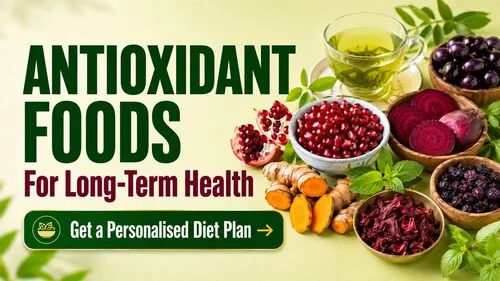
| Green vegetables | Spinach, amaranth, drumstick leaves, coriander | Carotenoids, vitamin C, polyphenols |
| Orange and yellow vegetables | Carrot, pumpkin, yellow capsicum | Carotenoids |
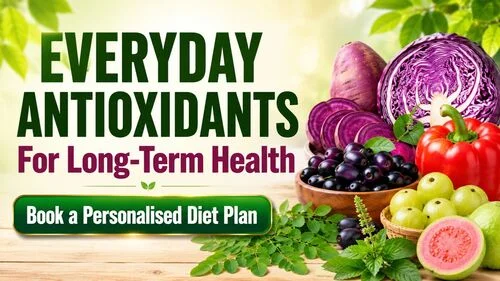
| Red and purple foods | Tomato, beetroot, brinjal, red cabbage | Lycopene, betalains, anthocyanins and other polyphenols |
| Fruits | Guava, amla, citrus fruits, papaya, pomegranate | Vitamin C, carotenoids, polyphenols |
| Pulses and legumes | Rajma, black gram, chickpeas, lentils | Polyphenols and other plant compounds |
| Nuts and seeds | Walnuts, groundnuts, sesame and suitable seeds | Vitamin E and polyphenols |
| Herbs and spices | Turmeric, ginger, cloves, cinnamon, coriander | Various polyphenols and aromatic plant compounds |
| Tea and coffee | Tea leaves and coffee beans | Polyphenols |
The purpose of this table is not to identify a winner.
It shows why antioxidant intake is better built through different foods rather than one ingredient.
Why Does Variety Matter More Than the “Highest-Antioxidant” Food?
Different antioxidant compounds behave differently in the body.
For example:
- tomatoes can provide lycopene
- carrots and pumpkin can provide beta-carotene
- amla and guava can provide vitamin C
- purple and red plant foods may provide anthocyanins or related polyphenols
- tea can provide flavonoids and other polyphenols
- turmeric contains curcuminoids
Eating one of these foods every day does not provide everything the others contribute.
That is why searching for the single strongest antioxidant food is less useful than regularly rotating plant foods.
A varied diet also provides fibre, vitamins, minerals and other nutrients alongside antioxidants.
Does Eating Different Colours Help?
It can be a useful practical reminder.
Plant colours often come from pigments with biological activity.
Orange and yellow foods may contain carotenoids.
Red foods may contain compounds such as lycopene.
Purple and blue foods can contain anthocyanins and related polyphenols.
Green vegetables may provide carotenoids, vitamin C and numerous other compounds even though green is the dominant visible colour.
But you do not need a rainbow on every plate.
The purpose is simply to avoid eating the same limited range of vegetables and fruits every week.
Are Indian Herbs and Spices Good Sources of Antioxidants?
Yes. Many herbs and spices contain concentrated plant compounds.
- turmeric
- ginger
- cloves
- cinnamon
- cumin
- coriander
- pepper
- cardamom
This is one advantage of using spices as part of normal Indian cooking.
But concentrated laboratory antioxidant activity does not mean that eating very large amounts of a spice will produce proportionally greater health benefits.
Culinary use and high-dose extracts are also not the same thing.
A teaspoon used in food should not be interpreted as equivalent to a concentrated supplement.
Does Cooking Reduce Antioxidants?
Cooking can reduce some antioxidant compounds while improving the availability of others.
For example, prolonged heating can reduce vitamin C because it is sensitive to heat.
On the other hand, cooking can soften plant tissues and make certain carotenoids easier to absorb.
Tomatoes are a useful example because cooking can improve the availability of lycopene.
So raw food is not automatically more nutritious than cooked food.
A mixture of appropriately prepared raw and cooked plant foods can provide different nutritional advantages.
Can Food Combinations Affect Antioxidant Absorption?
Yes.
Some antioxidant compounds are fat-soluble.
Carotenoids such as beta-carotene and lycopene, for example, can be absorbed more effectively when eaten as part of a meal containing some dietary fat.
That does not require large quantities of oil.
It simply shows that nutrition is not determined by the nutrient content of an individual food alone.
Preparation and food combinations can influence how much the body can actually use.
How Do Antioxidant Foods Relate to Long-Term Health?
Antioxidant-rich plant foods can form part of dietary patterns associated with better long-term health.
But it is important to understand what that means.
Eating tomatoes does not guarantee protection from heart disease.
Amla does not prevent diabetes.
Turmeric does not prevent cancer.
Long-term health is influenced by many factors, including:
- the complete dietary pattern
- physical activity
- sleep
- body weight
- genetics
- medications
- existing medical conditions
- environmental exposures
When diets rich in plant foods are associated with better outcomes, antioxidants may be one contributor among many.
Fibre, healthy fats, vitamins, minerals and reduced reliance on highly processed foods may all be important at the same time.
What Should You Think About When a Product Says “High in Antioxidants”?
Treat the antioxidant claim as only one piece of information.
A packaged food or drink can contain antioxidant compounds while also containing substantial amounts of:
- added sugar
- sodium
- refined ingredients
- calories
A front-of-pack claim does not tell you whether the complete product suits your needs.
Instead of asking:
“Does this contain antioxidants?”
also ask:
“What else does this product contain, and how does it fit into my diet?”
That prevents health claims from becoming a substitute for nutritional judgement.
Are Antioxidant Juices Better Than Whole Fruits?
Not automatically.
Whole fruit retains its natural fibre and food structure.
Juicing removes or reduces much of that structure and makes it easier to consume several fruits quickly.
This can be relevant when someone is managing:
- blood glucose
- body weight
- appetite
- overall carbohydrate intake
A juice may contain vitamin C and plant compounds, but that does not automatically make it nutritionally superior to eating the whole fruit.
The complete nutritional context matters.
Do You Need Antioxidant Supplements?
Most people should not assume that high-dose antioxidant supplements are better than antioxidant-rich foods.
Supplements provide isolated compounds in concentrations that can be very different from the amounts naturally obtained from food.
They may also:
- interact with medicines
- provide unnecessarily high doses
- be inappropriate around certain medical treatments
- create the false impression that food quality no longer matters
There can be legitimate reasons for supplementation when a particular nutrient is needed.
But “I want more antioxidants” is not enough information to decide that a supplement is necessary.
Why Antioxidant Scores Do Not Tell the Whole Story
Some foods are promoted using laboratory measurements of antioxidant capacity.
These tests can be scientifically useful in particular contexts.
But they do not directly tell you how beneficial a food will be after it is:
- digested
- absorbed
- metabolised
- altered by gut microbes
- distributed throughout the body
The food with the highest laboratory score is therefore not automatically the food that will produce the greatest health benefit.
This is one reason antioxidant rankings should not determine your entire diet.
How Can You Get More Antioxidants From Everyday Indian Foods?
You do not need a special antioxidant diet.
A few practical habits can broaden your intake naturally.
Rotate vegetables across the week
Instead of repeatedly buying the same vegetables, use seasonal choices from different plant groups and colours.
Choose whole fruits regularly
Whole fruits provide antioxidant compounds alongside fibre, water and micronutrients.
Continue using herbs and spices in normal cooking
Indian food already provides many opportunities to include plant compounds naturally through seasoning.
Keep pulses and legumes in the diet
Pulses contribute more than protein and fibre. They also contain a variety of plant compounds.
Include suitable nuts and seeds
These can contribute vitamin E, polyphenols, healthy fats and minerals.
The goal is not to tick off a long antioxidant checklist each day.
It is to make plant foods a regular part of the eating pattern.
Do You Need an Antioxidant Detox?
No.
The body already has organs and biological systems responsible for processing and eliminating waste products.
Antioxidant foods can support normal nutrition, but they do not “flush toxins” out of the body.
Juice cleanses, detox teas and restrictive detox diets are therefore unnecessary for getting antioxidants.
They may also reduce protein, energy or overall nutritional adequacy if they replace normal meals.
A sustainable dietary pattern is more useful for long-term health than short periods of extreme eating.
When Do Antioxidant Food Choices Need to Be More Individual?
For most healthy adults, eating a wider variety of plant foods is reasonable general advice.
But specific health circumstances can change which choices are appropriate.
Diabetes
Fruit, whole grains and other plant foods can provide antioxidants, but carbohydrate quantity and blood glucose response still matter.
Kidney disease
Some foods appearing on generic “antioxidant-rich foods” lists may need modification depending on kidney function and medical advice.
Gastrointestinal conditions
Raw vegetables, certain fruits or large quantities of plant foods may not be equally well tolerated by everyone.
Weight management
Antioxidant-rich does not mean calorie-free. Nuts, seeds and some beverages can still contribute meaningful energy.
Medication use
Concentrated herbal products and supplements may sometimes interact with treatment.
Once these factors enter the picture, the useful question changes from “Which antioxidant food is healthiest?” to “Which foods are appropriate for this person’s complete health situation?”
When Is Personalised Nutrition More Useful Than Another Antioxidant Food List?
You probably do not need a nutritionist simply to learn that vegetables and fruits contain antioxidants.
Personalised guidance becomes more useful when you already know which foods are considered healthy but do not know how they fit your own circumstances.
For example:
- Which fruits suit my blood glucose management?
- Can I use nuts regularly while trying to reduce weight?
- Should I take turmeric or antioxidant supplements with my medicines?
- Which plant foods suit my digestive condition?
- Am I focusing on antioxidant foods while overlooking protein or another nutritional priority?
These are no longer questions about antioxidants alone.
They are questions about the whole diet.
Chief Nutritionist Vasanthi Senthilvel at Newtrist Nutritionist Dietitian Dietician provides personalised diet planning for weight management and clinical nutrition based on individual food habits, medical conditions, medications, lifestyle, preferences and nutritional requirements.
The aim is not to prescribe the largest possible number of antioxidant foods.
It is to identify which dietary changes genuinely deserve priority for you.
Frequently Asked Questions
Do antioxidant foods need to be organic?
No. Conventionally grown vegetables and fruits can still provide vitamins, minerals and antioxidant plant compounds. Food safety, variety, affordability and regular intake are more important than assuming only organic produce is nutritious.
Are seasonal and local foods good sources of antioxidants?
Yes. Seasonal and locally available vegetables, fruits, herbs and pulses can provide a wide range of antioxidant compounds. Imported foods are not necessary to build an antioxidant-rich diet.
Do tea and coffee contain antioxidants?
Yes. Tea and coffee contain several polyphenols. Their overall nutritional impact also depends on how they are prepared, particularly the amount of added sugar or other ingredients.
Is dark chocolate an antioxidant food?
Cocoa contains polyphenols, but chocolate products vary considerably in cocoa content, sugar and fat. The presence of antioxidant compounds does not mean chocolate should be eaten without considering quantity and overall diet.
Can children eat antioxidant-rich foods?
Yes. Vegetables, fruits, pulses, nuts, seeds and other suitable plant foods can form part of a child’s balanced diet. Children do not need antioxidant supplements or restrictive “detox” diets for general health.
Final Takeaway
Antioxidants are useful components of a healthy diet, but they are not a shortcut to long-term health.
The most useful antioxidant foods are often ordinary foods you can eat regularly: vegetables, fruits, pulses, herbs, spices, nuts and seeds.
What matters is the dietary pattern they help create.
Rather than asking:
“Which antioxidant food is the most powerful?”
a better question is:
“Is my overall diet providing the foods and nutrients that suit my health and goals?”
If you know which foods are considered healthy but remain unsure how to fit them around weight management, diabetes, digestive concerns, medications or another health condition, personalised nutrition can help turn broad advice into a practical diet plan designed around your actual needs.
Author
Chief Nutritionist Vasanthi Senthilvel leads Newtrist Nutritionist Dietitian Dietician, providing personalised diet plans for weight management and clinical nutrition for children, adolescents, adults and families.
She has 21 years of experience in nutrition and has received professional recognition for her work.
- Pride of Bharat Awards 2026: Outstanding Achievement in Holistic Health & Nutrition Innovation
- Doctor of The Year: Nutritionist 2026: Excellence in Clinical Nutrition and Weight Loss.
Her approach considers age, growth, health history, medical conditions, laboratory reports, medication, body composition, weight history, dietary preferences, regional food habits, family routines, activity, sleep and personal health goals. Recommendations are developed according to individual needs rather than using one standard diet for everyone.
Consultations are available in person at Bangalore HSR Layout, Koramangala, Bellandur, Haralur and Electronic City, as well as online across India.
Independent Medical Review Panel
Newtrist health and nutrition articles undergo medical review, where appropriate, by doctors with relevant specialist expertise. The medical professionals listed below contribute to Newtrist’s review process within their respective specialties.
| Speciality | Doctor |
|---|---|
| Endocrinology | Dr Vinay Prasad MBBS, MD, DM |
| Gastroenterology & Hepatology | Dr Sunil kumar N MBBS, MD, DM |
| Gynaecology | Dr Prathiba G MBBS, DNB, FIRM, FMAS |
| Nephrology | Dr Priyashree R MBBS, MD, DNB, DM |