
Written by: Chief Nutritionist Vasanthi Senthilvel
21 years of experience | Newtrist Nutritionist Dietitian Dietician
Best Nutritionist in Bangalore with multiple awards for excellence in clinical nutrition, weight loss, holistic health and nutrition innovation.
Medically reviewed by: Dr Prathiba G MBBS, DNB, FIRM, FMAS | Dr Sunil kumar N MBBS, MD, DM | Dr Vinay Prasad MBBS, MD, DM
Medical Disclaimer: Nutritional needs vary based on an individual’s profile. The information on this page is for general educational purposes only and is not intended to replace personalised medical or nutrition care.
The ingredients you remove from your plate can matter just as much as the foods you leave on it.
You may have stopped eating curd, paneer and eggs, while continuing to enjoy familiar Indian meals such as dal, rice, roti, sambar and vegetable curries.
Your meals are now vegan. But are they providing the nutrition you need?
Removing dairy changes where your calcium comes from. Replacing eggs or paneer affects the protein contribution of your meals. Vitamin B12 needs particular attention because ordinary plant foods cannot reliably provide it.
These differences may not be obvious when your plate is full of wholesome, home-cooked food.
The good news is that you do not need expensive ingredients or an entirely new menu to build a balanced vegan diet.
What matters is how you combine familiar Indian foods across the day, in quantities that meet your nutritional needs.
Key Takeaway
A balanced vegan diet in India can provide enough protein through pulses, legumes and soy foods, and calcium through ragi, suitable leafy greens, calcium-set tofu and fortified plant milk. Vitamin B12 needs a dependable source from B12-fortified foods when relying on food alone. Planning these nutrients together across meals helps create a practical Indian vegan diet rather than simply replacing animal-derived ingredients with plant-based alternatives.
Table of Contents
What Changes Nutritionally When You Switch to a Vegan Diet?
Many everyday Indian dishes are already plant-based. However, removing animal-derived ingredients changes the nutrients some meals provide.
| Food Removed | Nutrients Previously Contributed | What Your Vegan Meals Need to Account For |
| Milk and curd | Protein and calcium | Suitable plant protein and calcium sources |
| Paneer | Protein and calcium | Legumes or soy foods, along with calcium-rich choices |
| Eggs | Protein and vitamin B12 | Plant protein and dependable B12-fortified foods |
You do not need to replace every nutrient within the same meal.
For example, if you remove curd from lunch, calcium can come from ragi at breakfast, leafy vegetables at lunch or calcium-set tofu at dinner.
The nutritional contribution of the entire day matters more than whether an individual dish contains every nutrient.
How Much Protein, Calcium and Vitamin B12 Do Indian Adults Need?
General Indian adult reference values provide a starting point for meal planning.
| Nutrient | Daily Reference |
| Protein | Approximately 0.83 g per kg of body weight for good-quality dietary protein |
| Calcium | 1,000 mg |
| Vitamin B12 | 2.2 micrograms |
For example, 0.83 g of protein per kilogram corresponds to approximately 50 g daily for an adult weighing 60 kg.
Predominantly cereal-based diets with lower protein quality may need a higher allowance, closer to 1 g per kilogram. Individual nutritional requirements also vary.
These numbers become useful when you connect them to the foods and portions you actually eat.
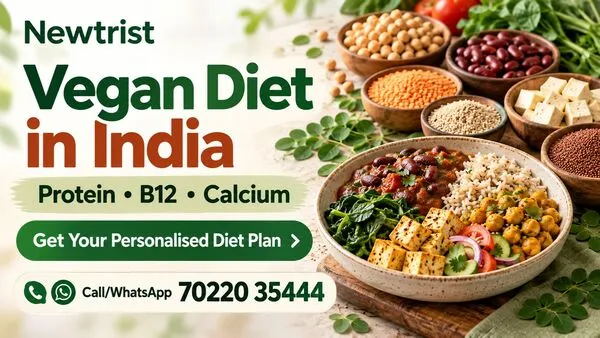
How Can You Get Enough Protein on an Indian Vegan Diet?
An Indian vegan diet can provide adequate protein through foods such as moong dal, chana, rajma, besan, soybeans and tofu.
The practical approach is to include substantial protein sources at different meals rather than depend on one protein-rich dish.
For example, besan chilla can contribute protein at breakfast, rajma at lunch and tofu at dinner.
Indian Vegan Foods That Provide Protein
| Food | Serving Size | Approximate Protein |
| Cooked lentils | 1 cup | 16 to 18 g |
| Cooked chickpeas | 1 cup | 14 to 15 g |
| Cooked rajma | 1 cup | 13 to 15 g |
| Besan | 60 g dry flour | 12 to 13 g |
| Soy chunks | 50 g dry | 25 to 26 g |
| Firm tofu | 100 g | 10 to 15 g |
Values are approximate and vary with food variety, preparation and serving weight.
Soy protein contains all nine essential amino acids.
Other plant foods provide different amino acid profiles. Eating adequate quantities and a variety of cereals, legumes, nuts and seeds throughout the day helps provide essential amino acids.
How Should Protein Fit Into Your Everyday Indian Meals?
Think about what provides protein in each main meal.
If your breakfast is usually poha or plain dosa, a substantial moong dal chilla or mixed-dal adai can offer a different protein contribution.
If lunch is mainly rice and vegetable curry, adding an appropriate serving of cooked chana or rajma can make the meal more protein-rich.
For dinner, tofu or another pulse-based preparation can accompany your regular chapati and vegetables.
You can retain familiar Indian dishes while making protein a deliberate part of your daily food choices.
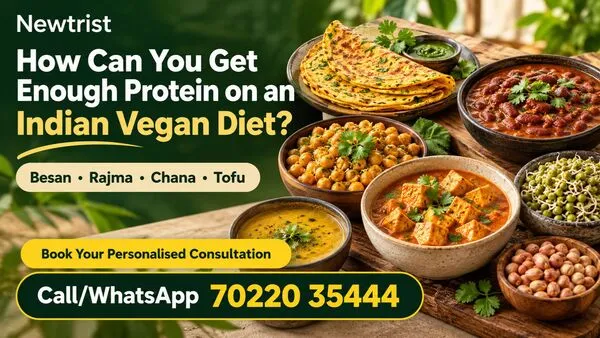
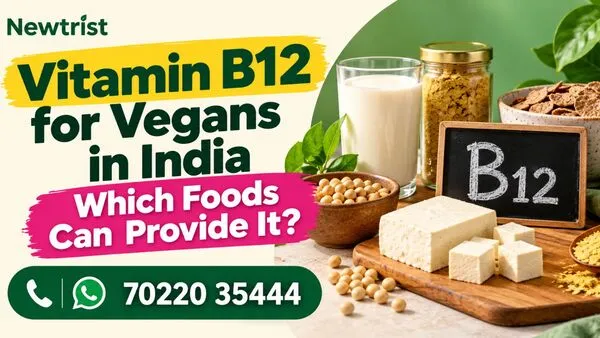
Vitamin B12 for Vegans in India: Which Foods Can Provide It?
Vitamin B12 supports normal nerve function, red blood cell formation and DNA synthesis.
Ordinary unfortified plant foods are not dependable sources of vitamin B12.
Even a varied menu containing vegetables, fruits, pulses, millets, nuts and seeds cannot be relied upon to meet the daily requirement.
For a food-based vegan diet, suitable choices are products specifically fortified with vitamin B12.
Depending on the manufacturer, these may include fortified plant milks, certain breakfast cereals and B12-fortified nutritional yeast.
How Can You Check Whether Fortified Foods Provide Enough B12?
Look at the amount of vitamin B12 declared per serving on the nutrition label.
For example, suppose a fortified plant milk provides 0.8 micrograms of B12 per serving.
Two servings contribute 1.6 micrograms. Another reliably fortified food would need to contribute the remaining 0.6 micrograms to reach the general adult reference of 2.2 micrograms.
This is why the amount of B12 in a product matters more than simply choosing something labelled vegan or plant-based.
Calcium-Rich Vegan Foods in India: How Can You Meet Your Needs Without Dairy?
Calcium supports healthy bones and teeth, along with normal muscle and nerve function.
Removing dairy does not mean removing calcium from your diet. It means choosing suitable plant-based sources that contribute towards your daily requirement.
Indian Vegan Foods That Provide Calcium
| Food | Practical Serving | How to Include It |
| Ragi (finger millet) | 50 to 60 g dry flour | Ragi roti, dosa or porridge |
| Unhulled sesame seeds | 1 tablespoon | Sesame chutney or podi |
| Drumstick leaves | 1 serving of cooked greens | Keerai, poriyal or dal |
| Amaranth leaves | 1 serving of cooked greens | Saag or vegetable preparation |
| Calcium-set tofu | 100 to 150 g | Tofu curry or vegetable stir-fry |
| Calcium-fortified soy milk | 200 to 250 ml | With breakfast or another meal |
Ragi fits naturally into everyday Indian cooking.
Approximately 60 g of dry ragi flour can provide around 200 to 210 mg of calcium.
Sesame seeds and suitable leafy greens contribute additional calcium. Calcium-set tofu and fortified plant milk can provide meaningful amounts depending on their nutritional composition.
Does Calcium Absorption Differ Between Plant Foods?
Yes. The calcium present in a food is not necessarily the amount absorbed by the body.
For example, spinach contains calcium, but its high oxalate content limits absorption.
Ragi and sesame also contain naturally occurring compounds that influence mineral availability. Preparation methods such as soaking and sprouting can improve mineral availability in certain foods.
Using a combination of suitable calcium sources gives you more variety than depending entirely on one ingredient.
Sample One-Day Indian Vegan Diet Plan
Knowing which foods provide protein, calcium and vitamin B12 is useful.
But how do you bring them together into breakfast, lunch and dinner without making your meals complicated?
The following one-day Indian vegan meal plan shows how familiar dishes can contribute towards these three nutritional priorities.
One-Day Indian Vegan Meal Plan
| Meal | Menu | Nutritional Focus |
| Breakfast | 2 besan chillas prepared using approximately 70 g besan and vegetables, with sesame chutney and 250 ml calcium- and B12-fortified soy milk | Protein, calcium and B12 |
| Mid-Morning | 1 guava and 30 g roasted chana | Additional protein |
| Lunch | 1 cup cooked rice, 1 cup cooked rajma and 1 serving drumstick leaves | Protein and calcium |
| Evening | 1 serving of B12-fortified breakfast cereal with a seasonal fruit | Additional B12 from the fortified cereal |
| Dinner | 2 ragi rotis prepared using approximately 60 g dry ragi flour, tofu vegetable curry made with 150 g calcium-set tofu and seasonal vegetables | Protein and calcium |
This example illustrates an adult meal pattern. Appropriate portions and total food intake depend on individual nutritional requirements.
How Does This Meal Plan Address Protein, Calcium and Vitamin B12?
The menu includes protein-containing foods at different meals, several calcium sources and identifiable foods that can provide B12.
Protein: Besan, roasted chana, rajma, soy milk, tofu and ragi contribute protein across the day.
Calcium: Ragi, sesame, drumstick leaves, calcium-set tofu and fortified soy milk provide calcium from different ingredients.
Vitamin B12: The fortified soy milk and breakfast cereal contribute the quantities declared on their nutrition labels.
For example, consider a meal plan using products with the following nutritional composition:
| Food | Quantity | Illustrative Contribution |
| Calcium- and B12-fortified soy milk | 250 ml | 300 mg calcium and 1 microgram B12 |
| Ragi flour | 60 g dry | Approximately 206 mg calcium |
| Calcium-set tofu | 150 g | 250 mg calcium |
| B12-fortified breakfast cereal | 1 serving | 1.2 micrograms B12 |
In this example, the soy milk, ragi and tofu together provide approximately 756 mg of calcium. Sesame, drumstick leaves and the other ingredients contribute additional calcium, with the total depending on their actual quantities.
The soy milk and cereal together provide 2.2 micrograms of vitamin B12, provided the selected products contain the stated amounts.
The example shows how a familiar menu can be evaluated using food quantities and declared nutritional values.
It does not mean that all soy milks, cereals or tofu products contain identical amounts.
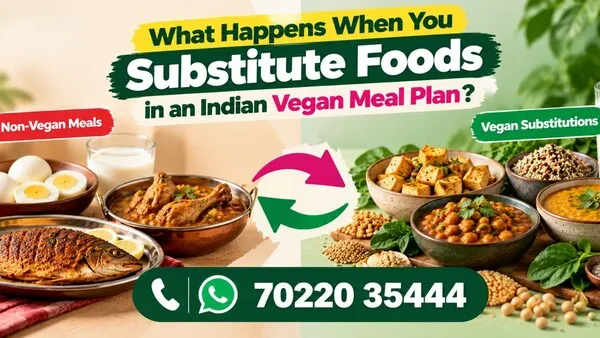
What Happens When You Substitute Foods in an Indian Vegan Meal Plan?
You may want to adapt the sample menu to match your family’s cooking.
Perhaps you prefer wheat roti instead of ragi roti, do not enjoy tofu or regularly prepare homemade plant milk.
These changes can fit into a vegan diet, but they may alter its nutritional contribution.
| Food Substitution | Possible Nutritional Change |
| Calcium-set tofu replaced with soy chunks | Protein may remain substantial, but calcium intake may decrease |
| Fortified soy milk replaced with homemade almond milk | Protein, calcium and B12 contributions may decrease |
| Ragi roti replaced with wheat roti | Calcium contribution generally decreases |
| A substantial serving of rajma replaced with vegetable curry | Protein contribution may decrease |
For example, soy chunks can provide substantial protein but may not replace the calcium contributed by calcium-set tofu.
Similarly, homemade almond milk can be suitable for vegan cooking without offering the same nutritional composition as fortified soy milk.
A suitable food substitution should preserve the nutritional role of the original ingredient, not simply its taste or appearance.
This is why planning the whole day is more useful than selecting individual dishes simply because they are vegan.
Frequently Asked Questions About Vegan Diets in India
1. Can Idli and Dosa Be Part of a Balanced Indian Vegan Diet?
Yes. Idli and dosa can fit into a vegan diet when prepared without animal-derived ingredients. Their protein contribution depends on the rice-to-dal ratio, serving size and accompaniments. A substantial serving of sambar can improve the meal’s protein contribution.
2. Do Rice and Dal Need to Be Eaten Together for Complete Protein?
No. Complementary plant proteins do not need to be combined in every meal. Eating adequate quantities and a variety of plant protein sources throughout the day can provide the essential amino acids your body needs.
3. Can I Follow an Indian Vegan Diet Without Soy?
Yes. A soy-free vegan diet can include lentils, chickpeas, rajma, lobia, besan and other legumes for protein. Suitable non-soy calcium sources and dependable B12-fortified food choices also need to be included.
4. Can a Vegan Diet Work With Indian Family Meals?
Yes. Many familiar Indian meals have a common base of rice, roti, vegetables and pulses. These dishes can remain part of family cooking, with vegan portions prepared without animal-derived ingredients and suitable substitutions where needed.
Is Your Current Indian Vegan Diet Meeting Your Nutritional Needs?
The sample meal plan shows one way to combine familiar Indian foods.
But your everyday meals may look different.
Perhaps you eat idli for breakfast, rice and sambar for lunch and chapati with vegetable curry for dinner.
You may rarely eat tofu or ragi. You might use homemade plant milk or different portions from those shown in the example.
These choices change what your diet provides.
A general diet chart can suggest food combinations, but it cannot determine whether your actual meals meet your individual nutritional requirements.
For one person, breakfast may need a more substantial protein source. For another, calcium may be the priority. Someone else may need to review the B12 contribution of their fortified foods.
The changes that matter depend on your existing eating pattern, food preferences and nutritional needs.
Personalised Vegan Diet Planning With Chief Nutritionist Vasanthi Senthilvel
At Newtrist, Chief Nutritionist Vasanthi Senthilvel, with 21 years of experience in nutrition, provides personalised dietary guidance based on individual requirements, existing food habits, preferences and daily routines.
An individual nutrition assessment can help you understand what your current meals provide and which changes may be appropriate.
A useful starting point is a record of one typical day’s food intake.
Include your breakfast, lunch, snacks and dinner, approximate serving sizes and the names of any fortified plant-based products you consume regularly.
Reviewing these details can help clarify:
- Whether your meals provide appropriate protein quantities.
- How your regular Indian foods contribute towards calcium requirements.
- Whether your fortified food choices provide a dependable vitamin B12 intake.
- Which ingredient substitutions preserve the nutritional balance of your meals.
- How to build a practical vegan eating pattern around your preferred regional dishes.
You may discover that much of your existing diet already works well.
Or you may identify a few specific changes that would make your meals more nutritionally appropriate.
You do not necessarily need an entirely new menu. You need to know what your own meals provide and which adjustments are right for you.
If you would like to assess whether your current Indian vegan diet meets your nutritional needs, consult Chief Nutritionist Vasanthi Senthilvel at Newtrist for personalised diet and nutrition planning.
Start with the Indian foods you already enjoy and develop a practical meal plan around your nutritional requirements and everyday life.
Author
Chief Nutritionist Vasanthi Senthilvel leads Newtrist Nutritionist Dietitian Dietician, providing personalised diet plans for weight management and clinical nutrition for children, adolescents, adults and families.
She has 21 years of experience in nutrition and has received professional recognition for her work.
- Pride of Bharat Awards 2026: Outstanding Achievement in Holistic Health & Nutrition Innovation
- Doctor of The Year: Nutritionist 2026: Excellence in Clinical Nutrition and Weight Loss.
Her approach considers age, growth, health history, medical conditions, laboratory reports, medication, body composition, weight history, dietary preferences, regional food habits, family routines, activity, sleep and personal health goals. Recommendations are developed according to individual needs rather than using one standard diet for everyone.
Consultations are available in person at Bangalore HSR Layout, Koramangala, Bellandur, Haralur and Electronic City, as well as online across India.
Independent Medical Review Panel
Newtrist health and nutrition articles undergo medical review, where appropriate, by doctors with relevant specialist expertise. The medical professionals listed below contribute to Newtrist’s review process within their respective specialties.
| Speciality | Doctor |
|---|---|
| Endocrinology | Dr Vinay Prasad MBBS, MD, DM |
| Gastroenterology & Hepatology | Dr Sunil kumar N MBBS, MD, DM |
| Gynaecology | Dr Prathiba G MBBS, DNB, FIRM, FMAS |
| Nephrology | Dr Priyashree R MBBS, MD, DNB, DM |