
Written by: Chief Nutritionist Vasanthi Senthilvel
Medically reviewed by: Dr Prathiba G MBBS, DNB, FIRM, FMAS | Dr Sunil kumar N MBBS, MD, DM | Dr Vinay Prasad MBBS, MD, DM
Medical Disclaimer: The sample meal chart is provided strictly for educational and general reference purposes. Nutritional requirements change drastically based on an individual’s profile. The information is not intended to diagnose, treat or cure a medical condition or replace personalised medical or nutrition care.
Healthy weight gain does not require abandoning familiar Indian home food for a standard muscle-building menu. A personalised plan can use the dishes, regional preferences and family cooking already familiar to you, then adapt them to age, appetite, activity, body-composition goals and individual nutritional requirements. It can include detailed ingredients and suitable quantities.
KEY TAKEAWAY A 7-day weight gain diet chart with 28 dishes below are independent examples for seven separate profiles, from medically assessed childhood growth to strength training, recovery and later-life poor appetite. Healthy weight gain needs adequate energy and nutrients, while muscle building also requires an appropriate training stimulus and individual assessment.
Table of Contents

How to read this seven-profile weight-gain diet chart
This chart uses seven Day headings to compare people whose needs differ materially. The days are not intended to be followed consecutively by one person. Day 1 is not the start of a menu that continues through Day 7, and no profile should be borrowed solely because its label sounds familiar.
Each breakfast, lunch, evening snack and dinner is also an independent teaching example. The four dishes under a Day heading are not a recommended daily combination. They do not prescribe quantities, meal timing, energy targets or a complete diet plan. Their purpose is to show how regional food can be retained while its preparation and context are reconsidered.
Why age, appetite, activity and training goals change a weight-gain chart
Weight gain is a goal, not a diagnosis. A child whose growth has slowed, a teenager developing through puberty, an adult lifting for strength and an older person losing appetite may all need different assessment and planning. Their food texture, nutrient density, digestive comfort, family context and medical priorities cannot be reduced to the instruction to eat more.
Energy intake must be sufficient for the goal, but indiscriminate high-energy eating can crowd out food variety without building muscle. Protein-containing foods matter for tissue maintenance and training adaptation, yet the appropriate sources and distribution depend on appetite, body size, activity and health findings. The related Newtrist healthy weight-gain support page can provide the broader service overview without repeating it here.
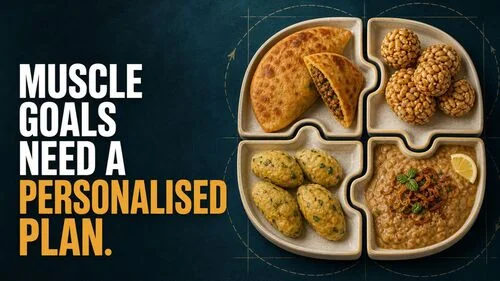
Day 1: Weight-gain meal examples for children with medically assessed faltering growth
Faltering growth should be assessed from a child’s growth pattern, health and feeding history rather than appearance alone. Planning must support growth, development, activity and a calm family mealtime environment. These examples show how familiar foods may become more nourishing without forcing adult muscle-building rules onto a child or assuming that every small child needs weight gain.
| Meal | State | Dish | Main adaptation |
|---|---|---|---|
| Breakfast | Andhra Pradesh | Minapa garelu | Soft paniyaram-pan cooking instead of deep frying |
| Lunch | Meghalaya | Jadoh | Tender meat, mild seasoning and age-appropriate vegetables |
| Evening snack | Odisha | Chhena poda | Less-sweet, softly baked occasional dairy example |
| Dinner | Uttarakhand | Phaanu | Smoother lentil texture and gentler seasoning |
Breakfast: Minapa garelu from Andhra Pradesh
Minapa garelu are popular in Andhra Pradesh and are traditionally made by grinding soaked black gram, seasoning the batter and frying ring-shaped fritters. For a child with assessed faltering growth, a modified version can be cooked in a paniyaram pan, kept soft and paired within the family’s usual breakfast pattern. Black-gram tolerance, chewing ability, appetite and allergy history affect suitability; a fried festive version may feel too heavy for some children.
Lunch: Jadoh from Meghalaya
Jadoh is commonly associated with Meghalaya’s Khasi cuisine and traditionally combines red rice with pork, aromatics and local seasonings in a one-pot preparation. A modified child-focused version can use tender, well-cooked meat, milder seasoning and vegetables cut to an age-appropriate texture while preserving the rice-and-meat character. The child’s growth assessment, family food practice, chewing skills and pork acceptance determine whether it fits; it is not suitable across all households.
Evening snack: Chhena poda from Odisha
Chhena poda is strongly associated with Odisha and is traditionally prepared by baking fresh chhena with sugar until the surface caramelises. For a child who eats small amounts, a modified home version can be less sweet, softly baked and used as an occasional dairy-based example rather than a strategy built on sugary foods. Milk allergy, lactose tolerance, dental health and the child’s wider food variety must be considered before it is included.
Dinner: Phaanu from Uttarakhand
Phaanu is associated with Uttarakhand and is traditionally made by soaking and grinding mixed lentils, then slow-cooking them with spices into a thick, comforting preparation. A modified version for a child can use a smoother texture, gentler seasoning and a familiar household grain alongside it when individually appropriate. Lentil tolerance, age, appetite and total food intake change how substantial it should be; it cannot correct faltering growth without assessment of the cause.
Day 2: Healthy weight-gain meal examples for underweight teenagers
Teenagers still need nutrition for growth, puberty, learning, sport and changing routines. Low weight can reflect constitution, inadequate intake, illness, feeding difficulty or emotional concerns, so an adult bulking plan is not an appropriate shortcut. These examples retain satisfying regional foods while recognising school schedules, family meals, appetite changes and the need for respectful medical assessment when growth is concerning.
| Meal | State | Dish | Main adaptation |
|---|---|---|---|
| Breakfast | Assam | Bora saul jolpan | Rice-and-dairy base with adjusted sweetness and optional fruit or seeds |
| Lunch | Himachal Pradesh | Tudkiya bhath | Vegetable variety and moderated chilli within the rice-dal base |
| Evening snack | Jharkhand | Arsa roti | Pan-cooked with less added fat and a nourishing snack context |
| Dinner | Sikkim | Sha phaley | Whole-wheat casing, vegetables and pan-cooked finish |
Breakfast: Bora saul jolpan from Assam
Bora saul jolpan is associated with Assam and uses sticky bora rice, traditionally cooked or soaked and served with curd, cream, milk, jaggery or fruit according to household custom. A modified teenage breakfast can keep the rice-and-dairy identity while adding fruit or seeds and adjusting sweetness to the person’s needs. School-day appetite, dairy tolerance, activity and dental health affect the final preparation; it should not become a sugar-led weight-gain shortcut.
Lunch: Tudkiya bhath from Himachal Pradesh
Tudkiya bhath is popular in Himachal Pradesh and is a mountain-style rice preparation traditionally cooked with lentils, potato, yoghurt, onion, tomato and aromatic spices. A modified teenage version can keep the rice, dal and potato base, include varied vegetables and moderate chilli without stripping away its hearty identity. Appetite, sports participation, digestive comfort and the rest of the school-day intake determine how it fits; one rich lunch cannot compensate for a persistently poor eating pattern.
Evening snack: Arsa roti from Jharkhand
Arsa roti is commonly associated with Jharkhand and is traditionally made from rice flour and jaggery, shaped and fried for festivals and celebrations. A modified snack can retain the rice-jaggery flavour while being pan-cooked with less added fat and combined with a more nourishing snack context chosen for the teenager. Glucose concerns, dental health, appetite and sports timing matter; it is an occasional regional example, not proof that sweet foods alone support healthy gain.
Dinner: Sha phaley from Sikkim
Sha phaley is popular in Sikkim’s Tibetan-influenced food culture and is traditionally a stuffed bread filled with seasoned meat and often fried. A modified dinner version can use a home-cooked whole-wheat casing, vegetables mixed with thoroughly cooked meat and a pan-cooked finish. This can preserve the recognisable filled-bread form for a hungry teenager, but spice tolerance, meat preference, activity and appetite vary; a restaurant version may contain considerably more fat and salt.
Day 3: Healthy weight-gain meal examples for underweight adult women
An underweight adult woman may need planning around menstrual health, work demands, digestive comfort, food access and any reason for low weight. The answer is not automatically a larger version of every meal. These examples show how familiar food can provide greater nourishment and satisfaction while the final structure remains responsive to appetite, activity, body composition and health findings.
| Meal | State | Dish | Main adaptation |
|---|---|---|---|
| Breakfast | Haryana | Besan masala roti | Added greens and an individually suitable ghee finish |
| Lunch | Punjab | Paneer bhurji | More vegetables with moderated oil, chilli and richness |
| Evening snack | Bihar | Makhana kheer | Spoonable milk base with restrained sweetness |
| Dinner | West Bengal | Chholar dal | Softer texture, restrained sweetness and lighter tempering |
Breakfast: Besan masala roti from Haryana
Besan masala roti is popular in Haryana and traditionally combines gram flour with wheat flour, spices and sometimes herbs before being cooked on a tawa. A modified breakfast can retain its savoury character, add finely chopped greens and use a gentle ghee finish when appropriate. It offers a compact grain-and-pulse example for a busy woman, but gluten tolerance, morning appetite, activity and digestive response determine whether the dense roti works for her.
Lunch: Paneer bhurji from Punjab
Paneer bhurji is widely associated with Punjabi home cooking and is traditionally made by crumbling paneer into sautéed onion, tomato, capsicum and spices. A modified lunch version can keep the paneer central, add vegetables and moderate oil and chilli rather than turning it into a cream-heavy restaurant dish. Dairy tolerance, appetite, activity and body-composition goal change its role; the complete household meal still needs suitable variety rather than paneer alone.
Evening snack: Makhana kheer from Bihar
Makhana kheer is strongly associated with Bihar and is traditionally made by roasting fox nuts and simmering them in milk with sugar, cardamom and sometimes nuts. A modified snack can keep the milk-and-makhana identity, use fruit or restrained jaggery for sweetness and retain a spoonable texture. It may suit a woman who finds dry snacks unappealing, but milk tolerance, nut allergy, appetite and glucose findings matter; added sweetness should not be the main driver of weight gain.
Dinner: Chholar dal from West Bengal
Chholar dal is associated with West Bengal and traditionally features Bengal gram cooked with ginger, whole spices, coconut pieces and a lightly sweet note. A modified dinner version can keep the characteristic chana dal and coconut while using a softer texture, restrained sweetness and a lighter tempering. It offers a familiar pulse dish for an underweight woman, but fullness, digestive tolerance, activity and the accompanying household foods determine whether it supports adequate overall intake.
Day 4: Healthy weight-gain meal examples for underweight adult men
Underweight adult men can differ in work intensity, exercise, appetite, sleep, digestive symptoms and reasons for low weight. Simply enlarging restaurant meals may add discomfort without improving nutritional quality. These examples show four different ways to retain regional identity while adapting cooking method and food density; the appropriate direction depends on assessment rather than gender-based assumptions about how much someone should eat.
| Meal | State | Dish | Main adaptation |
|---|---|---|---|
| Breakfast | Madhya Pradesh | Dal paniya | Hygienic covered cooking with softer maize cakes |
| Lunch | Uttar Pradesh | Awadhi murgh korma | Slow-cooked chicken with moderated oil, chilli and richness |
| Evening snack | Kerala | Ela ada | Thinner rice dough and a tolerance-led coconut, sesame or nut filling |
| Dinner | Goa | Chicken xacuti | Roasted coconut retained with less oil and softer chilli |
Breakfast: Dal paniya from Madhya Pradesh
Dal paniya is associated with Madhya Pradesh, especially the Malwa and tribal food traditions, and is traditionally prepared as maize-flour cakes cooked between leaves over heat with a lentil accompaniment. A modified breakfast can use a hygienic covered-pan or oven method, keep the maize cakes soft and serve them in a personally suitable meal context. Work activity, appetite, chewing comfort and pulse tolerance influence suitability; dense corn cakes may be difficult when morning appetite is low.
Lunch: Awadhi murgh korma from Uttar Pradesh
Awadhi murgh korma is associated with Lucknow and Uttar Pradesh’s Awadhi cuisine, traditionally slow-cooking chicken with yoghurt, browned onion, nuts and aromatic spices. A modified lunch version can retain the slow-cooked chicken and nut-yoghurt gravy while moderating oil, chilli and restaurant-style richness. It offers an energy-dense, protein-containing option for some underweight men, but nut allergy, dairy tolerance, digestive symptoms, activity and food preference must guide its use.
Evening snack: Ela ada from Kerala
Ela ada is popular in Kerala and is traditionally made by enclosing a coconut-jaggery filling in a rice-flour dough, wrapping it in banana leaf and steaming it. A modified snack can preserve the aromatic steamed parcel while using a thinner dough and a filling with coconut, sesame or ground nuts selected for tolerance. Workday appetite and energy needs affect the final preparation; diabetes risk, nut allergy and dental health may make another snack more appropriate.
Dinner: Chicken xacuti from Goa
Chicken xacuti is closely associated with Goa and traditionally uses chicken cooked in a roasted coconut gravy with a complex blend of spices. A modified dinner version can keep the roasted coconut and aromatic profile while reducing excess oil, softening chilli and including tender vegetables. It may suit an adult with a strong evening appetite, but reflux, spice tolerance, activity and preference influence suitability; a rich restaurant xacuti should not be assumed equivalent to the home adaptation.
Day 5: Weight-gain meal examples for strength-training adults
Many readers looking for a weight-gain chart want to build muscle, but food intake alone does not create a muscle-building programme. Strength-training adults need enough overall energy, adequate protein-containing foods, progressive resistance work and recovery suited to their body and training. These examples demonstrate adaptable regional meals, not a fixed sports menu or a promise that any one dish will increase muscle.
| Meal | State | Dish | Main adaptation |
|---|---|---|---|
| Breakfast | Maharashtra | Misal | Sprouts retained with moderated chilli, oil and fried topping |
| Lunch | Telangana | Hyderabadi haleem | Grain, lentil and meat retained with moderated ghee and garnishes |
| Evening snack | Chhattisgarh | Bafauri | Steamed gram dumpling with vegetables and light tempering |
| Dinner | Karnataka | Kori gassi | Coastal coconut masala with moderated chilli and oil |
Breakfast: Misal from Maharashtra
Misal is strongly associated with Maharashtra and traditionally layers a sprouted-matki curry with farsan, onion, coriander and a spicy gravy, often with bread. A modified training-day breakfast can keep the sprouts and characteristic gravy, moderate chilli and oil, and replace much of the fried topping with a small crisp garnish. Training time, appetite, digestive tolerance and total intake determine its role; a very spicy version may be uncomfortable around exercise.
Lunch: Hyderabadi haleem from Telangana
Hyderabadi haleem is closely associated with Telangana and is traditionally prepared by slow-cooking wheat, lentils, meat, ghee and spices until they form a thick, smooth mixture. A modified lunch can retain the grain-lentil-meat structure while moderating ghee and fried garnishes and choosing tenderness over heaviness. It offers multiple nutrient sources for a strength-training adult, but gluten tolerance, meat preference, training load and appetite determine suitability; festive portions are not a personal target.
Evening snack: Bafauri from Chhattisgarh
Bafauri is associated with Chhattisgarh and is traditionally made from seasoned ground Bengal gram, onion and herbs shaped into dumplings and steamed. A modified training snack can keep the steamed gram base, add finely chopped vegetables and use a light tempering for flavour. It provides a portable pulse example without relying on frying, but legume tolerance, training timing and the rest of the day’s food determine whether it is adequate; it is not a complete recovery meal by itself.
Dinner: Kori gassi from Karnataka
Kori gassi is associated with coastal Karnataka and traditionally combines chicken with a roasted coconut, chilli and spice gravy. A modified dinner can retain the coconut and coastal masala while moderating chilli and oil and using thoroughly cooked chicken. It may fit a strength-training adult who eats non-vegetarian food, but training schedule, appetite, reflux, energy needs and household accompaniments affect the final meal. More gravy or meat does not automatically mean better muscle gain.
Day 6: Weight-gain meal examples during recovery from illness or surgery
Recovery can change appetite, taste, chewing, swallowing, digestion and the body’s demand for nourishment. The treating team may also set temporary texture or food-safety restrictions. These examples favour adaptable textures and familiar flavours, but they should be considered only within recovery instructions. Continuing weight loss, poor wound healing or difficulty eating warrants professional review rather than repeated pressure to finish meals.
| Meal | State | Dish | Main adaptation |
|---|---|---|---|
| Breakfast | Manipur | Kabok | Softened rice mixture with finely ground sesame |
| Lunch | Tripura | Muya awandru | Tender meat, correctly prepared bamboo shoot and mild gravy |
| Evening snack | Gujarat | Patra | Steamed, not fried, with a soft and gently seasoned finish |
| Dinner | Rajasthan | Panchmel dal | Smoother consistency with mild seasoning and lighter tempering |
Breakfast: Kabok from Manipur
Kabok is popular in Manipur and is traditionally prepared from puffed or flattened rice combined with roasted grains, sesame and molasses in different local forms. A modified recovery breakfast can soften the rice mixture in warm milk or a suitable dairy alternative and use finely ground sesame for an easier texture. Swallowing safety, glucose findings, nausea, allergy and the type of surgery determine suitability; a dry, brittle version may be inappropriate during recovery.
Lunch: Muya awandru from Tripura
Muya awandru is associated with Tripura and traditionally combines bamboo shoot with pork and regional flavourings in a curry. A modified recovery version can use tender, thoroughly cooked lean pork, correctly prepared bamboo shoot, mild seasoning and a softer gravy. It may provide familiar nourishment for someone who eats pork, but surgical restrictions, digestive symptoms, food safety, chewing ability and salt needs must be checked; pungent or fatty versions may worsen poor appetite.
Evening snack: Patra from Gujarat
Patra is popular in Gujarat and is traditionally made by spreading a spiced gram-flour paste over colocasia leaves, rolling, steaming, slicing and sometimes frying the pieces. A modified recovery snack can keep the steamed roll, omit frying and use a softer, gently seasoned finish. It may offer compact nourishment when appetite is modest, but colocasia must be correctly prepared; swallowing difficulty, nausea, pulse tolerance and temporary post-surgical restrictions can make it unsuitable.
Dinner: Panchmel dal from Rajasthan
Panchmel dal is associated with Rajasthan and traditionally blends five lentils, slow-cooked and finished with an aromatic tempering. A modified recovery dinner can use a smoother consistency, mild seasoning and a lighter tempering while preserving the mixed-lentil identity. It can be adapted when familiar soft food is welcome, but bowel symptoms, prescribed texture, appetite and pulse tolerance vary after illness or surgery. It should not override instructions from the treating clinical team.
Day 7: Weight-gain meal examples for older adults with poor appetite
Later-life poor appetite may interact with taste changes, dental problems, swallowing difficulty, fatigue, isolation or illness. A useful plan often needs familiar flavours and manageable textures without making every mouthful overly rich. These examples show possible adaptations, while unexplained weight loss, weakness or persistent appetite change needs medical assessment. Food should never be offered in a texture that is unsafe for swallowing.
| Meal | State | Dish | Main adaptation |
|---|---|---|---|
| Breakfast | Tamil Nadu | Kuzhi paniyaram | Soft savoury batter with finely grated vegetables |
| Lunch | Arunachal Pradesh | Khawlam | Softer, moister rice-and-sesame texture |
| Evening snack | Mizoram | Chhangban | Softer steamed rice cake with a tolerance-led filling |
| Dinner | Nagaland | Bamboo-steamed fish | Mild, moist fish with every bone carefully removed |
Breakfast: Kuzhi paniyaram from Tamil Nadu
Kuzhi paniyaram is popular in Tamil Nadu and is traditionally made by cooking fermented rice-and-black-gram batter in a dimpled pan, with savoury or sweet variations. A modified older-adult breakfast can use a soft savoury batter with finely grated vegetables and a lightly greased pan. The small, tender form may suit modest appetite, but chewing, swallowing, fermentation tolerance and glucose findings affect suitability; crisp edges or whole chilli pieces may need adjustment.
Lunch: Khawlam from Arunachal Pradesh
Khawlam is associated with the Tai Khamti communities of Arunachal Pradesh and traditionally combines boiled rice with sesame seeds, often prepared as a compact local rice dish. A modified lunch can keep the rice-sesame identity while creating a softer, moister texture and adding an individually suitable accompaniment within the household meal. Sesame allergy, swallowing ability, appetite and health-related dietary limits matter; a dry or tightly packed version may be difficult for some older adults.
Evening snack: Chhangban from Mizoram
Chhangban is popular in Mizoram and is traditionally made from finely ground glutinous rice steamed into a cake or bun. A modified older-adult version can keep the steamed rice identity while making a softer, less chewy cake with a mild sesame or coconut filling if tolerated. It may be manageable in small bites for some people, but swallowing safety, dental comfort, glucose findings and appetite must be assessed; glutinous textures are unsuitable for certain swallowing difficulties.
Dinner: Bamboo-steamed fish from Nagaland
Bamboo-steamed fish is associated with Naga cooking and is traditionally prepared by seasoning freshwater fish, wrapping or enclosing it and steaming it in bamboo so it takes on an earthy aroma. A modified older-adult dinner can use a mild seasoning, carefully remove every bone and keep the fish moist and tender. It may suit a modest appetite, but swallowing safety, fish allergy, kidney-related dietary limits and access to reliable preparation determine suitability.
7-Day Weight Gain Diet Chart for Muscle Building
| Meal | State | Dish | Main adaptation |
| Day 1 | |||
| Breakfast | Andhra Pradesh | Minapa garelu | Soft paniyaram-pan cooking instead of deep frying |
| Lunch | Meghalaya | Jadoh | Tender meat, mild seasoning and age-appropriate vegetables |
| Evening snack | Odisha | Chhena poda | Less-sweet, softly baked occasional dairy example |
| Dinner | Uttarakhand | Phaanu | Smoother lentil texture and gentler seasoning |
| Day 2 | |||
| Breakfast | Assam | Bora saul jolpan | Rice-and-dairy base with adjusted sweetness and optional fruit or seeds |
| Lunch | Himachal Pradesh | Tudkiya bhath | Vegetable variety and moderated chilli within the rice-dal base |
| Evening snack | Jharkhand | Arsa roti | Pan-cooked with less added fat and a nourishing snack context |
| Dinner | Sikkim | Sha phaley | Whole-wheat casing, vegetables and pan-cooked finish |
| Day 3 | |||
| Breakfast | Haryana | Besan masala roti | Added greens and an individually suitable ghee finish |
| Lunch | Punjab | Paneer bhurji | More vegetables with moderated oil, chilli and richness |
| Evening snack | Bihar | Makhana kheer | Spoonable milk base with restrained sweetness |
| Dinner | West Bengal | Chholar dal | Softer texture, restrained sweetness and lighter tempering |
| Day 4 | |||
| Breakfast | Madhya Pradesh | Dal paniya | Hygienic covered cooking with softer maize cakes |
| Lunch | Uttar Pradesh | Awadhi murgh korma | Slow-cooked chicken with moderated oil, chilli and richness |
| Evening snack | Kerala | Ela ada | Thinner rice dough and a tolerance-led coconut, sesame or nut filling |
| Dinner | Goa | Chicken xacuti | Roasted coconut retained with less oil and softer chilli |
| Day 5 | |||
| Breakfast | Maharashtra | Misal | Sprouts retained with moderated chilli, oil and fried topping |
| Lunch | Telangana | Hyderabadi haleem | Grain, lentil and meat retained with moderated ghee and garnishes |
| Evening snack | Chhattisgarh | Bafauri | Steamed gram dumpling with vegetables and light tempering |
| Dinner | Karnataka | Kori gassi | Coastal coconut masala with moderated chilli and oil |
| Day 6 | |||
| Breakfast | Manipur | Kabok | Softened rice mixture with finely ground sesame |
| Lunch | Tripura | Muya awandru | Tender meat, correctly prepared bamboo shoot and mild gravy |
| Evening snack | Gujarat | Patra | Steamed, not fried, with a soft and gently seasoned finish |
| Dinner | Rajasthan | Panchmel dal | Smoother consistency with mild seasoning and lighter tempering |
| Day 7 | |||
| Breakfast | Tamil Nadu | Kuzhi paniyaram | Soft savoury batter with finely grated vegetables |
| Lunch | Arunachal Pradesh | Khawlam | Softer, moister rice-and-sesame texture |
| Evening snack | Mizoram | Chhangban | Softer steamed rice cake with a tolerance-led filling |
| Dinner | Nagaland | Bamboo-steamed fish | Mild, moist fish with every bone carefully removed |
The chart demonstrates regional breadth, but choosing a dish is only the first decision. If low weight, training goals, recovery needs or poor appetite make generic advice difficult to apply, an individual assessment can connect familiar food with the person’s health findings, cooking access, activity and actual eating pattern.

How should calories, protein and portions change across these profiles?
They should change according to the reason for weight gain, age, growth, body size, appetite, activity, health status and progress. A growing child needs assessment against an age-appropriate growth pattern. An adult recovering from surgery may have greater repair needs but reduced appetite, while a strength-training adult may tolerate a different eating pattern and food texture.
Energy must be sufficient to support gradual gain, but the source matters. A plan can increase nutrient density within familiar foods without relying mainly on fried or sugary choices. Protein-containing foods can come from pulses, dairy, eggs, fish, meat, soy or combinations accepted by the household. Exact quantities cannot be calculated safely from a webpage because medical findings, digestive tolerance and total intake change the answer.
What is the difference between gaining body weight and building muscle?
Body weight can increase through changes in muscle, body fat, body water and stored fuel. Building muscle is more specific: it requires a suitable resistance-training stimulus, enough overall energy, adequate protein-containing food and recovery. Eating substantially more without training does not direct every additional unit of energy toward muscle.
That distinction changes the chart. Someone recovering from illness may first need to stop unintentional loss and regain function, while a trained adult may focus on performance, strength progression and body composition. Scale weight alone cannot show what changed. Training history, measurements, appetite, digestion and health context help define a realistic goal.
When does unexplained low weight or poor appetite require medical assessment?
Seek medical assessment when weight has fallen without intention, appetite remains low, or a child is not growing as expected. Review is also important for persistent vomiting or diarrhoea, abdominal pain, swallowing difficulty, recurrent fever, unusual fatigue, weakness, slow wound healing, marked changes in eating behaviour or continuing loss despite attempts to eat adequately.
These signs do not identify one cause. Medical assessment can investigate underlying illness, feeding or swallowing problems, digestive conditions, emotional health concerns and other contributors before a weight-gain plan is developed. Children, teenagers, older adults and people recovering from illness or surgery deserve particular care because delay or an unsuitable generic plan can carry greater risk.
Frequently asked questions about healthy weight gain
Can a child follow an adult weight-gain diet chart?
No. Children need age-specific growth assessment, feeding history and family-centred planning. Adult calorie-surplus or muscle-building advice can overlook development, appetite cues, school activity, food safety and the reason growth has slowed. If a child’s weight or growth is concerning, the chart should be discussed with the child’s medical team and a qualified nutrition professional.
Does healthy weight gain mean eating more fried or sugary food?
No. Fried and sugary foods can add energy, but relying on them may reduce dietary variety and does not ensure adequate protein, fibre, vitamins or minerals. A healthier approach adapts ordinary meals so energy and nutrient density rise together, with the direction chosen for the person’s appetite, health, food preferences and goal.
What if larger meals reduce appetite even further?
Larger plates can feel unmanageable for someone with early fullness or poor appetite. The solution is not to keep increasing plate size. A personalised plan can work with the person’s most comfortable foods, textures and eating opportunities while considering why appetite is low. Persistent early fullness, nausea, pain or weight loss should be medically assessed.
Can vegetarian regional food support strength training?
Yes, a vegetarian pattern can support strength training when overall energy, protein quality, variety and recovery are adequate. Pulses, dairy or suitable alternatives, soy foods, grains, nuts and seeds can be combined according to tolerance and preference. The exact pattern depends on training load, appetite, digestive comfort and the person’s wider diet, not one compulsory food.
Should body weight increase every week on a healthy plan?
Not necessarily in a smooth line. Hydration, stored carbohydrate, bowel contents, menstrual changes and measurement conditions can move scale weight from one reading to the next. Progress is better interpreted as a trend alongside strength, function, appetite, symptoms and body-composition goals. A lack of progress or an unexpectedly rapid change warrants reassessment rather than automatic food escalation.
What should you remember about a healthy weight-gain diet chart?
A useful chart begins with the reason for low weight or the desired gain. Children need growth-focused assessment, recovery may require texture and clinical adjustments, and muscle building needs resistance training as well as adequate food. Regional Indian dishes can remain part of the plan, but their ingredients, preparation and role must change with the individual.
The seven Day headings on this page are comparisons, not a sequence. None of the 28 dishes carries a guaranteed result, and the article cannot determine personal quantities or restrictions. Healthy progress is more likely when familiar food, medical safety, appetite and a realistic goal are considered together.
How Chief Nutritionist Vasanthi Senthilvel personalises a healthy weight-gain plan
General examples cannot show why one person is underweight, how another person’s training is progressing or what texture is safe during recovery. Chief Nutritionist Vasanthi Senthilvel may assess age, growth history, health conditions, laboratory reports, body composition, weight history, appetite, digestive symptoms, dietary preferences, regional food habits, family cooking, activity, training, budget and daily routine.
That assessment can inform a personalised diet plan for weight management, clinical nutrition or both where needs overlap. The plan may retain foods already used at home, then specify suitable ingredients, preparation guidance and quantities according to the individual’s requirements.
Consult Chief Nutritionist Vasanthi Senthilvel for a Newtrist personalised diet plan that adapts familiar regional Indian food to your assessed weight-gain goal, appetite, health findings, activity, cooking access and daily routine.
Author
Chief Nutritionist Vasanthi Senthilvel leads Newtrist Nutritionist Dietitian Dietician, providing personalised diet plans for weight management and clinical nutrition for children, adolescents, adults and families.
She has 21 years of experience in nutrition and has received professional recognition for her work.
- Pride of Bharat Awards 2026: Outstanding Achievement in Holistic Health & Nutrition Innovation
- Doctor of The Year: Nutritionist 2026: Excellence in Clinical Nutrition and Weight Loss.
Her approach considers age, growth, health history, medical conditions, laboratory reports, medication, body composition, weight history, dietary preferences, regional food habits, family routines, activity, sleep and personal health goals. Recommendations are developed according to individual needs rather than using one standard diet for everyone.
Consultations are available in person at Bangalore HSR Layout, Koramangala, Bellandur, Haralur and Electronic City, as well as online across India.
Independent Medical Review Panel
Newtrist health and nutrition articles undergo medical review, where appropriate, by doctors with relevant specialist expertise. The medical professionals listed below contribute to Newtrist’s review process within their respective specialties.
| Speciality | Doctor |
|---|---|
| Endocrinology | Dr Vinay Prasad MBBS, MD, DM |
| Gastroenterology & Hepatology | Dr Sunil kumar N MBBS, MD, DM |
| Gynaecology | Dr Prathiba G MBBS, DNB, FIRM, FMAS |