
Written by: Chief Nutritionist Vasanthi Senthilvel
21 years of experience | Newtrist Nutritionist Dietitian Dietician
Best Nutritionist in Bangalore with multiple awards for excellence in clinical nutrition, weight loss, holistic health and nutrition innovation.
Medically reviewed by: Dr Priyashree R MBBS, MD, DNB, DM
Medical Disclaimer: Nutritional needs vary based on an individual’s profile. The information on this page is for general educational purposes only and is not intended to replace personalised medical or nutrition care.
Being told to lower phosphorus can make familiar foods suddenly seem difficult to judge. Low-phosphorus foods for kidney disease can include white rice and selected cereal foods, many fresh fruits and vegetables, egg whites and foods prepared without phosphate additives.
The harder question is what actually needs changing. Dairy, dals, nuts, seeds and other foods that contain more phosphorus are not automatically off-limits. How much restriction is useful depends on kidney function, blood phosphorus results, protein needs and overall nutritional status.
Key Takeaway: A practical low-phosphorus diet targets the phosphorus sources that matter most rather than trying to eliminate phosphorus from every meal. Phosphate additives deserve particular attention, while naturally phosphorus-rich foods should be considered according to their nutritional value and the individual’s requirements. The goal is effective phosphorus control without sacrificing adequate nutrition or food variety.
Table of Contents

When Does Phosphorus Need Attention in Kidney Disease?
Phosphorus needs dietary attention when maintaining phosphorus balance has become difficult and reducing food sources is relevant to managing it.
Kidney disease does not mean everyone should start a strict phosphorus restriction immediately. The need can differ according to kidney function, laboratory findings and the person’s nutritional situation.
That distinction matters because phosphorus occurs naturally in foods that can also supply protein, calcium, fibre and other nutrients.
Instead of asking whether a food contains phosphorus at all, ask a more useful question:
Is this food contributing enough phosphorus in my usual eating pattern to be worth changing?
That shift prevents the diet from becoming restrictive simply because a food appears on a generic “high phosphorus” list.

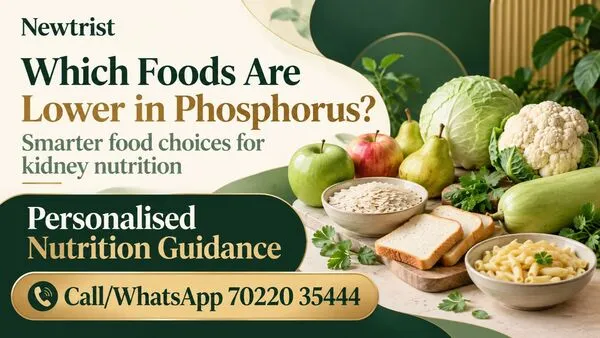
Which Foods Are Lower in Phosphorus?
Lower-phosphorus choices include several familiar staple foods, many fruits and vegetables, egg whites and simple meal additions such as herbs, spices and lemon.
| Food group | Examples generally lower in phosphorus |
| Staple and cereal foods | White rice, rava or semolina, puffed rice, rice noodles and selected breads without phosphate additives |
| Protein choices | Egg whites and appropriately selected fresh protein foods |
| Fruits | Many fresh fruits |
| Vegetables | A wide range of fresh vegetables |
| Everyday additions | Lemon, onion, garlic, coriander, herbs, spices and cooking oils |
These examples are starting points, not an unlimited “allowed foods” list. What belongs in a person’s meals still depends on the complete nutritional picture.
Rice and Other Staple Foods
White rice can be a useful staple when phosphorus reduction is a priority because it generally contains less phosphorus than bran-rich cereals.
Rava, puffed rice and some rice-based foods can provide other familiar lower-phosphorus options.
This does not make whole grains unhealthy. Whole grains provide useful nutrients but generally contain more natural phosphorus. Whether changing them offers a worthwhile benefit depends on how much phosphorus actually needs reducing.
Choosing Protein Foods
Protein foods require more thought because phosphorus and protein commonly occur together.
Egg whites are a useful lower-phosphorus protein choice compared with whole eggs. Fresh fish, chicken or other protein foods may also have a place when appropriate to the individual’s protein requirement.
Vegetarian eating presents a different challenge. Dals, pulses and dairy foods may provide an important share of protein, so indiscriminately removing them can create a nutritional gap.
The objective is therefore to choose protein deliberately rather than treating every phosphorus-containing protein food as unsuitable.
Fruits, Vegetables and Simple Meal Additions
Many fresh fruits and vegetables contribute relatively little phosphorus compared with several dairy, nut, seed and protein foods.
They are useful not just because of what they contain, but because they help a restricted diet continue to look and feel like normal food.
Fresh herbs, spices, lemon, onion and garlic can also build flavour without depending on heavily processed additions. This matters when dietary changes need to remain practical enough to follow over time.
Which Foods Contain More Phosphorus?
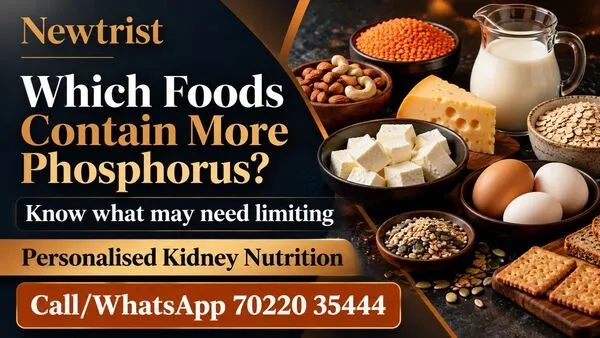
Foods naturally higher in phosphorus include dairy products, pulses, nuts, seeds, whole eggs, many whole grains and several animal protein foods.
- milk and curd
- paneer and cheese
- dals and pulses
- nuts and seeds
- whole eggs
- bran-rich foods and many whole grains
- fish
- chicken
- meat
These foods should not automatically be classified as “foods to avoid”.
A bowl of dal, a serving of curd and a handful of nuts do not perform the same nutritional job. Before removing a higher-phosphorus food, consider what it contributes to the diet and what would replace it.
This is especially important when the food is helping meet protein or overall nutritional needs.
There is also another source of phosphorus that needs to be considered differently: phosphorus deliberately added to manufactured foods.
Why Added Phosphorus Deserves Special Attention
Added phosphorus deserves closer attention because phosphate additives can provide phosphorus that is generally more readily absorbed than phosphorus naturally bound within many foods.
They may be used during food manufacturing for texture, preservation, moisture retention or other processing purposes.
This creates an important practical distinction.
Reducing a phosphate-containing processed food may lower phosphorus exposure without removing a nutritious whole food that is serving an important purpose in the diet.
How Can You Identify Phosphorus Additives?
Check the ingredient list for words containing “phos”.
- phosphate
- phosphoric acid
- sodium phosphate
- calcium phosphate
- disodium phosphate
- pyrophosphate
- polyphosphate
These ingredients can appear in some processed cheese products, processed meats, packaged bakery foods, ready-made mixes and other convenience products.
The useful habit is not to memorise every product that might contain them. Products and formulations can vary.
Instead, read the actual ingredient list.
That allows you to compare two similar products and choose the one without an added phosphate when an appropriate alternative is available.
How Can You Balance Phosphorus With Adequate Protein?
You can balance phosphorus and protein by protecting the protein the person actually needs while being selective about which foods provide it.
Simply cutting every phosphorus-containing protein food is not the goal.
Consider someone who obtains much of their protein from dal, curd and paneer. Removing all three at once because they contain phosphorus could leave a substantial gap in the diet.
Someone who regularly eats eggs, fish or chicken has a different set of choices.
The useful decision is therefore not:
Which protein foods contain phosphorus?
It is:
Which combination meets my protein needs with an appropriate phosphorus load?
That decision depends on protein requirements, food preferences, appetite and nutritional status.
Detailed questions about how much protein a person needs belong to the separate protein and kidney disease guidance. For phosphorus management, the key principle is to avoid solving one nutritional problem by creating another.

Sample 1-Day Low-Phosphorus Diet Plan
This example demonstrates phosphorus-conscious food selection across one Indian eating day. It is not a universal kidney-disease diet.
It assumes that dietary phosphorus needs reducing, appetite is reasonably stable and egg whites can be included. It does not calculate an individual’s protein requirement or account for additional renal nutrition requirements.
| Meal | Menu |
| Breakfast | Vegetable rava upma with fresh fruit |
| Mid-morning | Fresh fruit |
| Lunch | White rice with a freshly prepared vegetable dish and an egg-white preparation |
| Evening | Homemade puffed-rice mixture with onion, coriander, lemon and spices |
| Dinner | Rice noodles with vegetables and an individually appropriate freshly prepared protein choice |
| Additional food if required | An individually suitable fresh fruit or cereal-based choice |
The value of this example is the choice pattern, not the exact menu.
It uses lower-phosphorus staple foods, keeps fresh foods prominent, includes a planned protein source and avoids depending on heavily processed foods as routine meal components.
The same pattern cannot simply be copied for everyone. A vegetarian diet would require different protein decisions, while poor appetite, weight changes, different protein requirements or additional kidney-related nutrition needs could substantially alter the day.
If several kidney-related dietary changes apply at the same time, see renal diet for kidney disease. People receiving dialysis may need a different set of nutrition priorities; see dialysis diet.
Which Phosphorus Changes Are Most Worth Making?
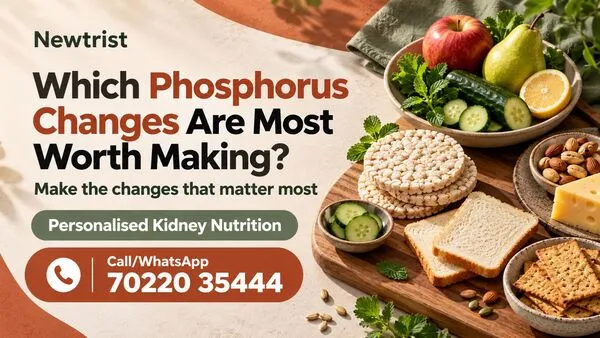
The most useful changes are usually the ones that reduce meaningful phosphorus exposure without unnecessarily disrupting the rest of the diet.
How often do I eat this food? Changing something eaten every day can matter more than worrying about an occasional food.
What nutritional job is this food doing? Replacing a processed product with little nutritional value is different from removing a food that is supplying much of the person’s protein.
What would replace it? Every restriction has a consequence. If removing a food leaves the person with fewer practical meal choices or inadequate nutrition, the replacement needs as much consideration as the restriction itself.
This is why the most effective phosphorus strategy is rarely the one with the longest avoidance list.
It is the one that makes the most useful changes first.
When Does Phosphorus Restriction Need Personalisation?
Personalisation becomes important when knowing which foods are higher or lower in phosphorus still does not tell you how to eat.
That may happen when you are asking questions such as:
- Which of my usual protein foods should stay?
- Do I really need to remove dairy or pulses?
- Where is most of the phosphorus in my current eating pattern coming from?
- Which familiar foods have I restricted unnecessarily?
- What should replace foods that genuinely need reducing?
- Is phosphorus control beginning to compromise my overall nutrition?
These questions depend on the person, not just the phosphorus content of individual foods.
Chief Nutritionist Vasanthi Senthilvel can assess kidney function and relevant laboratory findings together with current food intake, appetite, body weight, nutritional status, food preferences and the person’s usual Indian eating pattern.
The purpose is to establish three things clearly:
What needs to change? What can remain? What should replace anything that is reduced?
That turns phosphorus restriction from a collection of isolated food rules into a personalised nutrition plan that is practical enough to use in everyday life.
If you are repeatedly checking whether individual foods are “allowed” but still do not know how to build suitable meals, personalised renal nutrition can help identify the changes that are actually relevant to you.
Frequently Asked Questions
Is a Low-Phosphorus Diet Also a Low-Potassium Diet?
No. They address different minerals, so needing phosphorus restriction does not automatically mean another mineral also needs restricting. Dietary changes should reflect the individual’s actual findings rather than applying every renal restriction together.
Does Portion Size Still Matter With Lower-Phosphorus Foods?
Yes. “Lower phosphorus” describes a food relative to other choices; it does not make the amount irrelevant. The overall eating pattern and how frequently a food is eaten determine its contribution over time.
Can You Follow a Low-Phosphorus Diet When Eating Outside the Home?
It may be possible, but ingredient information is often less visible. Simpler freshly prepared dishes usually make food choices easier to judge than highly processed or multi-ingredient items.
Does a “Healthy” or “High-Protein” Label Mean a Food Is Suitable?
Not necessarily. Marketing descriptions do not indicate whether a product is lower in phosphorus or whether phosphate ingredients have been added. The actual ingredients and the food’s role in the person’s diet are more useful than front-of-pack claims.
Author
Chief Nutritionist Vasanthi Senthilvel leads Newtrist Nutritionist Dietitian Dietician, providing personalised diet plans for weight management and clinical nutrition for children, adolescents, adults and families.
She has 21 years of experience in nutrition and has received professional recognition for her work.
- Pride of Bharat Awards 2026: Outstanding Achievement in Holistic Health & Nutrition Innovation
- Doctor of The Year: Nutritionist 2026: Excellence in Clinical Nutrition and Weight Loss.
Her approach considers age, growth, health history, medical conditions, laboratory reports, medication, body composition, weight history, dietary preferences, regional food habits, family routines, activity, sleep and personal health goals. Recommendations are developed according to individual needs rather than using one standard diet for everyone.
Consultations are available in person at Bangalore HSR Layout, Koramangala, Bellandur, Haralur and Electronic City, as well as online across India.
Independent Medical Review Panel
Newtrist health and nutrition articles undergo medical review, where appropriate, by doctors with relevant specialist expertise. The medical professionals listed below contribute to Newtrist’s review process within their respective specialties.
| Speciality | Doctor |
|---|---|
| Endocrinology | Dr Vinay Prasad MBBS, MD, DM |
| Gastroenterology & Hepatology | Dr Sunil kumar N MBBS, MD, DM |
| Gynaecology | Dr Prathiba G MBBS, DNB, FIRM, FMAS |
| Nephrology | Dr Priyashree R MBBS, MD, DNB, DM |