
Written by: Chief Nutritionist Vasanthi Senthilvel
21 years of experience | Newtrist Nutritionist Dietitian Dietician
Best Nutritionist in Bangalore with multiple awards for excellence in clinical nutrition, weight loss, holistic health and nutrition innovation.
Medically reviewed by: Dr Prathiba G MBBS, DNB, FIRM, FMAS | Dr Sunil kumar N MBBS, MD, DM | Dr Vinay Prasad MBBS, MD, DM
Medical Disclaimer: Nutritional needs vary based on an individual’s profile. The information on this page is for general educational purposes only and is not intended to replace personalised medical or nutrition care.
Choosing breakfast can become complicated when you start checking every ingredient for iron. Foods you have eaten for years may suddenly feel uncertain, especially when different food lists give you conflicting answers.
A practical hemochromatosis diet plan helps you understand what deserves attention and how to put satisfying meals together.
Key Takeaway
Most people with hemochromatosis can continue eating a varied, balanced diet. Focus on reviewing products with added iron and your usual protein choices while maintaining adequate nourishment. The amount of iron listed for a food is only one factor in deciding how it fits into your meals.
Table of Contents
Foods to Include With Iron Overload
Grains, vegetables, fruit, dairy foods and plant proteins can all fit into a hemochromatosis diet. Choose combinations that provide enough energy and protein while keeping meals enjoyable.
| Food group | Familiar choices | How to use them |
| Grains and starches | Rice, atta, plain oats, dalia and potatoes | Use as the carbohydrate component of a meal. |
| Vegetables | Pumpkin, bottle gourd, cabbage, cauliflower, beans and leafy greens | Rotate sabzis, poriyal and other vegetable preparations. |
| Pulses and plant proteins | Moong dal, chana, rajma and tofu | Include as protein foods within balanced meals. |
| Dairy foods | Plain milk, curd and paneer | Use according to your preferences for protein and calcium. |
| Fruit | Apples, pears and seasonal fruit | Include whole fruit across the week. |
Can You Eat Dal, Beans and Leafy Greens?
Yes. Dal, beans and leafy greens can remain part of your diet with hemochromatosis. These foods contain non-haem iron, whose absorption varies with the rest of the meal. Haem iron, found in animal foods such as meat, is generally absorbed more readily.
This helps explain why choosing foods involves more than comparing iron numbers. Moong, chana and rajma also contribute protein and fibre. Keeping suitable portions of these foods can make vegetarian meals more complete.
For example, roti with moong dal and a vegetable preparation provides a broader range of nutrients than roti and vegetables alone.
Iron-Rich Foods and Added Iron to Review
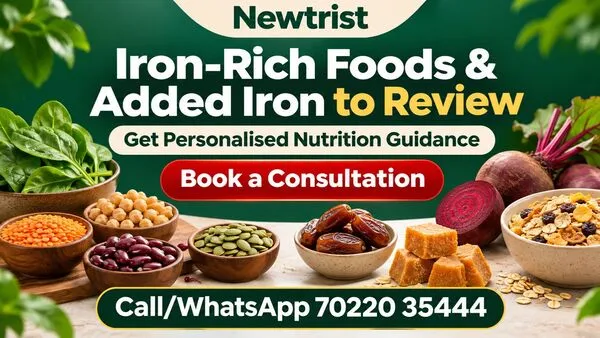
Start with concentrated sources of iron and packaged foods that have iron added during manufacture.
| Food or product | What deserves attention | Practical adjustment |
| Breakfast cereals with added iron | Fortification varies between products and brands. | Choose a cereal without added iron. |
| Packaged foods described as iron-enriched | Extra iron may be added to foods you eat regularly. | Compare similar products and choose an option without added iron where available. |
| Liver and other organ meats | These are concentrated sources of iron. | Choose other protein foods for regular meals. |
| Red meat, including mutton and beef | Frequent or large servings increase haem iron intake. | Reduce the frequency or portion and vary your protein choices. |
Choosing a Breakfast Cereal
Check the ingredient list for added iron before choosing a breakfast cereal. A “multigrain” or “high-fibre” description does not tell you whether it is iron-fortified.
When comparing nutrition panels, use the same basis, such as values per 100 grams. Serving sizes differ between products and can make a direct comparison confusing.
Plain, unfortified oats are one option. Homemade breakfasts such as vegetable upma or dalia can also give you more control over the ingredients.
Can You Eat Bananas and Avocado?
Yes, bananas and avocado can generally be included in a hemochromatosis diet. The portion depends on their place in your meal and your overall energy needs.
Bananas With Hemochromatosis
A banana provides carbohydrate and makes a convenient fruit serving. A small banana can work as a snack, especially when you need something easy to carry.
If you add banana to breakfast, consider it alongside the other foods in that meal. Its role will differ between a small bowl of porridge and a larger breakfast with several dishes.
Avocado With Iron Overload
Avocado contributes unsaturated fat and fibre. Use a few slices in a sandwich or mash a small portion onto toast.
Because avocado is relatively energy-dense, the amount can be adjusted to your appetite and weight goals. It is an optional ingredient that can add variety when you enjoy its flavour and texture.
Sample Hemochromatosis Menu With Breakfast and Plant-Based Options
This one-day Indian menu shows how familiar ingredients can form a balanced eating pattern. The portions are examples to personalise around your daily needs.
| Meal | Menu |
| Breakfast | A bowl of vegetable dalia with plain curd |
| Mid-morning | One small banana |
| Lunch | Two small rotis, a bowl of moong dal and cabbage sabzi |
| Evening | A small bowl of roasted makhana |
| Dinner | A serving of rice with tofu and pumpkin curry |
Moong, pumpkin, curd and makhana offer familiar ways to bring variety into the day. For a fully plant-based version, replace the breakfast curd with plain soy yogurt without added iron.
Two Breakfast Alternatives
Vegetable upma with curd: Prepare semolina with onion, carrot and beans, then serve with plain curd. This is a practical choice when you prefer a savoury breakfast.
Avocado toast with tofu bhurji: Use bread without added iron, spread with mashed avocado and serve with tofu bhurji. The tofu gives the meal a clear protein component.
Choose meals you can prepare consistently. A breakfast that fits your morning and a lunch that works with family cooking make the plan easier to follow over time.
Build Your Hemochromatosis Diet With Vasanthi Senthilvel
The difficult part often comes after reading a food list. You still need to decide what changes in your own kitchen.
Perhaps you have stopped eating dal and now struggle to put together a vegetarian lunch. Perhaps your breakfast relies on packaged foods, or your family meals include red meat several times a week. Those details give a nutrition consultation a practical purpose.
Chief Nutritionist Vasanthi Senthilvel can help you review your current meals and develop a personalised diet around your diagnosis, nutritional needs and food preferences.
At Newtrist, the discussion considers relevant reports, health history, appetite, weight changes and daily routine. Bring a typical day’s menu and photographs of labels from foods you eat regularly. Together, these details help identify which choices need adjusting, which foods can remain and how to make your meals nutritionally complete.
Author
Chief Nutritionist Vasanthi Senthilvel leads Newtrist Nutritionist Dietitian Dietician, providing personalised diet plans for weight management and clinical nutrition for children, adolescents, adults and families.
She has 21 years of experience in nutrition and has received professional recognition for her work.
- Pride of Bharat Awards 2026: Outstanding Achievement in Holistic Health & Nutrition Innovation
- Doctor of The Year: Nutritionist 2026: Excellence in Clinical Nutrition and Weight Loss.
Her approach considers age, growth, health history, medical conditions, laboratory reports, medication, body composition, weight history, dietary preferences, regional food habits, family routines, activity, sleep and personal health goals. Recommendations are developed according to individual needs rather than using one standard diet for everyone.
Consultations are available in person at Bangalore HSR Layout, Koramangala, Bellandur, Haralur and Electronic City, as well as online across India.
Independent Medical Review Panel
Newtrist health and nutrition articles undergo medical review, where appropriate, by doctors with relevant specialist expertise. The medical professionals listed below contribute to Newtrist’s review process within their respective specialties.
| Speciality | Doctor |
|---|---|
| Endocrinology | Dr Vinay Prasad MBBS, MD, DM |
| Gastroenterology & Hepatology | Dr Sunil kumar N MBBS, MD, DM |
| Gynaecology | Dr Prathiba G MBBS, DNB, FIRM, FMAS |
| Nephrology | Dr Priyashree R MBBS, MD, DNB, DM |