
Written by: Chief Nutritionist Vasanthi Senthilvel
21 years of experience | Newtrist Nutritionist Dietitian Dietician
Best Nutritionist in Bangalore with multiple awards for excellence in clinical nutrition, weight loss, holistic health and nutrition innovation.
Medically reviewed by: Dr Priyashree R MBBS, MD, DNB, DM
Medical Disclaimer: Nutritional needs vary based on an individual’s profile. The information on this page is for general educational purposes only and is not intended to replace personalised medical or nutrition care.
Being told to restrict potassium can make foods you have eaten for years suddenly feel uncertain. Can you still have fruit? What about dal, potato, curd or your usual vegetable dishes?
A low-potassium diet should not become a steadily shrinking list of foods. There are many low-potassium foods for kidney disease, and often the most useful approach is to change a few important choices while keeping the rest of your meals familiar.
The first step is knowing whether potassium restriction actually applies to you. The next is knowing where the changes will make the greatest difference.
Key Takeaway: Not everyone with kidney disease needs a low-potassium diet. When potassium restriction is required, lower-potassium fruits, vegetables and suitable everyday foods can help reduce potassium intake while keeping meals varied. Food quantity and preparation also matter, so the goal is targeted adjustment rather than avoiding every potassium-containing food.
Table of Contents

Does Everyone With Kidney Disease Need a Low-Potassium Diet?
No. Kidney disease does not automatically mean potassium must be restricted.
Potassium is an essential mineral naturally present in many foods. For some people with kidney disease, controlling dietary potassium becomes important. Others may not need to reduce potassium-rich foods.
This distinction matters because an unnecessary restriction can remove useful food choices and make everyday eating considerably harder.
The appropriate starting point is therefore not a general kidney-food avoid list. It is whether potassium specifically needs attention in your current situation. For the broader principles of kidney nutrition, see renal diet for kidney disease.
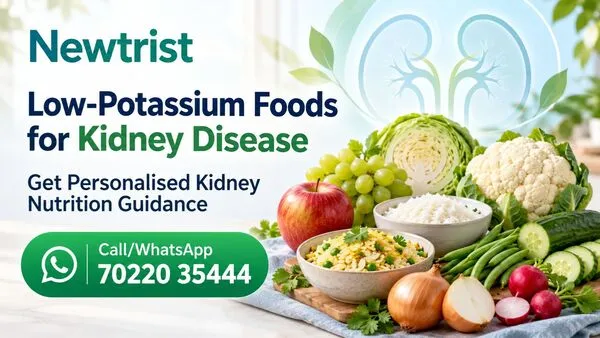
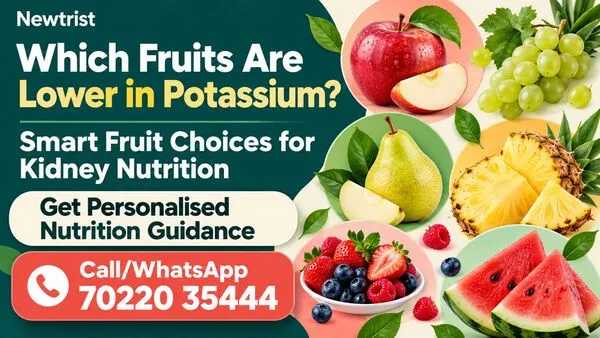
Which Fruits Are Lower in Potassium?
Common lower-potassium fruit choices include:
| Lower-potassium fruit | Practical consideration |
| Apple | Convenient everyday choice |
| Grapes | Easy to include in a suitable amount |
| Pear | Useful alternative to more potassium-dense fruits |
| Pineapple | Practical fresh-fruit option |
| Berries | Generally lower in potassium, although availability varies |
| Watermelon | Can fit, but larger servings add more potassium |
These foods are lower in potassium, not potassium-free.
That distinction matters because the amount eaten affects the total potassium consumed. Changing the fruit can be useful, but simply eating a much larger quantity of the replacement defeats part of the purpose.
A practical fruit decision therefore considers both which fruit and how much.
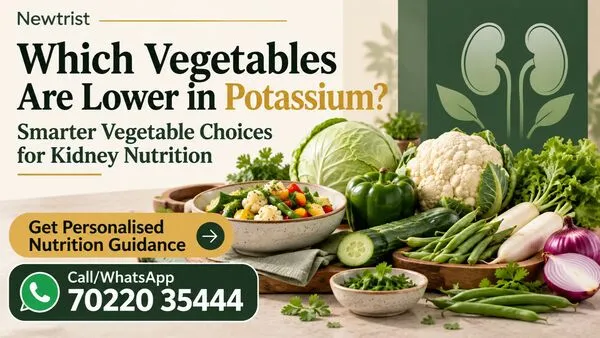
Which Vegetables Are Lower in Potassium?
Lower-potassium vegetable choices can include:
- cabbage
- capsicum
- cauliflower
- cucumber
- green beans
- lettuce
- onion
- radish
These choices allow vegetables to remain a regular part of meals rather than treating potassium restriction as a reason to reduce vegetables broadly.
For Indian meals, they can also be used in familiar sabzis, mixed vegetable preparations and accompaniments without making the plate feel like a completely different diet.
The useful strategy is to build more of the meal around vegetables that contribute less potassium when restriction is required.
Can Cooking Reduce Potassium in Vegetables?
Yes. Boiling can reduce the potassium content of some vegetables because part of the potassium moves into the cooking water.
Cutting the vegetable into smaller pieces before boiling increases its contact with water. The cooking water is then discarded rather than used in the finished dish.
This method can be helpful for selected vegetables.
It does not, however, make every higher-potassium vegetable equivalent to a naturally lower-potassium choice. The starting food and the amount eaten still matter.
What Other Foods Can Fit When Potassium Is Restricted?
A workable low-potassium diet needs more than an appropriate fruit and vegetable list. Familiar staples and the other components of a meal also need to fit.
Rice, Roti and Cereal Foods
White rice is relatively low in potassium and can be a useful staple.
Other familiar cereal foods such as poha, semolina and puffed rice can also work well in potassium-conscious eating.
Roti does not automatically need to be removed. Its suitability depends on the complete food pattern rather than the idea that every familiar staple must change.
This makes it possible to adjust potassium intake while keeping much of the structure of normal Indian meals intact.
Eggs, Fish, Chicken, Dal and Pulses
Eggs, fish and chicken can fit into many potassium-conscious eating patterns when appropriate for the individual.
Dals, beans and other pulses contribute potassium, particularly when eaten frequently or in larger quantities. This does not make dal universally unsuitable.
Detailed protein requirements are a separate nutrition question. For a fuller explanation of how needs can differ, see protein and kidney disease.
Milk and Curd
Milk and curd also contribute potassium.
They are not automatically excluded foods, but their contribution needs to be considered alongside the other foods regularly eaten.
This is one reason looking at the complete eating pattern is more useful than focusing on one food in isolation.
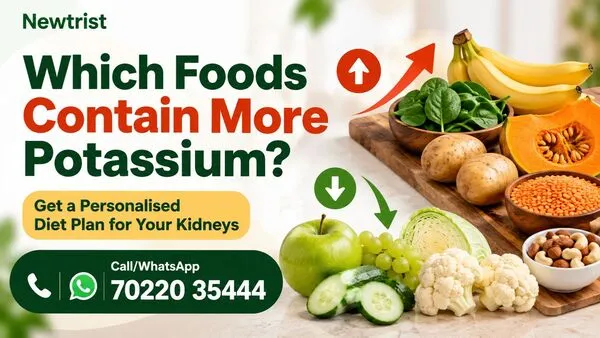
Which Foods Contain More Potassium?
Some foods can contribute more potassium and may need closer attention when restriction has been advised.
| Food category | Higher-potassium examples |
| Fruits | Banana, guava, custard apple, avocado |
| Dried fruits | Dates, raisins and other dried fruits |
| Root and tuber vegetables | Potato, sweet potato, yam, colocasia |
| Leafy vegetables | Spinach, amaranth and similar leafy greens |
| Concentrated tomato foods | Tomato puree and tomato paste |
| Dals and legumes | Larger amounts of dals, beans and other legumes |
| Nuts and seeds | Many nuts and seeds, particularly in larger amounts |
| Mixed dishes | Preparations containing several potassium-rich ingredients |
These foods are not automatically forbidden for everyone who needs potassium restriction.
Their relevance depends on the amount eaten, how frequently they appear and what else is included in the meal.
Mixed preparations are worth particular attention because several potassium-containing ingredients can combine in one dish. Looking only at the main ingredient may therefore underestimate where potassium is coming from.
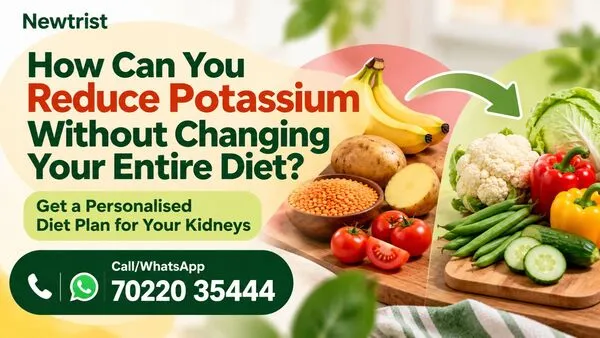
How Can You Reduce Potassium Without Changing Your Entire Diet?
Start with the foods that are contributing more potassium rather than changing everything at once.
| Situation | Practical direction |
| Your regular fruit is relatively high in potassium | Replace it with one of the lower-potassium fruits listed above |
| Potato or another potassium-dense vegetable dominates a dish | Build more of the dish around lower-potassium vegetables |
| Several potassium-rich vegetables appear in the same preparation | Reduce the concentration by using suitable lower-potassium choices |
| Dried fruit is eaten frequently | Prefer an appropriate fresh-fruit choice |
| Several pulse-based foods appear across the day | Review where they occur rather than automatically removing all pulses |
| Several moderate potassium sources appear in one meal | Adjust the combination rather than focusing on only one ingredient |
This is usually easier to sustain than memorising a long “allowed versus forbidden” list.
More importantly, it focuses attention on the changes that can make a meaningful difference while allowing suitable familiar foods to remain.
Sample 1-Day Low-Potassium Diet Plan
The following example is illustrative only. Its purpose is to demonstrate lower-potassium substitutions across a familiar Indian eating day.
It assumes an adult with kidney disease has specifically been advised to restrict potassium. It does not prescribe individual portions or determine complete nutritional requirements.
| Meal | Menu |
| Breakfast | Vegetable poha with cabbage, capsicum and onion, with apple |
| Mid-morning | Grapes |
| Lunch | White rice with an egg preparation, cabbage vegetable and cucumber |
| Evening | Plain puffed rice with cucumber and onion |
| Dinner | Chapati with cauliflower-capsicum sabzi and an individually suitable protein food |
The value of this example is in the substitution pattern, not in copying the menu.
Someone else’s potassium requirement, appetite, nutritional status, food preferences and usual meals may be different enough to require a substantially different pattern.
When Does a Low-Potassium Food List Stop Being Enough?
A list can answer:
“Which fruit contains less potassium?”
It cannot fully answer:
“What should my own meals look like?”
That difference becomes important when your questions start sounding like these:
- Can I continue the dal my family normally cooks?
- Which fruits can I rotate instead of eating the same one repeatedly?
- Have I stopped a vegetable that may still be possible to include?
- How can vegetarian meals remain varied?
- Which foods in my normal diet are contributing most of the potassium?
- Could changing a few portions or combinations allow me to keep more foods?
At that point, another list is unlikely to solve the problem.
What needs to be reviewed is your food pattern.
One person may be getting much of their dietary potassium from fruit. For someone else, the bigger issue may be vegetable choices, pulse-heavy meals or several moderate sources appearing together throughout the day.
Chief Nutritionist Vasanthi Senthilvel can assess your existing food habits alongside the nutritional and kidney-related factors that determine how much potassium restriction is appropriate.
The purpose of personalisation is not to create a longer restriction list. It is to establish:
What can stay? What actually needs changing? And what is the simplest way to make those changes work in your normal meals?
That can make the difference between constantly worrying about individual foods and having an eating pattern you understand and can realistically follow.
If you have been advised to restrict potassium but are still uncertain about everyday meals, personalised clinical nutrition with Chief Nutritionist Vasanthi Senthilvel can translate general potassium advice into a practical food plan suited to your usual Indian eating pattern and individual nutritional needs.
Frequently Asked Questions
Why Do Different Low-Potassium Food Lists Show Different Values?
Potassium values can differ according to the food variety, serving size, whether it is measured raw or cooked, preparation method and the food-composition data used. Compare foods in similar quantities and prepared in similar ways rather than expecting every published list to show identical numbers.
Can Fruit Juice Replace Fresh Fruit When Potassium Is Restricted?
Not automatically. Juice can make it easier to consume the equivalent of several portions of fruit at one time. The type of fruit and the total amount consumed therefore still need consideration.
Can Packaged Foods Contain Added Potassium?
Yes. Some packaged foods contain potassium-containing ingredients such as potassium chloride. When potassium needs close control, checking the ingredient list can identify potassium sources that may not be obvious from the product name.
Can I Eat at Restaurants When Potassium Is Restricted?
Yes, although potassium can be harder to estimate because quantities of vegetables, gravies and concentrated ingredients may not be clear. Dishes with simpler, recognisable ingredients can make food choices easier to evaluate.
Author
Chief Nutritionist Vasanthi Senthilvel leads Newtrist Nutritionist Dietitian Dietician, providing personalised diet plans for weight management and clinical nutrition for children, adolescents, adults and families.
She has 21 years of experience in nutrition and has received professional recognition for her work.
- Pride of Bharat Awards 2026: Outstanding Achievement in Holistic Health & Nutrition Innovation
- Doctor of The Year: Nutritionist 2026: Excellence in Clinical Nutrition and Weight Loss.
Her approach considers age, growth, health history, medical conditions, laboratory reports, medication, body composition, weight history, dietary preferences, regional food habits, family routines, activity, sleep and personal health goals. Recommendations are developed according to individual needs rather than using one standard diet for everyone.
Consultations are available in person at Bangalore HSR Layout, Koramangala, Bellandur, Haralur and Electronic City, as well as online across India.
Independent Medical Review Panel
Newtrist health and nutrition articles undergo medical review, where appropriate, by doctors with relevant specialist expertise. The medical professionals listed below contribute to Newtrist’s review process within their respective specialties.
| Speciality | Doctor |
|---|---|
| Endocrinology | Dr Vinay Prasad MBBS, MD, DM |
| Gastroenterology & Hepatology | Dr Sunil kumar N MBBS, MD, DM |
| Gynaecology | Dr Prathiba G MBBS, DNB, FIRM, FMAS |
| Nephrology | Dr Priyashree R MBBS, MD, DNB, DM |