
Written by: Chief Nutritionist Vasanthi Senthilvel
21 years of experience | Newtrist Nutritionist Dietitian Dietician
Best Nutritionist in Bangalore with multiple awards for excellence in clinical nutrition, weight loss, holistic health and nutrition innovation.
Medically reviewed by: Dr Prathiba G MBBS, DNB, FIRM, FMAS | Dr Sunil kumar N MBBS, MD, DM | Dr Vinay Prasad MBBS, MD, DM
Medical Disclaimer: Nutritional needs vary based on an individual’s profile. The information on this page is for general educational purposes only and is not intended to replace personalised medical or nutrition care.
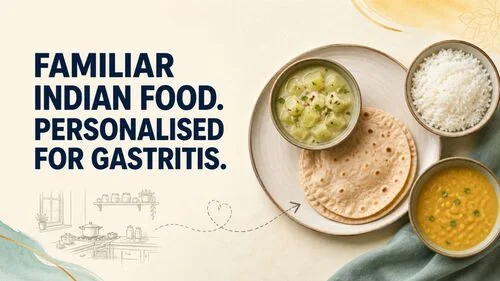
Managing gastritis does not mean replacing every familiar food with an unfamiliar special menu. A personalised gastritis diet can be developed around the Indian dishes already cooked in your home, your regional preferences and your family’s normal cooking methods, provided they are appropriate for your symptoms, tolerance and nutritional requirements. The individual plan can go beyond the examples in this article by specifying suitable ingredients and quantities.
KEY TAKEAWAY A gastritis diet menu cannot be chosen from a universal list of good and bad foods. The 28 dishes below are separate regional examples for seven different profiles. Preparation, texture, richness, appetite and individual tolerance can all change whether a familiar dish fits.
Table of Contents

What this seven-profile gastritis diet menu demonstrates
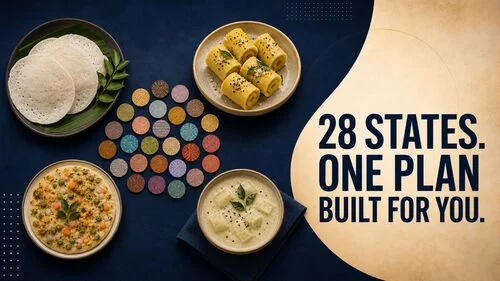
The seven days are a map of different people, not a calendar for one reader. Each “day” represents a life stage, health context or lifestyle. Its four dishes are independent examples for breakfast, lunch, an evening snack and dinner, not a combination intended to be eaten together.
Across the seven profiles, every Indian state appears once. The point is not to label a state’s food as suitable or unsuitable for gastritis. It is to show how a nutrition professional may look beyond a dish name and examine its ingredients, texture, cooking method, richness, usual accompaniments and the person who will eat it.
- 7 separate profiles, not 7 consecutive days for one reader
- 28 different dishes, representing India’s 28 states once each
- 4 meal roles per profile, used to demonstrate adaptation rather than prescribe a combination
- No fixed quantities, complete recipes or universal promises of symptom relief
What a diet menu can and cannot do for gastritis
A well-considered menu can make eating feel more manageable by adapting texture, pungency, fat, meal structure and familiar home foods to the person’s current symptoms. It can also protect variety when fear of discomfort has narrowed the diet more than necessary. Comfort is useful information, but it is not proof that a dish addresses the cause.
A menu cannot identify why gastritis developed, remove an underlying cause, guarantee that a food will be comfortable. The same dish may feel comfortable for one person and troublesome for another. For a broader explanation of causes and symptom patterns, see Newtrist’s gastritis and diet.
Day 1: Gastritis meal examples for older adults
Older adults may be managing changes in appetite, chewing comfort, digestion, body weight or other health conditions at the same time. Softness can help, but a soft dish is not automatically nutritionally complete. These examples show how familiar regional foods may be assessed without assuming that every older adult needs the same restrictions.
| Meal | State | Dish | Main adaptation |
|---|---|---|---|
| Breakfast | Goa | Pez | Adjust softness and volume |
| Lunch | Odisha | Dalma | Mild seasoning; tailor lentil and vegetable load |
| Evening snack | Meghalaya | Pumaloi | Review dryness and chewing comfort |
| Dinner | Tamil Nadu | Ven pongal | Reduce pepper or richness if needed |
Breakfast: Pez from Goa
Goan pez is a soft rice gruel traditionally prepared by simmering rice with extra water. Its gentle texture may be easier to manage when chewing is tiring or appetite is low. The consistency and richness should reflect the older adult’s swallowing comfort, energy needs and usual home food. Pez alone offers limited variety, and a very large volume may worsen early fullness for some people.
Lunch: Dalma from Odisha
Odisha’s dalma combines lentils and vegetables in a softly cooked preparation, commonly seasoned with restrained spices. Keeping the household recipe recognisable while reducing hot chilli or a heavy tempering can help when those worsen symptoms. Lentils support dietary variety, but they can also increase fullness or bloating. Vegetable choice, texture and the rest of the meal therefore need individual review.
Evening snack: Pumaloi from Meghalaya
Pumaloi is a Khasi preparation of coarsely powdered rice that is steamed until soft and crumbly. It demonstrates how a regional snack can avoid deep-frying while remaining familiar. For an older adult, dryness, chewing ability and appetite matter more than the “steamed” label alone. Its place in the day and any suitable accompaniment should be decided from the person’s overall intake rather than assumed.
Dinner: Ven pongal from Tamil Nadu
Tamil Nadu’s ven pongal is made from softly cooked rice and moong dal, usually with ghee, pepper, cumin and other seasonings. Using less pepper and only as much richness as the person tolerates can retain its soft rice-and-dal character. Moong dal is not comfortable for everyone, and the dish should be adapted if fullness, reflux-like discomfort or reduced appetite is present.
Day 2: Gastritis meal examples for adults with diagnosed H. pylori infection
When H. pylori infection has been diagnosed, food choices may support comfort and adequate intake, but food cannot remove the infection. Nausea, reduced appetite or recurring upper-abdominal discomfort can make regular eating difficult. These four dishes illustrate practical adaptations while keeping medical assessment and the diagnosed cause separate from menu planning.
| Meal | State | Dish | Main adaptation |
|---|---|---|---|
| Breakfast | Andhra Pradesh | Pesarattu | Restrained chilli; assess whole-moong tolerance |
| Lunch | Maharashtra | Varan bhaat | Mild tempering and suitable texture |
| Evening snack | Gujarat | Dhokla | Limit sharp or oily finishing if it triggers symptoms |
| Dinner | Sikkim | Vegetable thukpa | Mild broth; avoid excessive heat or volume |
Breakfast: Pesarattu from Andhra Pradesh
Pesarattu is an Andhra Pradesh crepe made mainly from ground whole green moong, with ginger, chilli and other flavourings varying by household. Cooking it thin and soft with restrained chilli can feel less aggressive than a crisp, heavily spiced preparation. Because whole moong can cause gas or fullness, the person’s tolerance matters. Its regional identity does not make it a remedy for the infection.
Lunch: Varan bhaat from Maharashtra
Maharashtrian varan bhaat pairs cooked toor dal with rice and is often valued as simple home food. For active symptoms, the dal can remain mild and the tempering can be adjusted if strong heat or excess richness is uncomfortable. Toor dal may not suit every person during nausea or bloating. The dish can support familiarity and intake, but it cannot address H. pylori on its own.
Evening snack: Dhokla from Gujarat
Gujarat’s dhokla is a steamed, fermented gram-and-rice preparation with a light texture when fresh. Hot chilli, sharp citrus and an oily tempering can be reduced while keeping the steamed cake recognisable. Fermentation is not automatically helpful or harmful for gastritis. Acidity, bloating, sweetness and quantity tolerance vary, so the snack needs to be judged from the individual response rather than its reputation.
Dinner: Vegetable thukpa from Sikkim
Vegetable thukpa, popular in Sikkim, brings noodles and vegetables into a warm broth. A mild version can limit hot chilli, excessive oil and strongly pungent flavouring while using a texture the person finds easy to eat. Very hot temperature or a large liquid volume may be uncomfortable during nausea or early fullness. The vegetable and protein pattern still needs personalisation for adequate overall nutrition.
Day 3: Gastritis meal examples for adults with low appetite or early fullness
Low appetite and feeling full soon after starting a meal can reduce food variety and total intake. Simply serving a large bowl of “light” food may make the problem worse. These examples focus on manageable texture and familiar flavours, while leaving meal size, timing and nutritional balance to individual assessment.
| Meal | State | Dish | Main adaptation |
|---|---|---|---|
| Breakfast | Madhya Pradesh | Poha | Softer, less oily preparation |
| Lunch | Uttar Pradesh | Vegetable tehri | Reduce pungency and excessive bulk |
| Evening snack | Chhattisgarh | Fara | Keep soft rather than dense or dry |
| Dinner | Nagaland | Galho | Moist texture; individualise bowl size and ingredients |
Breakfast: Poha from Madhya Pradesh
Poha is strongly associated with Madhya Pradesh and uses softened flattened rice with household variations in vegetables, peanuts, seasoning and garnish. With early fullness, keeping it soft and less oily and leaving out sev, hot chilli or a sharp citrus finish may make it easier to explore. Peanuts and vegetables change density and tolerance, so a diet plan should not treat every poha as identical.
Lunch: Vegetable tehri from Uttar Pradesh
Uttar Pradesh’s vegetable tehri is a one-pot rice dish coloured and flavoured with vegetables and spices. A gentler version can keep the aromatic character while reducing pungency and excess fat. Soft rice may feel approachable when appetite is low, but a bulky serving or many fibrous vegetables may bring fullness quickly. Ingredient choice and meal timing should reflect the person’s actual intake pattern.
Evening snack: Fara from Chhattisgarh
Chhattisgarhi fara consists of steamed rice-flour dumplings, with shaping and seasoning differing between families. Steaming avoids the heaviness of deep-frying, yet a dense or dry dumpling can still be difficult when appetite is poor. A softer preparation with a restrained tempering may work better. Chewing comfort, fullness and the nutritional purpose of the snack should guide whether fara belongs in the individual plan.
Dinner: Galho from Nagaland
Galho is a Naga rice porridge prepared in varied household forms with vegetables and sometimes a protein food. Its soft, moist texture can make a small meal feel less demanding when appetite is low. A mild version can avoid intense heat, but the dish should not become an oversized bowl that worsens early fullness. The ingredients need to match the person’s usual foods, tolerance and nutritional gaps.
Day 4: Gastritis meal examples for people with autoimmune conditions
People with autoimmune conditions may have very different symptoms, nutrient concerns and food tolerances. Autoimmune gastritis can affect iron and vitamin B12 status, but those concerns cannot be identified from symptoms or solved by a “special” dish. These examples show variety while keeping laboratory findings, health history and individual requirements central.
| Meal | State | Dish | Main adaptation |
|---|---|---|---|
| Breakfast | Kerala | Idiyappam | Select accompaniments from full nutritional needs |
| Lunch | Manipur | Kangshoi | Tailor vegetables, fibre and pungency |
| Evening snack | Uttarakhand | Jhangora kheer | Review dairy, sweetness and richness |
| Dinner | Mizoram | Bai | Mild vegetable selection and suitable volume |
Breakfast: Idiyappam from Kerala
Kerala idiyappam is made by pressing a rice-flour dough into fine strands and steaming it. The soft noodles may be easier to approach than a crisp or fried breakfast when the upper abdomen feels sensitive. Plain idiyappam is not a complete breakfast by itself, and its usual accompaniments vary widely. The final choice should account for appetite, protein needs, dairy tolerance and other health conditions.
Lunch: Kangshoi from Manipur
Kangshoi is a Manipuri vegetable stew whose ingredients change with season and household tradition. Its boiled, broth-based format can be kept mild while retaining familiar vegetables and aroma. Strongly pungent additions can be adjusted if they are a personal trigger, but removing every flavour is unnecessary. Fibre load, vegetable texture and any protein addition should reflect symptoms, laboratory findings and the person’s wider diet.
Evening snack: Jhangora kheer from Uttarakhand
Jhangora kheer from Uttarakhand uses barnyard millet cooked with milk and a sweetener. A less rich, gently sweet version may offer a familiar snack when tolerated, but milk, sweetness and millet texture can affect people differently. It should not be presented as a way to correct iron or vitamin B12 concerns. The person’s dairy tolerance, appetite and overall meal pattern determine whether it fits.
Dinner: Bai from Mizoram
Bai is a Mizo preparation built around softly cooked vegetables, with ingredients varying across communities and homes. Simpler seasoning can retain its vegetable-stew character without forcing pungent additions on someone who finds them uncomfortable. Softness may help, but a high volume or large fibre load can still worsen fullness. The selection of vegetables and any protein food requires individual planning.
Day 5: Gastritis meal examples for adults with chronic gastritis and iron or vitamin B12 concerns
Long-standing gastritis can coexist with low iron or vitamin B12 status, but only an appropriate assessment can show whether a deficiency is present and why. No single food example can correct it. These dishes demonstrate how nutrient awareness, symptom tolerance and regional habits can be considered together without making a food-based promise.
| Meal | State | Dish | Main adaptation |
|---|---|---|---|
| Breakfast | Karnataka | Ragi ganji | Adjust thickness; do not treat as deficiency correction |
| Lunch | West Bengal | Mild bhapa-style fish | Steam; adjust mustard and chilli to tolerance |
| Evening snack | Arunachal Pradesh | Zan | Mild porridge; individualise density |
| Dinner | Haryana | Bajra khichdi | Cook soft; assess fibre and dal tolerance |
Breakfast: Ragi ganji from Karnataka
Karnataka’s ragi ganji is a porridge made from finger millet flour, with household versions ranging from thin and plain to richer preparations. Its smoothness can be adjusted when chewing or appetite is limited. Ragi’s nutrient reputation does not mean the dish will correct an iron concern, and a thick preparation may feel filling quickly. Ingredients and texture should be matched to symptoms and documented nutritional needs.
Lunch: Mild bhapa-style fish from West Bengal
West Bengal’s bhapa fish is defined by steaming fish, commonly with a mustard-based seasoning. A symptom-aware bhapa-style version may keep the steamed fish and Bengali character while reducing pungent mustard or chilli if these provoke discomfort. Fish can contribute protein and vitamin B12, but one dish cannot correct a deficiency. Fish choice, seasoning, appetite and the rest of the diet require individual assessment.
Evening snack: Zan from Arunachal Pradesh
Zan is a Monpa porridge from Arunachal Pradesh, traditionally based on millet or maize flour and prepared in varied home styles. A softly cooked, mildly seasoned version can be explored when a warm snack feels manageable. Millet can still be dense or filling, and its nutrient content does not make it a treatment for low iron. Thickness, added vegetables and meal placement need personalisation.
Dinner: Bajra khichdi from Haryana
Haryanvi bajra khichdi commonly brings pearl millet and moong dal together in a slow-cooked dish. A softer, less rich version may suit someone who wants familiar winter food, yet millet fibre and dal can increase fullness or bloating for some people. It should not be chosen simply because it is perceived as nutrient-rich. Texture, digestive response and the person’s verified needs should guide its use.
Day 6: Gastritis meal examples for children and adolescents under medical supervision
Children and adolescents need enough nutrition for growth, learning and activity, so a restrictive adult-style gastritis menu can be inappropriate. Symptoms, growth pattern, appetite and the diagnosed cause need proper assessment. These examples show how family foods may be adapted without labelling a child as unable to eat whole food groups.
| Meal | State | Dish | Main adaptation |
|---|---|---|---|
| Breakfast | Bihar | Chura dahi | Include only if dairy is tolerated |
| Lunch | Tripura | Bhangui | Familiar flavouring and suitable richness |
| Evening snack | Assam | Til pitha | Consider density, sweetness and sesame tolerance |
| Dinner | Punjab | Soft makki di roti | Prevent dryness; plan suitable accompaniments |
Breakfast: Chura dahi from Bihar
Bihar’s chura dahi combines softened flattened rice with curd and is widely recognised as familiar home food. Its soft texture may be convenient, but curd is comfortable for some young people and not for others. Sweetness, temperature and added ingredients should reflect tolerance and family habits. The dish alone does not cover a child’s growth needs, so it should be viewed within the full pattern.
Lunch: Bhangui from Tripura
Bhangui is a Tripuri rice preparation in which seasoned rice is cooked in a leaf, traditionally with ingredients such as ginger, onion and ghee. A child-friendly version may use only familiar, tolerated flavouring and a level of richness that does not worsen symptoms. Leaf cooking gives regional identity, not a health guarantee. Appetite, chewing ability and the rest of the child’s intake still matter.
Evening snack: Til pitha from Assam
Assamese til pitha uses a thin rice casing with a sesame and jaggery filling. It offers a clear example of why “traditional” and “suitable” are not the same decision. The snack can be dense, sweet and crumbly, so texture, sesame tolerance and appetite need attention for a child or adolescent. It should remain an occasional adapted example rather than displace more complete everyday nourishment.
Dinner: Soft makki di roti from Punjab
Makki di roti is a Punjabi flatbread made from maize flour. A softer, less toasted version may preserve a familiar family food, but maize can feel coarse or dry and the roti is not a complete dinner by itself. For a young person with symptoms, chewing comfort, appetite and suitable accompaniments need professional review. Popularity in the home should guide adaptation, not automatic inclusion.
Day 7: Gastritis meal examples for working adults managing symptoms away from home
Working adults often need food that travels, reheats or can be found outside the home, yet convenience should not turn into a rigid “safe food” list. Symptoms may also change across commuting, long gaps and stressful workdays. These four state examples focus on practical preparation and predictability without prescribing a portable daily chart.
| Meal | State | Dish | Main adaptation |
|---|---|---|---|
| Breakfast | Jharkhand | Pan-cooked dhuska | Replace deep-frying with a less oily adaptation |
| Lunch | Himachal Pradesh | Siddu | Mild filling; keep moist for packed meals |
| Evening snack | Telangana | Sarva pindi | Softer texture and restrained heat |
| Dinner | Rajasthan | Gehun ka kheech | Soft cooking and restrained richness |
Breakfast: Pan-cooked dhuska from Jharkhand
Dhuska from Jharkhand is traditionally a deep-fried rice-and-lentil preparation. For someone managing symptoms before work, a pan-cooked, less oily adaptation may be more practical, although it will differ from the classic version. Rice and lentil batter can still cause fullness for some people. The value of this example is the adaptation decision, not a claim that modified dhuska suits every worker.
Lunch: Siddu from Himachal Pradesh
Himachali siddu is a steamed wheat bread that may contain a savoury filling. Its steamed format can travel well, but the filling, wheat texture and usual rich or pungent accompaniments can change tolerance. A mildly filled version may be easier to manage at work if it remains moist. The person’s wheat tolerance, appetite and access to a balanced meal should shape the final choice.
Evening snack: Sarva pindi from Telangana
Telangana’s sarva pindi is a pan-cooked rice-flour and pulse preparation, commonly flavoured with chilli, onion and other seasonings. A softer, less oily version with restrained heat may provide a familiar packed snack. Crispness, chilli and pulse content can each affect symptoms differently. The workday schedule, storage conditions and appetite should be reviewed before making it a regular option.
Dinner: Gehun ka kheech from Rajasthan
Gehun ka kheech is a Rajasthani preparation based on softened whole wheat, often made richer at serving. Gentle seasoning and restrained richness may suit a home dinner after a long workday, but wheat texture and density can produce early fullness. It is not inherently better because it is traditional. Cooking softness, symptom response and the day’s overall intake determine whether it fits.
7-Day Diet Plan for Gastritis
| Meal | State | Dish | Main adaptation |
| Day 1 | |||
| Breakfast | Goa | Pez | Adjust softness and volume |
| Lunch | Odisha | Dalma | Mild seasoning; tailor lentil and vegetable load |
| Evening snack | Meghalaya | Pumaloi | Review dryness and chewing comfort |
| Dinner | Tamil Nadu | Ven pongal | Reduce pepper or richness if needed |
| Day 2 | |||
| Breakfast | Andhra Pradesh | Pesarattu | Restrained chilli; assess whole-moong tolerance |
| Lunch | Maharashtra | Varan bhaat | Mild tempering and suitable texture |
| Evening snack | Gujarat | Dhokla | Limit sharp or oily finishing if it triggers symptoms |
| Dinner | Sikkim | Vegetable thukpa | Mild broth; avoid excessive heat or volume |
| Day 3 | |||
| Breakfast | Madhya Pradesh | Poha | Softer, less oily preparation |
| Lunch | Uttar Pradesh | Vegetable tehri | Reduce pungency and excessive bulk |
| Evening snack | Chhattisgarh | Fara | Keep soft rather than dense or dry |
| Dinner | Nagaland | Galho | Moist texture; individualise bowl size and ingredients |
| Day 4 | |||
| Breakfast | Kerala | Idiyappam | Select accompaniments from full nutritional needs |
| Lunch | Manipur | Kangshoi | Tailor vegetables, fibre and pungency |
| Evening snack | Uttarakhand | Jhangora kheer | Review dairy, sweetness and richness |
| Dinner | Mizoram | Bai | Mild vegetable selection and suitable volume |
| Day 5 | |||
| Breakfast | Karnataka | Ragi ganji | Adjust thickness; do not treat as deficiency correction |
| Lunch | West Bengal | Mild bhapa-style fish | Steam; adjust mustard and chilli to tolerance |
| Evening snack | Arunachal Pradesh | Zan | Mild porridge; individualise density |
| Dinner | Haryana | Bajra khichdi | Cook soft; assess fibre and dal tolerance |
| Day 6 | |||
| Breakfast | Bihar | Chura dahi | Include only if dairy is tolerated |
| Lunch | Tripura | Bhangui | Familiar flavouring and suitable richness |
| Evening snack | Assam | Til pitha | Consider density, sweetness and sesame tolerance |
| Dinner | Punjab | Soft makki di roti | Prevent dryness; plan suitable accompaniments |
| Day 7 | |||
| Breakfast | Jharkhand | Pan-cooked dhuska | Replace deep-frying with a less oily adaptation |
| Lunch | Himachal Pradesh | Siddu | Mild filling; keep moist for packed meals |
| Evening snack | Telangana | Sarva pindi | Softer texture and restrained heat |
| Dinner | Rajasthan | Gehun ka kheech | Soft cooking and restrained richness |
How should individual food tolerance change these meal examples?
Food tolerance is specific to the person and can change with symptom severity, preparation and quantity. A dish name is therefore only the starting point. The useful question is not “Is dal good for gastritis?” but “Which dal, in what texture and preparation, fits this person’s symptoms and nutritional needs?”
Notice whether discomfort follows pungency, richness, acidity, a dry texture, a large volume, long gaps between meals or a particular ingredient. A short, factual food-and-symptom record can reveal patterns without creating an ever-growing avoidance list. Foods should not be removed solely because they appear on a generic internet list.
Frequently asked questions about common foods and gastritis
Is watermelon good for gastritis?
Watermelon may be comfortable for some people with gastritis, but it is not a treatment and it does not suit everyone. A large volume can increase fullness, and temperature or natural sweetness may matter during nausea. Judge it by the person’s symptom response and overall food pattern rather than calling it universally soothing or harmful.
Can grapes be included in a gastritis diet?
Yes, grapes can be included when they are individually tolerated. Their skin, acidity and sweetness may be comfortable for one person and troublesome for another, especially during active symptoms. Fresh grapes and concentrated grape products are not equivalent. The useful decision is based on form, symptom response and nutritional context, not a blanket ban or endorsement.
Is ice cream good for gastritis?
Ice cream is not a gastritis remedy. Its fat, sweetness, dairy content and cold temperature may aggravate nausea, fullness or discomfort in some people, while a small amount may be tolerated by others. It should not be used to “coat” the stomach. Dairy tolerance and the role of the food in the wider diet need consideration.
Which dal is better for gastritis: moong, masoor or another dal?
No dal is universally best for gastritis. Moong dal is often perceived as lighter, but it can still cause gas or fullness; masoor, toor and other dals may work well when texture, seasoning and quantity suit the person. Compare the actual response to a specific preparation instead of relying only on the dal’s name.
Are upma and idli suitable for gastritis?
Upma and idli may fit when their preparation and accompaniments match the person’s tolerance. A very oily, chilli-heavy upma differs from a softly cooked mild version, while sourness and accompanying chutneys can change the experience of idli. Neither food is automatically safe. Texture, richness, acidity and the person’s response should guide inclusion.
Can ragi and corn be eaten with gastritis?
Ragi and corn do not need an automatic ban, but their texture and fibre can feel heavy during fullness or active discomfort. A smooth ragi preparation differs from a coarse item, just as soft maize food differs from dry roasted corn. Choose the form according to chewing comfort, appetite, symptoms and the person’s complete nutritional needs.
Are khichdi and dosa good for gastritis?
Khichdi and dosa can be adapted, but neither is universally good for gastritis. A soft, mildly seasoned khichdi differs from a rich version, and a thin soft dosa differs from a crisp, oily or strongly fermented preparation. The grain, dal, cooking fat, accompaniments and symptom pattern determine suitability. Familiarity helps only when the preparation also fits.
When do gastritis symptoms require medical assessment?
Seek prompt medical assessment for vomit containing blood or material that looks like coffee grounds, black or tarry stools, faintness, unusual breathlessness, severe or rapidly worsening pain, repeated vomiting, difficulty eating, unintended weight loss or symptoms that persist or keep returning. These signs should not be managed by changing food alone.
Children, adolescents, older adults and anyone with a diagnosed infection, autoimmune condition, anaemia concern or significant loss of appetite need particular care. A nutrition plan should be built after the cause, current health status and warning signs have been appropriately assessed.
What should you remember about a personalised gastritis menu?
The most useful menu is recognisable enough to live in your home and precise enough to reflect your symptoms. Regional dishes can often stay, but their ingredients, cooking method, texture, richness and place in the day may change. Use these 28 examples to identify the questions your own plan must answer, not as a chart to copy.
How Chief Nutritionist Vasanthi Senthilvel personalises a gastritis diet
Chief Nutritionist Vasanthi Senthilvel reviews the person behind the symptoms: health history, medical findings, appetite, weight pattern, food tolerance, family cooking, regional preferences, work or school routine and foods already available at home. That context helps distinguish a useful adaptation from an unnecessary restriction.
A personalised gastritis diet plan can then specify the ingredients, preparation details and quantities appropriate for you, while protecting nutritional adequacy and keeping the plan practical for your household.
Request a personalised diet plan with Chief Nutritionist Vasanthi Senthilvel if you want familiar Indian food translated into decisions built around your symptoms, routines and requirements.
Author
Chief Nutritionist Vasanthi Senthilvel leads Newtrist Nutritionist Dietitian Dietician, providing personalised diet plans for weight management and clinical nutrition for children, adolescents, adults and families.
She has 21 years of experience in nutrition and has received professional recognition for her work.
- Pride of Bharat Awards 2026: Outstanding Achievement in Holistic Health & Nutrition Innovation
- Doctor of The Year: Nutritionist 2026: Excellence in Clinical Nutrition and Weight Loss.
Her approach considers age, growth, health history, medical conditions, laboratory reports, medication, body composition, weight history, dietary preferences, regional food habits, family routines, activity, sleep and personal health goals. Recommendations are developed according to individual needs rather than using one standard diet for everyone.
Consultations are available in person at Bangalore HSR Layout, Koramangala, Bellandur, Haralur and Electronic City, as well as online across India.
Independent Medical Review Panel
Newtrist health and nutrition articles undergo medical review, where appropriate, by doctors with relevant specialist expertise. The medical professionals listed below contribute to Newtrist’s review process within their respective specialties.
| Speciality | Doctor |
|---|---|
| Endocrinology | Dr Vinay Prasad MBBS, MD, DM |
| Gastroenterology & Hepatology | Dr Sunil kumar N MBBS, MD, DM |
| Gynaecology | Dr Prathiba G MBBS, DNB, FIRM, FMAS |
| Nephrology | Dr Priyashree R MBBS, MD, DNB, DM |