
Written by: Chief Nutritionist Vasanthi Senthilvel
21 years of experience | Newtrist Nutritionist Dietitian Dietician
Best Nutritionist in Bangalore with multiple awards for excellence in clinical nutrition, weight loss, holistic health and nutrition innovation.
Medically reviewed by: Dr Dr Prathiba G MBBS, DNB, FIRM, FMAS | Dr Sunil kumar N MBBS, MD, DM | Dr Vinay Prasad MBBS, MD, DM
Medical Disclaimer: Nutritional needs vary based on an individual’s profile. The information on this page is for general educational purposes only and is not intended to replace personalised medical or nutrition care.
Pear during pregnancy is generally safe when the fruit is fresh, properly washed and comfortable for you to eat. Also commonly called nashpati in India, pear can contribute fibre, vitamin C, fluid and naturally occurring carbohydrate as part of a varied pregnancy diet. The more useful questions are often practical ones: whether the skin can stay on, whether timing matters, how pear fits across the three trimesters, and when a health concern means fruit choices need more individual attention.
Key takeaway: Pear can generally be included during pregnancy as part of a varied diet. It provides fibre, vitamin C, fluid and naturally occurring carbohydrate, and there is no routine need for special restrictions around this fruit. The amount and way it fits into the diet may need adjustment when digestion, blood-glucose management, allergy or other health concerns are relevant.
Table of Contents

Is Pear Safe During Pregnancy?
Yes. Pear can generally be eaten during pregnancy.
Choose fruit that is fresh, wash it thoroughly under clean running water and avoid fruit that is spoiled or badly damaged.
Pregnancy itself does not make an ordinary pear unsuitable. The situations that need more caution are individual, such as a known pear allergy, repeated digestive discomfort or a medical concern that changes how fruit should be planned.

Is Pear Good for Pregnancy?
Pear can be a nutritious fruit during pregnancy, but it is not a special pregnancy food or remedy.
Its value comes from the nutrients it contributes as part of the wider diet.
Fibre supports normal bowel function
Pear contains dietary fibre, including fibre in the skin.
That fibre contributes to the total obtained from vegetables, pulses, whole grains, nuts, seeds and other fruits.
Pear can therefore be one useful fibre-containing food, but it should not be presented as a treatment for constipation.
Vitamin C contributes to normal nutrition
Pear provides vitamin C, which supports normal tissue function and helps the body absorb iron from plant foods.
It is one possible source among many fruits and vegetables, so there is no need to depend on pear specifically for vitamin C.
Pear also provides fluid and carbohydrate
Fresh pear contains water and naturally occurring carbohydrate.
This can make it a convenient fruit when appetite allows, especially when you prefer familiar, simple foods rather than complicated recipes.
Are Nashpati and Babugosha Safe During Pregnancy?
Yes. Nashpati and babugosha can generally be eaten during pregnancy under the same food-safety principles as other pears.
Nashpati is a commonly used Indian name for pear, while babugosha is used for familiar pear varieties sold in India.
Different varieties can vary in size, sweetness, firmness and texture. These differences may affect preference and how much feels comfortable, but they do not make one ordinary variety uniquely beneficial for pregnancy.

Can You Eat Pear in the First, Second and Third Trimester?
Yes. Pear can generally be included during all three trimesters.
What may change is not the basic suitability of the fruit, but how comfortable it feels at different stages of pregnancy.
During the first trimester, nausea or changes in taste and smell may affect whether pear appeals to you.
Later in pregnancy, appetite, digestive comfort or clinical considerations may influence how fruit fits into the day.
There is no need to avoid pear simply because you move from one trimester to another.

How Much Pear Can You Eat During Pregnancy?
There is no single pregnancy-specific amount of pear that is right for everyone.
The amount that fits can depend on the size of the fruit, other fruits eaten during the day, appetite, digestive comfort and relevant health needs.
That is why prescribing a fixed number of pears is less useful than looking at the person’s overall fruit intake and eating pattern.
Whole pear and pear juice should also not be treated as the same thing. Whole fruit retains its fibre and makes the amount eaten easier to recognise.
If you find yourself unsure about quantities across many foods, not just pear, that becomes a broader nutrition-planning question rather than a pear-specific one.

Can You Eat Pear at Night During Pregnancy?
Yes. There is no general rule that makes pear unsafe at night.
If pear close to bedtime feels comfortable, there is no need to avoid it simply because of the time.
If it causes fullness, digestive discomfort or affects sleep, an earlier time may suit you better.
The decision should follow your comfort rather than a universal rule about fruit after a particular hour.

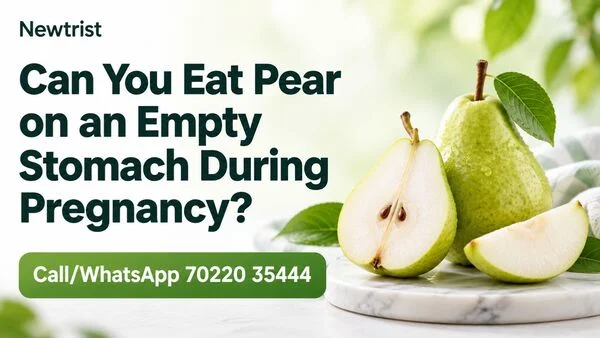
Can You Eat Pear on an Empty Stomach During Pregnancy?
Yes, if it feels comfortable for you.
There is no pregnancy rule requiring pear to be eaten only with another food.
If eating it alone causes nausea, discomfort or leaves you hungry again quickly, it may fit better alongside an appropriate meal or snack.
That is a question of tolerance and appetite rather than safety.
Can You Eat Pear With the Skin During Pregnancy?
Yes. Pear skin can usually be eaten after the fruit has been washed thoroughly.
The skin contains fibre, but peeling the fruit is also reasonable if you dislike the texture or find it uncomfortable.
Safe handling matters more than whether the skin is kept or removed.

How Should Pear Be Washed Before Eating?
- Wash your hands before handling the fruit.
- Rinse the pear thoroughly under clean running water while gently rubbing the surface.
- Wash it before peeling or cutting.
- Do not use soap or household cleaning products on the fruit.
- Remove damaged areas and discard fruit that appears spoiled.
- Use clean utensils and a clean cutting surface.
- Refrigerate cut pear appropriately if it is not eaten soon after preparation.
There is no need for special fruit-washing products or complicated preparation methods.
When Might Pear Need Individual Advice During Pregnancy?
For most women, pear does not require special dietary management. A few situations deserve more context.
When Blood Glucose Is Being Managed
Pear does not automatically need to be removed from the diet.
However, fruit quantity and how it fits with other carbohydrate-containing foods may need to be considered within the individual’s broader nutrition and medical plan.
Detailed glucose-management advice should therefore be based on the person’s clinical information rather than on a rule about pear alone.
When Pear Causes Digestive Discomfort
If pear repeatedly causes bloating, fullness or discomfort, there is no advantage in forcing yourself to eat it because it is considered healthy.
Another fruit or a different form may suit you better.
When Nausea Changes What You Can Tolerate
Pregnancy can change appetite, taste, smell and preferred textures.
If pear becomes unappealing, another suitable fruit can provide variety. A healthy pregnancy diet does not depend on one particular fruit.
When There Is a Known Pear Allergy
Someone with a known pear allergy should not reintroduce it based on general pregnancy guidance.
New symptoms such as itching, swelling or breathing difficulty after eating require prompt medical attention.
When One Food Question Becomes a Pregnancy Nutrition Question
Knowing whether pear is safe may solve one question.
But pregnancy often creates a chain of others.
You may start wondering how much fruit fits your day, what to eat when nausea changes your appetite, whether family meals need adjusting, or how a health finding should influence everyday food choices.
If you find yourself checking one food after another, the real challenge is no longer deciding whether each individual item is “allowed”.
It is understanding how your whole diet fits together.
Chief Nutritionist Vasanthi Senthilvel develops personalised pregnancy nutrition plans around your usual foods, appetite, health findings, regional preferences, family cooking and individual nutritional requirements.
The aim is not to replace familiar Indian food with a standard pregnancy menu.
It is to identify:
What already works well.
What needs adjustment.
What deserves priority for your pregnancy and nutritional needs.
If you are repeatedly searching whether individual foods are safe during pregnancy, a personalised consultation with Chief Nutritionist Vasanthi Senthilvel can bring those separate questions together into one practical nutrition plan built around your everyday diet.
Author
Chief Nutritionist Vasanthi Senthilvel leads Newtrist Nutritionist Dietitian Dietician, providing personalised diet plans for weight management and clinical nutrition for children, adolescents, adults and families.
She has 21 years of experience in nutrition and has received professional recognition for her work.
- Pride of Bharat Awards 2026: Outstanding Achievement in Holistic Health & Nutrition Innovation
- Doctor of The Year: Nutritionist 2026: Excellence in Clinical Nutrition and Weight Loss.
Her approach considers age, growth, health history, medical conditions, laboratory reports, medication, body composition, weight history, dietary preferences, regional food habits, family routines, activity, sleep and personal health goals. Recommendations are developed according to individual needs rather than using one standard diet for everyone.
Consultations are available in person at Bangalore HSR Layout, Koramangala, Bellandur, Haralur and Electronic City, as well as online across India.
Independent Medical Review Panel
Newtrist health and nutrition articles undergo medical review, where appropriate, by doctors with relevant specialist expertise. The medical professionals listed below contribute to Newtrist’s review process within their respective specialties.
| Speciality | Doctor |
|---|---|
| Endocrinology | Dr Vinay Prasad MBBS, MD, DM |
| Gastroenterology & Hepatology | Dr Sunil kumar N MBBS, MD, DM |
| Gynaecology | Dr Prathiba G MBBS, DNB, FIRM, FMAS |