
Written by: Chief Nutritionist Vasanthi Senthilvel
21 years of experience | Newtrist Nutritionist Dietitian Dietician
Best Nutritionist in Bangalore with multiple awards for excellence in clinical nutrition, weight loss, holistic health and nutrition innovation.
Medically reviewed by: Dr Dr Prathiba G MBBS, DNB, FIRM, FMAS | Dr Sunil kumar N MBBS, MD, DM | Dr Vinay Prasad MBBS, MD, DM
Medical Disclaimer: Nutritional needs vary based on an individual’s profile. The information on this page is for general educational purposes only and is not intended to replace personalised medical or nutrition care.
Once you start breastfeeding, food advice seems to come from everywhere.
Eat more. Drink more milk. Avoid spicy foods. Have plenty of ghee. Eat certain foods to increase breast milk. Do not eat others because they may upset the baby.
A diet for breastfeeding mothers does not need to become this complicated.
Breastfeeding does increase nutritional demands, but the practical goal is not to follow a long list of special lactation foods. It is to make sure your everyday diet provides enough energy and nutrients for you while fitting your appetite, breastfeeding pattern, health, food preferences and daily routine.
Key takeaway: A healthy diet for breastfeeding mothers should be varied, nutritionally adequate and practical. Regular protein foods, vegetables and fruits, suitable grains or other carbohydrate foods, calcium-rich foods, healthy fats and adequate fluids all have a place. Most breastfeeding mothers do not need to routinely eliminate particular foods, but some nutrients, dietary patterns and supplements require closer attention depending on the mother’s diet and health.
Table of Contents
What Should Breastfeeding Nutrition Prioritise?
Breastfeeding nutrition has a simple purpose: meet the mother’s higher nutritional demands without making eating unnecessarily difficult.
| Priority | What deserves attention |
| Adequate food intake | Enough food to support lactation and the mother’s own nutritional needs |
| Protein | Regular protein-containing foods across the day |
| Diet quality | Vegetables, fruits, pulses, grains and minimally processed foods |
| Micronutrients | Nutrients such as iodine, vitamin B12, vitamin D and others where relevant |
| Calcium-rich foods | Suitable dairy or alternative sources according to the mother’s diet |
| Food safety | Appropriate seafood choices and sensible caffeine intake |
| Individualisation | Vegetarian/vegan diets, deficiencies, medical conditions and supplements may need closer assessment |
Indian dietary guidance also recognises lactating women as having higher food and nutritional requirements than non-lactating adult women, particularly during the earlier months of lactation.
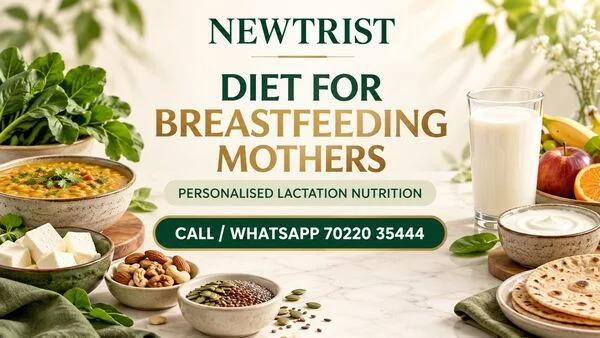
What Should a Breastfeeding Mother Eat?
There is no compulsory breastfeeding menu.
A strong breastfeeding mom diet can usually be built from familiar Indian foods rather than imported products, specialised lactation foods or expensive supplements.
Keep protein present in regular meals
Breastfeeding does not mean that you need an extreme high-protein diet.
But protein should not disappear from meals because your routine with the baby has become unpredictable.
- dals and pulses
- beans
- milk and curd
- paneer
- eggs
- fish
- chicken or other suitable meats
- soy foods
- nuts and seeds
The appropriate amount depends on your overall diet, body size, activity and breastfeeding pattern.
Include vegetables and fruits for variety, not because one food is “best”
Vegetables and fruits contribute fibre, vitamins, minerals and a variety of plant compounds.
Indian seasonal foods are entirely suitable.
There is no need to build your diet around pomegranate, beetroot, banana, drumstick leaves or another single food because it is promoted as particularly good for breastfeeding.
Variety is more useful than chasing one “superfood”.
Rice and roti do not need to disappear
A diet for lactating mothers does not need to be low in carbohydrates unless another clinical condition creates a specific reason for dietary modification.
Rice, roti, millets where suitable, oats and other grain-based foods can all fit within breastfeeding nutrition.
The quality and balance of the entire diet matter more than blaming one staple food.
Include calcium-rich foods
Milk, curd, paneer and other suitable foods can contribute calcium as well as protein.
Women who consume little or no dairy need to look more carefully at how calcium is being supplied through the rest of the diet.
That does not automatically mean taking supplements.
The first question is whether the current diet is meeting requirements and whether clinical circumstances indicate supplementation.
Include useful fats
Nuts, seeds, suitable cooking oils and foods such as fish can contribute useful fats.
The goal is balance.
Breastfeeding does not require adding large amounts of ghee or other energy-dense fats simply because they are traditionally considered strengthening.
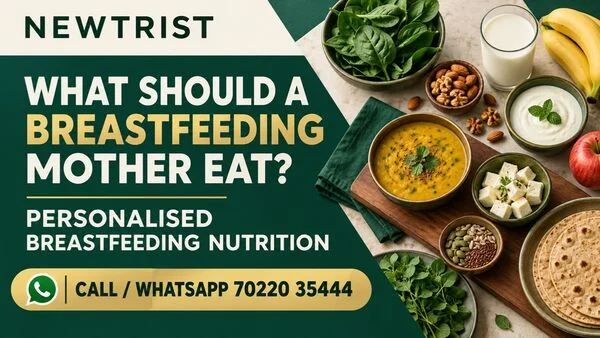
Do Breastfeeding Mothers Need to Eat More?
Generally, yes, but not by the same amount for every woman.
Producing breast milk requires additional energy, and nutritional requirements during lactation are higher for several nutrients.
But how much additional food a woman needs depends on factors such as her body size, activity, nutritional status and whether she is exclusively breastfeeding or combining breastfeeding with other feeding.
This is why “eat for two” is not useful advice.
Neither is deliberately keeping food intake as low as possible because you want to lose pregnancy weight.
The aim is enough food to support your nutritional needs without assuming that breastfeeding requires unlimited extra eating.
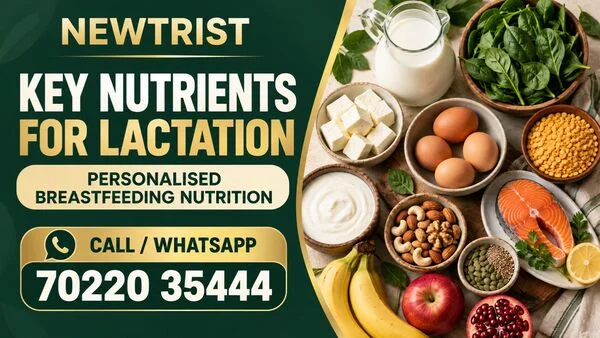
Which Nutrients Deserve Particular Attention During Lactation?
A balanced diet remains the foundation, but breastfeeding changes the importance of some nutrients.
Vitamin B12
Vitamin B12 deserves particular attention when little or no animal-source food is eaten.
This is especially important for vegan mothers because inadequate maternal B12 status can affect the amount available to the breastfed infant.
Women following vegan or substantially restricted vegetarian diets may therefore need individual assessment rather than relying on food assumptions alone.
Iodine and choline
Requirements for iodine and choline increase during breastfeeding.
Food sources can include dairy foods, eggs, suitable seafood and other foods depending on dietary pattern.
Whether the diet reliably supplies enough may vary significantly between women, particularly when several food groups are excluded.
Vitamin D and other micronutrients
Vitamin D, iron, zinc, vitamin A and omega-3 fats can also deserve attention depending on diet, deficiencies and individual health circumstances.
This does not mean every breastfeeding mother should buy a long list of supplements.
It means dietary adequacy and supplementation should be considered individually when there is a reason to do so.
Do You Need Special Foods to Produce Breast Milk?
You do not need a special lactation food to make breastfeeding nutritionally successful.
Traditional foods and family practices can certainly fit into a healthy diet.
But no individual food should be presented as compulsory simply because you are breastfeeding.
Foods such as fenugreek preparations, garlic, oats, laddoos, dry-fruit mixtures and other commonly recommended foods may become part of someone’s diet because she enjoys them or because they fit her culture.
That is different from assuming they are required.
Questions about increasing low breast-milk supply deserve their own assessment because feeding technique, frequency of milk removal, maternal and infant factors and other issues may be involved. A general breastfeeding-diet article should not reduce that problem to a list of milk-boosting foods.
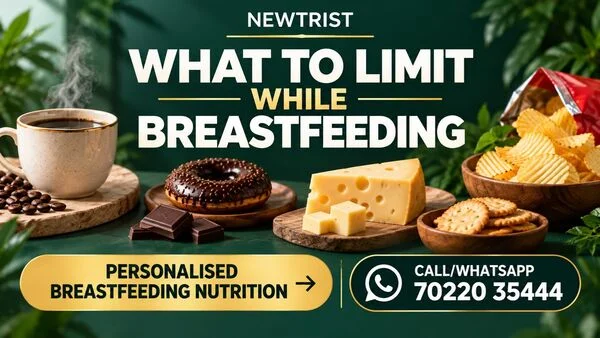
Which Foods Should Breastfeeding Mothers Avoid?
For most mothers, the answer is: far fewer than you may have been told.
A varied diet is generally appropriate, and routine food exclusions are rarely necessary without an individual reason.
Choose seafood carefully
Fish can provide protein and useful fats, but some types contain more mercury than others.
Breastfeeding women should therefore choose lower-mercury seafood and avoid high-mercury varieties rather than eliminating all fish.
Keep caffeine sensible
Caffeine passes into breast milk in small amounts.
Moderate intake is generally tolerated, but very high caffeine consumption may contribute to fussiness or poor sleep in some infants, particularly younger or preterm babies.
Remember that caffeine is not found only in coffee. Tea, energy drinks, cola and chocolate can also contribute.
Do not create unnecessary food exclusions
Spices, pulses, particular vegetables or culturally classified “hot” and “cold” foods do not need routine removal from every breastfeeding mother’s diet.
If you believe a specific food is repeatedly associated with symptoms in your baby, that deserves individual discussion rather than progressively removing multiple foods on your own.
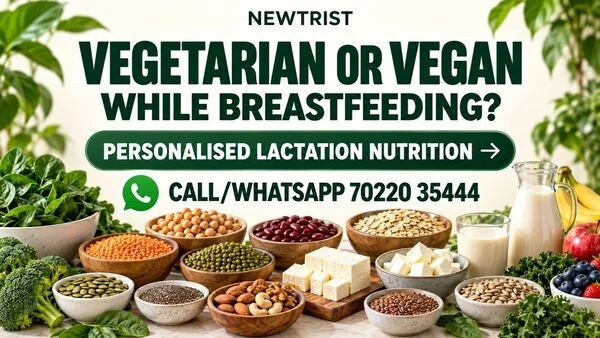
What If You Are Vegetarian or Vegan While Breastfeeding?
A well-planned vegetarian diet can support breastfeeding, but the more foods that are excluded, the more important nutritional planning becomes.
For vegan mothers in particular, vitamin B12 requires serious attention.
Other nutrients that may deserve review include iron, calcium, iodine, vitamin D, choline, zinc and omega-3 fats.
The solution is not necessarily a long supplement list.
It is to identify:
What is the diet actually providing?
Which nutrients are difficult to obtain reliably?
Are blood investigations or medical history showing an existing problem?
Which supplements, if any, are genuinely necessary?
That is where a lactation nutrition assessment becomes much more useful than a generic vegetarian breastfeeding diet chart.
Do You Need a Breastfeeding Mother Diet Chart?
A breastfeeding mother diet chart is appealing because it removes uncertainty.
Breakfast at this time. Fruit at that time. A particular food for lunch. A special lactation drink before bed.
But breastfeeding mothers do not all have the same nutritional needs.
One woman may be exclusively breastfeeding and extremely hungry. Another may be mixed feeding and trying to manage retained pregnancy weight. One may have low vitamin B12 or iron status. Another may follow a vegan diet. Someone else may have thyroid disease, diabetes, poor appetite or a highly irregular work schedule.
A standard lactation diet chart cannot account for all of these differences.
The more useful question is: “Is my current diet meeting my needs while breastfeeding, and what specifically needs changing?”
When Is a Lactation Nutritionist Useful?
General nutrition information works well when your diet is varied, your health is stable and eating is uncomplicated.
A lactation nutritionist becomes more useful when there is an individual nutrition problem to solve.
- you are unsure whether you are eating enough
- your diet is vegetarian or vegan and you are concerned about nutrient adequacy
- investigations show anaemia or another nutritional deficiency
- several foods have been removed because of suspected infant reactions
- your appetite is poor or eating regularly is difficult
- you have thyroid disease, diabetes or another condition affecting nutrition
- you are unsure which supplements you still need
- returning to work has disrupted meals
- breastfeeding and postpartum weight goals are beginning to conflict
- generic breastfeeding diet plans do not fit the foods you normally eat
The purpose of consultation should not be to make your diet more complicated.
It should make your decisions more specific.
What Should a Personalised Breastfeeding Nutrition Assessment Answer?
Chief Nutritionist Vasanthi Senthilvel can begin with your actual food pattern rather than a ready-made breastfeeding menu.
Depending on your needs, the assessment may consider:
- breastfeeding pattern
- current food intake
- appetite and hunger
- pre-pregnancy and current weight
- dietary restrictions
- vegetarian, vegan, egg-based or non-vegetarian preferences
- relevant blood investigations
- known deficiencies
- medical conditions
- medicines and supplements
- work and sleep routine
- foods normally prepared at home
- cultural postpartum practices
- longer-term weight-management goals
The assessment should answer four practical questions:
Are you eating enough for your current needs?
Which nutrients deserve closer attention?
What should change in your everyday diet?
What can remain exactly as it is?
That last question matters.
Personalised nutrition is not about changing every food because you are breastfeeding.
It is about making the smallest set of meaningful changes needed to keep the diet adequate, practical and appropriate for you.
Frequently Asked Questions
Can I eat spicy food while breastfeeding?
Usually, yes. Breastfeeding mothers do not routinely need to avoid spicy foods simply because they are breastfeeding. If you consistently notice a specific problem after a particular food, discuss it individually rather than broadly restricting the diet.
Does a breastfeeding mother have to drink milk?
No. Drinking milk is not compulsory for producing breast milk. Milk and curd can be useful sources of protein and calcium, but women who do not consume dairy need suitable alternatives so the overall diet remains nutritionally adequate.
Does breastfeeding require a special diet throughout lactation?
Nutritional needs remain higher during breastfeeding, but they also change as lactation progresses and feeding patterns change. Your diet therefore does not need to remain fixed for the entire breastfeeding period.
Your Breastfeeding Diet Should Nourish You, Not Give You More Rules
Breastfeeding already asks a great deal of your time and energy.
Your diet should not become another source of anxiety.
You may need more nutritional structure. You may need closer attention to protein or certain micronutrients. You may need help planning a vegetarian or vegan diet. You may need to reconsider supplements. Or you may already be eating reasonably well and need far fewer changes than you expected.
That cannot be determined from the words “breastfeeding mother” alone.
Chief Nutritionist Vasanthi Senthilvel at Newtrist provides personalised breastfeeding and lactation nutrition support by considering your actual diet, breastfeeding pattern, nutritional status, investigations, health conditions, food preferences, routine and longer-term goals together.
The objective is not to hand every breastfeeding mother the same diet chart.
It is to identify what your diet needs, what it does not need, and how to meet your nutritional requirements using foods that fit your everyday life.
If you have been told to “eat well while breastfeeding” but still do not know whether you are eating enough, choosing the right foods or meeting your own nutritional needs, a personalised lactation nutrition consultation can turn that broad advice into a practical plan designed around you.
Author
Chief Nutritionist Vasanthi Senthilvel leads Newtrist Nutritionist Dietitian Dietician, providing personalised diet plans for weight management and clinical nutrition for children, adolescents, adults and families.
She has 21 years of experience in nutrition and has received professional recognition for her work.
- Pride of Bharat Awards 2026: Outstanding Achievement in Holistic Health & Nutrition Innovation
- Doctor of The Year: Nutritionist 2026: Excellence in Clinical Nutrition and Weight Loss.
Her approach considers age, growth, health history, medical conditions, laboratory reports, medication, body composition, weight history, dietary preferences, regional food habits, family routines, activity, sleep and personal health goals. Recommendations are developed according to individual needs rather than using one standard diet for everyone.
Consultations are available in person at Bangalore HSR Layout, Koramangala, Bellandur, Haralur and Electronic City, as well as online across India.
Independent Medical Review Panel
Newtrist health and nutrition articles undergo medical review, where appropriate, by doctors with relevant specialist expertise. The medical professionals listed below contribute to Newtrist’s review process within their respective specialties.
| Speciality | Doctor |
|---|---|
| Endocrinology | Dr Vinay Prasad MBBS, MD, DM |
| Gastroenterology & Hepatology | Dr Sunil kumar N MBBS, MD, DM |
| Gynaecology | Dr Prathiba G MBBS, DNB, FIRM, FMAS |